Philipsen fails to capitalize on Van der Poel’s masterful lead-out: Merlier cruises to victory
Cycling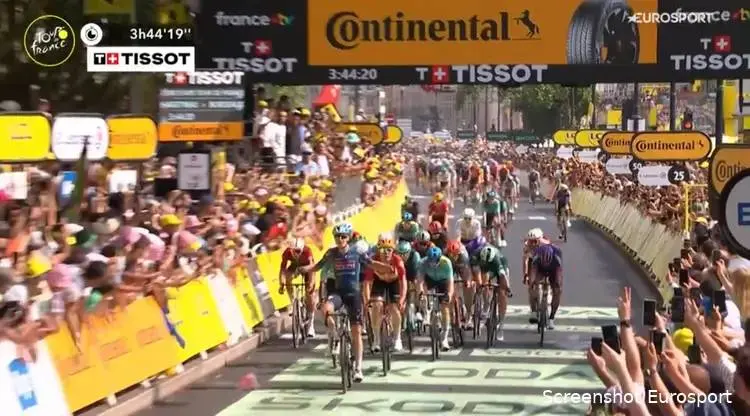
Follow IDL Pro Cycling on Google
Stay up to date with the best cycling news by making us a preferred source on Google.
Follow us on GoogleThe seventh stage of the Tour de France was won by Tim Merlier. The Belgian rider from Soudal Quick-Step capitalized on a fantastic lead-out for his rival Jasper Philipsen and won the sprint with a powerful display of strength. Søren Waerenskjold (Uno-X Mobility) finished second, ahead of Biniam Girmay (NSN). Olav Kooij didn’t factor into the finish this time.
ADVERTISEMENT
Bordeaux and
the Tour de France are inseparable. Only Paris has
appeared more frequently in the history of the race, and Bordeaux is a Tour
stage town for the 83rd time in 2026. When the peloton arrives in the wine
city, the day often ends in a bunch sprint. Previous winners in Bordeaux
include Mark Cavendish, Jasper Philipsen and Jean-Paul van Poppel. Servais
Knaven’s breakaway victory in 2003 was a notable exception.
Another sprint appears highly likely this time. Apart from the time trials, Stage 7 features the least climbing of the entire route, with only around 700 metres of elevation gain. After surviving the Pyrenees, the fast men can therefore be almost certain that they will get their opportunity. Can Philipsen repeat his 2023 victory in Bordeaux, or will a new winner emerge?
Read also
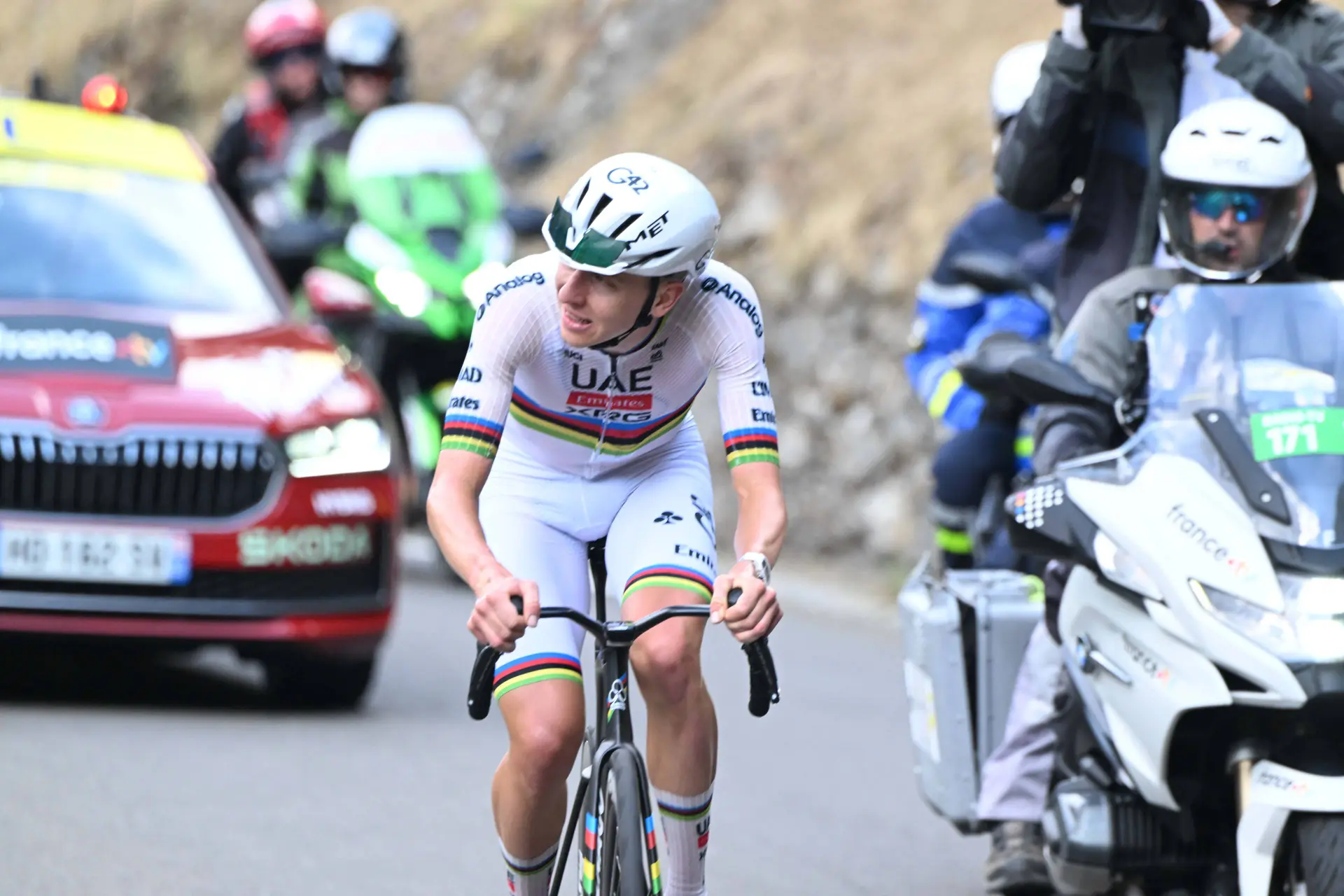
The route did not exactly encourage the formation of a large or particularly dangerous breakaway. When two riders eventually escaped, it was therefore no surprise that the rest of the peloton remained where they were. Baptiste Veistroffer was inevitably one of the attackers. The Frenchman had already won the combativity award on Stage 5 and went on the offensive again, this time accompanied by Czech rider Jakub Otruba of Caja Rural-Seguros RGA.
Quiet day, but Uno-X try to catch the sprinters off guard
What followed was a calm — and, it must be said, fairly uneventful — stage. The peloton quickly took control and rarely allowed the two leaders to build an advantage of much more than a minute. Alpecin-Premier Tech and Soudal Quick-Step were largely responsible for keeping the gap under control.
With little urgency in the bunch, the riders had plenty of time to chat. Mathieu van der Poel was serenaded by the motorcycle riders alongside the race, while Remco Evenepoel joked around with his fellow Belgians. On a stage unfolding at such a gentle pace, the riders had to find something to keep themselves entertained.
The race continued to drift along until Uno-X Mobility suddenly disturbed the peace after around 70 kilometres. The Norwegian team attempted to send three riders up the road, but the sprint teams immediately reacted and shut the move down. Their acceleration briefly inspired several other opportunistic attacks, with green jersey wearer Mads Pedersen of Lidl-Trek even trying his luck.
The activity did not last long, however, and calm soon returned to the peloton. Only temporarily, because the intermediate sprint provided a welcome change of pace in what had otherwise been a largely uneventful stage.
Veistroffer beat Otruba to collect the maximum points at the front. Behind them, the points-classification contenders fought hard for what remained. XDS Astana once again delivered an excellent lead-out, but Pedersen surprised his rivals and crossed the line first from the peloton, adding another 16 points to his green jersey total.
The sprint was inevitable—even Uno-X couldn’t stop it
After that, more and more sprinter teams began to make their move. The breakaway riders saw their lead dwindle, but the fun wasn’t over yet. Once again, it was Uno-X Mobility launching an attack, but Anders Skaarseth and Jonas Abrahamsen couldn’t stay out of the peloton’s clutches. Not long after, Veistroffer and Otruba were also caught: on to the sprint!
Or so it seemed? Well, Abrahamsen and company tried again. The Norwegians didn’t want a sprint, but this early in the Tour, it’s hard to catch the sprinter teams off guard. Everything came back together, and the sprint trains were set in motion. With seven kilometers to go, the road narrowed, and you had to be at the front. Netcompany INEOS was in an excellent position there, but Alpecin-Premier Tech, Lidl-Trek, Decathlon CMA CGM, and NSN were also right on top of things.
Later, the peloton spread out again, allowing the battle for positions to resume. Cofidis and Netcompany INEOS put in the early work, but Alpecin-Premier Tech seemed to time their move perfectly. With five riders, they moved to the front, and Van der Poel, as expected, did the final work. Philipsen attacked from the front, but lacked the speed entirely: Merlier overtook him with long strides and won by a landslide.
Follow Stage 7 of the 2026 Tour de France HERE
Tip: Is the live blog not loading? Press F5, or refresh your mobile page or app!
David Bavin-HobbsChief Editor
David has been working in the sports & cycling industry for 16 years. Covering racing, business and technology, he has worked in communications for cycling companies, teams, and as a journalist. His proudest achievement is winning the first bike race he ever entered. He hasn't won a race since.
IDL-productions
Rumours, speculation and guesswork: 2027 Tour de France route will be revealed live on October 22 in Paris
Vollering adds the Women’s European Championships road race jersey to her rainbow wardrobe
16-day Grand Tours, AI, VAR, drones and more: The UCI's new document has a potentially major impact from 2029 onwards
Quinn Simmons' Strava shows exactly what it takes to compete at the World Championships: ‘I said, Hey guys, anything is possible'
Despite losing the World Championships, Del Toro and Seixas rank high mentally and physically on the Pogačar scale
Latest Cycling News
Egan Bernal explains absence in open and honest message about future: 'I've made sacrifices I never imagined'
Isaac del Toro's attack fizzles during the final warm-up race before the Tour of Lombardy; INEOS capitalise
From Simon Yates to Nairo Quintana, there are plenty of riders retiring in 2026
INEOS's young talent dominated the European and World Championships: Noval hailed as 'new Seixas'
The World Championships show that these teams will be gunning for the (early) breakaway at the Tour of Lombardy
Popular Cycling News

Lance Armstrong was diagnosed with cancer 30 years ago but is still here today; celebrates with wife Anna Hansen
INEOS's young talent dominated the European and World Championships: Noval hailed as 'new Seixas'
European Championship organiser answers Giulio Ciccone's photo finish complaint: 'In the case of minimal differences'
Lidl-Trek terminate multiple contracts, lucrative transfer season in full swing at German team
Sensational Primož Roglič gives home fans something to cheer about by winning the mens' European time trial title
Latest Comments
- - ¡Qué ilusión para el ciclismo español! If Noval can combine climbing, time trialling and that mental strength, Spain may have another superstar on its hands.davidm08-10-2026
- - I’m still learning the sport—how can someone be the second-youngest WorldTour pro ever if his contract starts in 2027? Does that record depend on his exact birthday and debut date?pedalpowe2908-10-2026
- - “Once-in-a-generation talent” is a huge claim. What power numbers did Noval actually produce in Asturias, and how do they compare with riders of the same age?jeremya08-10-2026
- - The Contador comparisons are exciting, but also a bit premature. Time-trial ability is a major advantage, though the jump from juniors to the WorldTour can be brutal. Hopefully INEOS gives him time to develop rather than expecting instant results.patriciaw08-10-2026
- - Noval’s junior season has been absolutely ridiculous. Winning both world titles and the European time trial title suggests he isn’t just a climber—his versatility could be what separates him from the other big prospects.gearguru3308-10-2026
- Great drama, but the article leans a little too hard into the “what if” angle. Evenepoel still had to recover from a crash and finish the job—credit where it’s due.robert6507-10-2026
- What exactly is a pacer in this situation, and why was Ciccone listening to that information instead of just watching the race? I’m still learning the tactics, but it seems like Scaroni being behind changed everything.andrewf07-10-2026
- The photo finish sounds far too vulnerable to tiny setup errors. If the line is curved and the camera alignment is even slightly off, can we really call a one-pixel victory completely definitive?jennifer1907-10-2026
- Ciccone’s final turn was excellent, but I agree with Zonneveld that he probably worked too much before the finish. With Scaroni behind, sitting on Remco’s wheel would have been the smarter gamble.bikebuffj07-10-2026
- Evenepoel showed serious resilience after that crash. Coming back, attacking on the descent and still winning the sprint is a proper champion’s performance.cadencekingm07-10-2026
Loading


