Follow IDL Pro Cycling on Google
Stay up to date with the best cycling news by making us a preferred source on Google.
Follow us on GoogleOne of the many great things about sports is the variety between them, which creates a lot of excitement and interest, as athletes tap into different skill sets. But just because you know your way around cycling betting because of a love for the sport, it doesn’t necessarily mean that it will be a straightforward transition into betting on other racing sports.
ADVERTISEMENT
Of course, the basics stay the same. Punters who bet regularly and follow specialist resources to check bookmaker ratings – and even rate the sportsbooks themselves – compare odds and keep an eye on recent trends will already have a sense of what markets to expect. However, different sports involve different betting approaches. Anyone who digs into data around Superbikes, for instance, is likely to find a very different picture, shaped by factors such as race length, the balance between team and individual roles, and even the influence of weather conditions.
Cycling for the Tour de France will have different markets from a NASCAR race, for example, and there will also be variations on the implied probability that impact odds. Here are three of the main differences between cycling and some other racing-based sports when it comes to betting.
Race Distance and Event Types
Even within cycling, there are many different disciplines, from road racing to dynamic sprints inside a velodrome. The Tour de France lasts multiple days, and while a market for the outright winner of the famous race is popular, each day has the potential of producing a new winner for a given stage.
So the overall event can be broken down into smaller components for a more focused betting look beyond the overall classification winner. Hill climbs, sprints and various distances will bring different riders to the fore day by day and this all leads to unpredictability for betting purposes.
But things are different in F1 racing, however. While there are different types of tracks, a dominant driver tends to win the bulk of races in an F1 season. It’s far more predictable because race distances are roughly the same distance no matter where they are held.
Individual F1 races are just more structured and standardised, which produces steadier, less volatile betting markets. A driver that’s won four of the last five races at various tracks and in different weather conditions, is going to be a firm favourite for the next race in sports betting, and that’s a very different scenario to cycling.
Teams and Individuals
Much of cycling is team-based, and on the Grand Tours for example, the tactics of a team can help their main rider’s bid for glory. There are riders on a Tour team (a “domestique”) that are there to specifically protect and help the team leader win at the sacrifice of their own ambitions.
This is a very complex set-up, so team tactics and the ability of riders to collectively fulfil instructions can massively impact the outcome of a stage. So bettors have to know the balance of what a team is going to do, and in a lot of cases, it’s not about winning every stage, it’s simply consolidating position and time. In cycling, you don’t expect the Giro d’Italia favourite to win every stage of the event.
In contrast, if you dip into something like Superbikes, the machines are developed and maintained by teams, but it’s more about individual performance on the day. Occasionally if title points are at stake, team orders could feature, but it’s not very common and therefore Superbike riders are essentially left to their own devices on race day when it is all about winning and nothing else - and that’s where the betting focus is too.
Machines vs Human
There are a lot fewer things to go wrong on a bicycle than there are on a Superbike, to the point that is pretty much not part of the equation in terms of cycling betting. The sport is all down to human power and physical endurance.
But F1, rally and NASCAR racing, for example, have to deal with mechanical issues. There is a lot more unreliability in a motorcar thundering around a track than there is a cyclist on a bike in terms of any potential mechanical failure.
Race teams can easily have issues with engine reliability, tyre wear or their downforce not being on point. The nuances of the machine’s performance will drastically impact the potential outcome of a race. Having the wrong car aerodynamics can keep a pre-race favourite off the podium, and that’s a factor when betting on the Fastest Lap and Race Winner markets in sports like F1.
Research and Odds
Cycling is not as popular as something like F1 in terms of the volume of bets placed on it and doesn’t have as big of a variety of betting markets. But an advantage of cycling betting is that odds can be a little more in favour of bettors.
Due to the huge popularity of F1, the more bettors that jump on the outright winner market for the Monaco Grand Prix, for example, the more the market is going to get “sharper”. Public support will shift things away from the true value and implied probability of original odds, making it harder for bettors to find good prices.
The quieter cycling markets are simply not as heavily impacted, due to fewer bets being taken, which is a positive for bettors. It’s where having a specialisation in cycling knowledge and stats can be put to good use.
IDL-productions
Quinn Simmons' Strava shows exactly what it takes to compete at the World Championships: ‘I said, Hey guys, anything is possible'
Despite losing the World Championships, Del Toro and Seixas rank high mentally and physically on the Pogačar scale
Van der Poel loves it, but a lack of race radios gave McNulty and USA the chaos it needed to slip away
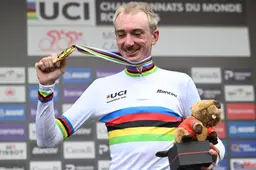
Pogačar hails the 'King of Montréal', but McNulty already has a plan for 2027: 'Maybe Tadej will have to ride for me'
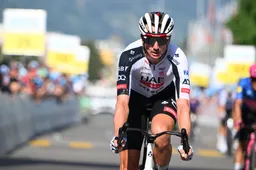
An American rider can win the Elite Men’s World Championship road race, but the smart money isn’t on Quinn Simmons!
Latest Cycling News
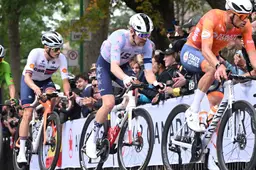
Oscar Onley on his day in the break with Van der Poel, Van Aert & Simmons: "I still have to figure that out"
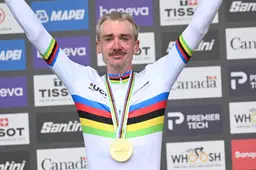
Rasmussen isn’t looking forward to a year of McNulty as World Champion: ‘With his jersey full of water bottles’
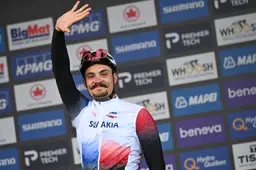
Massage therapist who had to race the World Championships for Slovakia did better than expected: 'It was amazing'
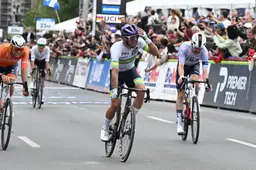
Matthews joins the Pidcock Del Toro row after World Championships: 'If fewer teams had ridden together across national borders...'
A mix of gratitude, guilt, and a thirst for revenge: Del Toro’s fresh World Championship analysis
Popular Cycling News
Matthews joins the Pidcock Del Toro row after World Championships: 'If fewer teams had ridden together across national borders...'
Pidcock accuses Del Toro of helping UAE teammate McNulty to the rainbow jersey: 'Obviously working for McNulty in the end'
Isaac del Toro hits back at Pidcock's criticism: 'All the other teams remained passive'
Pogačar hails the 'King of Montréal', but McNulty already has a plan for 2027: 'Maybe Tadej will have to ride for me'
Quinn Simmons' Strava shows exactly what it takes to compete at the World Championships: ‘I said, Hey guys, anything is possible'
Latest Comments
- - I don’t really get why none of the Vuelta guys made top 13 at Worlds. Is two weeks really not enough to recover? And does heat make that big a difference?patriciaw30-09-2026
- - Pogi comparisons are getting old. Let the kid breathe. He’s more Ayuso-style diesel than Pogačar’s chaos watts. Still, seventh in first GT = massive. Bravo fantje!julien30-09-2026
- - Question: how steep are the key climbs on the Euros course in Ljubljana? If it’s punchy like a Mohorič/Tratnik playground, does Roglič still lead or do they free Omrzel to roll the dice?jennifer1930-09-2026
- - Small correction: the piece says “In 2026 he finished sixth at Tour of the Alps” but this season is 2024—typo? Otherwise love the context on Bahrain Victorious’ plan not to rush him.robert6530-09-2026
- - Great read. Omrzel’s Vuelta ride was legit—Stage 12 raid plus holding top 10 to Madrid at 20 is wild. Skipping Worlds made sense with those Montréal fade-outs. Bring on Ljubljana!jeremya30-09-2026
- - Grande carrera de McNulty, pero Isaac mostró corazón. Forza Lombardia!andrewf30-09-2026
- - Del Toro will win one of these soon. He animated the race, marked Seixas, still had a kick for 5th. Chapeau, mate.michael5430-09-2026
- - Can someone explain why riders help a trade teammate when they’re in national colours? Is that normal at Worlds, or kind of frowned upon?patriciaw30-09-2026
- - Not sure I buy the “perfect teammate” angle entirely. If he had the legs, why soft-pedal so much when the gap hit a minute? Felt like he waited too long to flip the script.gearguru3330-09-2026
- - Loved the tactical chaos. Del Toro rode like a boss for 200k, then had to play the team card once McNulty went. Painful to watch but that’s Worlds—national jersey with trade-team loyalties lurking.sprocketspiny30-09-2026
Loading