Alpe d'Huez → Paris, but with a twist: this is the Tour de France peloton's 24-hour itinerary
Cycling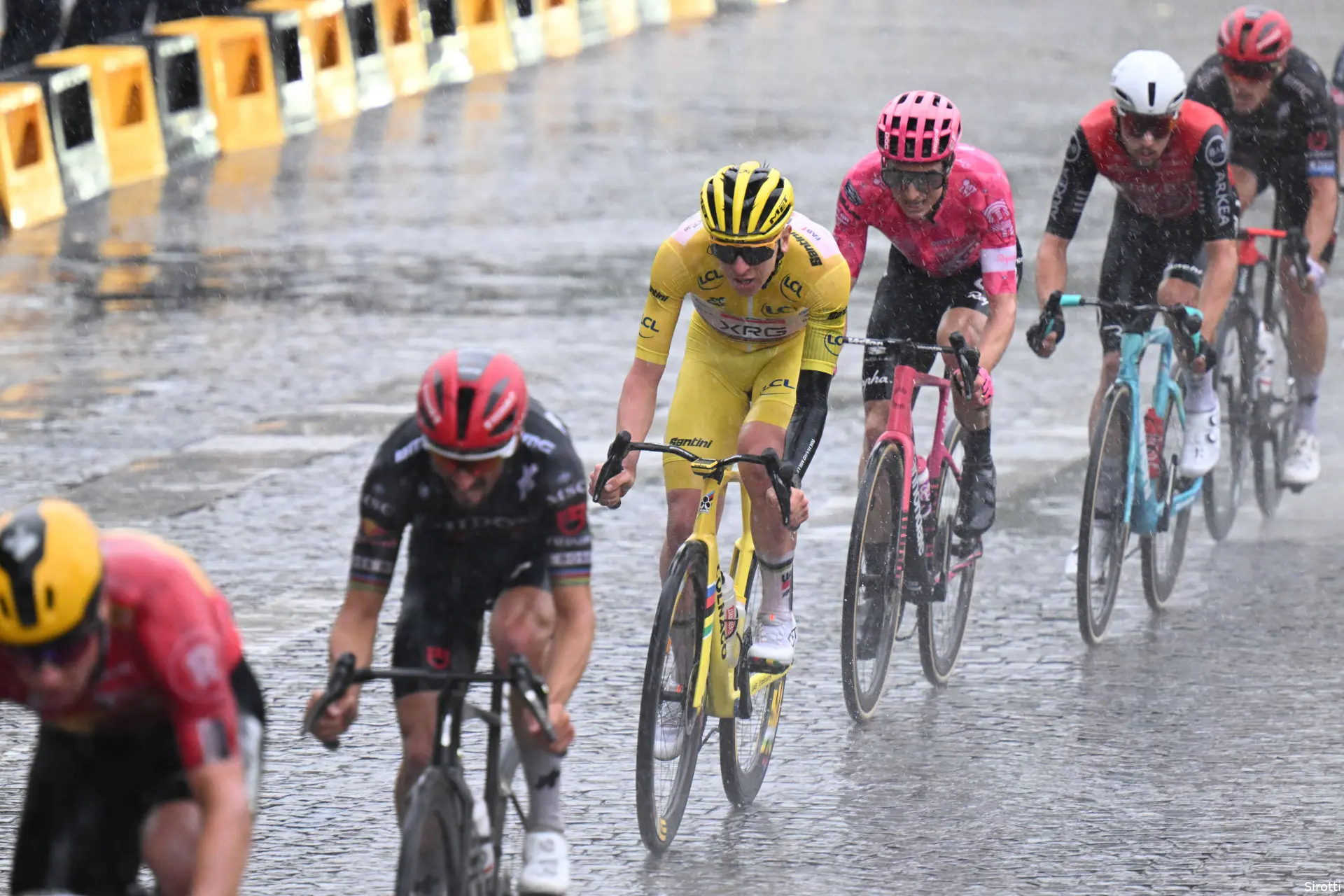
Follow IDL Pro Cycling on Google
Stay up to date with the best cycling news by making us a preferred source on Google.
Follow us on GoogleFor the participants, the Tour de France isn’t just about cycling many kilometers. It also involves traveling many kilometers. For example, the entire caravan has to make the trip from Alpe d’Huez to Paris from Saturday to Sunday, but what does a journey of more than 600 kilometers look like for the peloton and its entourage?
ADVERTISEMENT
Alpe d'Huez is, of course, the centerpiece of the final weekend. On Friday, the riders arrived there via the route we all know, after which the A.S.O. accommodated them all in hotels in the ski village. “That saves us a three-hour bus ride. It’s nice for a change,” Mike Teunissen remarked with a wink. The team buses will be parked in Vif overnight and won’t be making it up to the top of Alpe d’Huez during this Tour.
On Saturday morning, the absolute queen stage is on the schedule, starting in Bourg d'Oisans. That means the riders will only have to descend Alpe d'Huez in the morning, though they’ll certainly have to set their alarm clocks early. The 171-kilometer stage, with a staggering 5,450 meters of elevation gain, starts earlier than other stages in anticipation of the subsequent transfer.
Between 10:10 and 11:10 a.m., the teams are expected at the starting podium, after which the race will begin at 11:20 a.m. in Bourg d'Oisans. Next on the schedule are, in succession, the Croix de Fer, Télégraphe, Galibier, Col de Sarenne, and the final stretch of Alpe d'Huez in what is this year’s toughest stage.
Read also
Read more below the photo!

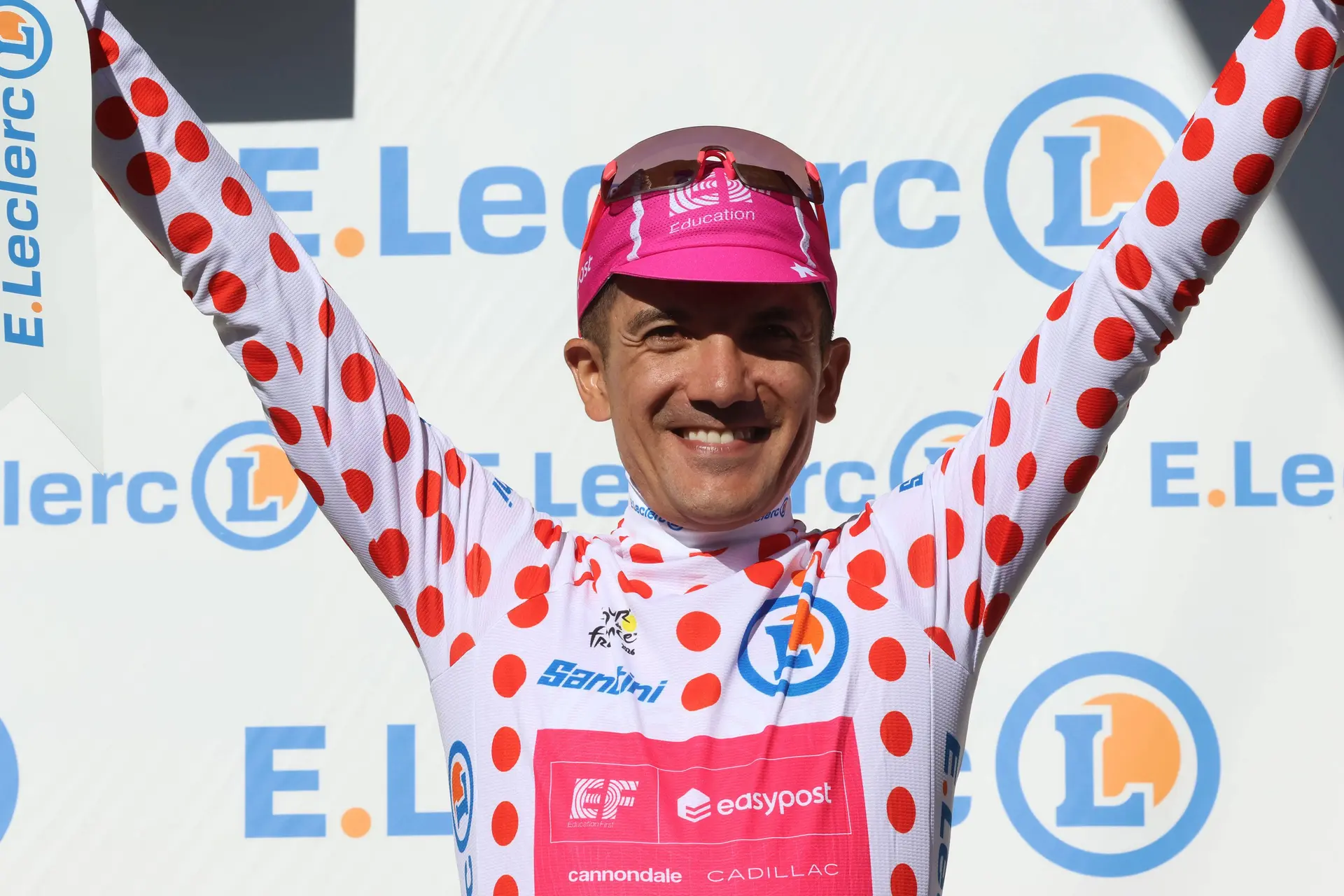
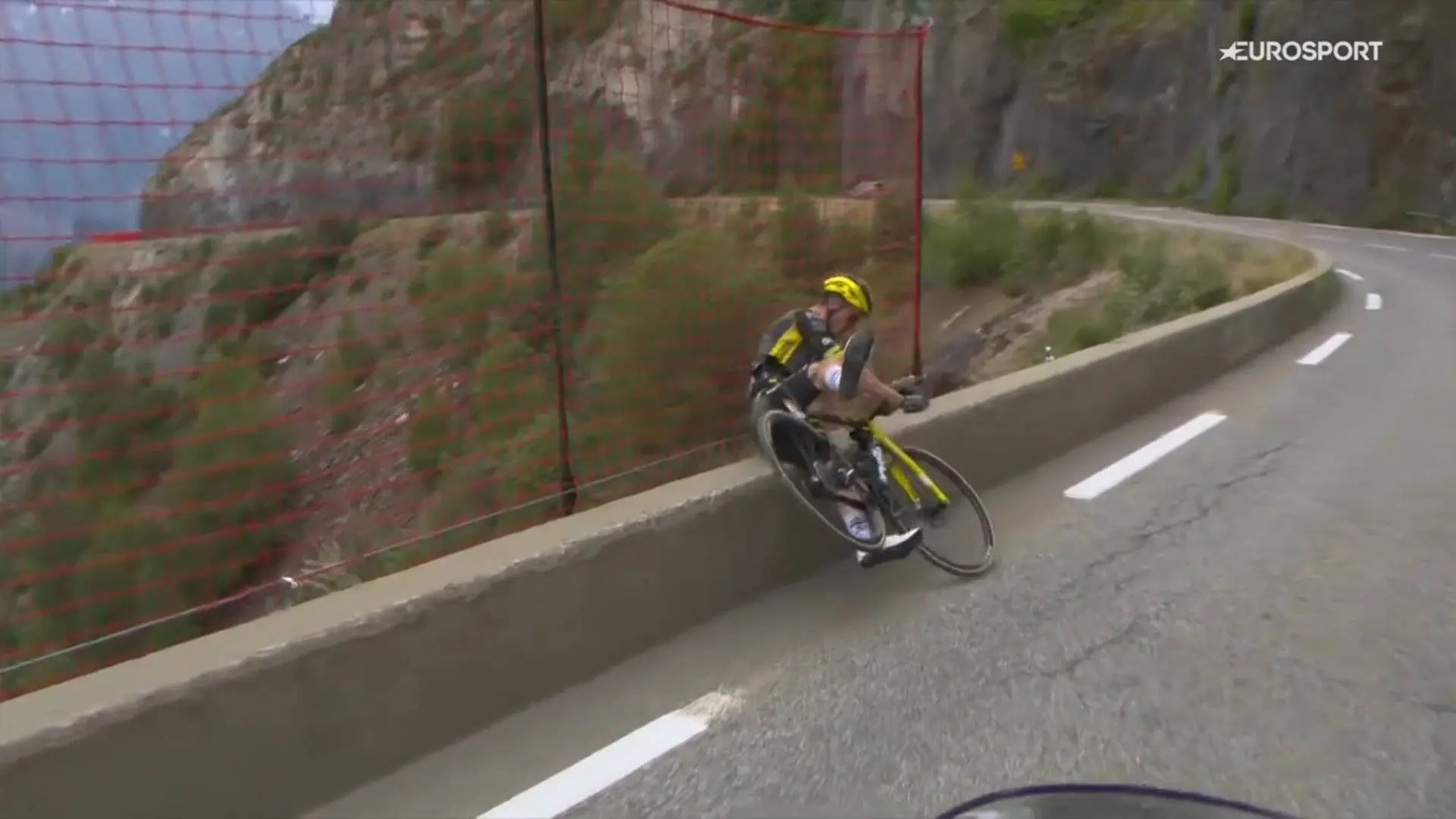
Alpe d'Huez took center stage during the Tour's final weekend.
Riders travel to Versailles by train
The first riders are expected to cross the finish line between 4:10 p.m. and 4:50 p.m. Add roughly 50 minutes to that, and everyone should have made it to the top by then. That’s necessary, too, because at 6:30 p.m., the riders are expected to return to that morning’s starting point: Bourg d’Oisans. That’s where the so-called convoy will depart from.
Escorted by the gendarmerie, the riders will be taken by team bus from Bourg d'Oisans to the nearest city, Grenoble, in 1 hour and 15 minutes. There, a TGV train will be waiting for the riders, scheduled to depart for Versailles at 8:45 p.m. The train is expected to take about three hours, after which the riders will be taken to their hotel. For the rest of the caravan, the transfer is estimated to take about eight hours.
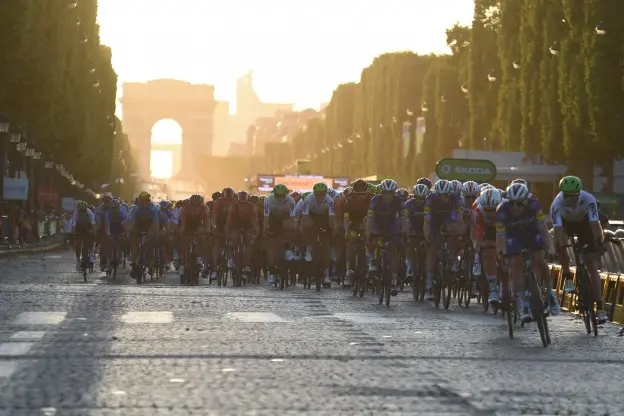
Of course, the traditional final stage is still on the schedule for the next day. On Sunday morning, people can sleep in a little longer, because—following the adjustment to the final stage route—the team presentation isn’t scheduled until 3:40 p.m. The race will start at 5:50 p.m. at the finish line on the Champs-Élysées for an 89-kilometer stage; the finish is expected around 7:45 p.m.
Read also
Tom van der Salm (27) comes from the charming town of Zeilberg (Deurne) in the Netherlands and has been working as editor-in-chief & journalist at IDL Pro Cycling's parent site, In de Leiderstrui, since 2019. He travels with the peloton from the Tour de France to the AlUla Tour and from the World Championships in Rwanda or Canada to the Zilvermeercross in Mol. In his spare time he enjoys playing football, mountain biking, running, walking with his Labrador/Stabyhoun, investing, holidays, (specialty) beers, reading, cooking and watching sports & documentaries!
Contact: [email protected]
IDL-productions

Team GB dominate, China on the rise, Lavreysen the best ever? Five takeaways from the 2026 Track World Championships
Track World Championships day 2: A golden day for Team GB, Levreysen goes 2 for 2, and Kopecky eliminates the competition

Rumours, speculation and guesswork: 2027 Tour de France route will be revealed live on October 22 in Paris
Vollering adds the Women’s European Championships road race jersey to her rainbow wardrobe
16-day Grand Tours, AI, VAR, drones and more: The UCI's new document has a potentially major impact from 2029 onwards
Latest Cycling News
Tour de France boss Prudhomme compares Pogačar to 1969 Merckx after Vuelta crash: 'Are you still the same person?'
Joran Wyseure defeats Night of Woerden winner Nieuwenhuis at Heerde cyclocross

Dutch champion Alvarado claims first cyclocross win of 2026 in Heerde in Brand's absence
Team USA's Ashlin Barry recalls becoming World Champion: 'One of the first texts was from Wout'
Lance Armstrong has a warning about the 2027 Tour de France route: 'Won’t make it across the English Channel'
Popular Cycling News
Tadej Pogačar to skip Paris-Roubaix in 2027: 'The easier it becomes to stay away from racing'
Lance Armstrong has a warning about the 2027 Tour de France route: 'Won’t make it across the English Channel'
The 2027 Tour de France route is out; here's where Pogačar could win or lose his record sixth title
Picnic PostNL's WorldTour uncertainty has five rival teams, and Tom Pidcock, watching the UCI closely
Here's the 2027 Tour de France route, including 71 time trial kilometers and 'just' 3 mountain-top finishes
Latest Comments
- More time trials sounds good, but could Remco actually win the whole race? I thought the Tour was mostly about climbing.gearguru3323-10-2026
- If Pogačar crashed badly, does that mean he might not be fully fit for the Tour?julien23-10-2026
- Edinburgh for the Grand Départ is brilliant news. The crowds in Yorkshire were incredible, and Scotland could be just as special.pedalpowe2923-10-2026
- Froome’s point about the mountains is spot on: the extra TT distance gives the other GC contenders a real reason to race aggressively before the final climbs.tourdeforce923-10-2026
- 71km of time trialling should make things much more interesting. Remco will fancy his chances, but you can never write Pogačar off.lindae23-10-2026
- I’m still figuring out how time trials affect the overall race. If Evenepoel gains time there, will Pogačar have enough mountain stages left to make it back? The route sounds exciting, but I’m not sure how much difference 71km makes.davidm22-10-2026
- Two 223km stages in the opening week could make for a proper nervous start. Those narrow British roads and potholes might have the GC favourites watching every corner.jennifer1922-10-2026
- That Pau–Portet stage sounds absolutely savage: Tourmalet, Soulor, Hourquette d’Ancizan and then the Portet. Vingegaard should suit those long climbs, though Pogačar is hardly easy to shake.julien22-10-2026
- Seventy-one kilometres against the clock gives Evenepoel a real chance to put pressure on Pogačar, but those Pyrenean stages look brutal. Could be a cracking final week if the time gaps stay close.sprocketspiny22-10-2026
- Not sure we can call this a perfect Evenepoel route before we’ve seen the start list. Plenty of time-trialling, yes, but those Pyrenees stages look absolutely savage. Could be a great Tour, though.julien22-10-2026
Loading