Mads Pedersen's coach explains astonishing Flanders comeback training load: 'Completely insane'
CyclingThursday, 30 April 2026 at 08:57
Follow IDL Pro Cycling on Google
Stay up to date with the best cycling news by making us a preferred source on Google.
Follow us on GoogleMads Pedersen's spring did not go as planned. The Lidl-Trek rider crashed on the very first day of his 2026 season, and saw a significant chunk of his preparation go up in smoke. He returned remarkably quickly — and that comeback was largely built on a training regime that defies belief.
ADVERTISEMENT
On 4 February, it went wrong at the Volta a la Comunitat Valenciana. Pedersen, who had again targeted the cobbled Classics as a major goal, crashed heavily and broke both his collarbone and his wrist. It looked like the early Classics might be written off — but nothing could have been further from the truth.
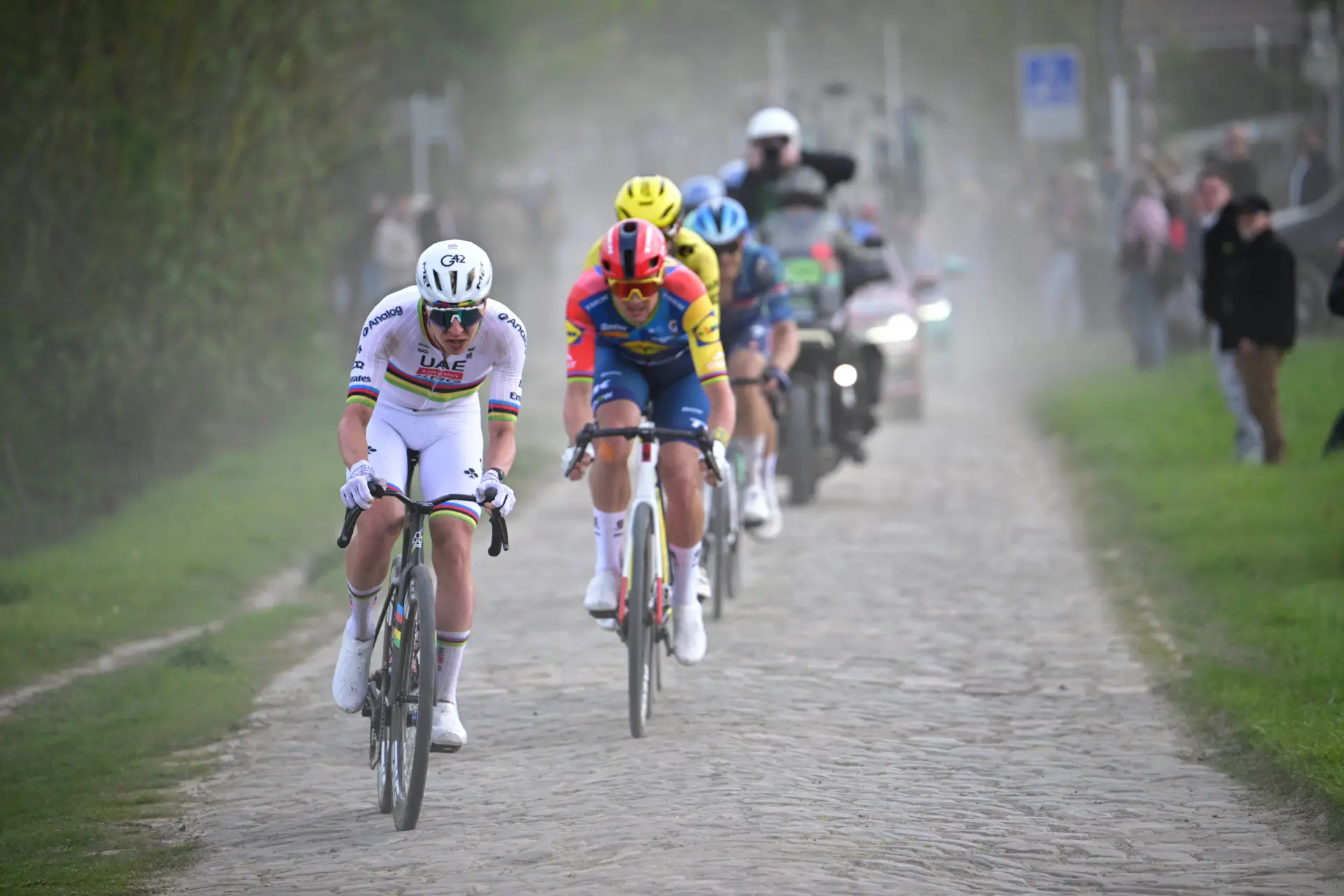
He was back at the start of Milan-San Remo on 21 March, finishing fourth to prove his condition was genuine. That form carried through the E3 Saxo Classic (ninth), Dwars door Vlaanderen (tenth), the Tour of Flanders (fifth) and Paris-Roubaix (seventh). No wins, but exceptional results given the circumstances — particularly as he picked up an illness after the E3 and suffered another training crash before Flanders.
Those results were made possible by the extraordinary training work Pedersen put in during his recovery, his coach Matthias Reck revealed on the Half Wheeling podcast. The Dane wasted no time — he joined Lidl-Trek's training camp almost immediately after his crash.
Continue reading below the photo!

Reck explains Pedersen's 'hardest training week ever'
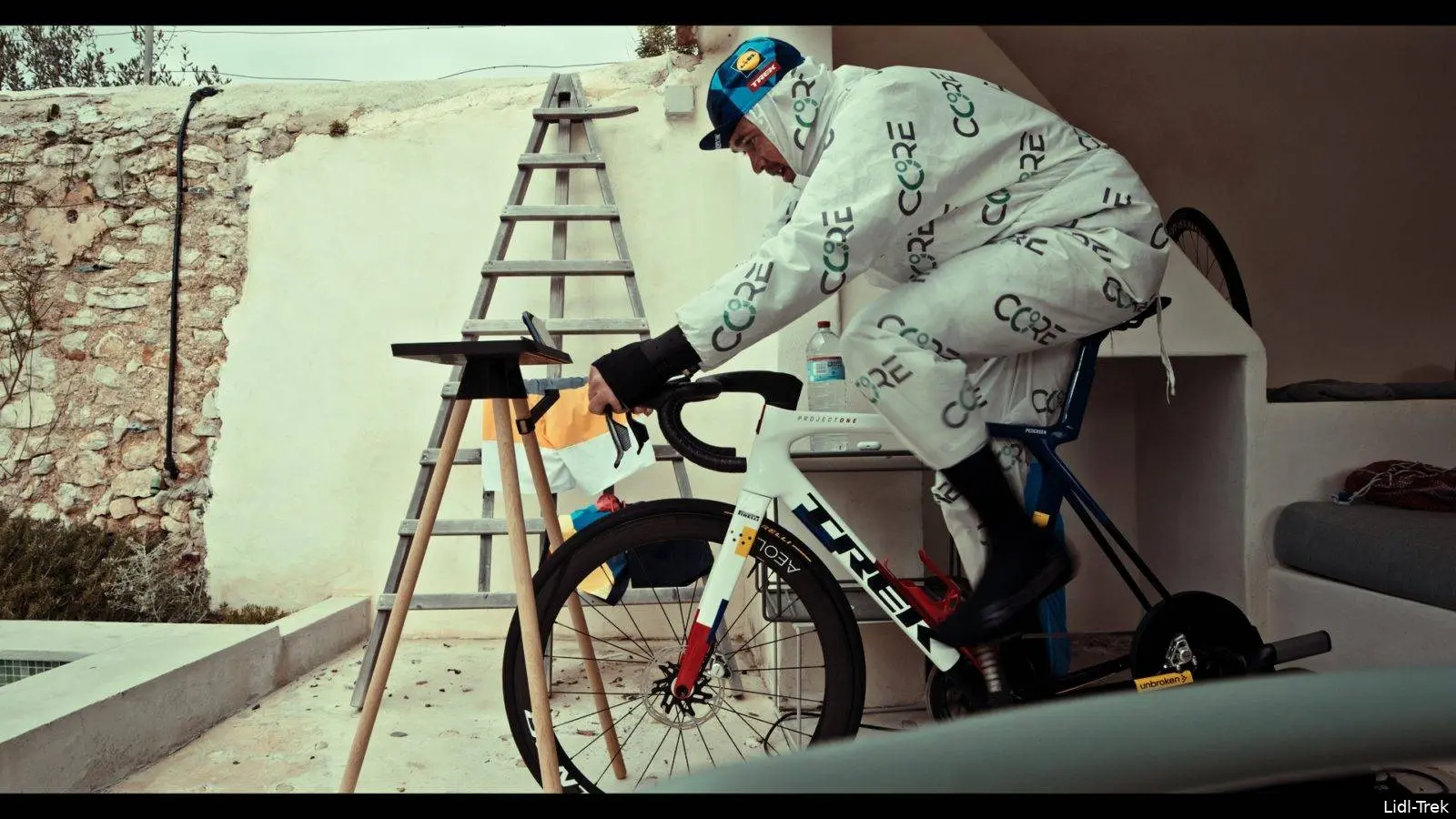
At camp, according to Reck, Pedersen completed 80 hours of training in two weeks. "In the first week he was only on the turbo trainer." That alone accounted for 37 hours. "And these were not easy sessions — he was also doing intervals. Three hours in the morning and three hours in the afternoon, six days in a row."
Was that it? Far from it. "In between, he also did a one-hour recovery ride." And that pattern continued throughout the entire spring. "I think he did the hardest training week of his life before Flanders. It was insane. On Tuesday he trained for five hours — with intervals, pacing sessions behind a scooter and, if I remember correctly, a heat acclimatisation session too."
Reck continued: "Wednesday was seven hours. First Dwars door Vlaanderen at an average of 48 kilometres per hour, then two more hours at high tempo back to the hotel — straight into a full headwind. Thursday was another five-hour session, partly behind the scooter. And on Saturday he put some sharpness in the legs ahead of Sunday with a solid three-hour ride."
Continue reading below the photo!

'Don't try this at home'
Reck is under no illusion that this approach is replicable. "To anyone listening to this: don't try this at home. Not many people come out the other side of a cold and a crash doing this." He is also honest enough to admit it was something of a gamble. "But because of the frustration of having setbacks again at a moment when we really couldn't afford them, it was mentally necessary to do more than ever before."
That experience led Reck to a conclusion he had been building towards for years. "It has taken me years to understand how much training load Mads can handle. It is completely insane when you think about it. It is so much training. He has an incredible capacity to recover. If he does too little, his heart rate is high and his power is low. That's why we train this way."
The annual numbers? "He does between 1,100 and 1,200 hours a year. To do that while also travelling extensively and racing a full calendar, you need a lot of 30-hour training weeks. We are very lucky that he genuinely loves being on the bike," Reck concluded.
IDL-productions

2026 GP Montreal preview | Evenepoel and Pidcock face World Championships dress rehearsal
2026 Vuelta a España Stage 21 preview | Route change boosts Van Aert as Granada circuit sparks safety debate
2026 Vuelta a España route | 7 times Visma | Lease a Bike, now finally success for Mas

2026 Vuelta a España Stage 20 preview | The monstrous mountain stage everyone has feared for weeks
From the Scottish Borders to leading the Vuelta a España time trial: the rapid rise of Britain's Callum Thornley
Latest Cycling News
🎥 Evenepoel put the final touches to his World Championship time trial prep on an F1 circuit: 'Set the bar high'
🎥 Watch as a spectator kicks a water bottle back into the peloton, causing a crash; Italian Fancellu wins stage 1
Van Avermaet explains ideal World Championship scenario for Van der Poel and Van Aert: 'Then they are favorites to finish it off'

Dutch national coach explains why he dropped Anna van der Breggen and Marianne Vos for the World Cycling Championships
Slovenia built its European Championships around Pogačar and Zigart, but neither will now race in Ljubljana
Popular Cycling News
Cycling transfers 2026/2027 | The 2027 transfer market merry-go-round continues apace
Oscar Onley wins Vuelta a España white jersey after difficult three weeks

Isaac del Toro powers past Paul Seixas to victory on World Championship course in Montreal, Remco Evenepoel unable to follow

2026 World Cycling Championships Route & Schedule | Road & time trial teams are starting to be announced
Matthew Brennan’s words show how much the peloton will miss Steven Kruijswijk
Latest Comments
- - Grande artículo, pero una duda: if “you don’t have to be the strongest to win,” does that mean we’ll see more negative racing? Seems a bit defeatist, no?raceready715-09-2026
- - Pidcock managing his efforts will be key. He was too eager in Montreal; hold fire until the final lap and he’s dangerous. Also, no Pogačar = more tactical chaos. Brilliant.davidm15-09-2026
- - Can someone explain why the Worlds route is that much longer than Montreal GP but on a similar circuit? Is it just extra laps, or are there added climbs too?patriciaw15-09-2026
- - Not sure about naming Del Toro and Seixas as top favorites over MvdP and WVA. Feels a tad contrarian—class usually tells in a 270k attrition day.michael5415-09-2026
- - Love the honesty from Pidcock. Montreal GP as a dress rehearsal makes sense—those last two laps bite. If GB keeps numbers late, he’s got a real medal shout.julien15-09-2026
- No matter the results, the intervening difficulties, or even the crashes, including two within minutes of each other last month when Sepp appeared headed for a long-hoped for stage win at the Tour de France, Seth Kuss always finds a reason to be grateful, an an ability to project positivity and a smile. Chapeau to Sepp,rjb13-09-2026
- Pogi is the Road Warrior par excellence. Come back even stronger much to the chagrin of all other competitors.
 Brucegel12-09-2026
 - - Félicitations in advance si ça se concrétise. Line-up looks très britannique mais con ambición grande. Tour 2027 en Edimbourg sería épico si les invitan.gearguru3310-09-2026
- - Vamos Ethan! Breakaway king of this Vuelta and super combative. Today’s flat chrono is perfect terrain—just keep it clean through the Jerez crosswinds.breakawaybikerd10-09-2026
- - Bit cautious here. Hayter’s had stop-start seasons with crashes/illness and I still don’t know if he’s a GC week-long guy or a TT/sprint hybrid. Curious whether they build around him or Pidcock first.pedalpowe2910-09-2026
Loading