Pogačar does the near-impossible with stunning fightback to win first Milan-San Remo
CyclingSaturday, 21 March 2026 at 17:01
Follow IDL Pro Cycling on Google
Stay up to date with the best cycling news by making us a preferred source on Google.
Follow us on GoogleTadej Pogačar has finally won Milan-San Remo. The world champion of UAE Emirates-XRG did something close to impossible on Saturday: after a wave of setbacks and even a crash on the run-in to the Cipressa, he fought his way back to the front, attacked, dropped Mathieu van der Poel, and then beat Tom Pidcock in a two-up sprint. Wout van Aert finished third after he too had been caught up in the crash involving Pogačar.
ADVERTISEMENT
In the build-up to Milan-San Remo, most of the talk had centred for weeks around a duel between Pogačar and Van der Poel. The pair had already produced a magnificent spectacle in 2025, beginning on the Cipressa, and the big question was whether they could light up the race in the same way again. The many outsiders hoping to pull off a surprise knew exactly what Pogačar and UAE Emirates-XRG were planning.
Then there were the weather conditions. Whereas Pogi and company had enjoyed a tailwind in 2025, a headwind was forecast for the final part of the race on Saturday, 21 March 2026. “In the Monuments there are usually few surprises, but if there is an edition in which we could get a sprint, it is this one because of the headwind,” Oliver Naesen said before the start.
Continue reading below the photo
Breakaway takes a wrong turn immediately as Sanremo peloton slowly wakes up
Once the flag dropped at 10:10, plenty of riders were eager to commit to a long day in the break. A number of ProTeam squads sent riders up the road, but their adventure was over almost before it had begun. Part of the race convoy in the peloton went straight on at a roundabout, and the attackers followed the wrong route as well.
While the unfortunate early attackers suddenly had to try to regain contact with the bunch, a new leading group formed at the front. That move included Martin Marcellusi and Manuele Tarozzi of Bardiani CSF 7 Saber, Lorenzo Milesi and Manlio Moro of Movistar, Andrea Peron and David Lozano of Novo Nordisk, Dario Igor Belletta and Mirco Maestri of Polti VisitMalta, and Alexy Faure Prost of Picnic PostNL.
Four teams had placed two riders in the move, with Faure Prost out there on his own. Behind them, Alpecin-Premier Tech immediately put Silvan Dillier on the front of the peloton, just as he had done for much of the race last year. The pace in the bunch was low enough for the breakaway to gain time quickly, and with Alpecin keeping the gap around four minutes, a long wait seemed to be in store.
Continue reading below the video
Pogačar loses teammate unusually early
With 240 kilometres still to race, there was already unwelcome news for Pogačar and UAE. Jan Christen had to abandon, just like Movistar sprinter Orluis Aular, after both were unable to continue following a crash. That left the Slovenian one rider short far earlier than expected for the battle on the Cipressa, and it was hardly ideal if UAE had hoped to put pressure on earlier in the race, perhaps already on the Passo del Turchino.
With Alpecin-Premier Tech still leading the peloton, the breakaway began the first climb of the day with just under three minutes in hand. The final 2.4 kilometres of the Turchino average 5.2 percent, but the race remained largely in a holding pattern there. After the summit, however, the escapees gained ground again, and by the time the riders entered the final 100 kilometres they had stretched their lead to 5 minutes 45 seconds.
Dillier continued to do the hard work on the front, while Pinarello-Q36.5 also began to show themselves near the front for Pidcock. When Dillier finally swung off with 80 kilometres to go, it was not Pinarello that took over, but UAE through Domen Novak. With a motorbike in front of him, a helicopter behind the peloton and only one motorbike trailing the break, the gap began to fall.
Continue reading below the video
Ganna sees three teammates crash, then Pogačar goes down on the run-in to the Cipressa
As the race moved into the final 50 kilometres of Milan-San Remo, everyone knew what was coming: time for the Capi. Capo Mele, Capo Cervo and Capo Berta were taken at great speed. In that phase the breakaway lost much of its advantage, and by the time the last of those climbs had been crested the leaders were down to less than a minute, with the real approach to the Cipressa about to begin.
INEOS Grenadiers had already suffered a major blow before that point, with three riders crashing after hitting a kerb. Michal Kwiatkowski was even forced to abandon. Fortunately for the main contenders, the race had remained relatively clean over the Capi, and no major favourite had yet been eliminated before the Cipressa. But that sense of calm proved short-lived.
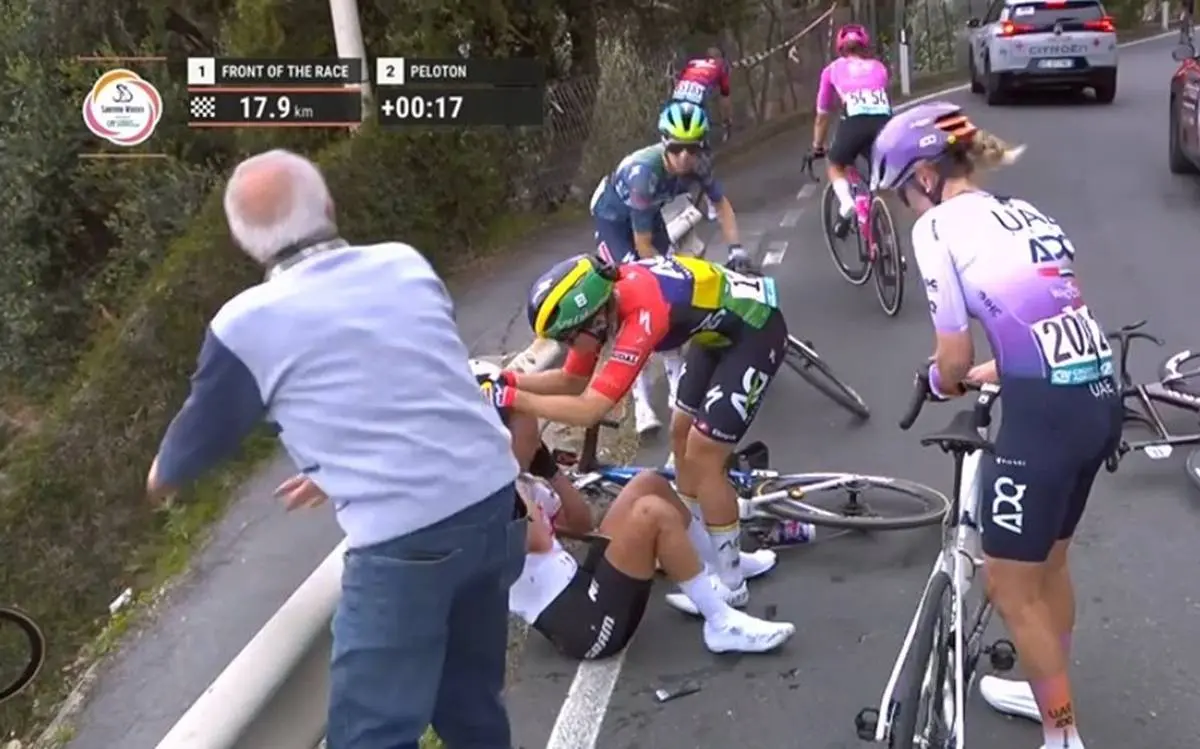
In a left-hand bend on the approach to the Cipressa, none other than Pogačar himself crashed. Wout van Aert was also involved, but whereas the world champion got back on his bike quickly and was brought back up, Van Aert lost time and seemed out of contention. Van der Poel was briefly delayed as well, yet he made it back in time for the foot of the climb. Pogačar was still not there when the Cipressa began, but the UAE train managed to deliver him to the front anyway.
Continue reading below the video
Pogačar attacks despite the damage, but Pidcock and Van der Poel can still follow
With the left side of his body grey from the tarmac, Pogačar still wanted UAE’s original plan to be carried out. Brandon McNulty and Isaac del Toro therefore lifted the pace, after which Pogačar launched his own attack. Only Van der Poel and Tom Pidcock could go with him. On the climb itself, Pogačar chose two more moments to accelerate, but the three of them still reached the summit together.
On the flat section between the Cipressa and the Poggio, Van der Poel could be seen with blood on his left hand and abrasions on his arm, showing he too had not escaped the Pogačar crash unscathed. Yet the Dutchman was still there, together with a very impressive-looking Pidcock and the world champion. Van Aert had not given up hope and was helping to drive the chase with Visma | Lease a Bike at around half a minute.
Continue reading below the video
Pidcock stays with Pogačar all the way to Via Roma
That gap came down further with the help of riders including Lidl-Trek, but there was no fully re-formed peloton by the time the front of the race reached the base of the Poggio. Pogačar attacked again immediately from the foot, and somewhat surprisingly Van der Poel was dropped quickly. The Dutchman seemed troubled by his injured hand, leaving Pidcock as the only rider capable of following. The Brit survived the first three accelerations, just hanging on.
Pidcock managed to stay with Pogačar all the way to the summit, but even on the descent he came under pressure. With 23 seconds over the chasers, a group that by then also included Van der Poel, the two leaders had some room to start thinking tactically. Once they were down at the bottom, Pidcock even took a turn on the front, fully aware that this was a unique opportunity.
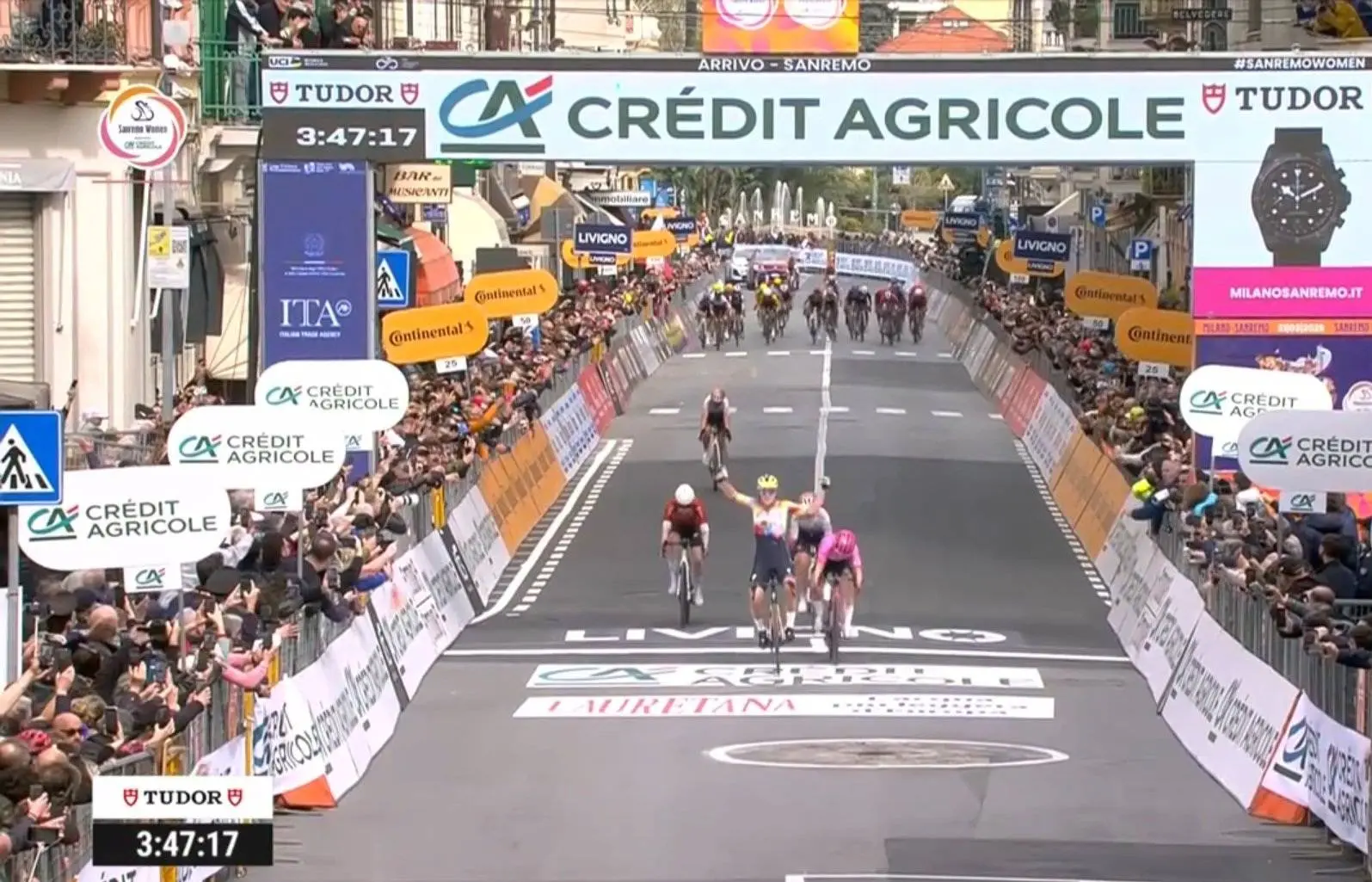
Van Aert then attacked out of the peloton in the final kilometre, but the race for victory was always going to be decided in a two-man sprint. Who would write his name into Sanremo’s history for the first time? Just as Van Aert was almost getting back, Pogačar launched first from the front. Pidcock came alongside, but not far enough: the world champion finally claimed the Monument that had long been missing from his palmarès.
Bram van der PloegEditor-in-chief
Bram van der Ploeg (35) is the proud founder of In de Leiderstrui, IDL Pro Cycling's parent site, launched in 2018. Finally, he could create stories about the sport he had followed since childhood. He is the editor-in-chief on paper, but prefers to be with his recorder next to a rider, a team bus, or in the mud at a cyclocross race. Every year, from February to the end of May, Bram follows the entire Italian cycling season, from the Trofeo Laigueglia to the Giro d'Italia, with the grand finale in October in Lombardy. During that time, he lives in Tuscany, where he has since come to call Italy his 'home'.
IDL-productions
Tadej Pogačar's 2027 schedule is shaping up and it is mega: Tour de France #6, 'Super Worlds', and unfinished business in Spain
An American rider can win the Elite Men’s World Championship road race, but the smart money isn’t on Quinn Simmons!
Demi Vollering take note: Elite debutant Zoe Bäckstedt's previous World Championship results show why she's a contender

Female stars from across cycling disciplines, including Demi Vollering, condemn Sydney Sweeney 'sports' video

2026 GP Montreal preview | Evenepoel and Pidcock face World Championships dress rehearsal
Latest Cycling News
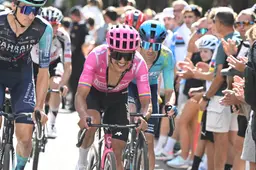
Favourite for the World Cycling Championship road race withdraws: 'I won't take any risks with my career'
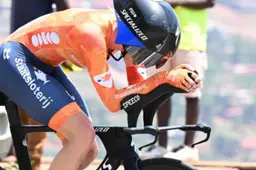
Demi Vollering surprised after World Championship time trial recon in Montreal: ''Sh*t, that didn't go well'
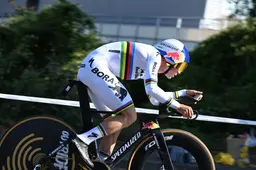
The World Cycling Championships haven't even started yet, but Remco Evenepoel has already thrown his first jab
UCI issues scathing ruling following 'professional misconduct' and imposes a 10-year suspension
Remco Evenepoel makes full use of the short time he is given on the World Championship route: 'Remarkable course'
Popular Cycling News
UCI issues scathing ruling following 'professional misconduct' and imposes a 10-year suspension
Ben Turner's departure from Netcompany INEOS isn't all that surprising once you hear his story: 'The team I looked up to'
Sepp Kuss is a special kind of cyclists, one we’re seeing less and less: 'It's a good formula for me'
Covered in mud and fully geared up: Pidcock is well prepared for a unique World Championship opportunity
Tadej Pogačar's 2027 schedule is shaping up and it is mega: Tour de France #6, 'Super Worlds', and unfinished business in Spain
Latest Comments
- - Gran artículo, pero una duda: ¿por qué solo dos horas de reconocimiento? Eso suena muy corto para un Mundial. Merci!velodromevirtuoso119-09-2026
- - Wait, Rwanda 2025—did he really win last year by over a minute on Jay Vine? I thought the huge margin was two seasons ago. Feels like the article’s mixing editions?jennifer1919-09-2026
- - Fifth in Montréal after the Québec win isn’t a red flag. That parcours is punchier and the cadence demands are different. TT legs should be fine by Sunday. Allez Remco!davidm19-09-2026
- - Ganna’s “2–3 km” power is insane, but this is 39k. Over/under pacing will decide it. If Remco negative splits like Québec, he’s favourite. If it’s blustery, Ganna’s mass might help. Flip a coin.sprocketspiny19-09-2026
- - Remco’s right to be annoyed. Two hours for line choice, wind mapping, road surface, manhole locations, roundabouts, and turnaround pacing is tight. He’s meticulous—racetrack sessions, CdA dialing, the whole lot. Marginal gains win rainbow bands.andrewf19-09-2026
- - How does course reconnaissance actually help in a time trial if it’s mostly flat and straight? Is it just corner lines and wind spots, or are there other things they look for?bikebuffj19-09-2026
- - Minor correction: the Worlds TT is usually on a weekday, not Sunday the 20th? Is that a typo from the organiser or the article? Either way, Montréal flats + long straights scream Ganna vs Evenepoel. Can’t wait.gearguru3319-09-2026
- - Love the confidence from Remco, but two hours recon on a2km TT is a joke. Course knowledge matters at 55 kph. Still, if anyone maximises aero and pacing, it’s him.breakawaybikerd19-09-2026
- - Qué pena por Carapaz, pero la salud primero. Volverá más fuerte. Grande campeón!robert6519-09-2026
- - Slightly harsh take: announcing via “his own channels” isn’t unique to South America, it’s just modern pro sport. That line felt a bit stereotyped, to be honest.davidm19-09-2026
Loading


