Tour de France organisers issue remarkable response to Alpe d'Huez criticism: 'Car has sensors everywhere'
Cycling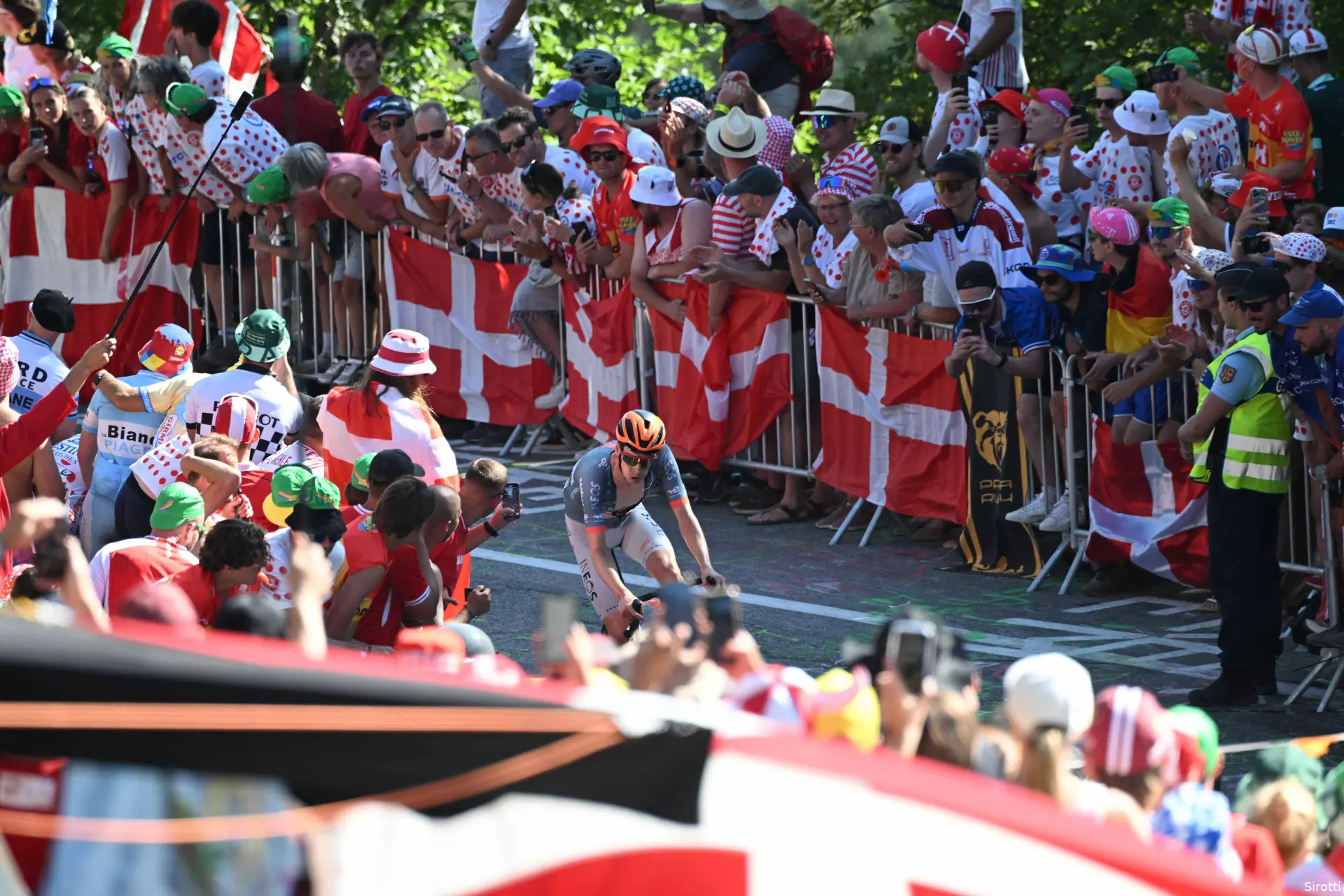
Follow IDL Pro Cycling on Google
Stay up to date with the best cycling news by making us a preferred source on Google.
Follow us on GoogleThe Alpe d'Huez stage of the Tour de France caused quite a stir. There was a frenzied crowd on the “Dutch Mountain,” and Einer Rubio ultimately fell victim to it. There was a lot of criticism directed at the organisers—had they done too little to protect the riders? The organisers have vehemently refuted that criticism.
ADVERTISEMENT
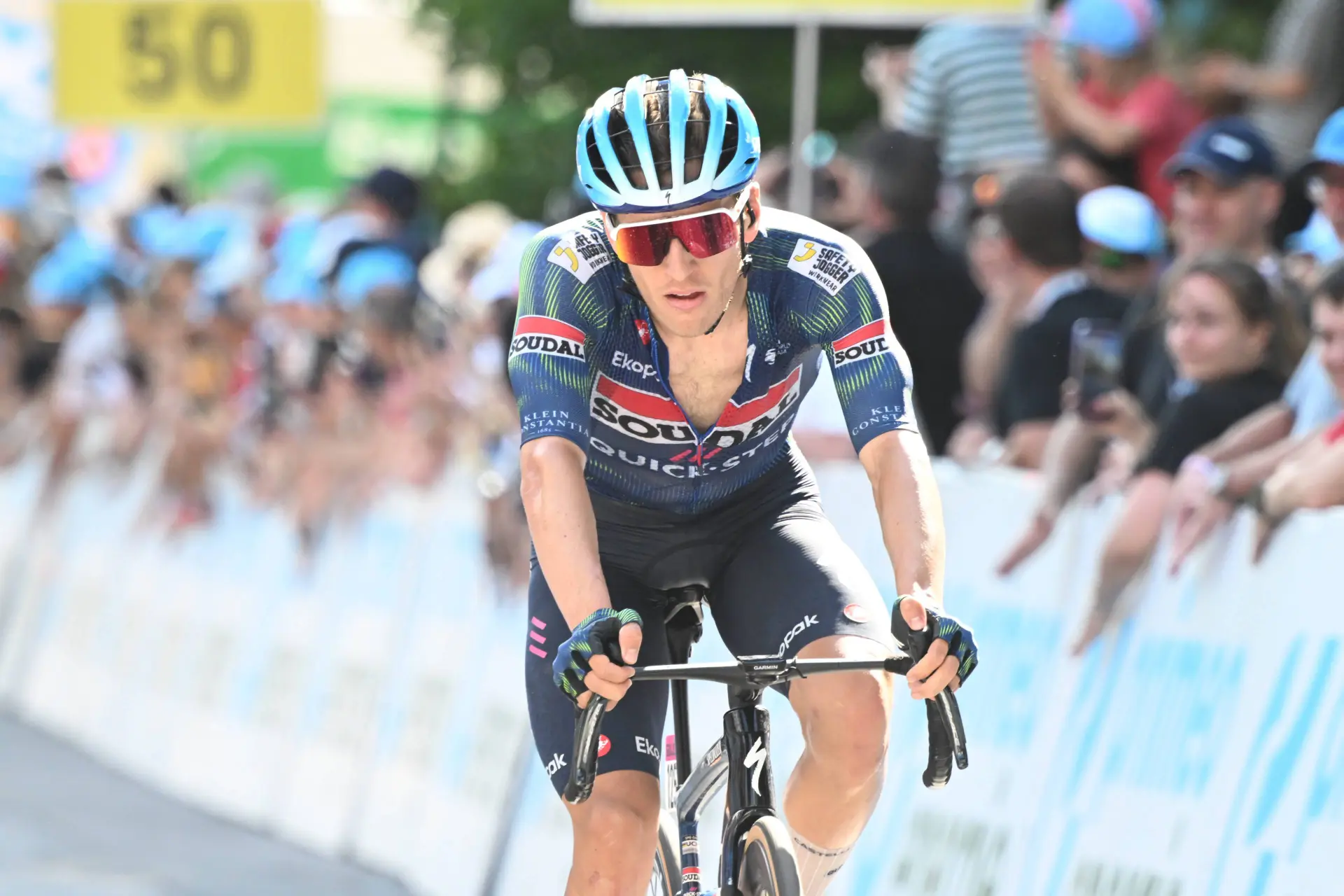
Rubio was part of the breakaway on Friday during Stage 19 of the Tour, but ultimately had to drop back. Just after eventual winner Tadej Pogacar had sped past him, the Colombian ended up right behind the UAE team car. The car suddenly had to slam on the brakes because of a fan who had fallen onto the road. Rubio went through the rear window and had to withdraw from the race, sustaining 20 stitches to his face as a result.
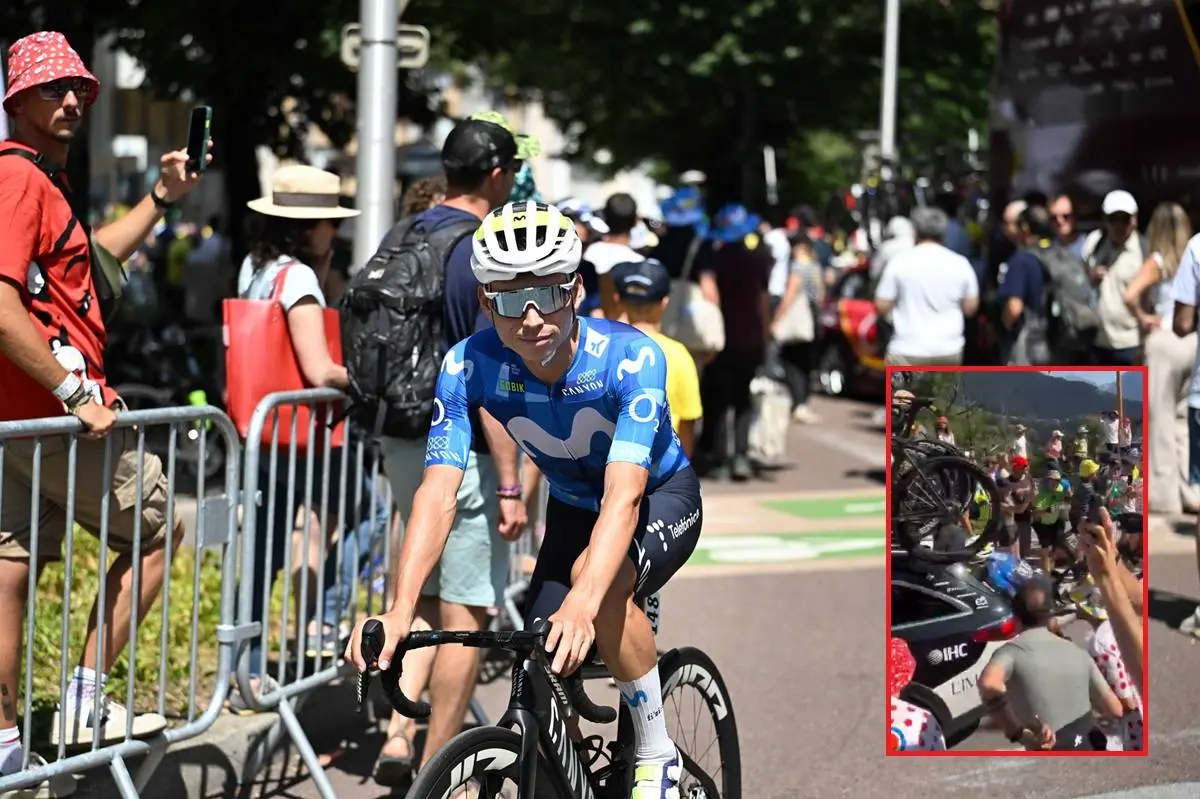
Could that accident have been avoided? “Perhaps all accidents can be prevented at the moment they happen, but it’s clear that these days we also have new cars equipped with sensors everywhere,” counters Thierry Gouvenou, director at the Tour organization and also a course designer, on Sporza. “The car detected a spectator who had fallen in front of it, braked abruptly, and the engine stalled.”
"If we’d had cars that were twenty years older, the accident wouldn’t have happened," goes the argument. The seemingly selective Frenchman doesn’t say a word about what would have happened to the bystander in that case. Still, Gouvenou also said, “It’s always a bit amazing to see how this crowd of people comes together and prepares for this gathering months and months in advance.”
Read more below the photo!

Gouvenou saw the organisation take many measures
He knows full well that Alpe d'Huez is legendary. “And it’s true that there were an enormous number of people there yesterday. So that still causes us some concern,” Gouvenou does admit. There’s always a “but”... “I do want to say that the vast majority are behaving reasonably well: we’re seeing fewer spectators walking alongside the riders, but there’s still a small percentage of spectators who are doing all sorts of things and kind of ruining the party.”
The organization did, in fact, take measures. “We closed Alpe d’Huez at 2 p.m. the day before to prevent any more cars from driving up. Compared to previous years, a huge number of additional barriers were put in place. Ropes were strung up and posts were installed. More police officers were deployed along the climb.”
Still, the Frenchman notes that this year there was simply “an incredibly large crowd.” Finding solutions is difficult in that case. “You could also ban spectators. We could put up fences, but will the fans stay behind them? I remember the last time in the Basque Country when we put up fences on the final climb, and the fans just climbed right over them.”
Read also
Read more below the photo!

Gouvenou: admission fee 'doesn't fit with the spirit of the Tour'
According to Gouvenou, it’s not that simple after all. “It really comes down to the fans’ attitude. The solution is to make it as clear as possible to the fans that they must respect the riders. Restrictive measures alone won’t be enough.”
Thijs Zonneveld, among others, suggested simply charging an admission fee. Gouvenou doesn't think that's a good idea. "That doesn't fit with the spirit of the Tour. It's a free sport for spectators. That's precisely the great strength of cycling. That's not the path we should take."
Read also

David Bavin-HobbsChief Editor
David has been working in the sports & cycling industry for 16 years. Covering racing, business and technology, he has worked in communications for cycling companies, teams, and as a journalist. His proudest achievement is winning the first bike race he ever entered. He hasn't won a race since.
IDL-productions
Team GB dominate, China on the rise, Lavreysen the best ever? Five takeaways from the 2026 Track World Championships
Track World Championships day 2: A golden day for Team GB, Levreysen goes 2 for 2, and Kopecky eliminates the competition
Rumours, speculation and guesswork: 2027 Tour de France route will be revealed live on October 22 in Paris
Vollering adds the Women’s European Championships road race jersey to her rainbow wardrobe
16-day Grand Tours, AI, VAR, drones and more: The UCI's new document has a potentially major impact from 2029 onwards
Latest Cycling News
Dutch champion Alvarado claims first cyclocross win of 2026 in Heerde in Brand's absence
Team USA's Ashlin Barry recalls becoming World Champion: 'One of the first texts was from Wout'
Tour de France boss Prudhomme compares Pogačar to 1969 Merckx after Vuelta crash: 'Are you still the same person?'
Lance Armstrong has a warning about the 2027 Tour de France route: 'Won’t make it across the English Channel'
2026 Superprestige Overijse 2026 Preview | Favourites, route and start times
Popular Cycling News
Tadej Pogačar to skip Paris-Roubaix in 2027: 'The easier it becomes to stay away from racing'
Lance Armstrong has a warning about the 2027 Tour de France route: 'Won’t make it across the English Channel'
2027 Tour de France men's and women's routes: Everything you need to know about the UK Grand Départ
The 2027 Tour de France route is out; here's where Pogačar could win or lose his record sixth title
Picnic PostNL's WorldTour uncertainty has five rival teams, and Tom Pidcock, watching the UCI closely
Latest Comments
- More time trials sounds good, but could Remco actually win the whole race? I thought the Tour was mostly about climbing.gearguru3323-10-2026
- If Pogačar crashed badly, does that mean he might not be fully fit for the Tour?julien23-10-2026
- Edinburgh for the Grand Départ is brilliant news. The crowds in Yorkshire were incredible, and Scotland could be just as special.pedalpowe2923-10-2026
- Froome’s point about the mountains is spot on: the extra TT distance gives the other GC contenders a real reason to race aggressively before the final climbs.tourdeforce923-10-2026
- 71km of time trialling should make things much more interesting. Remco will fancy his chances, but you can never write Pogačar off.lindae23-10-2026
- I’m still figuring out how time trials affect the overall race. If Evenepoel gains time there, will Pogačar have enough mountain stages left to make it back? The route sounds exciting, but I’m not sure how much difference 71km makes.davidm22-10-2026
- Two 223km stages in the opening week could make for a proper nervous start. Those narrow British roads and potholes might have the GC favourites watching every corner.jennifer1922-10-2026
- That Pau–Portet stage sounds absolutely savage: Tourmalet, Soulor, Hourquette d’Ancizan and then the Portet. Vingegaard should suit those long climbs, though Pogačar is hardly easy to shake.julien22-10-2026
- Seventy-one kilometres against the clock gives Evenepoel a real chance to put pressure on Pogačar, but those Pyrenean stages look brutal. Could be a cracking final week if the time gaps stay close.sprocketspiny22-10-2026
- Not sure we can call this a perfect Evenepoel route before we’ve seen the start list. Plenty of time-trialling, yes, but those Pyrenees stages look absolutely savage. Could be a great Tour, though.julien22-10-2026
Loading