2026 European Cycling Championships Elite Men Preview | No Pogačar in Slovenia, but plenty of favourites with a point to prove
CyclingWednesday, 30 September 2026 at 11:56
Follow IDL Pro Cycling on Google
Stay up to date with the best cycling news by making us a preferred source on Google.
Follow us on GoogleThe World Cycling Championships in Montreal are barely behind us, but the next battle for a champion’s jersey is already on the horizon. This Sunday in Slovenia, it’s time for the elite men’s road race at the European Cycling Championships. With Tadej Pogačar absent from his home turf, the path is wide open for others—just as it was in the Vuelta a España and at the World Championships.
ADVERTISEMENT
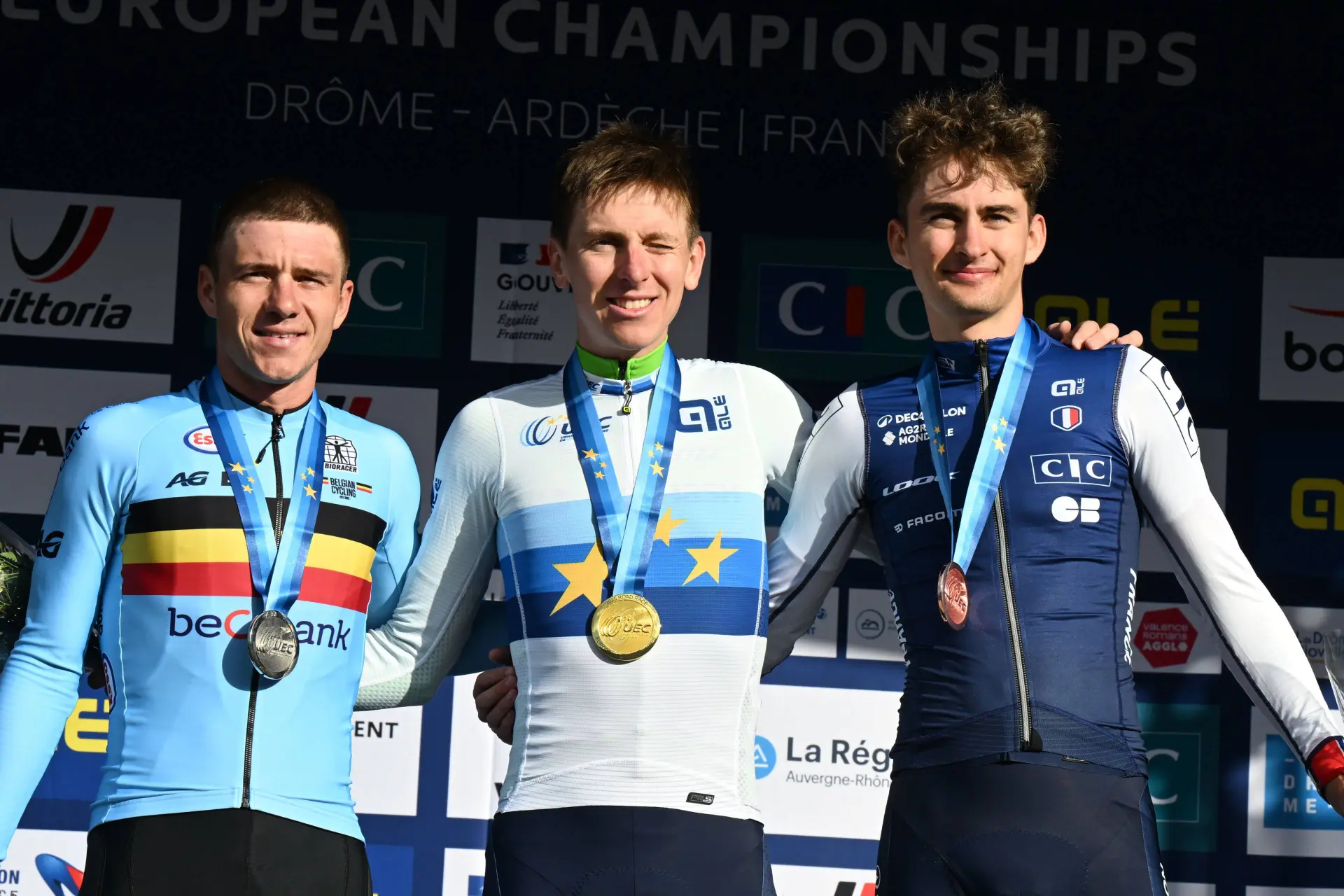
The European Championship for elite men has only existed since 2016, but in those ten editions it has already produced an impressive list of champions. In fact, no one has ever managed to win the title a second time. Peter Sagan was the first winner in 2016, followed by Alexander Kristoff, Matteo Trentin, Elia Viviani, Fabio Jakobsen, and Christophe Laporte, among others.
Last year, Tadej Pogačar rounded out the list. The Slovenian was set to defend his title in 2026—in his home country, no less—but his serious crash in the Vuelta a España put an end to those plans. Despite rumors of a miraculously quick return, UAE Team Emirates-XRG reiterated this week that Pogacar will not race again this season.
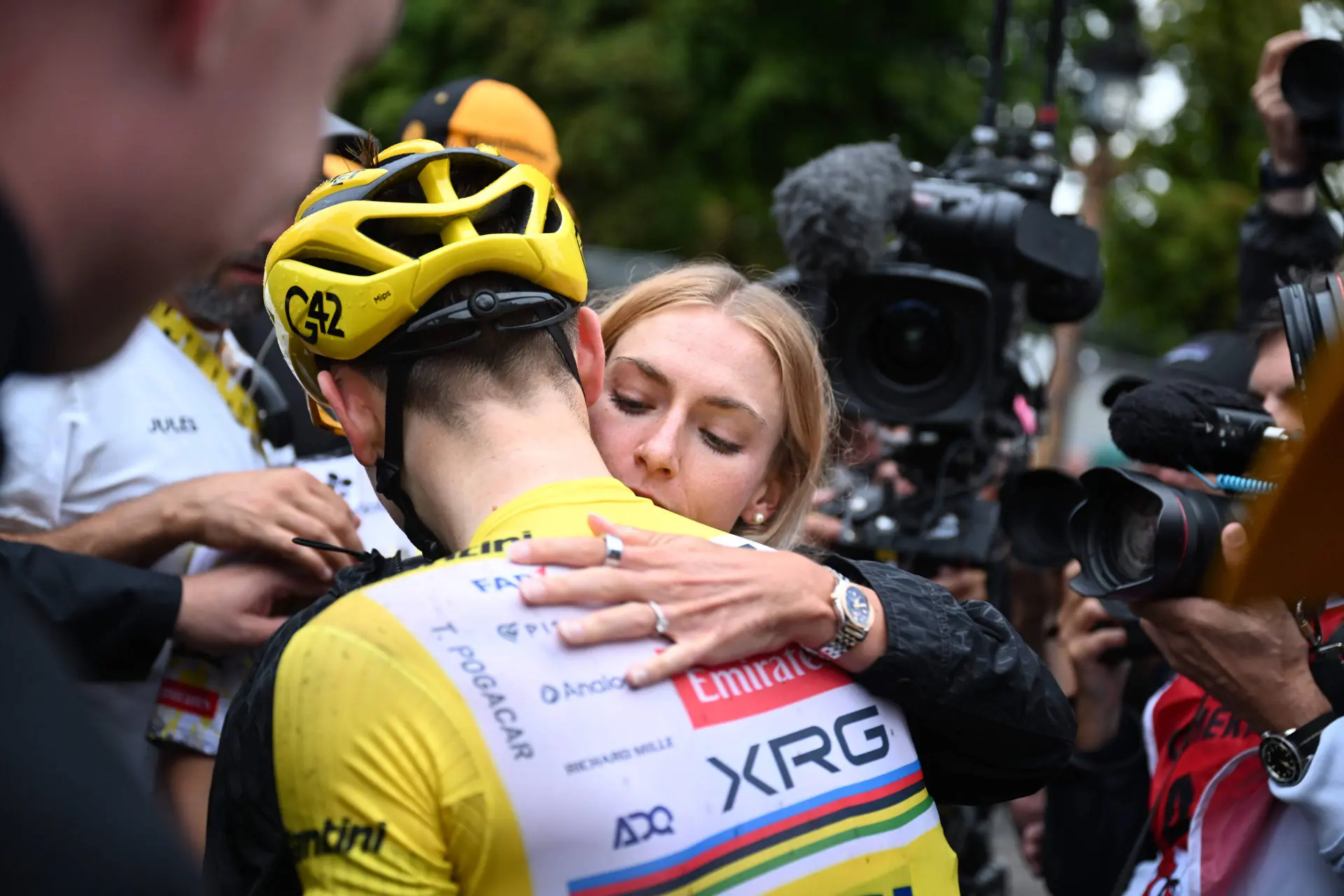
Recent Winners of the Men's European Cycling Championships
2025 Tadej Pogacar
2024 Tim Merlier
2023 Christophe Laporte
2022 Fabio Jakobsen
2021 Sonny Colbrelli
2020 Giacomo Nizzolo
2019 Elia Viviani
2018 Matteo Trentin
2017 Alexander Kristoff
2016 Peter Sagan
2024 Tim Merlier
2023 Christophe Laporte
2022 Fabio Jakobsen
2021 Sonny Colbrelli
2020 Giacomo Nizzolo
2019 Elia Viviani
2018 Matteo Trentin
2017 Alexander Kristoff
2016 Peter Sagan
2026 Men's European Cycling Championships: route, weather, and times
Anyone looking only at the 196.3 kilometers and 2,571 meters of elevation gain might think that the organizers have mapped out a fairly standard hilly race. That impression changes when we take a closer look at the profile. The first 85.8 kilometers are mostly flat, after which virtually all the serious climbing is crammed into five local loops around Šenčur.
The race starts at Kongresni trg in the heart of Ljubljana. After nine neutralized kilometers, kilometer zero is reached in Šentvid, and the peloton heads toward Šenčur, passing through Škofja Loka, Kranj, Kamnik, and Komenda, among other towns. That’s where the finish line is crossed for the first time, and the real finale can begin. That local loop is 22.1 kilometers long and features 367 meters of elevation gain on each lap.
The biggest challenge is called Možjanca. According to the organizers, it’s about 2.1 kilometers at a 10.2 percent grade, with sections as steep as 15.8 percent. Five such climbs are a whole different story compared to the relatively gentle first part of the race. And once they reach the top, the riders aren’t done yet. After Možjanca, the road continues along a narrow, undulating stretch, followed by a technical descent toward the base of Krvavec.

The route then races through the valley at breakneck speed, with a few more flat kilometers remaining toward Šenčur. The summit of Možjanca is located about 14 kilometers from the finish line on the final lap. That’s what makes it interesting: a pure climber can break away on the steep sections, but must then hold on alone or with a small group.
So it’s not a course where you simply climb five times and the strongest climber automatically wins. A rider with both power and endurance might actually benefit even more here. Anyone who just manages to survive on Možjanca will then have time to recover. But anyone who’s pushed to the limit five times on a climb with a gradient of over 10 percent could very well break for good in the final lap.

Weather report
There is still some uncertainty about the weather a few days before the race. Local weather stations are currently forecasting temperatures of around 19 degrees for Šenčur, with mostly cloudy skies, light winds, and little to no precipitation. Other sites, however, indicate a significantly higher chance of a few showers. One thing that seems fairly consistent, though, is that strong winds do not appear to be a major factor on Sunday.
Important times
Start: 11:49 a.m GMT / 6:49 a.m ET
Finish: Around 4:10 p.m GMT / 11:10 a.m ET (if the fastest time is achieved)
Favourites for the 2026 Men's European Cycling Championships
The official starting lists haven't been released yet: this is based on the information currently available.
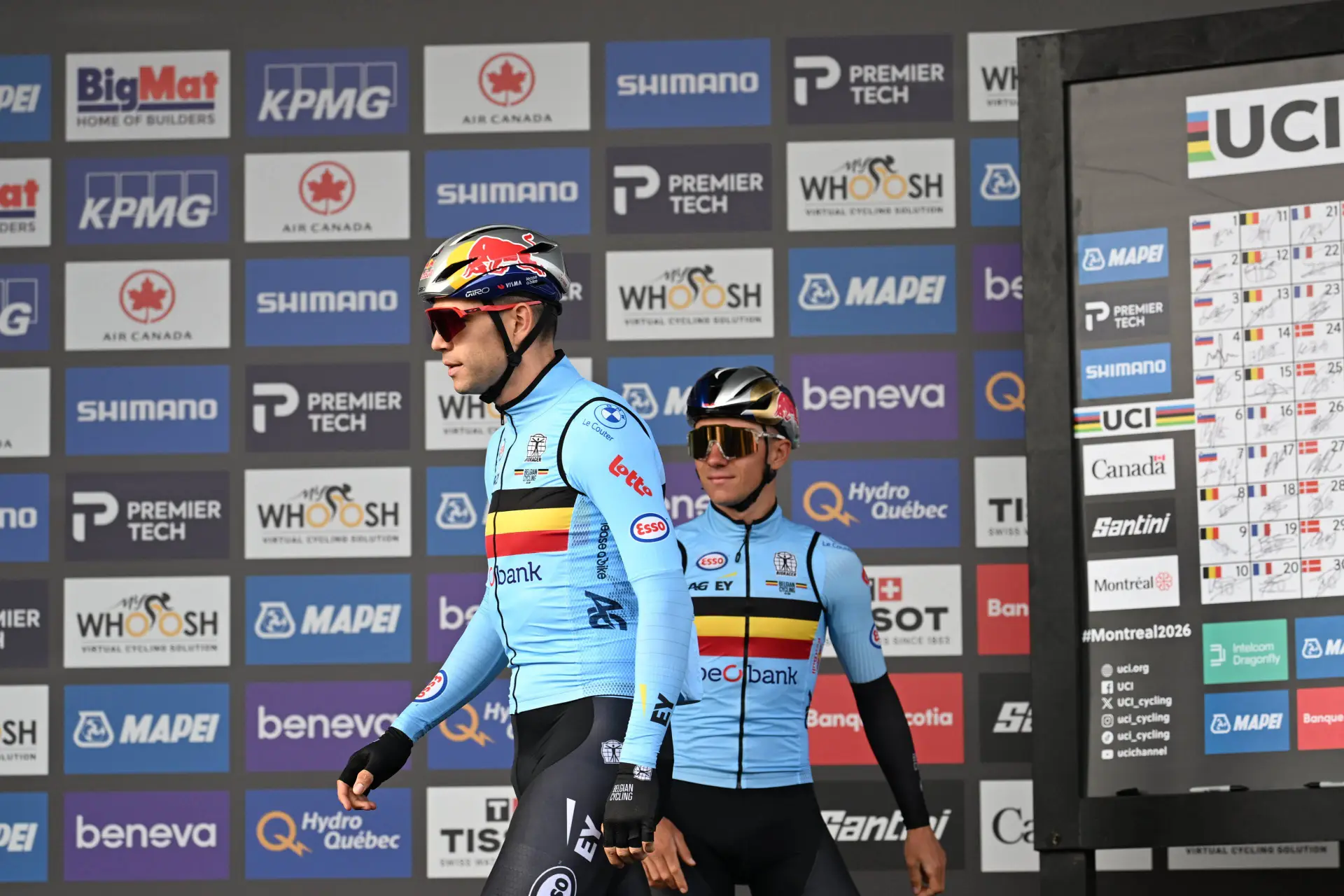
The first country everyone will be watching is Belgium. Remco Evenepoel once again became world time trial champion in Montreal, but had a much tougher day in the road race. However, he never gave up, and after a week of recovery, we have high expectations for the Belgian team leader. The Možjanca is an Evenepoel climb, and it’s especially around that section that the “Aerokogel of Schepdaal” can make a difference.
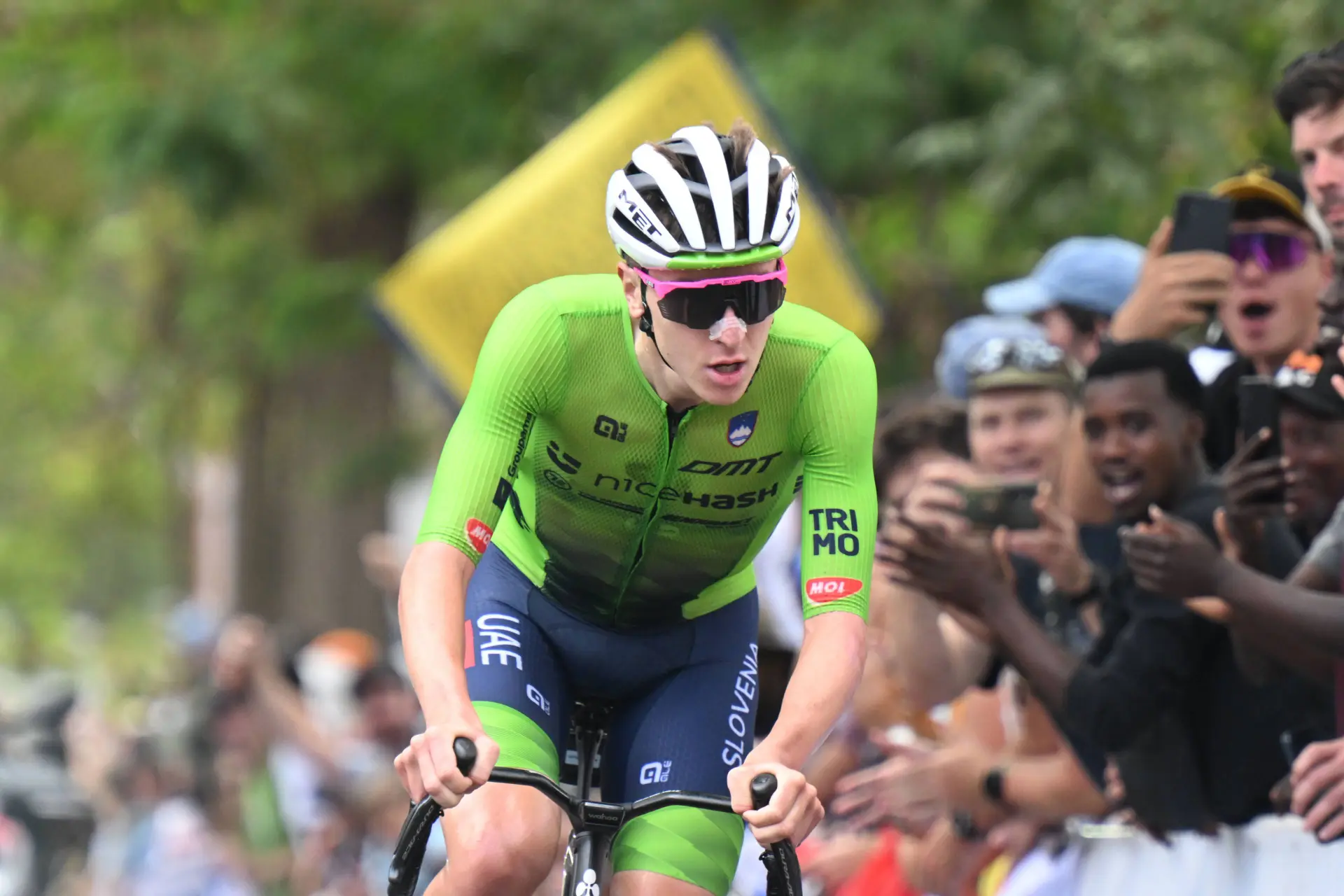
His home country of Slovenia had been counting on Pogacar, but is now switching to Plan B— Primož Roglič—and perhaps even Plan C— Jakob Omrzel. Roglic rode aggressively at the World Championships and is generally in good form, but Omrzel skipped the World Championships, is still fresh, and showed in the Vuelta a España—with a stage win and a seventh-place finish in the general classification—that he is a dangerous dark horse. Matej Mohoric is also a Slovenian option.
In the search for climbers who can make a difference and sprinters who might be able to survive, there are more interesting lineups. The Czech Republic is fielding Mathias Vacek as a true sprinter, while Italy, with Giulio Ciccone, Giulio Pellizzari, and Christian Scaroni, is banking on a tougher climb-heavy course. The Netherlands, too, with Wout Poels and Tijmen Graat , stands to benefit from a grueling race.
Read more below the photo

Giulio Ciccone
As a result, the race is expected to feature a fast pace and grueling wattage on the climbs, which will play to the strengths of riders like Juan Ayuso (Spain), Jan Christen (Switzerland), and Felix Großschartner (Austria). France is also fielding a climbing team featuring Romain Grégoire, Kévin Vauquelin, and Mathys Rondel. Germany has Marco Brenner on the team.
Still, there are also plenty of riders who, while not among the absolute world elite when it comes to climbing, have proven time and again that they can handle a course like this. In addition to Vacek and Mohoric, we can mention names such as Diego Ulissi ( Italy), Iván Roméo (Spain), Mads Pedersen (Denmark), Léo Bisiaux ( France), Antonio Morgado (Portugal), and Toms Skujins ( Latvia).
Top Favorite: Remco Evenepoel (Belgium)
Dark horses: Giulio Ciccone (Italy), Mathias Vacek (Czech Republic), Mads Pedersen (Denmark), and Romain Grégoire (France)
Long shots: Kévin Vauquelin, Léo Bisiaux, Mathys Rondel (France), Primoz Roglic, Jakob Omrzel, Matej Mohoric (Slovenia), Juan Ayuso, Iván Roméo (Spain), Christian Scaroni, Giulio Pellizzari, Diego Ulissi (Italy), Marc Hirschi, Jan Christen (Switzerland), Wout Poels, Tijmen Graat (Netherlands), Toms Skujins (Latvia), Antonio Morgado (Portugal), Marco Brenner (Germany), and Felix Großschartner (Austria)
Dark horses: Giulio Ciccone (Italy), Mathias Vacek (Czech Republic), Mads Pedersen (Denmark), and Romain Grégoire (France)
Long shots: Kévin Vauquelin, Léo Bisiaux, Mathys Rondel (France), Primoz Roglic, Jakob Omrzel, Matej Mohoric (Slovenia), Juan Ayuso, Iván Roméo (Spain), Christian Scaroni, Giulio Pellizzari, Diego Ulissi (Italy), Marc Hirschi, Jan Christen (Switzerland), Wout Poels, Tijmen Graat (Netherlands), Toms Skujins (Latvia), Antonio Morgado (Portugal), Marco Brenner (Germany), and Felix Großschartner (Austria)
How to watch the 2026 Men's European Cycling Championships on TV
| Country/region | Streaming Service |
| United Kingdom | TNT Sports |
| Europe | Eurosport / HBO Max |
| North America | FloBikes |
| Australia | Stan Sports |
Read also
David Bavin-HobbsChief Editor
David has been working in the sports & cycling industry for 16 years. Covering racing, business and technology, he has worked in communications for cycling companies, teams, and as a journalist. His proudest achievement is winning the first bike race he ever entered. He hasn't won a race since.
IDL-productions
Quinn Simmons' Strava shows exactly what it takes to compete at the World Championships: ‘I said, Hey guys, anything is possible'
Despite losing the World Championships, Del Toro and Seixas rank high mentally and physically on the Pogačar scale
Van der Poel loves it, but a lack of race radios gave McNulty and USA the chaos it needed to slip away
Pogačar hails the 'King of Montréal', but McNulty already has a plan for 2027: 'Maybe Tadej will have to ride for me'
An American rider can win the Elite Men’s World Championship road race, but the smart money isn’t on Quinn Simmons!
Latest Cycling News
2026 European Cycling Championships Schedule and Results | 14 European jerseys up for grabs in 5 days
Matthews joins the Pidcock Del Toro row after World Championships: 'If fewer teams had ridden together across national borders...'
Oscar Onley on his day in the break with Van der Poel, Van Aert & Simmons: "I still have to figure that out"
Pidcock accuses Del Toro of helping UAE teammate McNulty to the rainbow jersey: 'Obviously working for McNulty in the end'
Isaac del Toro hits back at Pidcock's criticism: 'All the other teams remained passive'
Popular Cycling News
Matthews joins the Pidcock Del Toro row after World Championships: 'If fewer teams had ridden together across national borders...'
Pidcock accuses Del Toro of helping UAE teammate McNulty to the rainbow jersey: 'Obviously working for McNulty in the end'
Isaac del Toro hits back at Pidcock's criticism: 'All the other teams remained passive'
Pogačar hails the 'King of Montréal', but McNulty already has a plan for 2027: 'Maybe Tadej will have to ride for me'
Quinn Simmons' Strava shows exactly what it takes to compete at the World Championships: ‘I said, Hey guys, anything is possible'
Latest Comments
- - Vamos Pog! Si el médico dice OK y él quiere, déjenlo correr. Forza Tadej!robert6529-09-2026
- - Pog has pushed his luck after injuries before and still smashed it, but this time feels risky. Off-season form + travel + pressure at home… could backfire. Better to save the legs for January and the classics.patriciaw29-09-2026
- - Can someone explain how the reserve list actually works for Euros? If he’s listed as a reserve, can Slovenia swap him in last minute without UCI penalties or does UAE have final say?raceready729-09-2026
- - Not sure I buy Gianetti’s line completely. “Too early” after a clean medical? Sounds more like calendar politics and protecting him for TDU and the spring. Let the guy race one day in front of his own fans.cadencekingm29-09-2026
- - Great read. If Dr Mir says he’s cleared and the champ feels good, why not let him roll the dice in Ljubljana? Home roads, massive motivation. Could be a statement win before 2026 ramps up.gearguru3329-09-2026
- - Grande análisis pero una duda: por qué dicen que “nadie del Vuelta en top 13” si Ayuso fue 13º? ¿Cuenta o no? Also, was Carapaz really ill or just saving bullets for Euros?patriciaw29-09-2026
- - The podcast nailed it: Vuelta fries you, especially crossing continents. Still, Wout cracking when it mattered was a surprise. He’d looked invincible—maybe over-raced? Organisers shifting Worlds back to August makes sense to me.tourdeforce929-09-2026
- - Valverde’s comments were telling. If Mas truly hadn’t recovered, why name him co-leader? Spain’s tactic looked muddled once Enric climbed off 105 km out. Poor support for Ayuso once it split, no?cadencekingm29-09-2026
- - Wait, I’m confused—if Van der Poel flew in last minute, how did he still get in that move with Roglic? Isn’t jet lag supposed to ruin your legs? Does he just handle travel better than others?raceready729-09-2026
- - Fascinating how the Montreal course + jet lag flipped the script. You could see the North America-acclimated guys had snap, while the Vuelta legs looked cooked. Ayuso hanging on for 13th felt like a minor win given how “empty” he said he was.pedalpowe2929-09-2026
Loading