2026 Tour de France stage 2 favourites | Pogačar out for revenge on this punchy stage to Barcelona
Cycling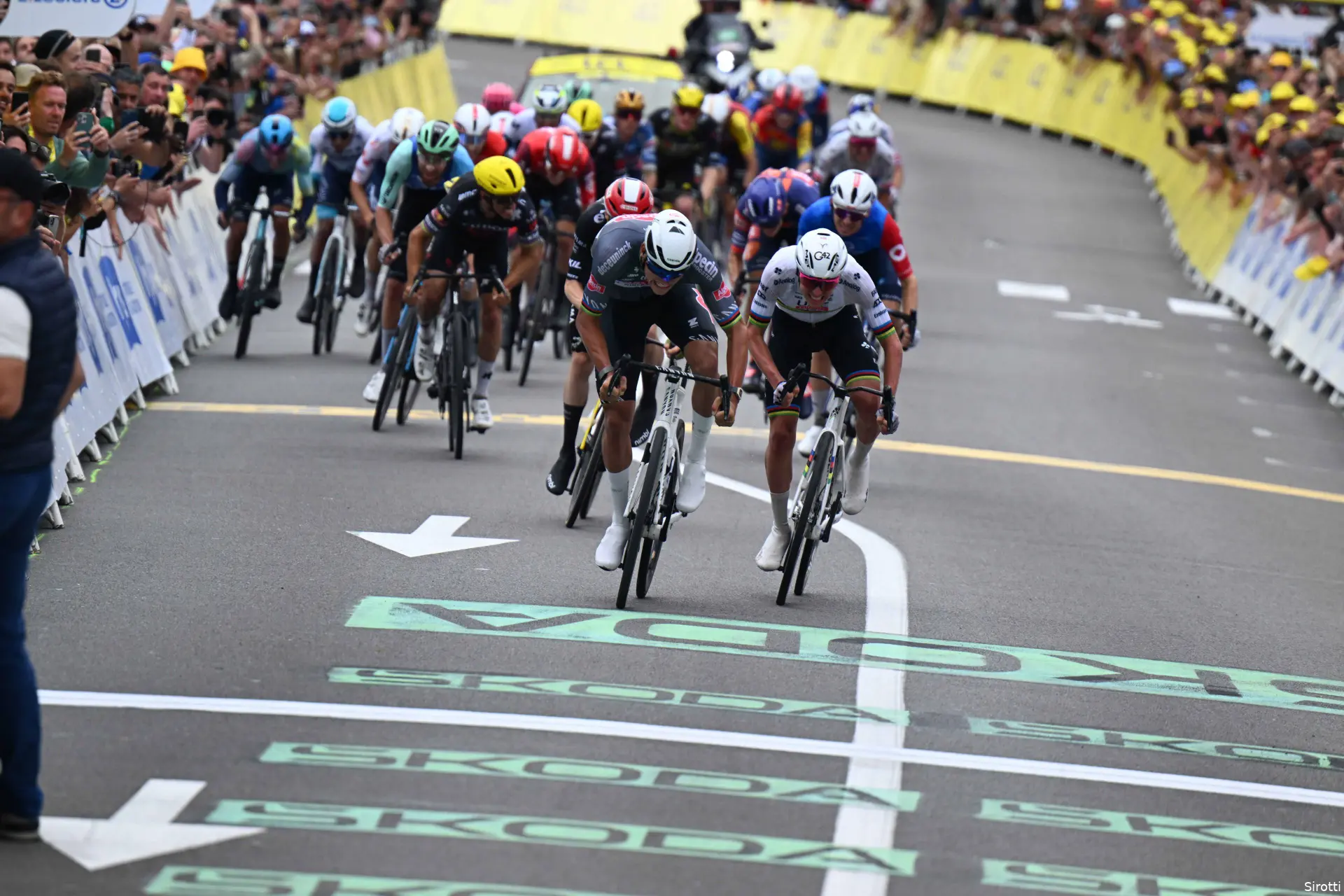
Follow IDL Pro Cycling on Google
Stay up to date with the best cycling news by making us a preferred source on Google.
Follow us on GooglelllBarcelona and the Tour de France, Part 2! After Saturday’s spectacular opener—the team time trial—Sunday brings a road stage finishing at Montjuïc. In the final stretch, the riders will complete three laps through the Catalan city before finishing at the Olympic Stadium. IDL Pro Cycling breaks down a very interesting stage.
ADVERTISEMENT
2026 Tour de France stage 2 route

We’ll start in Tarragona, which is about an hour south of Barcelona. From there, we’ll follow the Costa Brava for about 75 kilometers, during which a breakaway group will likely be given a free pass by the peloton. There could still be some competition for that, as the first mountain jersey will be awarded after about 94 kilometers of riding in this stage, which is 168.5 kilometers long in total and features 2,500 meters of climbing—all in the second half.
Near Castelldefels, after 71.5 kilometers of racing and a spot where many teams have been based over the past few days, we head inland. This is a key point for the sprinter teams, as the first intermediate sprint is scheduled 15 kilometers further on. In Viladecans, we’ll already get a preview of who’s set their sights on the green jersey.
This stretch isn’t just part of the intermediate sprint, but also marks the start of the Tour de France’s first serious climb: the Côte de Begues is 6.1 kilometers long and has an average gradient of 6.5 percent. The major teams will want to be somewhat near the front here, especially since the route remains on a sort of plateau for the next fifteen kilometers.
Next, we’ll descend from El Pla de Pelag to sea level, where the drag race will gradually begin. Within twelve kilometers, we’ll already be at the circuit in Barcelona, where the race will ultimately reach its climax. That circuit is twelve kilometers long and will have to be completed two and a half times.
Read more below the photo!

As soon as we enter the circuit, the key challenge awaits us fairly quickly: the climb up Montjuïc, via a significantly steeper side than we’re used to seeing, for example, in the final stage of the Tour of Catalonia. With a 1.6-kilometer climb at a 9.3 percent gradient—which doesn’t drop below 10 percent in the final few hundred meters—it’s more like Mur de Huy. And that’s where Newton’s laws come into play, as someone like Van der Poel carries about 10 kilograms more than many of his opponents.
After a short descent of just over a kilometer, the final climb to the finish line at the Olympic Stadium follows: 700 meters at a 7 percent gradient. So there’s little time to recover. Even in the remainder of the circuit, which features a few technical sections, the course continues to undulate slightly, so there are few real moments of respite in Barcelona.
Read more below the photos!
This sets the stage for chaos, because the stakes are high at this stage of the Tour de France, which means that all teams and riders want to be at the front. In addition to the tougher climb, this makes it a completely different challenge than the classic Montjuïc circuit we know from the Tour of Catalonia, where the order of the peloton is usually already set. Let’s at least hope for a great race, without any crashes!
Times
Start: 1:55 p.m CET
Finish: approximately 5:35 p.m CET
Start: 1:55 p.m CET
Finish: approximately 5:35 p.m CET
2026 Tour de France stage 2 weather
It has been quite warm in Barcelona all week, and that won't change as we head into Sunday. The temperature will reach 32 to 33 degrees Celsius, but it will feel a bit warmer in the city. There will be a light southerly breeze, but it is unlikely to have much of an effect.
2026 Tour de France stage 2 favourites
2,500 meters of elevation gain over 80 kilometers—that’s really something. Add to that the fact that we’re in the second stage of the world’s biggest cycling race and riding on a city circuit, and you’ve got a tricky ride on your hands. One of those where you probably can’t win the Tour de France here, but you sure can lose it.
Head-to-head, this is the first clash between the top contenders of this Tour de France, and there’s usually one rider who stands out on this type of course: Tadej Pogacar of UAE Emirates-XRG. The Slovenian reigns supreme in races like Liège–Bastogne–Liège and Strade Bianche, where we’ll see similar gradients on Sunday. Will he deliver his first blow here?
The riders who dare to try to keep up with Pogacar at all can be counted on one hand. In the races mentioned earlier, Paul Seixas (Decathlon CMA CGM) was the rider who came closest to staying with Pogacar all the way to the finish, but ultimately had to give up. Will he give France some extra hope on Sunday as they head into their home stretch, just one day later?
Tom Pidcock ( Pinarello-Q36.5) will also feel right at home on this technical city circuit, where explosive power is a key asset. For Mathieu van der Poel (Alpecin-Premier Tech), it’s going to be a close call—maybe even a stretch—but if there’s one person in his weight class who can rise above himself...
Read more below the photo!

Pogacar and Pidcock at Milan-Sanremo.
Red Bull-BORA-hansgrohe theoretically has several contenders in Remco Evenepoel, Maxim Van Gils, and Florian Lipowitz, but it will still mainly come down to that first one. Incidentally, Pogacar’s UAE Team is in the same position, but with Del Toro as the number two on the roster. Generally speaking, the Mexican does have a bit more trouble with the truly explosive work.
This Tour de France is brimming with talent, which means we haven’t even mentioned riders like Mauro Schmid (Jayco AlUla, second in the Flèche Wallonne), Romain Grégoire (Groupama-FDJ, French champion and fourth in Strade and Amstel), Mattias Skjelmose (Lidl-Trek, second in the Gold Race), and Juan Ayuso (Skjelmose’s teammate, one of the dark horses for the overall victory) haven’t even been mentioned yet.
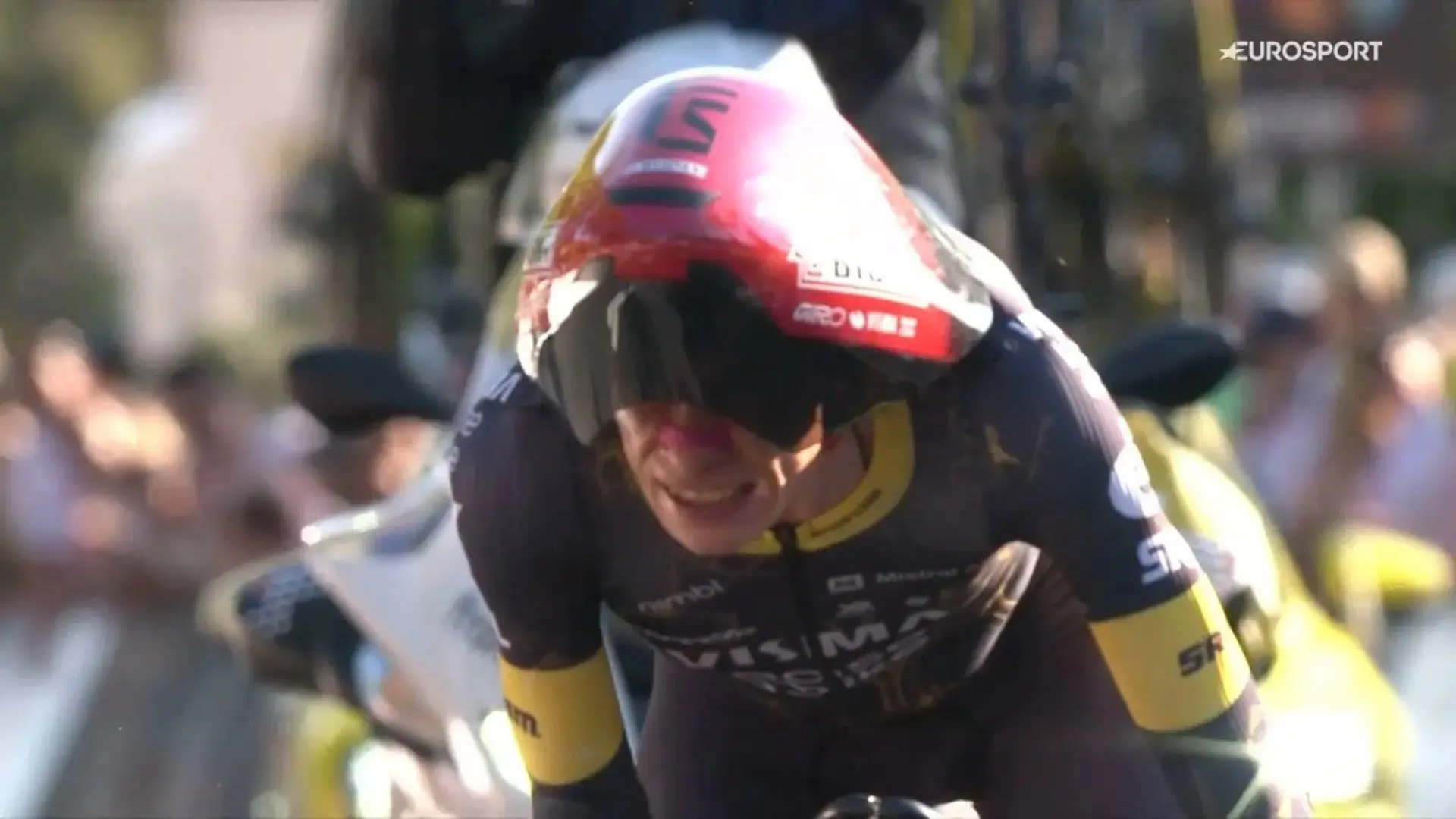
The same goes for Jonas Vingegaard of Visma | Lease a Bike. The Dane may not find his ideal course here, but he proved last season in the Tour that he can certainly hold his own. The same goes for Matteo Jorgenson, who is usually a force to be reckoned with on the steeper climbs and has good positioning skills.
Read more below the photo!
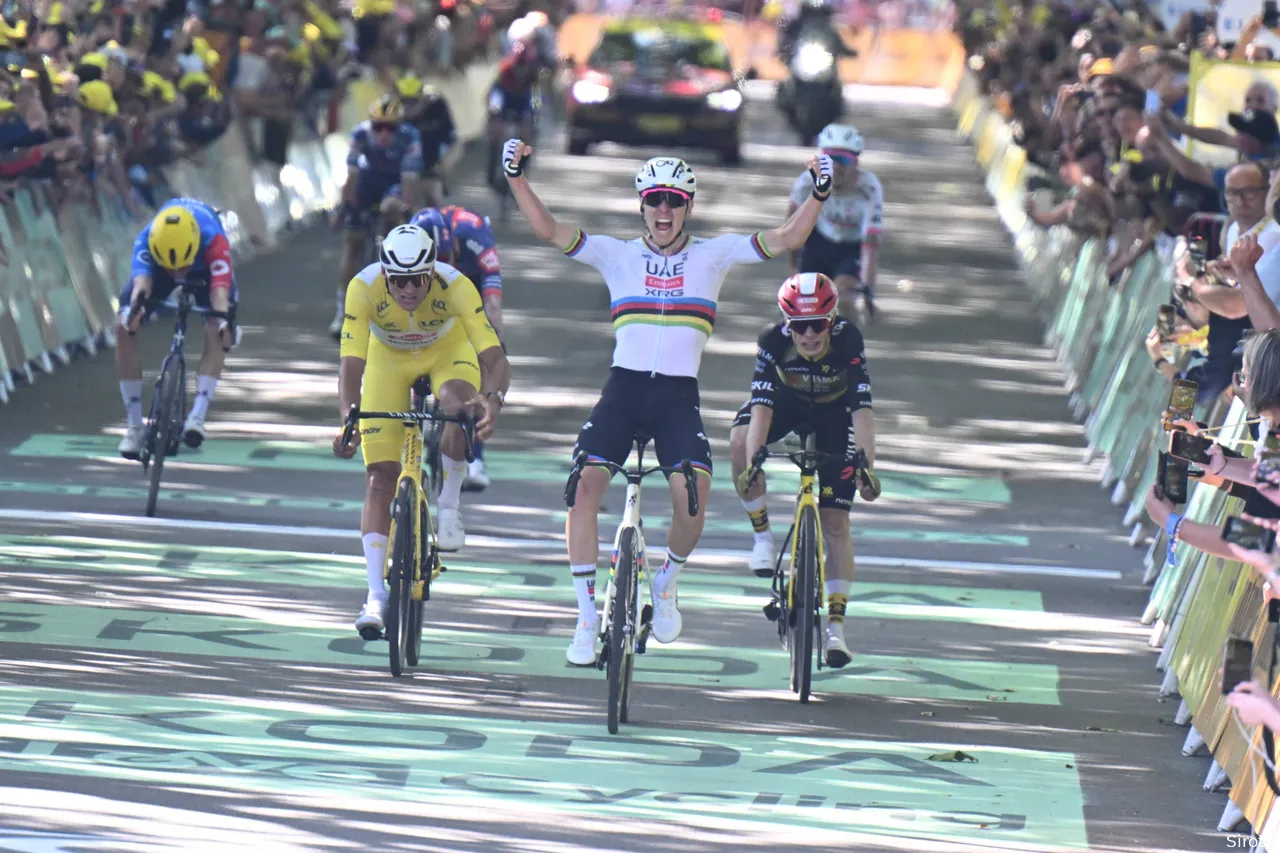
Last year, too, we saw some explosive stages in the Tour.
Outsiders among outsiders? They exist, too. And we need to mention them as well. Remember the grueling Tour opening weekends in 2023 in Bilbao and 2024 in Italy, where we ultimately saw Adam Yates, Victor Lafay, Romain Bardet, and Kévin Vauquelin emerge as surprise winners. Couldn’t something like that happen in 2026?
Vauquelin is back—this time riding for Netcompany INEOS—along with Richard Carapaz, Alex Baudin (EF Education-EasyPost), Lenny Martinez (Bahrain Victorious), Mathias Vacek (Lidl-Trek), Tobias Foss (Netcompany INEOS), Harold Tejada (XDS-Astana), Tobias Halland Johannessen (Uno-X), Michael Matthews (Jayco AlUla), Lennert Van Eetvelt (Lotto-Intermarché), Alex Aranburu (Cofidis), and the list goes on in this Tour brimming with talent...
IDL Pro Cycling top picks for Stage 2 of the 2026 Tour de France
Top Favorites: Tadej Pogacar (UAE Emirates-XRG) and Paul Seixas (Decathlon CMA CGM)
Dark horses: Isaac del Toro (UAE Emirates-XRG), Tom Pidcock (Pinarello-Q36.5), Jonas Vingegaard (Visma | Lease a Bike), and Remco Evenepoel (Red Bull-BORA-hansgrohe)
Long shots: Mathieu van der Poel (Alpecin-Premier Tech), Mauro Schmid (Jayco AlUla), Romain Grégoire (Groupama-FDJ), Florian Lipowitz (Red Bull-BORA-hansgrohe), Mattias Skjelmose, Juan Ayuso (Lidl-Trek), Richard Carapaz (EF Education-EasyPost), and Matteo Jorgenson (Visma | Lease a Bike)
Dark horses: Isaac del Toro (UAE Emirates-XRG), Tom Pidcock (Pinarello-Q36.5), Jonas Vingegaard (Visma | Lease a Bike), and Remco Evenepoel (Red Bull-BORA-hansgrohe)
Long shots: Mathieu van der Poel (Alpecin-Premier Tech), Mauro Schmid (Jayco AlUla), Romain Grégoire (Groupama-FDJ), Florian Lipowitz (Red Bull-BORA-hansgrohe), Mattias Skjelmose, Juan Ayuso (Lidl-Trek), Richard Carapaz (EF Education-EasyPost), and Matteo Jorgenson (Visma | Lease a Bike)
Read also
David Bavin-HobbsChief Editor
David has been working in the sports & cycling industry for 16 years. Covering racing, business and technology, he has worked in communications for cycling companies, teams, and as a journalist. His proudest achievement is winning the first bike race he ever entered. He hasn't won a race since.
IDL-productions
Vollering adds the Women’s European Championships road race jersey to her rainbow wardrobe
16-day Grand Tours, AI, VAR, drones and more: The UCI's new document has a potentially major impact from 2029 onwards
Quinn Simmons' Strava shows exactly what it takes to compete at the World Championships: ‘I said, Hey guys, anything is possible'
Despite losing the World Championships, Del Toro and Seixas rank high mentally and physically on the Pogačar scale
Van der Poel loves it, but a lack of race radios gave McNulty and USA the chaos it needed to slip away
Latest Cycling News
2026 European Cycling Championships Elite Men Preview | Evenepoel hopes to do better one week after the World Championships
Primoz Roglic after the European Championships on home soil: '9th place was my victory'
Evenepoel's national team coach on European Championships: What was said in the final stretch?
"One last spin in the stars": What notable absentees Pogaçar and Van der Poel did on the day of the European Championships
"That's cycling": Giulio Ciccone shows maturity after losing European Championship to Evenepoel in photo finish
Popular Cycling News
Millimeter sprint decides magnificent European Championship, full of crashes, tactical ingenuity and crucial bike throw.
Rasmussen isn’t looking forward to a year of McNulty as World Champion: ‘With his jersey full of water bottles’
Tom Pidcock again frustrated by Matteo Jorgenson's race tactics at the Giro dell'Emilia
Boonen and others think Van Aert rode 'recklessly' at World Championships: 'We thought he'd get the message after Roubaix'
2026 European Cycling Championships Elite Men Preview | Evenepoel hopes to do better one week after the World Championships
Latest Comments
- - Un poco corto en la parte técnica de la bici de McNulty, no? Colnago nero con detalles arcoíris suena brutal — queremos más fotos, per favore.pedalpowe2902-10-2026
- - Demi finally gets her stripes! Team Oranje tactics on point again — recon, lead-out, and that patient regroup. Textbook. Chapeau.sprocketspiny02-10-2026
- - Wait, does the world champ jersey apply to all disciplines or just road race? Can McNulty wear it in a TT too, or is that only if he won the TT worlds?davidm02-10-2026
- - Brilliant coverage. The early flight back to beat jet lag is elite-level thinking. Those marginal gains matter before a punchy Euros course.samanthak02-10-2026
- - Not sure the “surprised everyone” line about McNulty is fair. He’s been knocking on the door all season in one-day races and TTs. Emilia in rainbows is going to slap.patriciaw02-10-2026
- - Love seeing the rainbow bands back on Slovenian roads. Demi looks sharp in that kit. Hope she gets a full custom bike soon, not just a tiny stripe under the seatpost. Come on, give the champ a proper paint job!cadencekingm02-10-2026
- - Quick one: why can’t McNulty wear the rainbow at Euros? Is it only for world champs from Europe or something about national teams vs trade teams?lindae02-10-2026
- - That Dutch masterclass was something else. Vollering timed that second move perfectly after the first dig didn’t stick. Proper teamwork — Wiebes and the crew deserve as much credit as Demi.julien02-10-2026
- - Boonen’s line about trusting teammates is gold. World’s is chess, not crit. Belgium tried to cover every scenario and covered none. Harsh lesson, but needed before next year.samanthak02-10-2026
- - Great read, but the piece leans a bit too harsh on Wout for me. He wasn’t at leader-level form, true, yet the team didn’t set up a plan B well enough. Segaert the bright spot, agreed.julien02-10-2026
Loading