Follow IDL Pro Cycling on Google
Stay up to date with the best cycling news by making us a preferred source on Google.
Follow us on GoogleYou've watched Grand Tours for years. You can tell the difference between a breakaway merchant padding his palmares and a proper GC contender sitting in the bunch, saving his legs on a transition stage. But you've never actually stuck money on it. That's way more common than you'd think.
ADVERTISEMENT
Cycling betting doesn't work like football or tennis, and the three-week format throws up opportunities you won't find in any other sport. Here's a rundown of the main markets, and why a race like this year's Vuelta is the perfect entry point if you want to get involved.
The Main Markets You'll Find
A few core markets make up the bulk of Grand Tour betting. The general classification is the obvious one, where you back a rider to win the race outright, and the odds will move every single day as time gaps open up or close down on the road. Stage winner is the other big market, resetting each morning for that day's racing and behaving more like a standalone event bet.
After those two, you'll get jersey markets. Points classification (green), mountains classification (polka dot), and best young rider (white). Each Grand Tour has slightly different jersey colours and rules, so check the specifics before you back anyone. Most casual punters don't bother with these, so the bookmakers aren't always as sharp on their pricing, which can leave gaps.
Head-to-head matchups will probably appeal most to cycling fans who know the peloton well. A bookmaker pairs two riders and you pick which one finishes higher on GC or on a given stage. Forget about predicting the outright winner. All you need is a read on which of those two riders suits the day's parcours better, and that's a much easier question to answer if you actually follow the sport closely. Top-10 finishes round out the main options and can offer decent value on dark horses who won't win but will grind out a consistent three weeks.
Why Three Weeks Change Everything
This is what separates Grand Tour betting from backing a one-day Classic. A three-week stage race is a rolling market. GC odds won't stay the same for more than a few hours. They react to crashes, crosswinds, bonus seconds, time trials and bad days in the mountains.
Look at this year's Vuelta. Enric Mas holds the red jersey going into stage 18's time trial, with Felix Gall 2:06 back in second and Primož Roglič 2:10 down in third. Roglič is one of the strongest time triallists in the peloton, and 32 kilometres of flat road between El Puerto de Santa María and Jerez de la Frontera is exactly his kind of terrain. A two-minute gap sounds comfortable, but Roglič can make up serious time on a course like that, and Gall will be fighting to hold second too.
Mas's odds will have tightened considerably since the start of week three, and they'll move again the moment the TT finishes. That constant repricing, day after day, is the whole reason Grand Tour betting exists as its own thing.
Every Stage Is a Fresh Betting Day
Each morning of a Grand Tour opens what's basically a new card. Stage winner markets go live, head-to-heads get priced up, and GC odds adjust to reflect whatever happened the day before. Check today's free bets before the flag drops on a stage, because sign-up offers can give you a low-risk way to test things out while you're still getting your head around how the markets move.
A flat sprint stage, a mountain summit finish and a time trial will all produce completely different betting dynamics too. Sprint days narrow the field down to five or six realistic contenders. Mountain stages are messier because the breakaway adds chaos and the GC riders might not even bother contesting the win. That kind of day-to-day variety across three weeks means you're never really betting on the same sport twice.
Where the Vuelta Fits for New Bettors
The Vuelta is arguably the best Grand Tour to start with. It pulls in less public betting volume than the Tour de France, so odds can be slower to adjust and you'll find value lingering for longer than it would in July.
Racing tends to be more aggressive too, with smaller squads willing to take risks they wouldn't dare try at the Tour. For someone who actually knows cycling, all of that extra unpredictability in the racing translates to bookmakers getting caught out more often, and that's where you can capitalise.
If you already understand why a summit finish at 2,000 metres in 35-degree heat changes a rider's pacing strategy, you're better equipped for this than you realise.
IDL-productions
Team GB dominate, China on the rise, Lavreysen the best ever? Five takeaways from the 2026 Track World Championships
Track World Championships day 2: A golden day for Team GB, Levreysen goes 2 for 2, and Kopecky eliminates the competition
Rumours, speculation and guesswork: 2027 Tour de France route will be revealed live on October 22 in Paris
Vollering adds the Women’s European Championships road race jersey to her rainbow wardrobe
16-day Grand Tours, AI, VAR, drones and more: The UCI's new document has a potentially major impact from 2029 onwards
Latest Cycling News
Marlen Reusser critical after 2027 Tour de France route presentation: 'Where is the Tour de France Hommes?'
Lance Armstrong has a warning about the 2027 Tour de France route: 'Won’t make it across the English Channel'
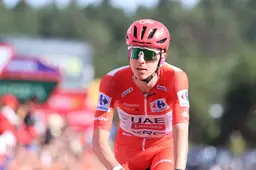
Tour de France boss Prudhomme compares Pogačar to 1969 Merckx after Vuelta crash: 'Are you still the same person?'
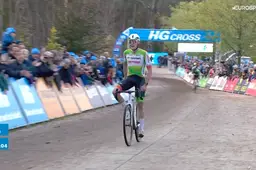
Joran Wyseure defeats Night of Woerden winner Nieuwenhuis at Heerde cyclocross
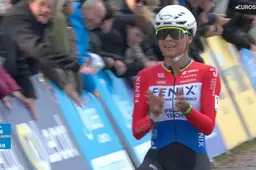
Dutch champion Alvarado claims first cyclocross win of 2026 in Heerde in Brand's absence
Popular Cycling News
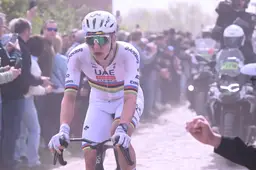
Tadej Pogačar to skip Paris-Roubaix in 2027: 'The easier it becomes to stay away from racing'
Lance Armstrong has a warning about the 2027 Tour de France route: 'Won’t make it across the English Channel'
The 2027 Tour de France route is out; here's where Pogačar could win or lose his record sixth title
Picnic PostNL's WorldTour uncertainty has five rival teams, and Tom Pidcock, watching the UCI closely
Here's the 2027 Tour de France route, including 71 time trial kilometers and 'just' 3 mountain-top finishes
Latest Comments
- More time trials sounds good, but could Remco actually win the whole race? I thought the Tour was mostly about climbing.gearguru3323-10-2026
- If Pogačar crashed badly, does that mean he might not be fully fit for the Tour?julien23-10-2026
- Edinburgh for the Grand Départ is brilliant news. The crowds in Yorkshire were incredible, and Scotland could be just as special.pedalpowe2923-10-2026
- Froome’s point about the mountains is spot on: the extra TT distance gives the other GC contenders a real reason to race aggressively before the final climbs.tourdeforce923-10-2026
- 71km of time trialling should make things much more interesting. Remco will fancy his chances, but you can never write Pogačar off.lindae23-10-2026
- I’m still figuring out how time trials affect the overall race. If Evenepoel gains time there, will Pogačar have enough mountain stages left to make it back? The route sounds exciting, but I’m not sure how much difference 71km makes.davidm22-10-2026
- Two 223km stages in the opening week could make for a proper nervous start. Those narrow British roads and potholes might have the GC favourites watching every corner.jennifer1922-10-2026
- That Pau–Portet stage sounds absolutely savage: Tourmalet, Soulor, Hourquette d’Ancizan and then the Portet. Vingegaard should suit those long climbs, though Pogačar is hardly easy to shake.julien22-10-2026
- Seventy-one kilometres against the clock gives Evenepoel a real chance to put pressure on Pogačar, but those Pyrenean stages look brutal. Could be a cracking final week if the time gaps stay close.sprocketspiny22-10-2026
- Not sure we can call this a perfect Evenepoel route before we’ve seen the start list. Plenty of time-trialling, yes, but those Pyrenees stages look absolutely savage. Could be a great Tour, though.julien22-10-2026
Loading