A day in Huelva: Spain records hottest ever Sept temperature just days before the Vuelta peloton rolls through
Cycling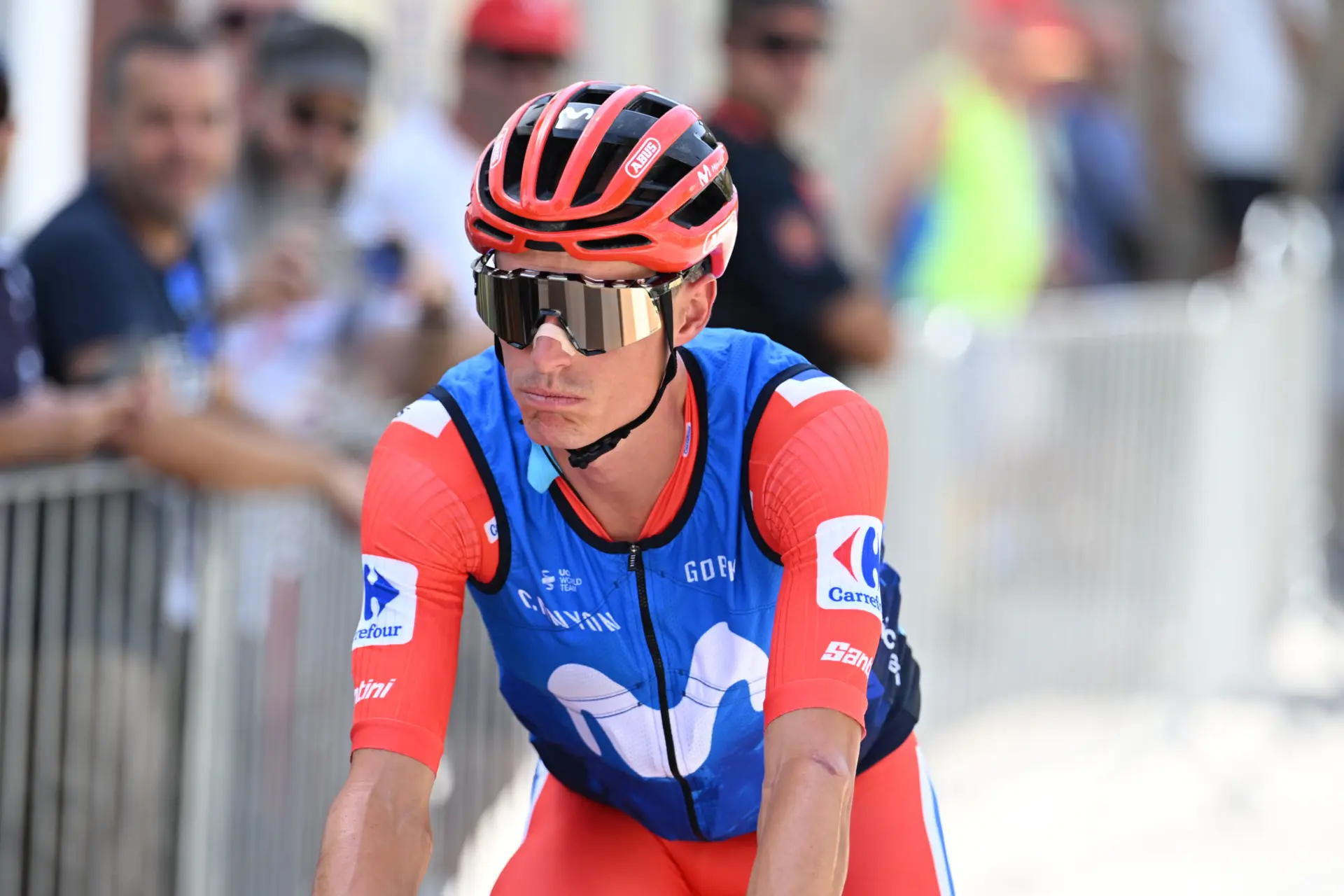
Follow IDL Pro Cycling on Google
Stay up to date with the best cycling news by making us a preferred source on Google.
Follow us on GoogleFive days ago, Spain's state weather agency AEMET recorded a temperature of 45.7°C in El Granado, in the southwestern province of Huelva. It was the joint-highest September temperature in the country's recorded history and the highest reading anywhere in Spain so far this year. On Tuesday, the Vuelta a España returns from its second rest day for Stage 16. The entire 181.1 kilometre stage runs through Huelva province. As the heat crisis continues to grip the 2026 Vuelta a España, the decision to continue (unchanged) will likely spark even more questions and protests from the cycling world.
ADVERTISEMENT

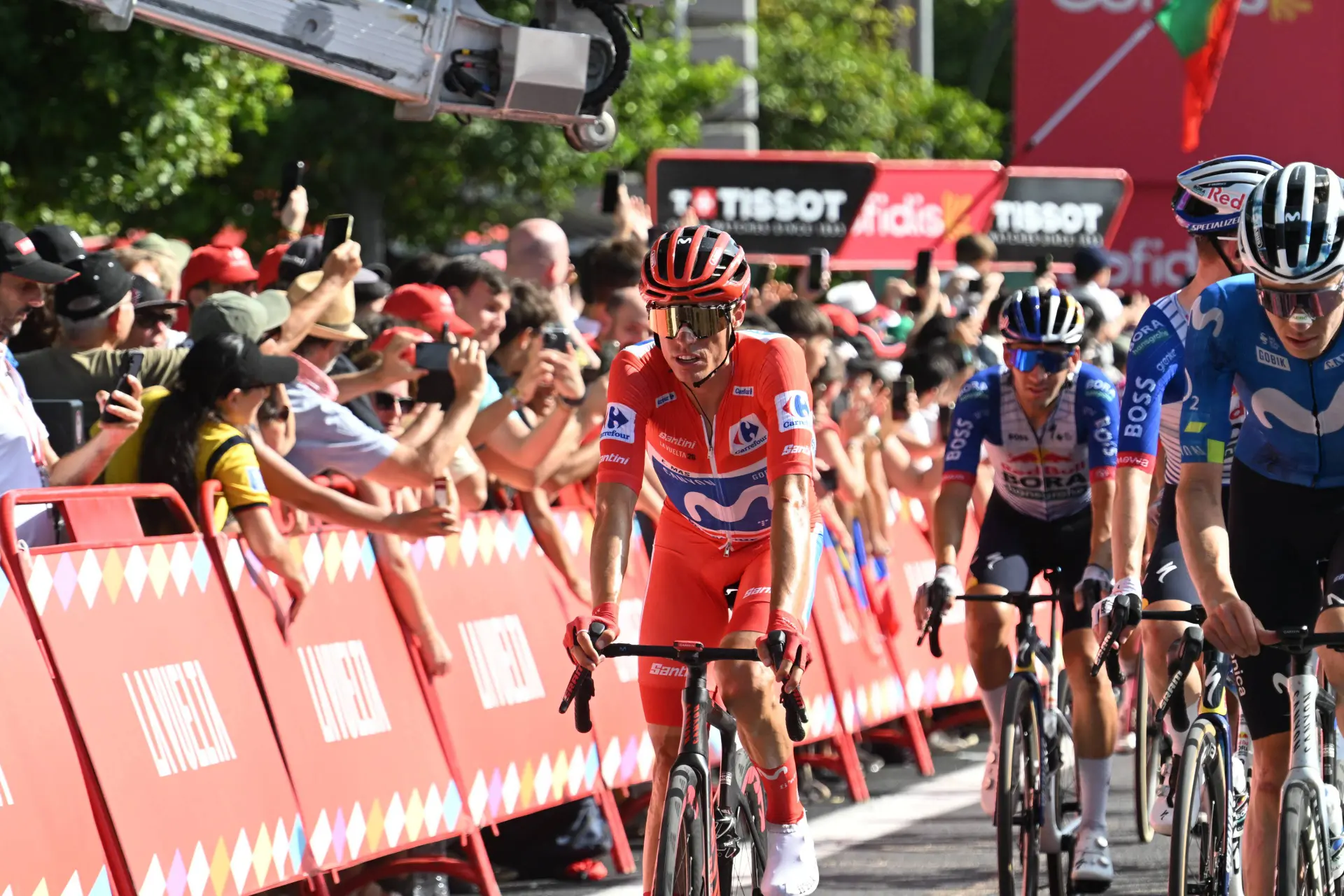
Enric Mas tries to keep cool at the Vuelta
Spain's warmest year in recorded history
The 45.7°C in El Granado was measured at 16:20 on September 3 and matched Spain's September temperature record, previously reached in Montoro, Córdoba, in 2016. But the context around it makes the reading far more alarming. On the same day, AEMET announced that the country had experienced its hottest January-to-August period on record, 'with a clear difference' when compared with the next four warmest periods, all recorded in the previous four years.
AEMET described the pattern as 'an unmistakable sign that warming is accelerating in Spain.' The agency also briefly issued the highest red alert for heat in small areas of Andalusia that Thursday, the first time such warnings had been sent in September since they started in 2007.
The timing is itself striking. Spain endured repeated periods of extreme heat during June, July, and August, yet none produced an official station temperature higher than the one measured during the first days of meteorological autumn. Several other locations in Andalusia exceeded 44°C on September 3, including 45.1°C at Sevilla Tablada, 44.7°C at Fuentes de Andalucía, and 44.5°C in Andújar.
Read more below the video
The Vuelta rides back into the heat
Cortegana lies at an altitude of around 650 metres, and the route heads south on winding terrain for the first half of the stage, rolling through the Sierra de Aracena and Picos de Aroche national park before flattening out toward the coast, with the finish located at La Rábida, a Franciscan monastery in Palos de la Frontera.
The race jury has confirmed that the exemption on feeding rules will apply to stages 16 and 17, allowing teams to feed along the entire route and from the team car. The same measure was granted for stages 14 and 15 after the extreme heat of the second week. Stage 15 was originally planned to cover 189.7 kilometres but was cut to 110.2, and its start was delayed by two hours.
Riders and teams have been vocal about the conditions throughout the second week. Matthew Brennan sharply criticised the UCI, and race leader Enric Mas acknowledged that unnecessary risks could not be taken.
Those complaints came during a week when Spain's weather agency was simultaneously recording the country's highest temperature of the year in the same province the peloton will cross on Tuesday.
Read more below the video
A crisis far bigger than the peloton
The heat taking a toll on the Vuelta has exacted an even greater cost across Spain as a whole. According to the MoMo mortality monitoring system, 5,232 deaths have been statistically linked to high temperatures in 2026, the highest figure since the system was launched in 2015. In August alone, MoMo estimated that 2,149 deaths were attributable to high temperatures.
Some respite is on the way apparently, with many heat alerts across southern Spain downgraded to yellow, and temperatures in the Huelva area are expected to settle in the mid-30s. But the Vuelta continues through Andalusia for the rest of the week, with Stage 17 heading to Seville on Wednesday and the individual time trial in Jerez de la Frontera on Thursday. By every available measure, the heat that has defined this race is part of something much larger.
Read also
David Bavin-HobbsChief Editor
David has been working in the sports & cycling industry for 16 years. Covering racing, business and technology, he has worked in communications for cycling companies, teams, and as a journalist. His proudest achievement is winning the first bike race he ever entered. He hasn't won a race since.
IDL-productions
Team GB dominate, China on the rise, Lavreysen the best ever? Five takeaways from the 2026 Track World Championships
Track World Championships day 2: A golden day for Team GB, Levreysen goes 2 for 2, and Kopecky eliminates the competition
Rumours, speculation and guesswork: 2027 Tour de France route will be revealed live on October 22 in Paris
Vollering adds the Women’s European Championships road race jersey to her rainbow wardrobe
16-day Grand Tours, AI, VAR, drones and more: The UCI's new document has a potentially major impact from 2029 onwards
Latest Cycling News
Tadej Pogačar to skip Paris-Roubaix in 2027: 'The easier it becomes to stay away from racing'
Here's the 2027 Tour de France route, including 71 time trial kilometers and 'just' 3 mountain-top finishes
Netcompany INEOS is doubling down on Benjamin Noval (18): 'Biggest contract ever for someone his age'
The 2027 Tour de France route is out; here's where Pogačar could win or lose his record sixth title
Lance Armstrong has a warning about the 2027 Tour de France route: 'Won’t make it across the English Channel'
Popular Cycling News
Tadej Pogačar to skip Paris-Roubaix in 2027: 'The easier it becomes to stay away from racing'
2027 Tour de France men's and women's routes: Everything you need to know about the UK Grand Départ
Transfer rumours fly as Roglič's retirement deadline looms: New potential team enters conversation
The 2027 Tour de France route is out; here's where Pogačar could win or lose his record sixth title
Picnic PostNL's WorldTour uncertainty has five rival teams, and Tom Pidcock, watching the UCI closely
Latest Comments
- I’m still figuring out how time trials affect the overall race. If Evenepoel gains time there, will Pogačar have enough mountain stages left to make it back? The route sounds exciting, but I’m not sure how much difference 71km makes.davidm22-10-2026
- Two 223km stages in the opening week could make for a proper nervous start. Those narrow British roads and potholes might have the GC favourites watching every corner.jennifer1922-10-2026
- That Pau–Portet stage sounds absolutely savage: Tourmalet, Soulor, Hourquette d’Ancizan and then the Portet. Vingegaard should suit those long climbs, though Pogačar is hardly easy to shake.julien22-10-2026
- Seventy-one kilometres against the clock gives Evenepoel a real chance to put pressure on Pogačar, but those Pyrenean stages look brutal. Could be a cracking final week if the time gaps stay close.sprocketspiny22-10-2026
- Not sure we can call this a perfect Evenepoel route before we’ve seen the start list. Plenty of time-trialling, yes, but those Pyrenees stages look absolutely savage. Could be a great Tour, though.julien22-10-2026
- I’m still learning the route—does a time trial mean every rider starts separately, and the fastest time wins the stage? Either way, 38km sounds like a long time to be racing alone!breakawaybikerd22-10-2026
- Montmartre again! Three ascents, with the last one 10km from the line, could make the finale far less predictable than a straightforward bunch sprint. Can’t wait.pedalpowe2922-10-2026
- The July 14 stage looks savage: 4,750 metres in just 150km is a proper day in the mountains. Skipping the biggest Alpine giants but finishing at Les Saisies should make for an interesting tactical race.velodromevirtuoso122-10-2026
- Seventy-one kilometres against the clock and only three summit finishes—Remco will be circling this one. But that Portet stage is brutal enough to undo a lot of damage in a hurry.davidm22-10-2026
- TotalEnergies’ sponsor situation makes this whole race for an invitation feel a bit academic unless they can secure funding. Hope they get it sorted—I’d love to see more teams get a crack at the Tour.cadencekingm21-10-2026
Loading

