Follow IDL Pro Cycling on Google
Stay up to date with the best cycling news by making us a preferred source on Google.
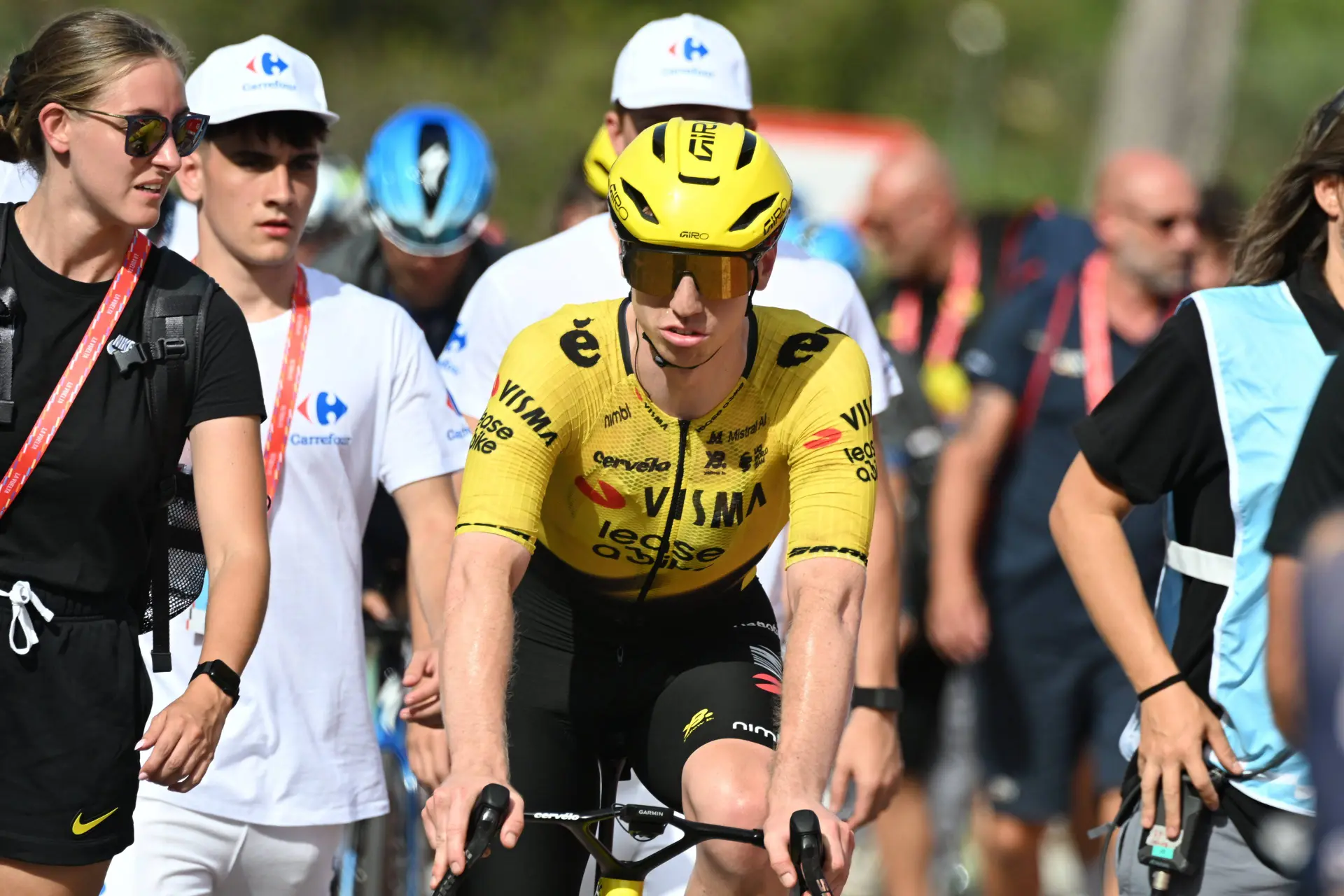
Follow us on GoogleIt has been extremely hot in the Vuelta a España over the past few days. The heat literally reached a peak during the stage to Córdoba, where the organisers decided to shorten the stage due to the high temperatures. But was that enough? At UAE Team Emirates-XRG, they aren’t exactly happy with how things went.
ADVERTISEMENT
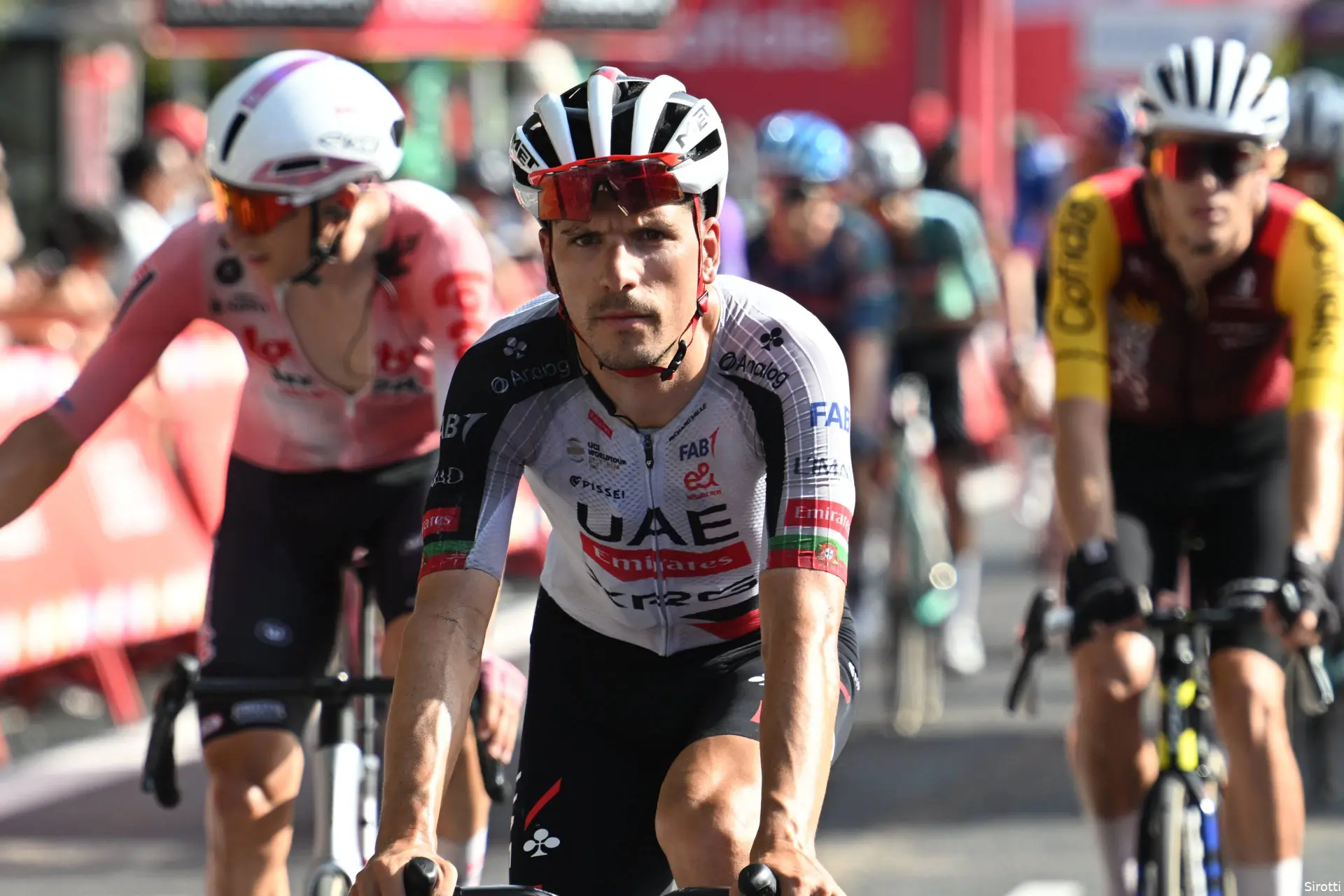
The fifteenth stage to Córdoba was significantly shortened, leaving the riders with a 110-kilometer stage to complete. Wout van Aert (Visma | Lease a Bike) won the stage, but other riders decided to take it as easy as possible. João Almeida, like his teammates, struggled considerably in the heat and spoke with Cyclingnews about the conditions before the stage.
Almeida: 'We have to look out for each other'
"I think we're starting to reach the limits of the human body, and that's dangerous. It's not easy to explain, but part of the preparation involves doing heat acclimatization training so you can ride in these conditions. You ride at a steady pace—it’s no problem—and you drink enough water to stay hydrated. But racing isn’t easy for us; it’s different, and that’s why it can definitely be dangerous. We have to look out for each other.”
Almeida is from Portugal, so he’s used to extreme temperatures, but he actually has a hard time dealing with them during races. “It’s hard for me, and it really affects me. I think it’s the same for everyone, but some guys handle it better than others. And it’s one of those things where you really can’t afford to make any mistakes, or else you’re in big trouble.”
Read also
Read more below the photo!

Matxin is critical: "Why don't we consider a different schedule?"
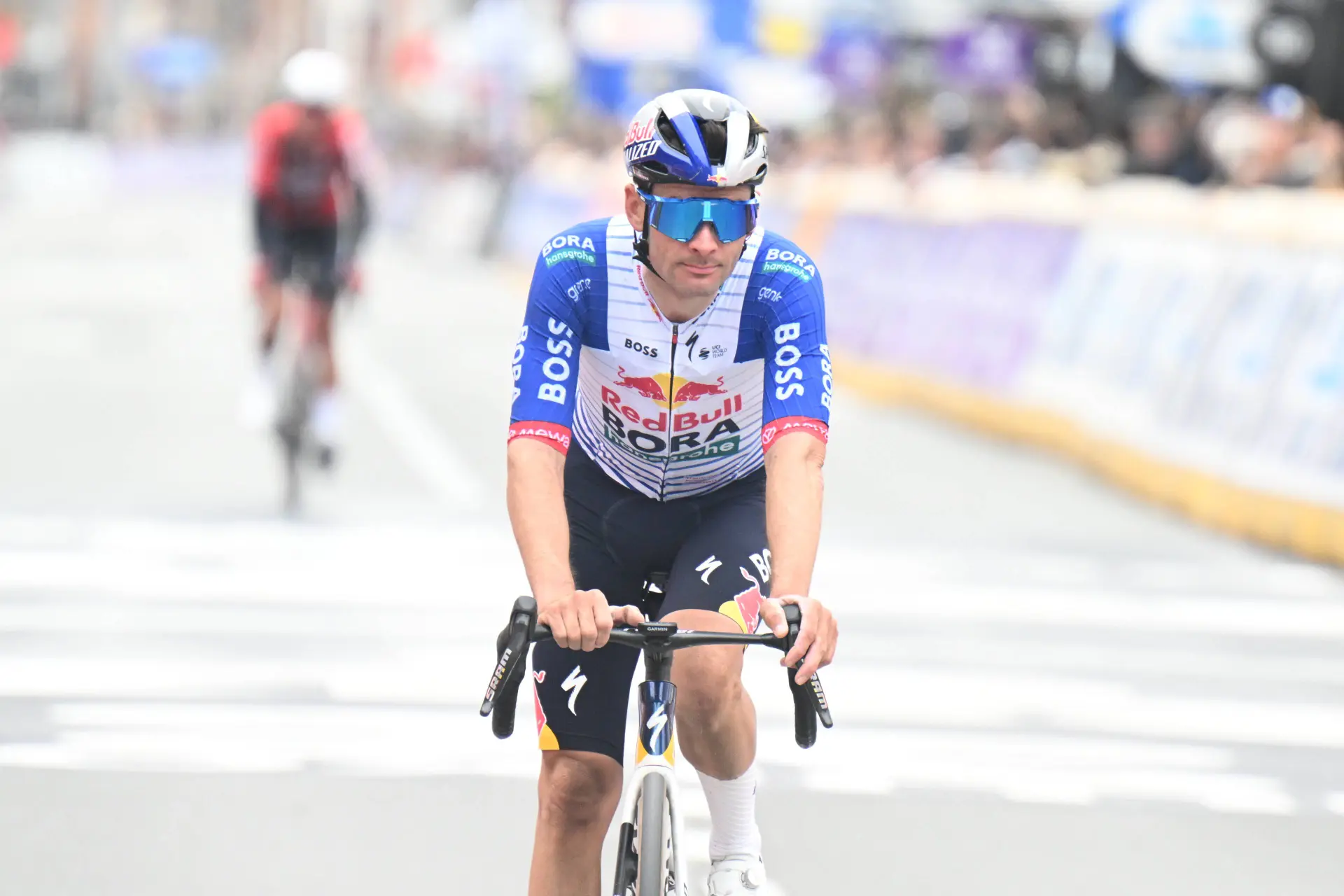
Team director Joxean “Matxin” Fernandez was also critical of the conditions. “It’s often hard to gauge how hot it is on TV, but when you’re here, you really realise what it’s like,” he told Eurosport. “Riding a stage under these conditions can cause serious problems. We’ve already seen riders drop out due to heatstroke, and two days ago we also lost Pavel Sivakov because of the heat.”
The Spaniard had hoped for more drastic measures and is disappointed in the organization. “In many cases, these can be dangerous situations. There is a heat protocol, and I think the organization made the right decision by shortening the stage. But why don’t we also consider a different schedule? I know that might not be ideal for television, but if it’s 42, 46, or even 50 degrees, why shouldn’t we look for an alternative time?”
Because shortening the race wasn't just beneficial—it also came with an unforeseen drawback. “Starting and racing at 3:00 p.m., when the heat is at its peak, doesn’t really help with the heat protocol either,” Matxin explains. “So I’d like to suggest that idea as well. Television will probably have to adapt to these situations, too.”
Read also
David Bavin-HobbsChief Editor
David has been working in the sports & cycling industry for 16 years. Covering racing, business and technology, he has worked in communications for cycling companies, teams, and as a journalist. His proudest achievement is winning the first bike race he ever entered. He hasn't won a race since.
IDL-productions
Team GB dominate, China on the rise, Lavreysen the best ever? Five takeaways from the 2026 Track World Championships
Track World Championships day 2: A golden day for Team GB, Levreysen goes 2 for 2, and Kopecky eliminates the competition
Rumours, speculation and guesswork: 2027 Tour de France route will be revealed live on October 22 in Paris
Vollering adds the Women’s European Championships road race jersey to her rainbow wardrobe
16-day Grand Tours, AI, VAR, drones and more: The UCI's new document has a potentially major impact from 2029 onwards
Latest Cycling News
The 2027 Tour de France route is out; here's where Pogačar could win or lose his record sixth title
2027 Tour de France Route | 71 kilometers of time trials and only 3 mountain-top finishes
Visma | Lease a Bike release first analysis of 2027 Tour de France route: 'Fewer riders making it to the top'
Red Bull-BORA-hansgrohe likely to target yellow jersey with Remco Evenepoel at 2027 Tour de France: 'This could be decisive'
Tadej Pogačar to skip Paris-Roubaix in 2027: 'The easier it becomes to stay away from racing'
Popular Cycling News
Cycling transfers 2026/2027 | The road season has ended, but the transfer market is in full swing
Tadej Pogačar to skip Paris-Roubaix in 2027: 'The easier it becomes to stay away from racing'
Marcel Kittel, Wout van Aert, and Marianne Vos partied at a cycling festival in Ibiza: 'To avoid a major hangover'
2027 Tour de France men's and women's routes: Everything you need to know about the UK Grand Départ
Greg LeMond on Pogačar, Seixas and living with cancer: 'He is the next Hinault'
Latest Comments
- I’m still figuring out how time trials affect the overall race. If Evenepoel gains time there, will Pogačar have enough mountain stages left to make it back? The route sounds exciting, but I’m not sure how much difference 71km makes.davidm22-10-2026
- Two 223km stages in the opening week could make for a proper nervous start. Those narrow British roads and potholes might have the GC favourites watching every corner.jennifer1922-10-2026
- That Pau–Portet stage sounds absolutely savage: Tourmalet, Soulor, Hourquette d’Ancizan and then the Portet. Vingegaard should suit those long climbs, though Pogačar is hardly easy to shake.julien22-10-2026
- Seventy-one kilometres against the clock gives Evenepoel a real chance to put pressure on Pogačar, but those Pyrenean stages look brutal. Could be a cracking final week if the time gaps stay close.sprocketspiny22-10-2026
- Not sure we can call this a perfect Evenepoel route before we’ve seen the start list. Plenty of time-trialling, yes, but those Pyrenees stages look absolutely savage. Could be a great Tour, though.julien22-10-2026
- I’m still learning the route—does a time trial mean every rider starts separately, and the fastest time wins the stage? Either way, 38km sounds like a long time to be racing alone!breakawaybikerd22-10-2026
- Montmartre again! Three ascents, with the last one 10km from the line, could make the finale far less predictable than a straightforward bunch sprint. Can’t wait.pedalpowe2922-10-2026
- The July 14 stage looks savage: 4,750 metres in just 150km is a proper day in the mountains. Skipping the biggest Alpine giants but finishing at Les Saisies should make for an interesting tactical race.velodromevirtuoso122-10-2026
- Seventy-one kilometres against the clock and only three summit finishes—Remco will be circling this one. But that Portet stage is brutal enough to undo a lot of damage in a hurry.davidm22-10-2026
- TotalEnergies’ sponsor situation makes this whole race for an invitation feel a bit academic unless they can secure funding. Hope they get it sorted—I’d love to see more teams get a crack at the Tour.cadencekingm21-10-2026
Loading