Ferrand-Prévot’s isolation catches Van Vleuten’s eye: ‘Surprising they did not act’
CyclingThursday, 06 August 2026 at 09:02
Follow IDL Pro Cycling on Google
Stay up to date with the best cycling news by making us a preferred source on Google.
Follow us on GoogleFDJ-SUEZ took the bull by the horns during the grueling fifth stage of the Tour de France Femmes. The French team appeared to have every kilometre under control and helped Demi Vollering claim the stage victory while making an even more significant move in the general classification. Pauline Ferrand-Prévot, however, spent a large part of the stage on her own. How did that happen?
ADVERTISEMENT
There was no breakaway for a long time during the demanding hilly stage. Later in the day, a relatively large group finally managed to escape, containing several strong riders, including Dominika Włodarczyk, Puck Pieterse and Antonia Niedermaier. FDJ-SUEZ also placed two riders in the move, with Juliette Berthet and Franziska Koch making it into the breakaway.
Lieselot Decroix, the team’s performance manager, explained on De Avondetappe how the situation had developed. “Our plan was to have two riders in the group if a breakaway went clear,” said the Belgian former professional. “Ideally, they would also be the riders we wanted to have there, so that worked out perfectly. We did not want them to go too early in the race either.” In the end, Koch and Berthet both made it into the front group.
Read also
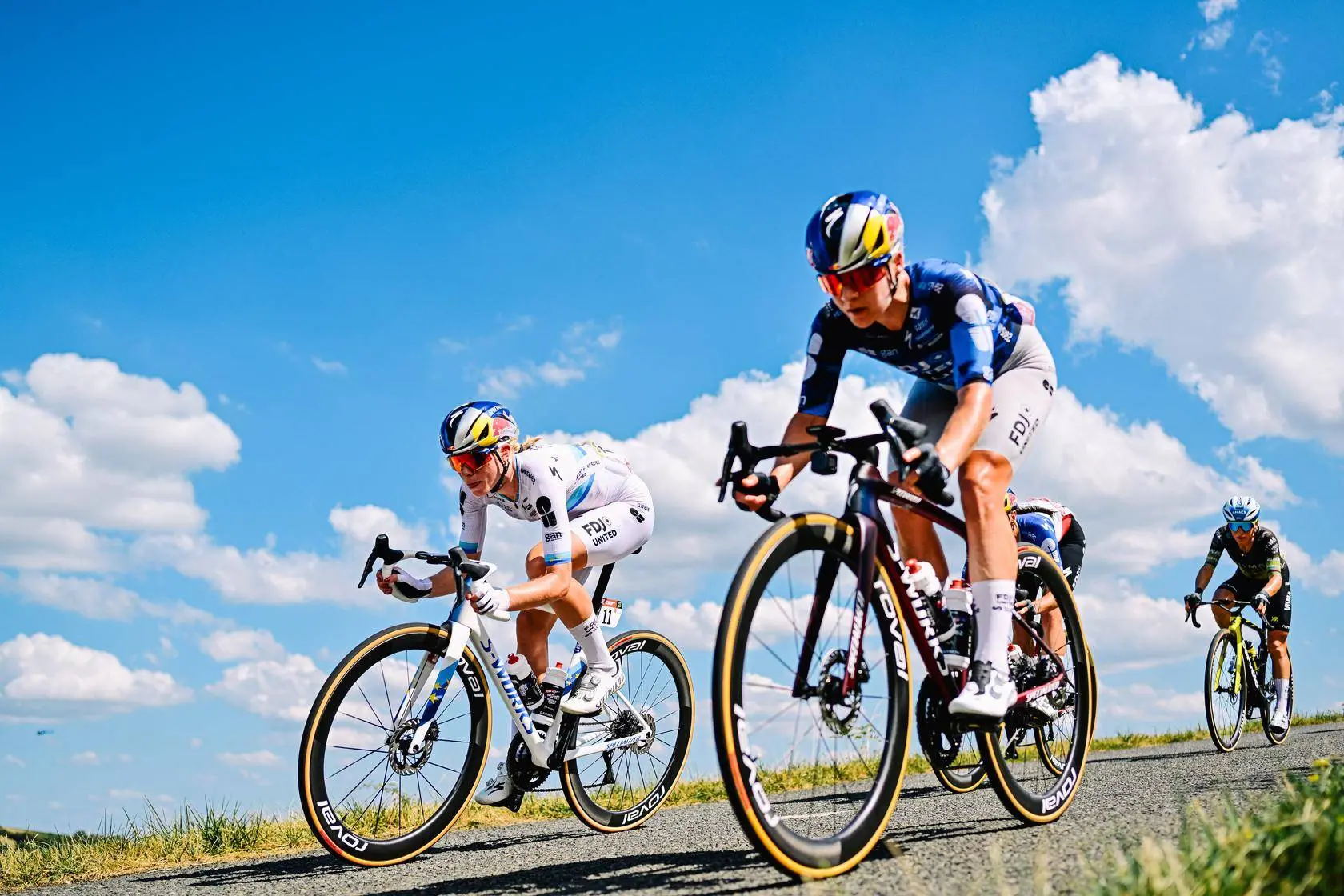
That created an unusual situation in which FDJ-SUEZ were effectively chasing FDJ-SUEZ, but that was also part of the plan. “There were three riders in that group who were still relatively close in the standings, so we knew we could not give them too much time. Lars also decided from the team car that we would take the initiative ourselves and chase with Amber Kraak and Évita Muzic. That meant we always had control of the race.”
Stef Clement watched FDJ-SUEZ deliver a tactical masterclass, allowing Vollering’s team to launch its leader at exactly the right moment in the finale. The move eventually earned her substantial time on most of her rivals. “Then everything comes back together, and you can continue with the plan at precisely the moment you want. The whole structure is rock-solid. It is also something we have seen from this team earlier in the season.”
Read more below the photo!

Ferrand-Prévot isolated: ‘Surprising they did not act’
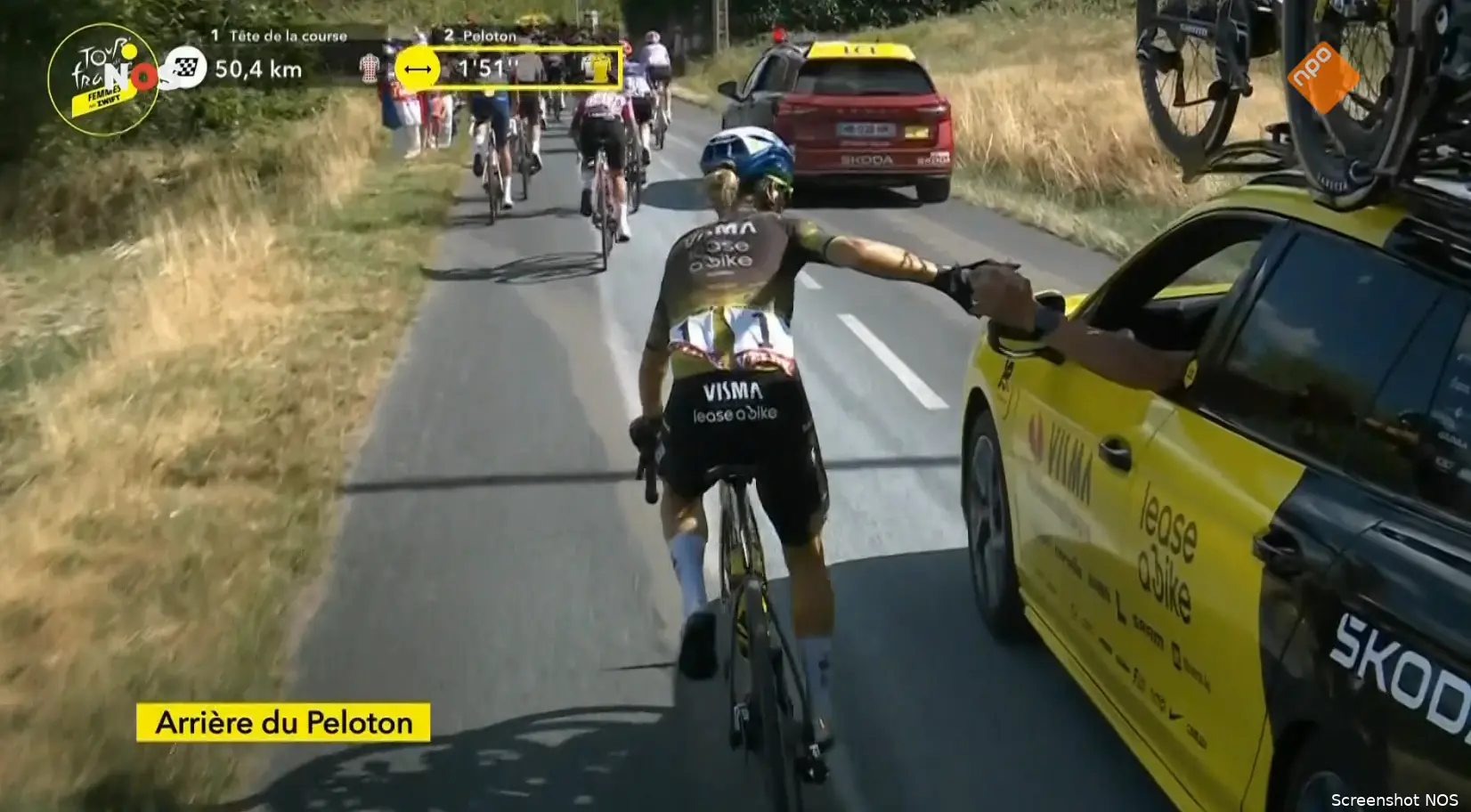
While FDJ-SUEZ excelled during the difficult stage, Visma | Lease a Bike were far less visible. Admittedly, the team also had two strong riders in the breakaway in Femke de Vries and Sarah Van Dam, but that meant leader Ferrand-Prévot was completely alone in the reduced peloton. She had to fight for position without support and even had to collect bottles from the team car herself.
It was a painful image, and Annemiek van Vleuten believed a different decision should have been made. “That team is not as strong across the board. You already have two riders at the front, while several others are being dropped from the peloton. She was then left completely isolated, particularly in such a difficult stage. You do not want that, so it was surprising that they did not take action.”
However, the former Tour de France Femmes winner added that she would not necessarily have considered the situation disastrous herself. “At some point you have to collect bottles, which may be slightly less convenient. But I would rather have my teammates up the road, because then you can still use them tactically. That would be the ideal situation, and Ferrand-Prévot could potentially have bridged across to them. That was the plan. But the fact that she was isolated was obviously not ideal.”
Read more below the video!
Did Ferrand-Prévot come to the Tour believing she could win?
When the race came back together and Vollering accelerated, the group of favourites was blown apart. Ferrand-Prévot had sounded determined after losing time in Tuesday’s individual time trial, but she was dropped on the penultimate climb. She eventually crossed the line in 19th place, two minutes and 35 seconds behind stage winner Vollering. The defending champion is now 17th in the general classification, five minutes down, ending her hopes of claiming a second yellow jersey.
Clement openly questioned whether Ferrand-Prévot had arrived at the Tour with realistic hopes of defending her title. “Did she really come to the Tour with the numbers, the knowledge and the belief that she could win it? I am beginning to wonder.” Decroix, however, offered a more measured assessment. “We live in an era in which we think we can know everything through data and measurements, but ultimately we are working with human beings. Sometimes there are still things we simply cannot explain.”
Read also

IDL-productions
Tadej Pogačar's 2027 schedule is shaping up and it is mega: Tour de France #6, 'Super Worlds', and unfinished business in Spain
An American rider can win the Elite Men’s World Championship road race, but the smart money isn’t on Quinn Simmons!
Demi Vollering take note: Elite debutant Zoe Bäckstedt's previous World Championship results show why she's a contender

Female stars from across cycling disciplines, including Demi Vollering, condemn Sydney Sweeney 'sports' video

2026 GP Montreal preview | Evenepoel and Pidcock face World Championships dress rehearsal
Latest Cycling News
Evenepoel already thinking ahead after unique time trial performance: 'Good start to the World Championships'
UCI issues scathing ruling following 'professional misconduct' and imposes a 10-year suspension
Reusser overtakes Vollering and retains world time trial title on her birthday
Historic Evenepoel flies to fourth consecutive world time trial title in Montreal
Demi Vollering surprised after World Championship time trial recon in Montreal: ''Sh*t, that didn't go well'
Popular Cycling News
UCI issues scathing ruling following 'professional misconduct' and imposes a 10-year suspension
Start Times for the 2026 World Time Trial Championships - Elite Men | Evenepoel is the last to start
The World Cycling Championships haven't even started yet, but Remco Evenepoel has already thrown his first jab
Demi Vollering surprised after World Championship time trial recon in Montreal: ''Sh*t, that didn't go well'
Tadej Pogačar's 2027 schedule is shaping up and it is mega: Tour de France #6, 'Super Worlds', and unfinished business in Spain
Latest Comments
- - Gran artículo, pero una duda: ¿por qué solo dos horas de reconocimiento? Eso suena muy corto para un Mundial. Merci!velodromevirtuoso119-09-2026
- - Wait, Rwanda 2025—did he really win last year by over a minute on Jay Vine? I thought the huge margin was two seasons ago. Feels like the article’s mixing editions?jennifer1919-09-2026
- - Fifth in Montréal after the Québec win isn’t a red flag. That parcours is punchier and the cadence demands are different. TT legs should be fine by Sunday. Allez Remco!davidm19-09-2026
- - Ganna’s “2–3 km” power is insane, but this is 39k. Over/under pacing will decide it. If Remco negative splits like Québec, he’s favourite. If it’s blustery, Ganna’s mass might help. Flip a coin.sprocketspiny19-09-2026
- - Remco’s right to be annoyed. Two hours for line choice, wind mapping, road surface, manhole locations, roundabouts, and turnaround pacing is tight. He’s meticulous—racetrack sessions, CdA dialing, the whole lot. Marginal gains win rainbow bands.andrewf19-09-2026
- - How does course reconnaissance actually help in a time trial if it’s mostly flat and straight? Is it just corner lines and wind spots, or are there other things they look for?bikebuffj19-09-2026
- - Minor correction: the Worlds TT is usually on a weekday, not Sunday the 20th? Is that a typo from the organiser or the article? Either way, Montréal flats + long straights scream Ganna vs Evenepoel. Can’t wait.gearguru3319-09-2026
- - Love the confidence from Remco, but two hours recon on a2km TT is a joke. Course knowledge matters at 55 kph. Still, if anyone maximises aero and pacing, it’s him.breakawaybikerd19-09-2026
- - Qué pena por Carapaz, pero la salud primero. Volverá más fuerte. Grande campeón!robert6519-09-2026
- - Slightly harsh take: announcing via “his own channels” isn’t unique to South America, it’s just modern pro sport. That line felt a bit stereotyped, to be honest.davidm19-09-2026
Loading
