Former pro highlights differences between Pogačar and Seixas in Strade Bianche
CyclingTuesday, 10 March 2026 at 15:05
Follow IDL Pro Cycling on Google
Stay up to date with the best cycling news by making us a preferred source on Google.
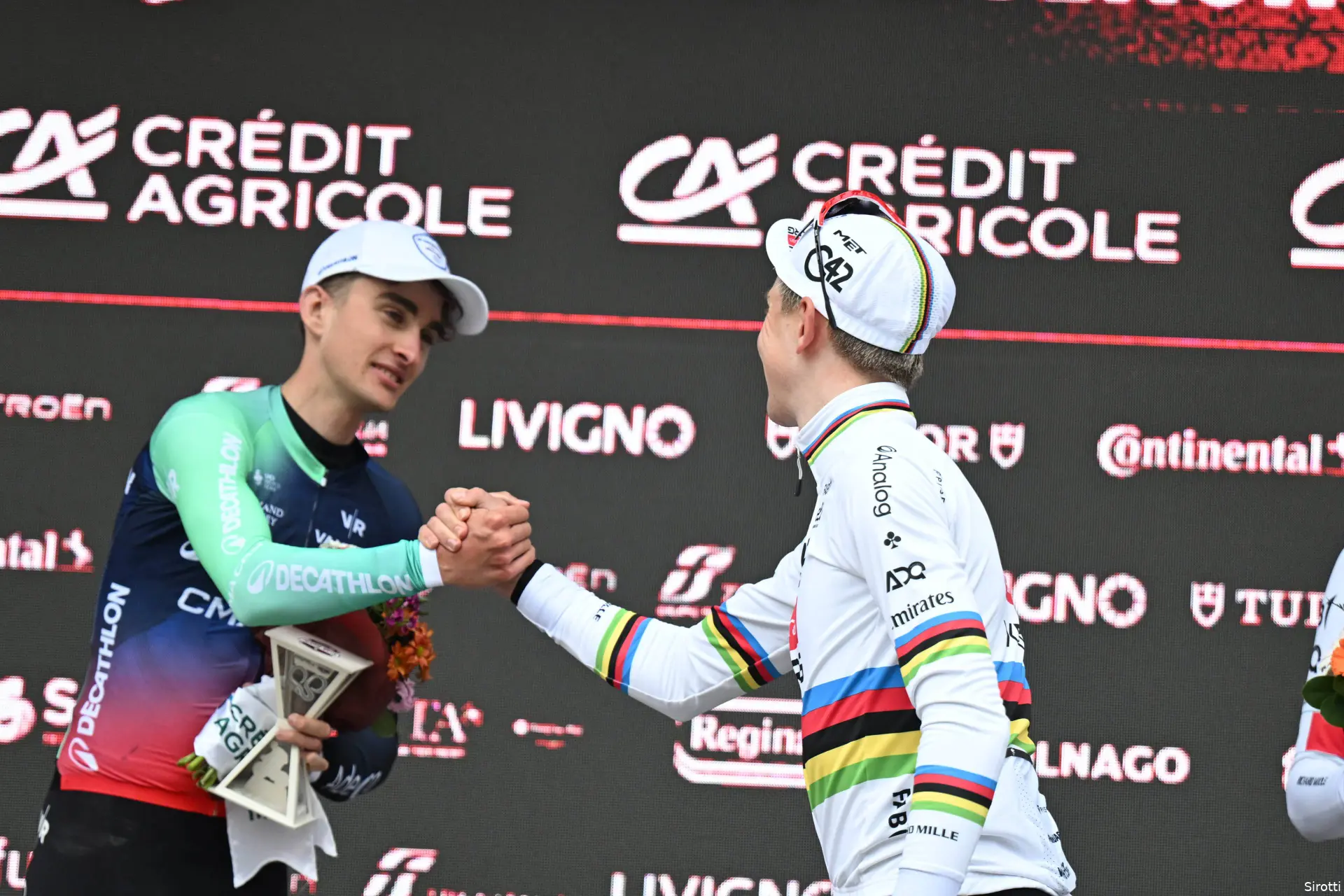
Follow us on GoogleIt was the crucial moment of the latest Strade Bianche: Tadej Pogačar’s acceleration on Monte Sante Marie. Paul Seixas was able to follow the Slovenian for a long time, but on the decisive stretch he still had to bow to the four-time Tour de France winner. Former pro Tom Danielson has now broken down the differences between the two riders on X.
ADVERTISEMENT
By now, it almost feels written in the stars: Pogačar attacking on Monte Sante Marie. This year, once again, it proved to be the key point where the Slovenian left his rivals behind. Young Seixas was able to stay with him the longest, but the 19-year-old Frenchman eventually had to give in as well.
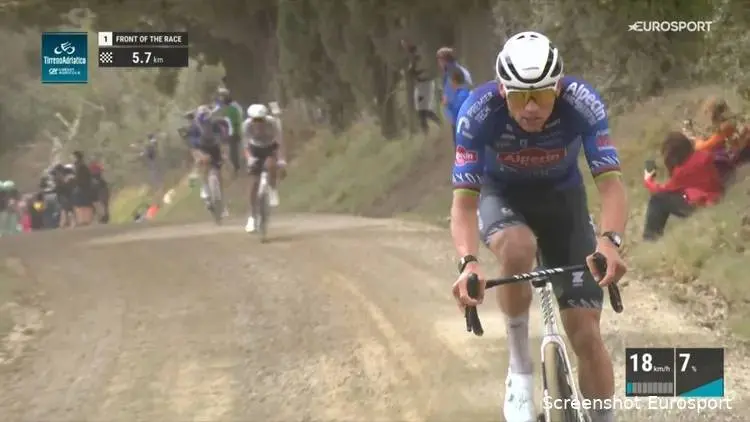
American former rider Danielson identified three crucial differences between the pair in that decisive moment. The first was sight line. At the moment of the acceleration, Pogačar can be seen looking far up the road, unlike Seixas, who is looking closer to his own front wheel.
“The first big thing that stood out to me was how Tadej was focused looking up the road on the climb ahead, while Seixas was looking down more at the road in front of his front wheel,” Danielson said. “While this sounds like a small difference, I believe looking ahead allows you to choose a better gear, find a better line, stay more relaxed, and possibly go faster as a result.”
Read more below the picture
Pogačar’s higher cadence made the difference in the crucial phase
The second point that stood out to the 47-year-old former pro was the difference in cadence. “While both riders rode at high cadence, Tadej seemed to be even 10 rpm above Seixas, resulting in even more power delivery for likely a lower torque.”
According to Danielson, riding that way demands a lot from the muscles that stabilize the body on the bike. “While this sounds simple, this requires a stronger anchor on the bike through core strength as well as a higher aerobic demand. This also demands more traction on the gravel road, so finding the best line is key.” In other words, Pogačar’s higher cadence once again ties back to his better line choice and superior control in that section.
That fits with what the race itself showed. Pogačar made the winning move on Monte Sante Marie, while Seixas briefly tried to respond before losing contact and eventually finishing an impressive second in Siena.
Read more below the photo
Pogačar uses his lats to stabilize himself on the bike
As a third and final point, Danielson saw a difference in posture and breathing. The four-time Tour de France winner rides with a more open chest, while the Frenchman appears far more closed off. Pogačar also seems to breathe more deeply from the diaphragm.
“Finally, I think it’s interesting to compare both upper bodies. Tadej visibly has a more open chest in comparison to Seixas’s seemingly more closed-up chest. In addition, Tadej appears to be taking deeper diaphragmatic breaths than Seixas,” Danielson said.
He then drew the following conclusion: “I believe both of these key areas around breathing are due to the way Tadej uses his lats to anchor on the bike to push the pedal stroke.” According to the former pro, those are relatively simple details the Decathlon CMA CGM talent can work on in order to move closer to Pogačar in the most decisive phases of the race. “All three points here could possibly make a small difference, but I believe these are simple things that Seixas can work on to come closer to staying with Tadej in the key selection, the moment of urgency.”
Read also

PD
Pim van der Doelen
IDL-productions
A horrific injury stopped him walking for two years, but now the Norwegian Champion has finished the Tour de France
Lance Armstrong outraged by Vingegaard and Pogačar doping controversy: ‘2AM is a human rights issue’
2026 Tour de France stage 10 preview | Can Vingegaard repeat his Le Lioran victory over Pogacar?
IDL Pro Cycling Tour de France fantasy league results after week 1. Substitutions now available
Adrie van der Poel delivers the perfect reaction after Mathieu’s Tour de France stage win
Latest Cycling News
Tadej Pogačar wanted a yellow win in Paris, but Van der Poel stole the final Tour de France victory of 2026
Tadej Pogačar reflects on the 5am doping control at the Tour de France with 'stranger examples' from recent years
Mathieu van der Poel said some very interesting things after his Tour de France win: 'Deepest I've ever gone'
Remco Evenepoel delivers a string of top answers and has kind words for his wife at final Tour press conference
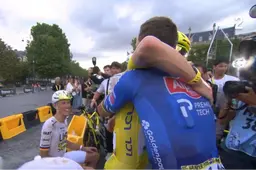
Legend Pogačar hugs Van der Poel and Urska after 'amazing day': 'Too bad Vingegaard dropped out'
Popular Cycling News
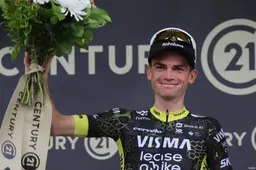
2026 Tour de France fines & penalties | Two crashes and a hefty fine for Sepp Kuss on day he'd like to forget
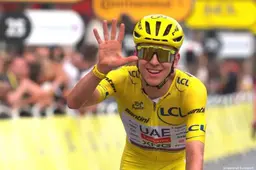
2026 Tour de France Final Standings | Pogacar, Pedersen, Carapaz, Del Toro and Lidl-Trek, chapeau!
Tour de France Route 2026 | Van der Poel reigns in Paris, Pogačar reigns supreme
How to watch stage 21 of the Tour de France (Paris) for free on BBC iPlayer
Tadej Pogačar wanted a yellow win in Paris, but Van der Poel stole the final Tour de France victory of 2026
Latest Comments
- - Wow, second place already? How big was the time gap to first in the end, and does that come mostly from the mountain stages or time trial? Gracias por la info, très curieux!sprocketspiny26-07-2026
- - Great piece overall, but quoting Vanthourenhout while noting he’s not on Tour duty with Remco feels odd. Would love more insight from BORA’s actual in-race DS.gearguru3326-07-2026
- - The idea that next year’s route with a 50 km TT flips the script is interesting. If ASO gives us that, Remco starts as 1A contender. But he still needs a mountain train that can blunt UAE’s tempo.michael5426-07-2026
- - “He should have gone sooner” is always easy to say. Carapaz was flying. Remco emptied the tank late and nearly bridged — fine margins at the end of a brutal Tour.andrewf26-07-2026
- - From third last year to second now, plus a stage tally that could’ve been three — that’s progression. BORA’s support looked miles better too, even after the Alpe d’Huez spat. Winning the Tour one day doesn’t look crazy.julien26-07-2026
- - Can someone explain why a longer time trial would help him that much? Is he that much better than Pogacar in TT over 50 km?jeremya26-07-2026
- - Not sure I buy Herygers’ “loyal to Pogačar” angle. Remco races to win. If he had the legs 5 km earlier, he goes. Feels like Monday-morning quarterbacking.pedalpowe2926-07-2026
- - Massive ride from Remco. Second overall and second on the queen stage isn’t “almost” — it’s elite. The way he paced that final 3 km was smart given the UAE/Decathlon tug-of-war behind.patriciaw26-07-2026
- - Pog is on another planet. Even rivals would doubt him? That quote from Gianetti is blunt but honest.julien26-07-2026
- - So if Cobo’s Vuelta got stripped for blood passport issues, why did it take so long? Feels like the system punishes fans retroactively. Confusing tbh.patriciaw26-07-2026
Loading