Greg LeMond recalls late Dutch teammate Johannes Draaijer and takes aim at “doping team” PDM
CyclingTuesday, 10 February 2026 at 07:39
Follow IDL Pro Cycling on Google
Stay up to date with the best cycling news by making us a preferred source on Google.
Follow us on GoogleGreg LeMond has never been one to bite his tongue, and the three-time Tour de France winner has done so again. Speaking on the Roadman Podcast (via X), the American looked back on the rise of doping in the peloton around the early 1990s — something he believes likely cost him results as speeds and performances suddenly changed.
ADVERTISEMENT
LeMond won the Tour de France in 1986, 1989 and 1990, but ultimately stepped away from the sport in 1994 after several seasons in which he could no longer compete at the level he previously reached. According to the Californian, that decline is directly linked to the arrival of EPO in the professional peloton, with riders suddenly going markedly faster than those he had been able to control earlier in his career.
The American points to Italian rider Claudio Chiappucci as an example. “I raced with Chiappucci from 1986. He was a domestique. I’m sorry, but he wasn’t that good a rider. But I remember him riding away in 1992 on the Sestriere stage. I’d won the Tour three times, but I was basically the last rider in that stage. I finished an hour behind him.”
LeMond says the impact was immediate, including financially. “My team told me: we’ll have to reduce your salary. But I said: this is really happening in teams — they’re taking EPO, they’re taking testosterone. Either you stay out of it and let us race and nothing changes with the salary, or you bring in the same doctor. Not that I wanted to use doping, but we couldn’t be punished for not using doping.”
Continue reading below the photo!

Greg LeMond in 2019
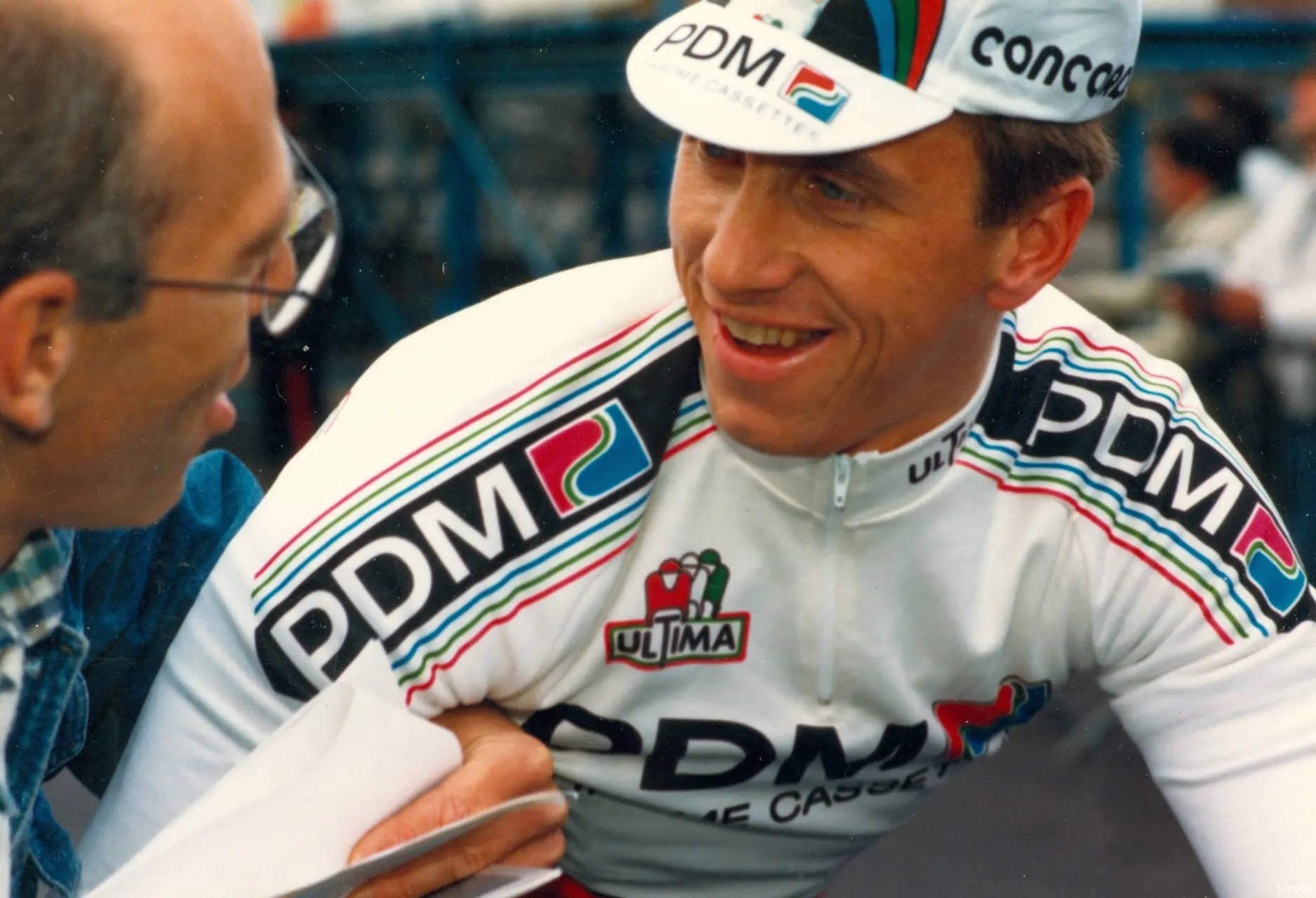
LeMond left PDM because of doping
When LeMond raced for Dutch team PDM in 1988 — after returning from a hunting accident that sidelined him for a long time — he says he encountered doping in an organised form for the first time. “When I rode for PDM, I realised that was the first truly organised doping team. And I left for that reason.”
LeMond also mentioned the Dutch rider Johannes Draaijer, his former PDM teammate who died in 1990 at the age of 26, as an example of what was wrong in that era. “His wife (like LeMond’s, an American) called my wife in the middle of the night because her husband had died. So sad,” LeMond recalled.
At the time, links were drawn between early experimentation with doping and Draaijer’s death, but this was never proven. Dutch riders Bert Oosterbosch and Connie Meijer also died from cardiac arrest in that period. LeMond — who was one of the first prominent figures to openly accuse Lance Armstrong — placed much of the blame on Italian doctors Francesco Conconi and Michele Ferrari. “I genuinely believe some riders had no idea what they were being given, because Conconi worked for the Olympic Committee at the time, doing tests on how to detect EPO. But he used pro riders as guinea pigs,” LeMond said.
Read also

Tom van der Salm (27) comes from the charming town of Zeilberg (Deurne) in the Netherlands and has been working as editor-in-chief & journalist at IDL Pro Cycling's parent site, In de Leiderstrui, since 2019. He travels with the peloton from the Tour de France to the AlUla Tour and from the World Championships in Rwanda or Canada to the Zilvermeercross in Mol. In his spare time he enjoys playing football, mountain biking, running, walking with his Labrador/Stabyhoun, investing, holidays, (specialty) beers, reading, cooking and watching sports & documentaries!
Contact: [email protected]
IDL-productions
Three world titles, two heart surgeries, and one last U23 chance: the Rogers family story behind Cameron's World Championship heartbreak
Mathieu van der Poel sees '1,000 scenarios' for the World Cycling Championships road race: 'Actually reminds me a bit of Glasgow'
Here's why the 2032 World Championships were awarded to India, not the Netherlands
Who is Isabella Holmgren, the 21-year-old Canadian who is the clear favourite for the women's U23 world championship?
Australia leave team spots empty, USA riders pay $1,000 to race: the World Championships' national team model faces serious financial problems
Latest Cycling News
🎥 Women's World Cycling Championships marred by severe crash, favourite Paula Blasi abandons
'First day back, last in the rainbow'; Pogačar shows off his scars on his first ride back on the bike
World Champion Vollering brought back down to earth by hefty penalty from the UCI
Reusser lashes out at fellow World Championship chasers: 'I was the only one racing for gold'
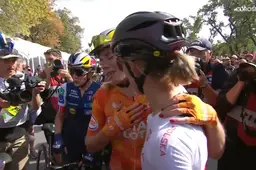
Niewiadoma has mixed feelings finishing second to Vollering again: 'I lost the rainbow jersey'
Popular Cycling News
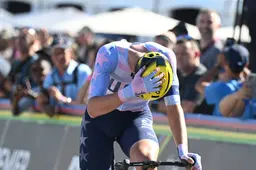
Disappointed Belgian Driesen has his doubts about the legitimacy of Barry's victory: 'They'll say I'm a sore loser'
🎥 Women's World Cycling Championships marred by severe crash, favourite Paula Blasi abandons
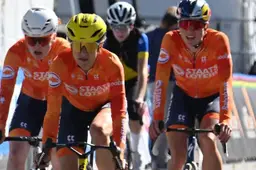
2026 World Cycling Championships Route & Schedule | Vollering gets her rainbow finish after thrilling race
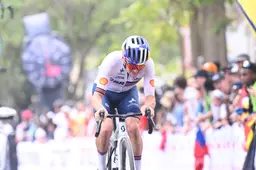
Tom Pidcock has four specifically picked domestiques in his hunt for a record-breaking rainbow jersey
World champion at last! Demi Vollering made the race her own but is pushed all the way to the end
Latest Comments
- - Bienvenido de vuelta, Pogi! Forza per la prossima stagione — zdravje naj bo na prvem mestu.bikebuffj27-09-2026
- - Was the vertebra a C6 or C7? Curious what the expected timeline is before he can do threshold work outdoors again.breakawaybikerd27-09-2026
- - That first-week domination at the Vuelta was scary good—three stage wins and time gaps on wide, windy roads. Shame a stray rock changed everything. Vamos Tadej!cyclechamp4527-09-2026
- - “You’re not a real cyclist until you’ve broken your collarbone” made me wince. Bit macho, innit? Recovery isn’t a badge—just glad he’s riding safely again.patriciaw27-09-2026
- - Why wasn’t the ride on Strava if he’s okay to post videos? Is there a reason pros sometimes skip Strava uploads after injury?cadencekingm27-09-2026
- - Loved the context about Urska, Dunbar and Verhulst-Wild all dealing with similar surgeries. The titanium plate club is real. Heal up, champ. Paris 2025 focus?samanthak27-09-2026
- - Five Tours “won” is a big claim—did you mean five-time strongest performer, or are we counting something unofficial? He’s got two yellow jerseys officially. Article needs a quick fact-check there.gearguru3327-09-2026
- - Great to see Tadej back spinning the legs. That Vuelta crash was brutal, but collarbone + C-vertebra recovery in this timeframe is impressive. Hope they’re not rushing—concussion protocols matter more than an Insta reel.jennifer1927-09-2026
- - Qué carrera, magnifique esprit! Niewiadoma mostrando coraje total, pero Demi otra vez imparable en el sprint. Respect to both.sprocketspiny26-09-2026
- - Not sure the article gives enough tactical detail. Who was in the chase group and what teams were actually pulling? That context matters if we’re judging Kasia’s options in the finale.jennifer1926-09-2026
Loading
