Follow IDL Pro Cycling on Google
Stay up to date with the best cycling news by making us a preferred source on Google.
Follow us on GoogleTim Merlier has now won a stage in each of his three appearances at the Tour de France. After taking one victory on his debut in 2021 and winning twice last year, the Belgian powered to another triumph in Stage 7 of the 2026 Tour de France. Merlier admitted afterwards that the result brought considerable relief.
ADVERTISEMENT
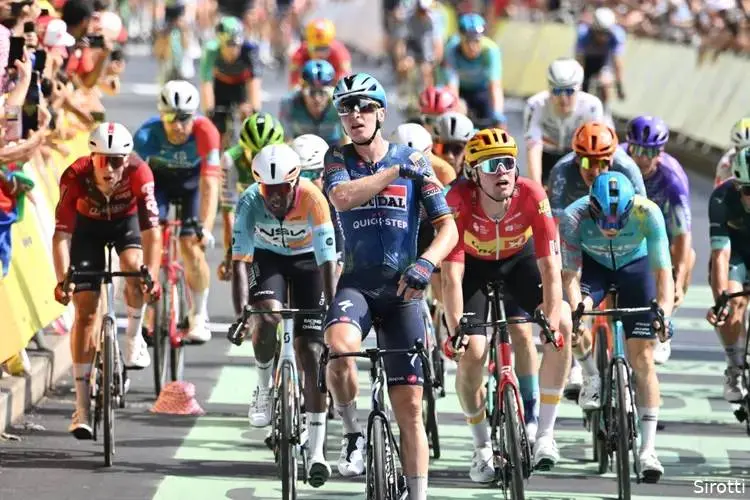
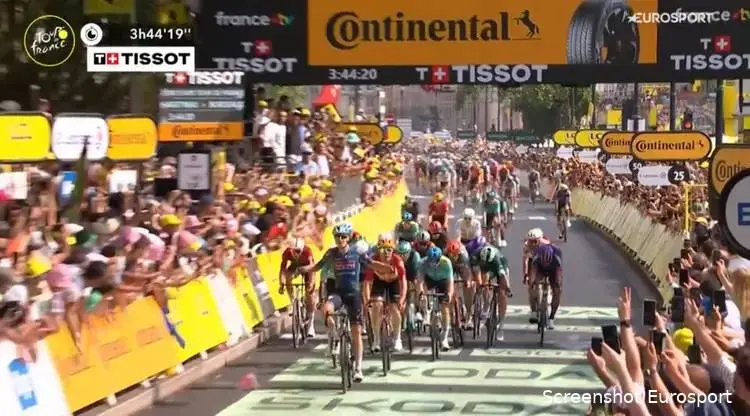
Merlier won in the manner that has become familiar throughout his career. He came from deep, opened his sprint early and carried far more speed than his rivals through the final few hundred metres. By the time he reached the line, he had enough of an advantage to celebrate, while Jasper Philipsen and Alpecin-Premier Tech were left empty-handed despite appearing to have the best-organised lead-out.
Merlier’s first comments in the Tour de France flash interview focused on the timing of his winning effort. “I don’t know whether I timed it perfectly, because I launched my sprint with—I don’t even know how far there was still to go,” he said with a smile. “It was a mess trying to get into position, but I managed it thanks to my team.”
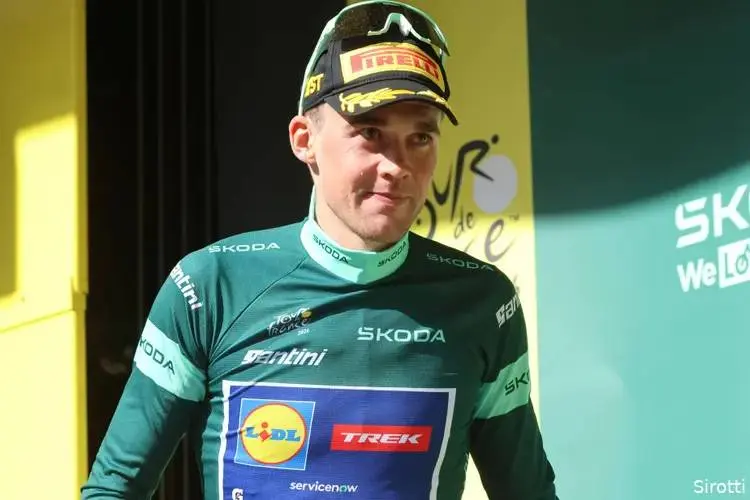
Soudal Quick-Step and Alpecin-Premier Tech had been the two teams that spent much of Stages 5 and 7 controlling the breakaway. This time, The Wolfpack were rewarded for their efforts. “I feel really good. This is only my third Tour de France, and I’ve won a stage every time I’ve participated, so that makes me very proud,” Merlier said.
Read more below!
Merlier wins without a lead-out, just like Olav Kooij
What stood out about Olav Kooij’s sprint victory on Day 5 and Merlier’s on Day 7 was the fact that both riders won without a real lead-out. On Wednesday, Kooij found his own way in the final 2 kilometers; on Friday, Merlier lost sight of his lead-out rider, Jasper Stuyven. “I was in a scramble, where I kept getting boxed out. So I had to get back to Jasper.”
As is so often the case, Merlier decided to just go for it when the opening presented itself. After being constantly “boxed out” back and forth, it was all or nothing. “Gaviria came in on the inside, but was caught in the wind and had to find a wheel again. From that moment on, I launched my sprint. I tried to figure out how many meters were left, but I couldn’t find a sign,” Merlier said at the press conference.
“So I had to go by feel, and luckily I had the legs to hold on until the finish,” he continued, knowing that his lead-out train had already been somewhat decapitated by Bert Van Lerberghe’s withdrawal in Stage 6. “I did miss him during the stage, but that will be even more the case in the coming stages. I always trust him for the lead-out, and he always keeps me out of the wind.”
Read more below the photo

Merlier hopes Tour de France sprint opportunities do not decrease further
Another similarity with Kooij: Merlier also missed the winter due to an injury and, just like the Dutchman, didn’t start the 2026 season until late. But just like Kooij, Merlier also won right away upon his return. He headed into the Tour de France with six victories under his belt. “My sprinting form was still there, but when you have to go to the Tour de France, you’re still missing two months of training.”
“It’s always a little scary when you arrive here at the highest level of cycling,” said Merlier, who thus received a positive boost. Relief—that’s what came through in the way he celebrated. “We had a meeting before the Tour de France team presentation in Barcelona, and during it, CEO Jurgen Foré said that I might be carrying too much pressure on my shoulders.”
“He made the same gesture I just made at the finish,” he said. Because for a sprinter, you have to strike quickly in the Tour, with opportunities dwindling every year. “You know there aren’t many chances in this Tour, and when one rider wins one, a second often follows. That does make you a little nervous. So I’m happy with the victory—it’s what you dream of as a kid.”
Finally, he issued a call to the Tour de France organizers and all other race organizers, emphasizing that sprinters remain important. “When I was a little boy, there were more opportunities for sprinters. I also read somewhere that this is the toughest Tour de France in years, so if you’re here as a sprinter… I hope I can continue to compete in Grand Tours as a sprinter.”
Bram van der Ploeg (Lindkedin | e-mail: [email protected]l)
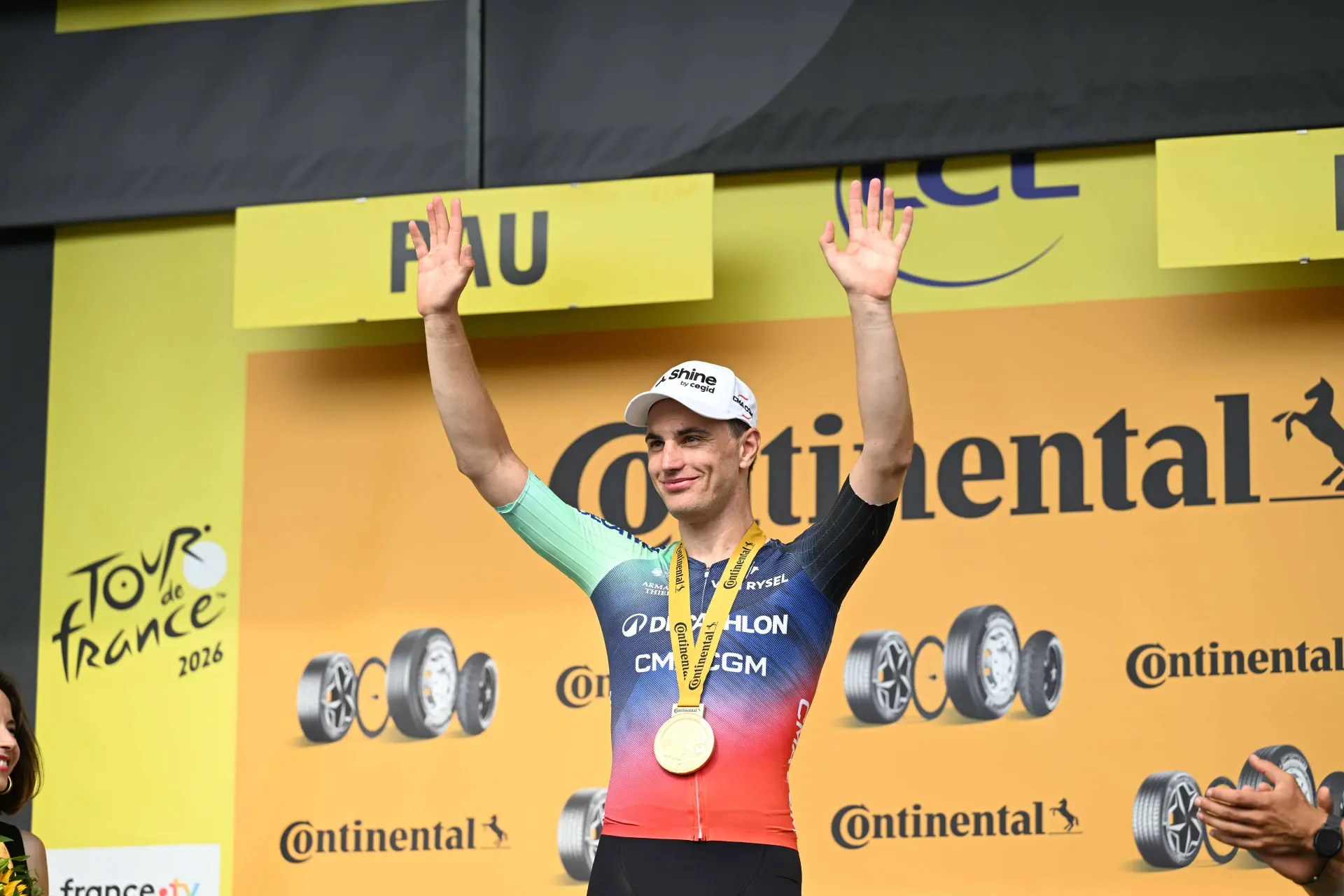
Bram van der PloegEditor-in-chief
Bram van der Ploeg (35) is the proud founder of In de Leiderstrui, IDL Pro Cycling's parent site, launched in 2018. Finally, he could create stories about the sport he had followed since childhood. He is the editor-in-chief on paper, but prefers to be with his recorder next to a rider, a team bus, or in the mud at a cyclocross race. Every year, from February to the end of May, Bram follows the entire Italian cycling season, from the Trofeo Laigueglia to the Giro d'Italia, with the grand finale in October in Lombardy. During that time, he lives in Tuscany, where he has since come to call Italy his 'home'.
IDL-productions
Rumours, speculation and guesswork: 2027 Tour de France route will be revealed live on October 22 in Paris
Vollering adds the Women’s European Championships road race jersey to her rainbow wardrobe
16-day Grand Tours, AI, VAR, drones and more: The UCI's new document has a potentially major impact from 2029 onwards
Quinn Simmons' Strava shows exactly what it takes to compete at the World Championships: ‘I said, Hey guys, anything is possible'
Despite losing the World Championships, Del Toro and Seixas rank high mentally and physically on the Pogačar scale
Latest Cycling News
Il Lombadria Strava analysis shows 2026 Paul Seixas outshines 2022 Tadej Pogačar on the Civiglio
Lucinda Brand shines in the rainbow Jersey at the Cyclocross season opener in Dendermonde
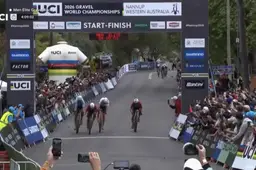
'Surprise' Dane Klaris wins the 2026 Gravel World Championships; Brit Connor Swift in the medals
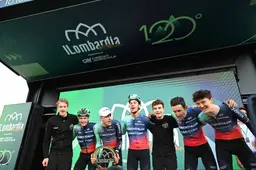
Paul Seixas is back on the start line just 15 hours after winning Il Lombardia, but on a very different bike
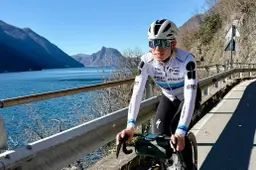
Demi Vollering is still not getting a response from the RCS and UCI regarding a women's Tour of Lombardy
Popular Cycling News
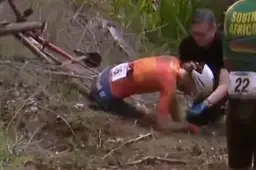
🎥 Women's Gravel World Championships shaken by a serious crash involving Unbound runner-up
In the style of Tadej Pogačar, record breaking Paul Seixas wins the 2026 Tour of Lombardy
Marianne Vos wins the 2026 Women's Gravel World Championships after crash-filled race
2026 Il Lombardia Preview | Evenepoel, Del Toro, Seixas and Pidcock all fight to win Pogacar’s crown
2026 Gravel World Championships Elite Men's Preview | Florian Vermeersch vs the dominant Specialized trio
Latest Comments
- Why is the Chrono des Nations only “three-quarters of an hour”? Is that the usual length of the time trial, or just an estimate?sprocketspiny10-10-2026
- Great ride from Seixas, but I’m slightly surprised Evenepoel couldn’t follow when the pace went up. Was it simply fatigue, or did the climb not suit him this year?cyclechamp4510-10-2026
- Heavy legs after such a long season, yet he still wins the sprint for fourth. That’s a proper professional mentality. Best of luck at the Chrono des Nations.julien10-10-2026
- Seixas was phenomenal on the Civiglio. Evenepoel’s honesty is refreshing too—fourth place on a bad day still shows just how strong he is.tourdeforce910-10-2026
- I’m a bit confused by the photo finish explanation—if the image shows time rather than distance, how can it prove who crossed first? And why was the result not explained immediately after the race?velodromevirtuoso109-10-2026
- 13,000 captures per second is some serious technology! Still, I can understand why Ciccone felt frustrated when the margin was so tiny. Hopefully the organisers publish the full image so fans can see exactly what happened.patriciaw09-10-2026
- Evenepoel handled this well. No need to turn a razor-thin result into a bigger argument, especially with the governing body confirming the procedure. That jersey and Specialized bike combination should look absolutely brilliant in Lombardy.cadencekingm09-10-2026
- A finish decided by fractions of a second will always create debate, but the UEC’s explanation of the EtherLynx system sounds pretty conclusive. Photo finishes are often misunderstood—the image represents time, not a normal view of the riders’ position. Fair play to Ciccone for accepting it graciously.pedalpowe2909-10-2026
- This feels a bit overdramatic from the media. Until Roglic or his agent confirms it, all these “insiders” are just guessing. Still, seeing him line up with Pidcock would be pretty cool.breakawaybikerd09-10-2026
- I’m still learning the team side of cycling: if a team has 29 contracts already signed, how can it still add Roglič? Do riders leave, or are there limits on how many can be registered?samanthak09-10-2026
Loading
