Just 0.00028 seconds decided it; why Ciccone seemed to ride a child's bike in the European Championships photo finish
Cycling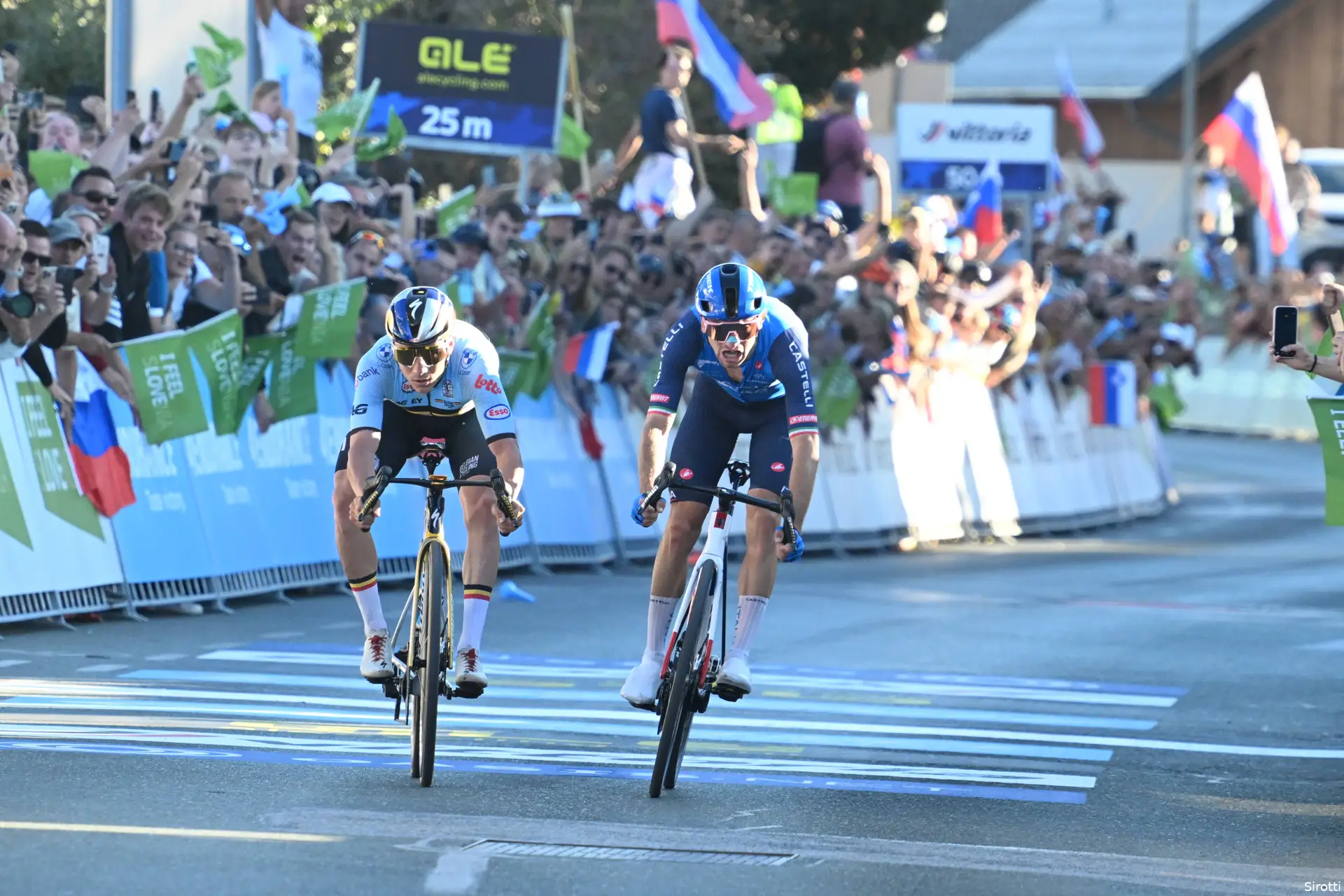
Follow IDL Pro Cycling on Google
Stay up to date with the best cycling news by making us a preferred source on Google.
Follow us on GoogleRemco Evenepoel won the 2026 European Championship road race by the thinnest of margins. On Sunday in Slovenia the Belgian edged Giulio Ciccone in a photo finish, and according to RTBF and La DH the gap was 0.00028 seconds. Yet the image that settled the race has since sparked a wave of suspicion online. Ciccone appears shrunken, his spokes look bent, and some fans have gone as far as crying foul. The explanation is far less sinister than the theories.
ADVERTISEMENT
Evenepoel and Ciccone had gone clear together more than 35 kilometres from the finish, La DH reports, and arrived at the line almost side by side. The Belgian came back level with the Italian at the very end of a long sprint and won thanks to a far more effective bike throw, according to RTBF. He had to wait several long seconds before the organisers confirmed the result.
Read more below the photo!

Why does Ciccone look like he is riding a child's bike?
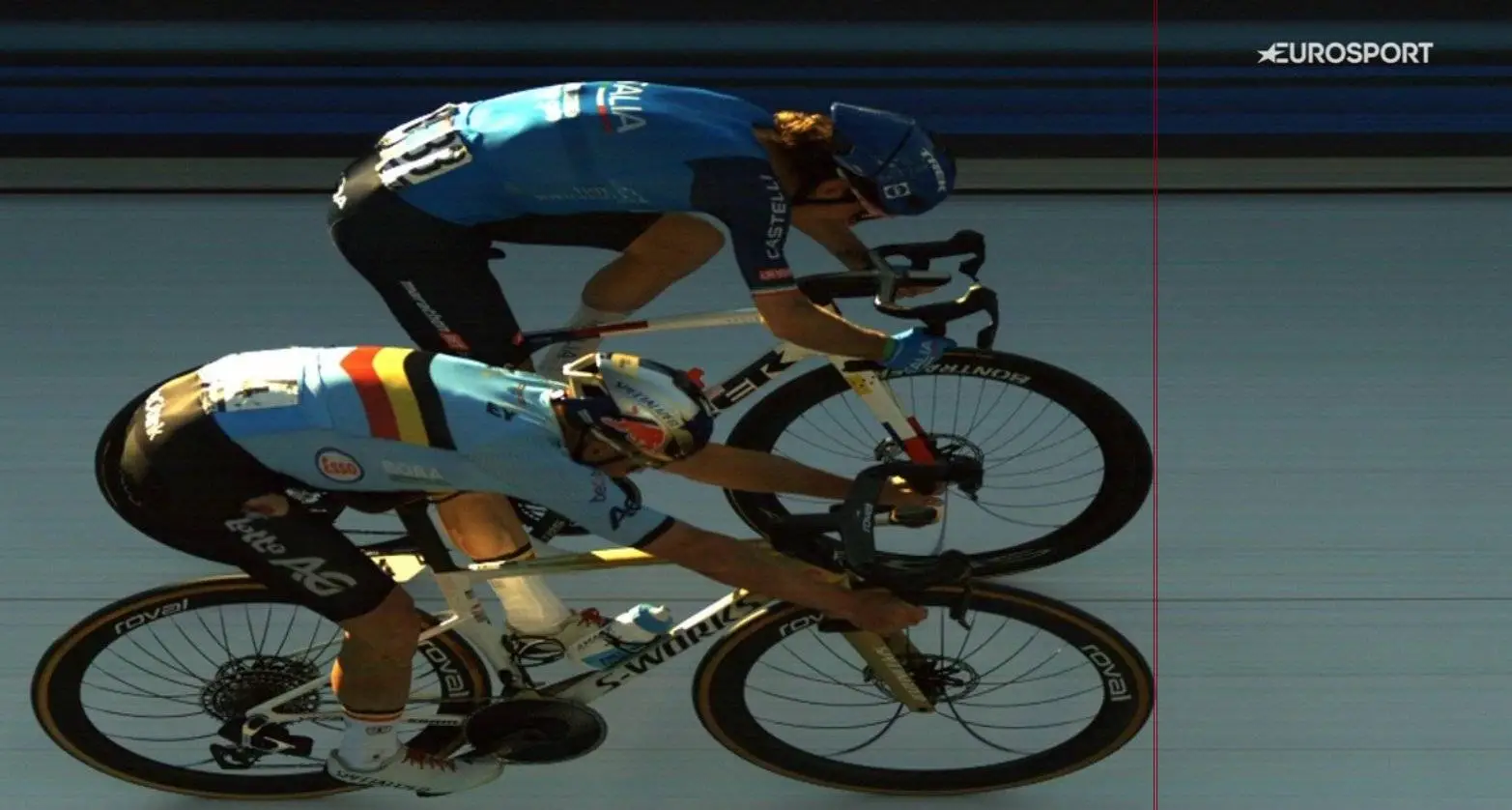
That was the question Sporza put to itself after many fans looked at the image with raised eyebrows. On the photo, Ciccone's bike looks much smaller than Evenepoel's and his wheel spokes are curved, which led some to suggest the picture was inaccurate or even doctored, La DH writes.
The key point is that a photo finish is not taken by an ordinary camera. It is produced by a scanner that records a single vertical strip exactly on the finish line, over and over again, and then places those strips side by side. The sources differ on the rate: Sporza and La DH describe one strip every millisecond, RTBF says several thousand times per second, and Italian outlet tuttoBICI reports it can reach up to 15,000 images per second depending on the equipment.
The result looks like a two-dimensional snapshot, but the horizontal axis does not show distance. It shows time. That is why, as both Sporza and RTBF point out, athletics photo finishes show almost every sprinter apparently diving at the line, even though most of them had not yet reached it when the winner crossed.
Physicist Scheire: 'In cycling you can see it best'
Sporza had already asked physics expert Lieven Scheire to explain the phenomenon after the Olympic 100 metres final between Noah Lyles and Kishane Thompson, which was decided by barely five thousandths of a second. His explanation applies just as well to Sunday's finish.
If a runner stood still on the line, you would see a flat area across the whole width. It is difficult to interpret, but it is not the case that there is a photo when the first one crosses the line.- Lieven Scheire to Sporza (translated from Dutch original)
"In cycling you can see it best," Scheire added. "Then the spokes are bent or the bikes are completely distorted." tuttoBICI offers a further reason for the warped wheels: the bottom of the wheel, in contact with the road, moves more slowly than the top. That distortion does not affect the result, the Italian outlet stresses, because the leading edge of the front wheel, the point that decides a sprint, is recorded with absolute precision.
Read more below the poll!
Viviani checked the image himself and applauded
tuttoBICI puts the margin at three millimetres, compared with the six that separated Wout van Aert and Tom Pidcock at the 2021 Amstel Gold Race, another finish that triggered endless debate. Italy's team manager Elia Viviani wanted to see the evidence with his own eyes on Sunday. He saw a sliver of light between Ciccone's wheel and the line while Evenepoel's had already reached it, then applauded the Belgian and Ciccone alike, accepting the verdict with a smile.
So the image may look unfair, but La DH calls it "implacably correct", and RTBF concludes there was no malfunction whatsoever. With the win, the 26-year-old Evenepoel became the first rider in history to have won all the major international titles, both on the road and against the clock, according to RTBF. The conspiracy theories about Ciccone's child's bike, as Sporza put it, can go in the bin.
Read also
David Bavin-HobbsChief Editor
David has been working in the sports & cycling industry for 16 years. Covering racing, business and technology, he has worked in communications for cycling companies, teams, and as a journalist. His proudest achievement is winning the first bike race he ever entered. He hasn't won a race since.
IDL-productions
Vollering adds the Women’s European Championships road race jersey to her rainbow wardrobe
16-day Grand Tours, AI, VAR, drones and more: The UCI's new document has a potentially major impact from 2029 onwards
Quinn Simmons' Strava shows exactly what it takes to compete at the World Championships: ‘I said, Hey guys, anything is possible'
Despite losing the World Championships, Del Toro and Seixas rank high mentally and physically on the Pogačar scale
Van der Poel loves it, but a lack of race radios gave McNulty and USA the chaos it needed to slip away
Latest Cycling News
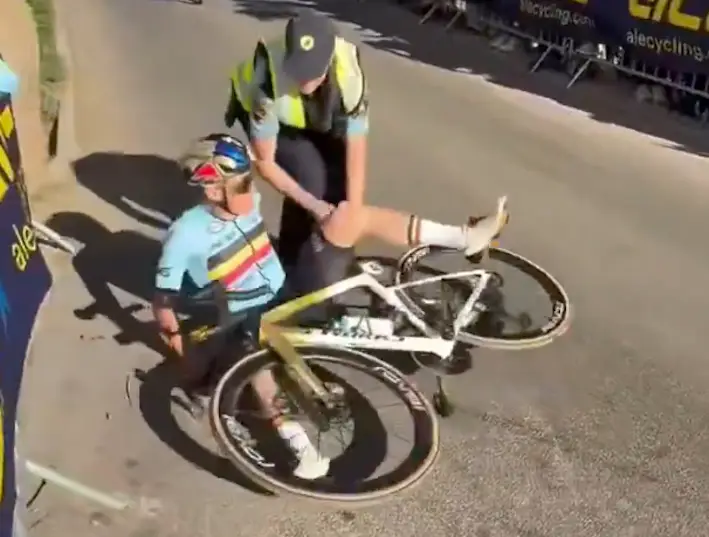
🎥 Policewoman saves Evenepoel's gold medal after European Championships crash, but still feels his wrath
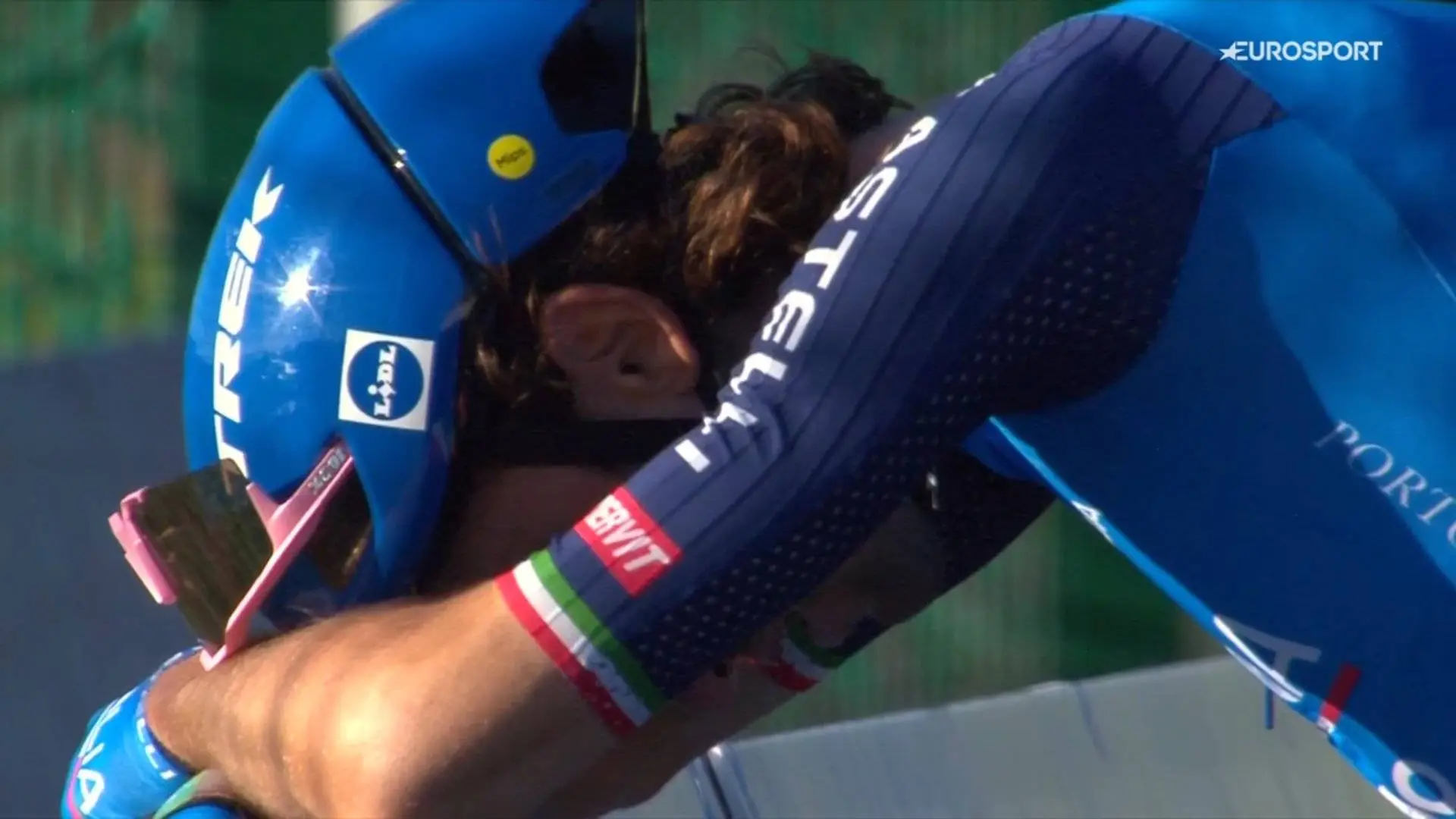
Second-place Ciccone seems to have been in a dark place: "Reasons that only your loved ones and your wife understand"
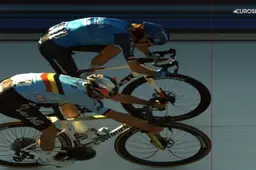
Photo finish decides magnificent European Championship, full of crashes, tactical ingenuity and a crucial bike throw
'I blocked his Wahoo': Ayuso fails to deliver more than poorly-timed prank on unamused Ciccone, at European Championships
'We would have won team classification': Voeckler unusually mellow after Grégoire and France disappoint at European Championships
Popular Cycling News
Photo finish decides magnificent European Championship, full of crashes, tactical ingenuity and a crucial bike throw
Tom Pidcock again frustrated by Matteo Jorgenson's race tactics at the Giro dell'Emilia
Boonen and others think Van Aert rode 'recklessly' at World Championships: 'We thought he'd get the message after Roubaix'
The peloton bids an incredible farewell to Nairo Quintana—except for one rider
2026 European Cycling Championships Elite Men Preview | Evenepoel hopes to do better one week after the World Championships
Latest Comments
- - The article leans too hard on “implacably correct” without showing the actual calibration/line alignment. Where’s the timing file or the judge’s overlay? If you want conspiracy theories to die, publish the data, mate.gearguru3305-10-2026
- - Not buying the outrage. Anyone who followed Amstel 2021 knows these finishes always look “weird” to the eye. The line-scanner logic is consistent, and the leading edge of the tyre is what counts. End of.patriciaw05-10-2026
- - Fair play to Viviani for checking the strip and accepting it. Remco now holding worlds RR/TT, Euros RR/TT across his palmarès is insane. First ever to complete the full set? Massive stat.bikebuffj05-10-2026
- - Wait, how does the photo make Ciccone’s wheel look bent? Is that just the scanner slicing time instead of distance? I don’t fully get why the spokes curve if they’re straight in real life.pedalpowe2905-10-2026
- - That bike throw from Remco was textbook. You can actually see Cicco holding speed but Remco launches the shoulder and pushes the front axle a hair sooner. Three millimetres sounds about right given00028s at ~60 km/h.velodromevirtuoso105-10-2026
- - So happy for PFP. After three monster seasons across MTB, CX, and road, a reset is earned. Monaco power couple era continues—like Tadej and Urška. Vamos y bonne chance!samanthak05-10-2026
- - Quick question: why did Pauline stop racing after the Tour if she kept training? Is that normal for the team to shut down a season like that?michael5405-10-2026
- - Class couple. Dylan’s engine at Paris–Tours the week before a wedding is peak cyclist energy. Hope SQS lets him open up the sprint on the Avenue de Grammont!sprocketspiny05-10-2026
- - Small quibble: didn’t they announce the engagement before Worlds in Glasgow, not Rwanda? Timeline here looks a bit off.cadencekingm05-10-2026
- - Lovely news. Two absolute pros who’ve given so much to the sport. Félicitations and best wishes for October!breakawaybikerd05-10-2026
Loading
