Looking at the 2026 Vuelta a España route, ASO still have a lot to learn from the Tour de France Femmes
CyclingTuesday, 11 August 2026 at 22:53
Follow IDL Pro Cycling on Google
Stay up to date with the best cycling news by making us a preferred source on Google.
Follow us on GoogleThe Tour de France Femmes has been a real eye-opener for much of the cycling world. The 9-day women’s stage race was undoubtedly one of the most exciting competitions in recent years, and the organisers and course designers deserve their share of the praise. The stages in the Tour de France Femmes kept viewers on the edge of their seats right up to the final day, a level of suspense that was hard to find in the men’s race.
ADVERTISEMENT
Demi Vollering was the out-and-out favourite based on her 2026 performance alone, and went on to win the race by over a minute. However, the FDJ United-SUEZ leader wasn’t as dominant as she had been in the spring. Back then, she had left everyone in the dust at the Tour of Flanders, the Flèche Wallonne, and Liège–Bastogne–Liège, but the competition was fierce in the Tour.
While everyone expected Pauline Ferrand-Prévot and Visma | Lease a Bike to come up with a plan to beat Vollering, it turned out to be Kasia Niewiadoma (CANYON//SRAM) and Marlen Reusser (Movistar) who were the main challengers. And to think that Reusser was almost always on her own in the final stages, without much support. Niewiadoma at least still had Antonio Niedermaier with her.
We’re just mentioning this because Vollering was by far the strongest on paper, not only individually but also with her team. FDJ United-SUEZ fielded several women who might well have been the lead riders on other teams. Think of Paris-Roubaix winner Franziska Koch, top climber Juliette Berthet (who was ill, though), top talent Celia Gery, and then there’s also Evita Muzic and Amber Kraak.
Continue reading below the photo

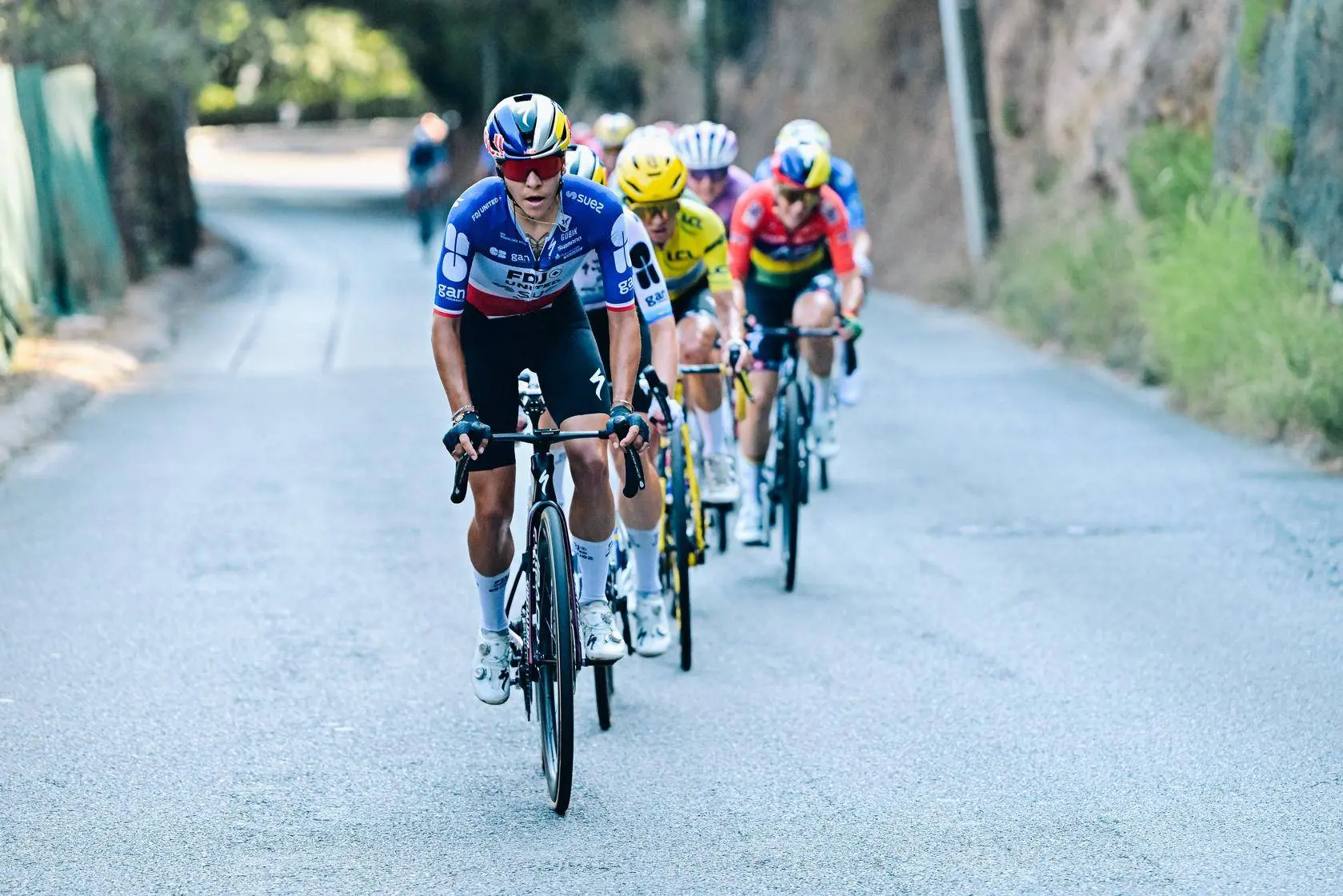
Demi Vollering
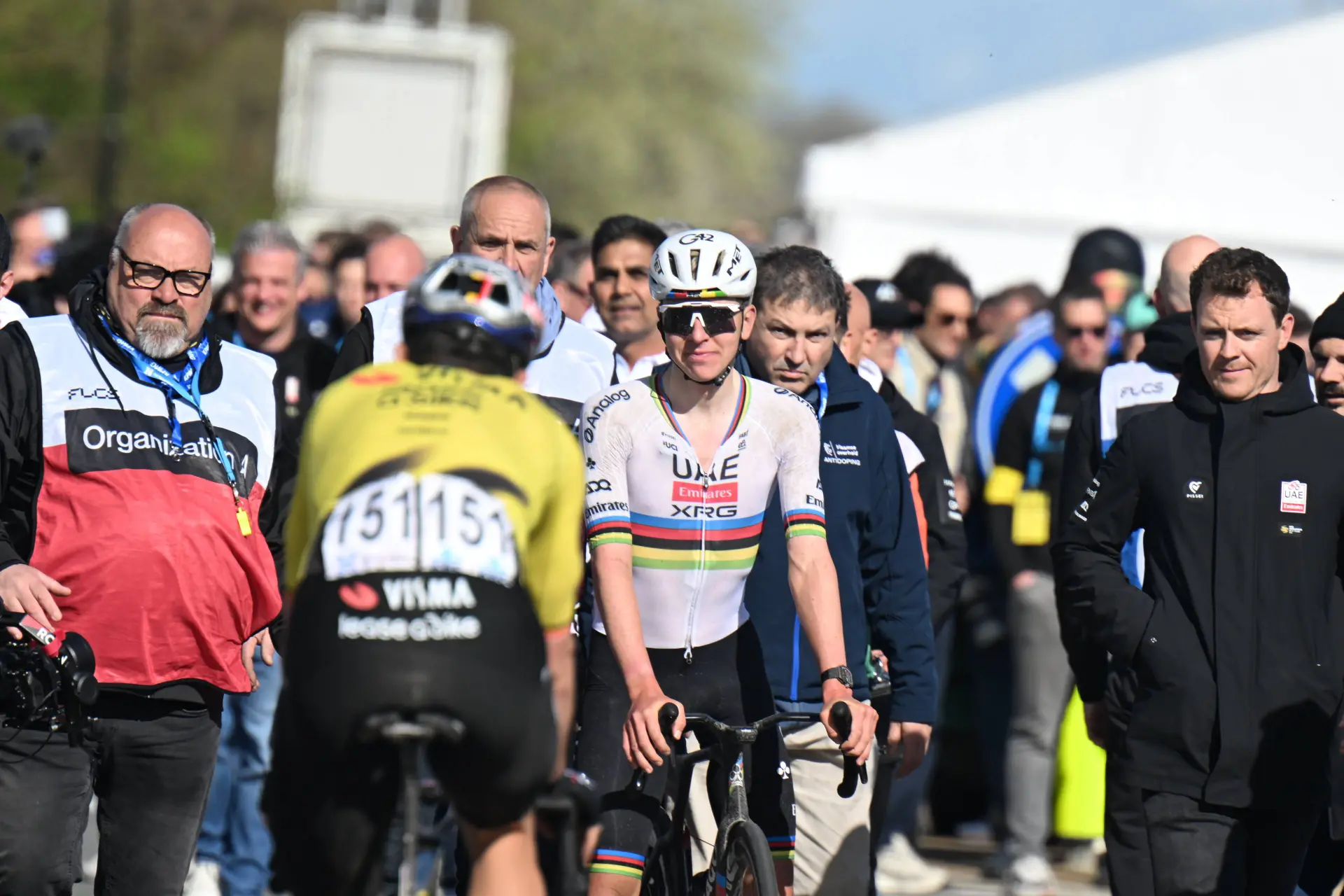
The dominance of Tadej Pogačar and UAE Emirates-XRG
FDJ United-SUEZ’s dominance was immense this spring, as the team won several races with multiple riders. It’s a bit like UAE Emirates-XRG, which almost always wins with Tadej Pogačar, but is still among the best even when the Slovenian world champion isn’t competing. This is the result of tremendous depth, with several top riders capable of winning.
In the spring, Pogačar was also dominant in the Tour of Flanders and Liège–Bastogne–Liège, as those are races where, in principle, the strongest rider wins. In the Tour de France, however, his dominance was even more painfully evident. If Pogačar had wanted to, he could have won eight stages. He let one go to Isaac del Toro and ended up with five stage wins himself.
UAE Emirates-XRG and Pogačar were able to capitalise on their team and individual strengths in the Tour de France, whereas Vollering and FDJ United-SUEZ were far from always able to do so in the Tour de France Femmes. Comparing men’s and women’s cycling directly is risky in this context. However, the course design cannot be viewed in isolation from this factor.
Continue reading below the photo

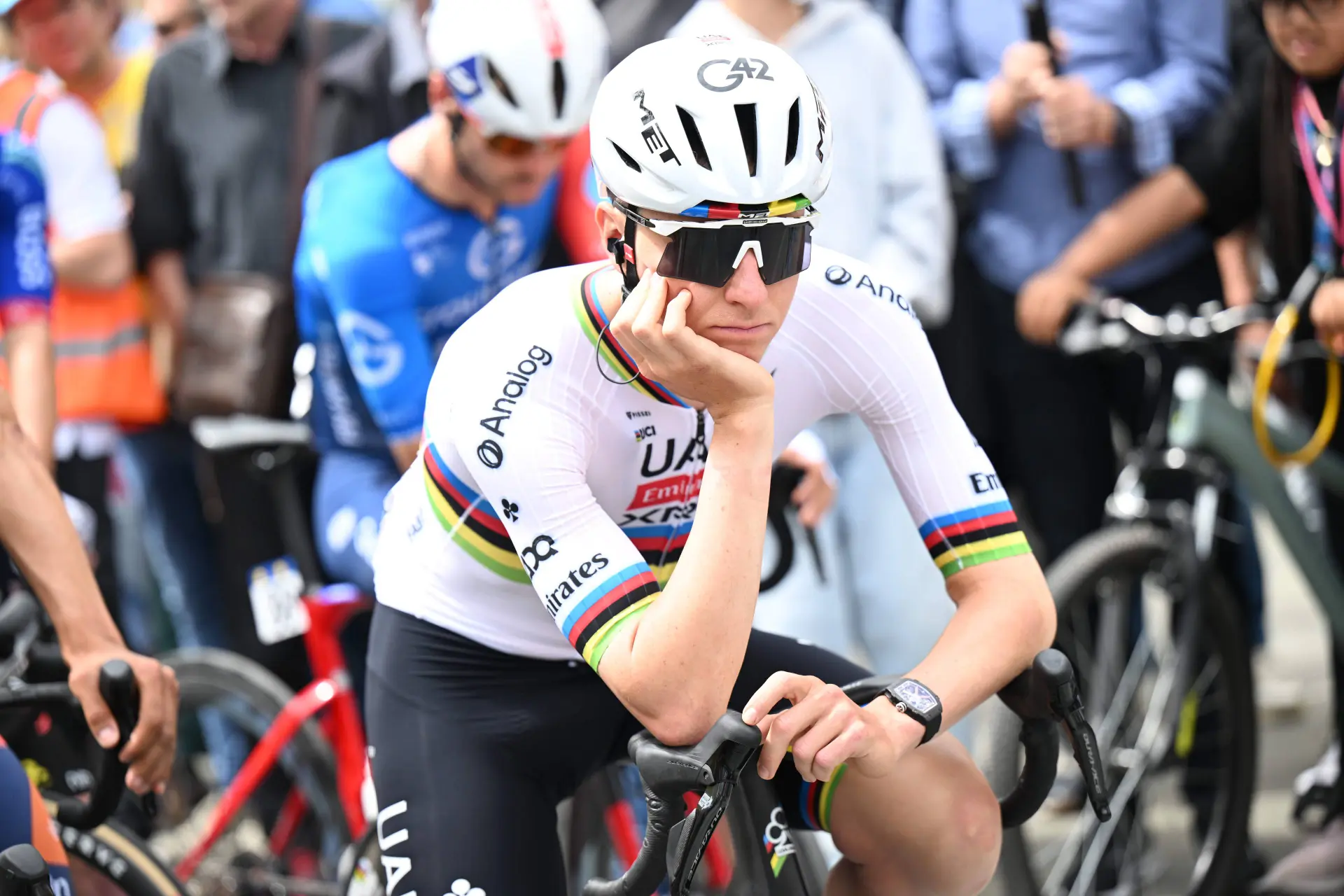
There was nothing anyone could do to stop Tadej Pogacar in the Tour de France.
The Tour de France Femmes features climbing stages during the Final Weekend
The comparison between Pogačar and Vollering also falls short, simply because Pogačar is still a cut above the rest in the men’s race. Still, it was striking that Vollering and FDJ United-SUEZ really only had one chance in the first seven days to showcase their strength both as a team and as individuals. That was on Mont Ventoux, and Vollering didn’t win there.
Another difference between men and women: in the women’s race, riders still tend to keep an eye on each other, and tactics often play a role. For the men, it’s full throttle from start to finish, with a UAE train that often stayed in contention deep into the final stretch and Pogačar simply pulling away from the pack. Breakaway hopefuls with a plan were kept in check and often reeled back in during the closing stages.
The Tour de France Femmes route, however, deserves high praise, as—just like in previous editions—it prioritized diversity, excitement, and a late decider. The true mountain stages were saved for the end, while the sprint and punchy stages resulted in smaller time gaps in the stages leading up to them. The top contenders were evenly matched, simply because they didn’t have many opportunities to build up significant gaps.
Continue reading below the photo

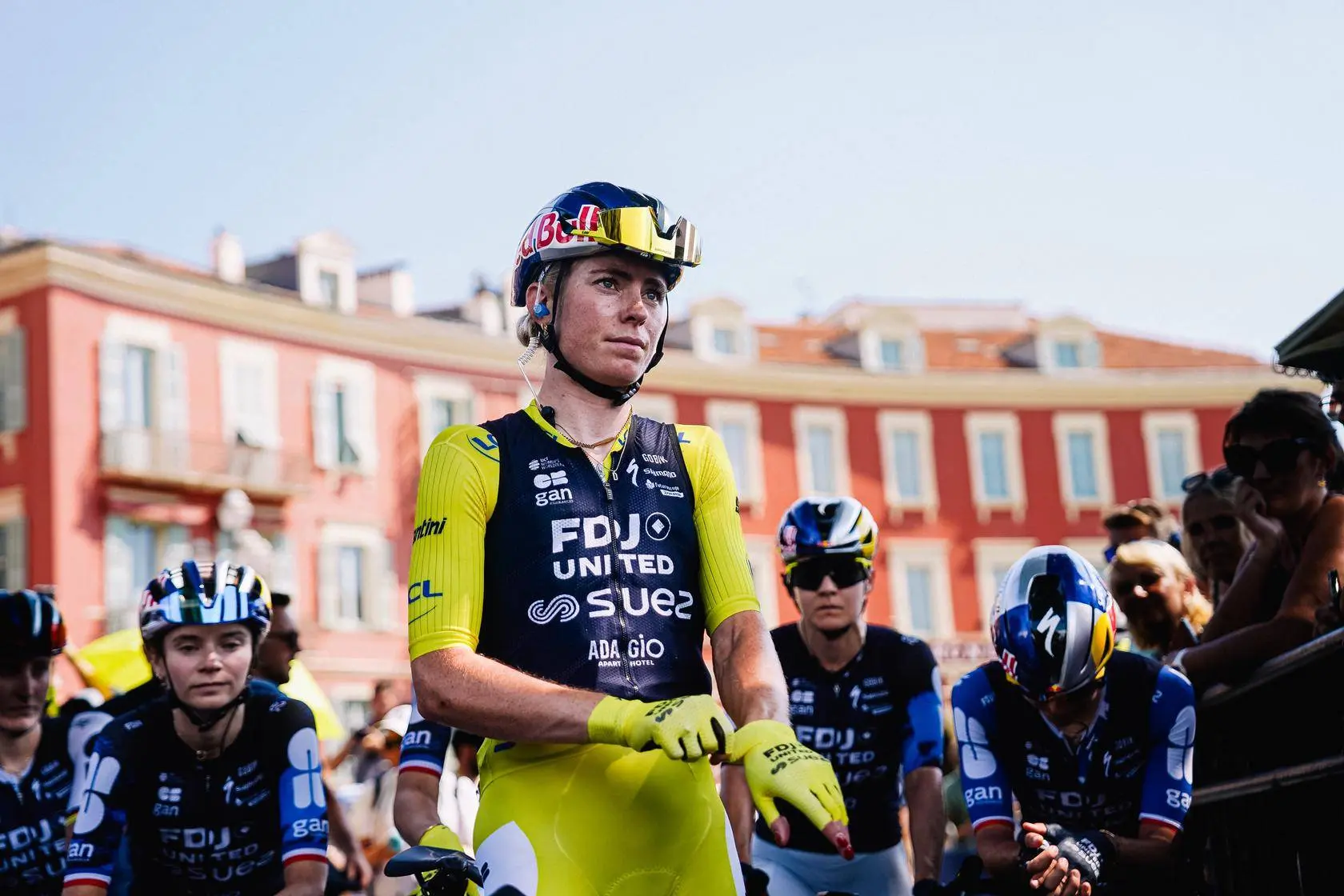
Pogačar wouldn't have made a difference until late in the Tour de France Femmes
For the 2025 Tour de France, the organisers actually opted for a format similar to the one we’ve seen in the Tour de France Femmes for years. It wasn’t until Day 7 that Pogačar really got a chance to make a difference, and he did so convincingly right away on Mûr-de-Bretagne. However, it wasn’t until Day 12, with the finish at Hautacam, that minutes were gained.
In this year’s Tour de France, Pogačar faced a stage over the Tourmalet as early as Day 6, and after the Slovenian’s show of strength, the Tour was all but decided. On the Tour de France Femmes course, Pogačar had been given a chance in the first six days—in a time trial and a punchy Stage 5—but his real day didn’t come until Day 7 on Mont Ventoux.
With Pogačar in the race, it probably wouldn’t have been a close contest all the way to Nice—he would have already sealed the deal on Mont Ventoux. But that wouldn’t have happened until the final weekend. Given the current balance of power in men’s cycling, a temporary shift toward more low-altitude mountain stages, sprints, echelon stages, and slightly fewer major mountain stages in the first two weeks might not be such a bad idea.
Continue reading below the photo

Pogacar was still in the race even during Stage 21 of the Tour de France
Vuelta a España route is right up Pogačar's alley
We’re not claiming that Pogačar couldn’t make a difference on a less challenging course, but hopefully the gaps at the finish won’t be measured in minutes. Let’s leave that for the third week, just like in the women’s race. Let the very best riders rise to the top then, knowing that they’ve had to fight hard during the first week (for the women) and the first two weeks (for the men) to stay in contention.
In that regard, the Vuelta a España route offers little hope. It’s in the race’s DNA that nearly half of the stages finish uphill. But this stands in stark contrast to the excitement generated by the Tour de France Femmes route. To put it bluntly, Pogačar could already be 4 minutes ahead after the first week, with 3 opportunities to win on hills and climbs and at least 1 or 2 finishes that suit him very well.
In the second week, two more grueling mountain finishes will be added to the route, before Pogacar—if he feels like it—can build his lead to 7 or 8 stage wins in the third week. That might not even be necessary anymore, which would be good news for the attackers. However, there’s a good chance that the conclusion after the Vuelta will be that, when it comes to designing the Tour, the Vuelta, and dealing with Pogačar’s presence, the ASO still has a lot to learn from a sensational Tour de France Femmes.
Bram van der PloegEditor-in-chief
Bram van der Ploeg (35) is the proud founder of In de Leiderstrui, IDL Pro Cycling's parent site, launched in 2018. Finally, he could create stories about the sport he had followed since childhood. He is the editor-in-chief on paper, but prefers to be with his recorder next to a rider, a team bus, or in the mud at a cyclocross race. Every year, from February to the end of May, Bram follows the entire Italian cycling season, from the Trofeo Laigueglia to the Giro d'Italia, with the grand finale in October in Lombardy. During that time, he lives in Tuscany, where he has since come to call Italy his 'home'.
IDL-productions
Three world titles, two heart surgeries, and one last U23 chance: the Rogers family story behind Cameron's World Championship heartbreak
Mathieu van der Poel sees '1,000 scenarios' for the World Cycling Championships road race: 'Actually reminds me a bit of Glasgow'

Here's why the 2032 World Championships were awarded to India, not the Netherlands
Who is Isabella Holmgren, the 21-year-old Canadian who is the clear favourite for the women's U23 world championship?
Australia leave team spots empty, USA riders pay $1,000 to race: the World Championships' national team model faces serious financial problems
Latest Cycling News
Reusser lashes out at fellow World Championship chasers: 'I was the only one racing for gold'
Niewiadoma has mixed feelings finishing second to Vollering again: 'I lost the rainbow jersey'
🎥 Women's World Cycling Championships marred by severe crash, favourite Paula Blasi abandons
Longo Borghini goes down fighting at the World Championships: 'I'd rather lose like a champion than beat her like a loser'
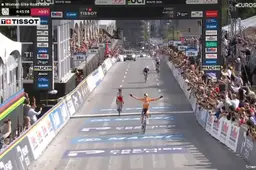
World champion at last! Demi Vollering made the race her own but is pushed all the way to the end
Popular Cycling News
Disappointed Belgian Driesen has his doubts about the legitimacy of Barry's victory: 'They'll say I'm a sore loser'
🎥 Women's World Cycling Championships marred by severe crash, favourite Paula Blasi abandons
2026 World Cycling Championships Route & Schedule | Vollering gets her rainbow finish after thrilling race
Tom Pidcock has four specifically picked domestiques in his hunt for a record-breaking rainbow jersey
World champion at last! Demi Vollering made the race her own but is pushed all the way to the end
Latest Comments
- - Qué carrera, magnifique esprit! Niewiadoma mostrando coraje total, pero Demi otra vez imparable en el sprint. Respect to both.sprocketspiny26-09-2026
- - Not sure the article gives enough tactical detail. Who was in the chase group and what teams were actually pulling? That context matters if we’re judging Kasia’s options in the finale.jennifer1926-09-2026
- - Brilliant race craft from Vollering. That surge at 40km to go forced everyone to burn matches, and Kasia still nearly nicked it. Silver today, but the trajectory for Niewiadoma is clearly up. Keep the faith.patriciaw26-09-2026
- - Can someone explain why a rider who isn’t the best sprinter wouldn’t attack earlier than 40k out? If sprinting isn’t her strength, wouldn’t a longer solo be better?julien26-09-2026
- - Heartbreaker for Kasia again. She’s riding smarter every year, closing that sprint gap bit by bit. Montréal finish really suited Demi’s kick though. Chapeau to both.bikebuffj26-09-2026
- - Grande corsa! Vollering troppo forte, pero Marlen con mucho coraje. Last climb gave me goosebumps.jennifer1926-09-2026
- - Kasia was immense. She covered so many moves and still had a kick on the last ramp. ELB nearly pipped Reusser too—fourth feels harsh, but that’s racing. Chapeau all round.davidm26-09-2026
- - Can someone explain why running out of energy gels happens at this level? Don’t they have team cars or feed zones to avoid that? Seems crazy to lose a medal that way.michael5426-09-2026
- - Not sure I buy Reusser’s take that “everyone was riding for second.” Dutch squad had numbers but they weren’t exactly free to tow the bunch. Also, national-team dynamics always get messy at Worlds. Still, her honesty is refreshing.pedalpowe2926-09-2026
- - What a thriller. Vollering timed it perfectly, but hats off to Reusser for lighting it up and taking big pulls. You could see the moment she looked for a gel and the gap opened—brutal.cyclechamp4526-09-2026
Loading