Tadej Pogačar hits the gravel as Vuelta a España preparation begins
CyclingWednesday, 05 August 2026 at 16:52
Follow IDL Pro Cycling on Google
Stay up to date with the best cycling news by making us a preferred source on Google.
Follow us on GoogleTadej Pogačar won the Tour de France for a fifth time just over a week ago. The Slovenian from UAE Team Emirates-XRG was once again incredibly dominant, also collecting five stage victories during La Grande Boucle. Before turning his attention to the Vuelta a España, the world champion decided to enjoy himself in a completely different cycling discipline—one that also serves a practical purpose for what lies ahead.
ADVERTISEMENT
Pogačar returned to his native Slovenia after the Tour and spent time in Komenda, the village where he was born. As he does every year, he also held a criterium there. After first winning the professional race, he organised the “Pogi Challenge.” More than 1,000 amateur riders attempted to stay ahead of him on the Krvavec climb, but only Germany’s Frederik Niessen managed to do so.
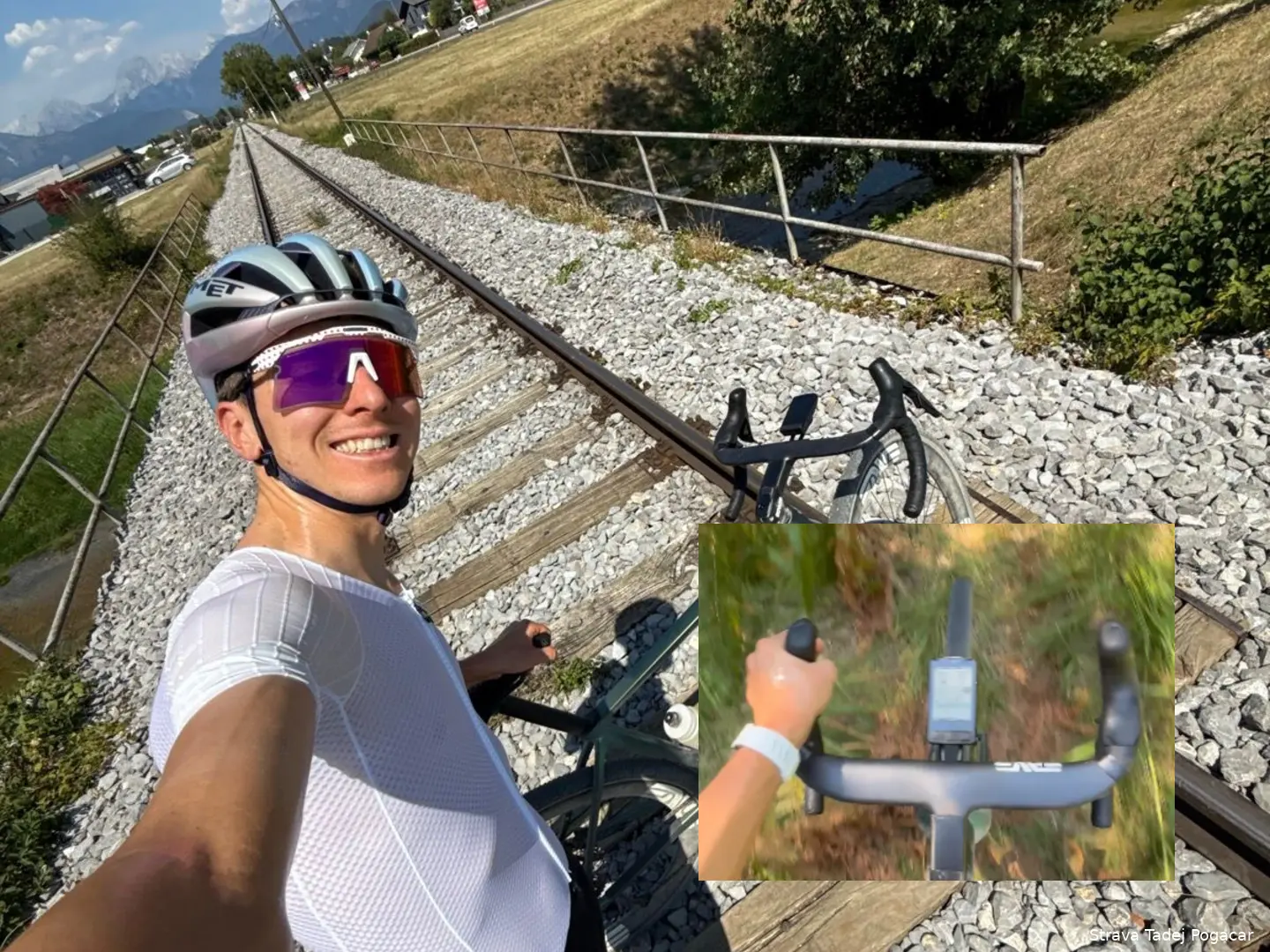
After that, it really was time for the superstar to recharge. There were no demanding training sessions or races for the world champion, who eased off following the Tour de France. Staying off the bike completely proved impossible, however, so he brought out his gravel bike. On Monday, he completed a 62-kilometer ride on the unpaved roads and forest trails surrounding Komenda.
Read more below the photos!
Pogačar prepares for the Vuelta on gravel
Where Pogačar would normally be knocking every KOM off the top of the Strava leaderboards, this was a very different kind of afternoon. Averaging 27 kilometers per hour, the emphasis was mainly on enjoying the warm weather and the beautiful Slovenian countryside. One day later, he repeated his gravel adventure with a ride of almost 40 kilometers, spending close to an hour and a half in the saddle.
These are important days for the Slovenian, who needs to recharge his batteries. He will soon need a full tank again after recently announcing that he will compete in the Vuelta a España. It will be only his second appearance in the Spanish Grand Tour. His first came during his debut professional season in 2019, when he finished third overall and won three stages, but he has never taken the red jersey home.
The gravel riding is not purely for entertainment, either, as this year’s Vuelta also features an unpaved section. Stage 6 to Castelló includes the Puerto El Bartolo as its decisive challenge. The climb is 9.1 kilometers long at an average gradient of 7.1 percent, with roughly four kilometers taking place on gravel roads. There are also sections where the gradient rises comfortably above 16 percent.
David Bavin-HobbsChief Editor
David has been working in the sports & cycling industry for 16 years. Covering racing, business and technology, he has worked in communications for cycling companies, teams, and as a journalist. His proudest achievement is winning the first bike race he ever entered. He hasn't won a race since.
IDL-productions
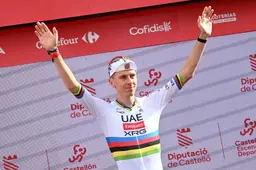
Tadej Pogačar's 2027 schedule is shaping up and it is mega: Tour de France #6, 'Super Worlds', and unfinished business in Spain
An American rider can win the Elite Men’s World Championship road race, but the smart money isn’t on Quinn Simmons!
Demi Vollering take note: Elite debutant Zoe Bäckstedt's previous World Championship results show why she's a contender

Female stars from across cycling disciplines, including Demi Vollering, condemn Sydney Sweeney 'sports' video

2026 GP Montreal preview | Evenepoel and Pidcock face World Championships dress rehearsal
Latest Cycling News
Favourite for the World Cycling Championship road race withdraws: 'I won't take any risks with my career'
Demi Vollering surprised after World Championship time trial recon in Montreal: ''Sh*t, that didn't go well'
The World Cycling Championships haven't even started yet, but Remco Evenepoel has already thrown his first jab
UCI issues scathing ruling following 'professional misconduct' and imposes a 10-year suspension
Remco Evenepoel makes full use of the short time he is given on the World Championship route: 'Remarkable course'
Popular Cycling News
UCI issues scathing ruling following 'professional misconduct' and imposes a 10-year suspension
Ben Turner's departure from Netcompany INEOS isn't all that surprising once you hear his story: 'The team I looked up to'
Sepp Kuss is a special kind of cyclists, one we’re seeing less and less: 'It's a good formula for me'
Covered in mud and fully geared up: Pidcock is well prepared for a unique World Championship opportunity
Tadej Pogačar's 2027 schedule is shaping up and it is mega: Tour de France #6, 'Super Worlds', and unfinished business in Spain
Latest Comments
- - Gran artículo, pero una duda: ¿por qué solo dos horas de reconocimiento? Eso suena muy corto para un Mundial. Merci!velodromevirtuoso119-09-2026
- - Wait, Rwanda 2025—did he really win last year by over a minute on Jay Vine? I thought the huge margin was two seasons ago. Feels like the article’s mixing editions?jennifer1919-09-2026
- - Fifth in Montréal after the Québec win isn’t a red flag. That parcours is punchier and the cadence demands are different. TT legs should be fine by Sunday. Allez Remco!davidm19-09-2026
- - Ganna’s “2–3 km” power is insane, but this is 39k. Over/under pacing will decide it. If Remco negative splits like Québec, he’s favourite. If it’s blustery, Ganna’s mass might help. Flip a coin.sprocketspiny19-09-2026
- - Remco’s right to be annoyed. Two hours for line choice, wind mapping, road surface, manhole locations, roundabouts, and turnaround pacing is tight. He’s meticulous—racetrack sessions, CdA dialing, the whole lot. Marginal gains win rainbow bands.andrewf19-09-2026
- - How does course reconnaissance actually help in a time trial if it’s mostly flat and straight? Is it just corner lines and wind spots, or are there other things they look for?bikebuffj19-09-2026
- - Minor correction: the Worlds TT is usually on a weekday, not Sunday the 20th? Is that a typo from the organiser or the article? Either way, Montréal flats + long straights scream Ganna vs Evenepoel. Can’t wait.gearguru3319-09-2026
- - Love the confidence from Remco, but two hours recon on a2km TT is a joke. Course knowledge matters at 55 kph. Still, if anyone maximises aero and pacing, it’s him.breakawaybikerd19-09-2026
- - Qué pena por Carapaz, pero la salud primero. Volverá más fuerte. Grande campeón!robert6519-09-2026
- - Slightly harsh take: announcing via “his own channels” isn’t unique to South America, it’s just modern pro sport. That line felt a bit stereotyped, to be honest.davidm19-09-2026
Loading

