Reigning Olympic road race champion Kristen Faulkner is training with AI, records highest ever power
CyclingSaturday, 25 April 2026 at 10:28
Follow IDL Pro Cycling on Google
Stay up to date with the best cycling news by making us a preferred source on Google.
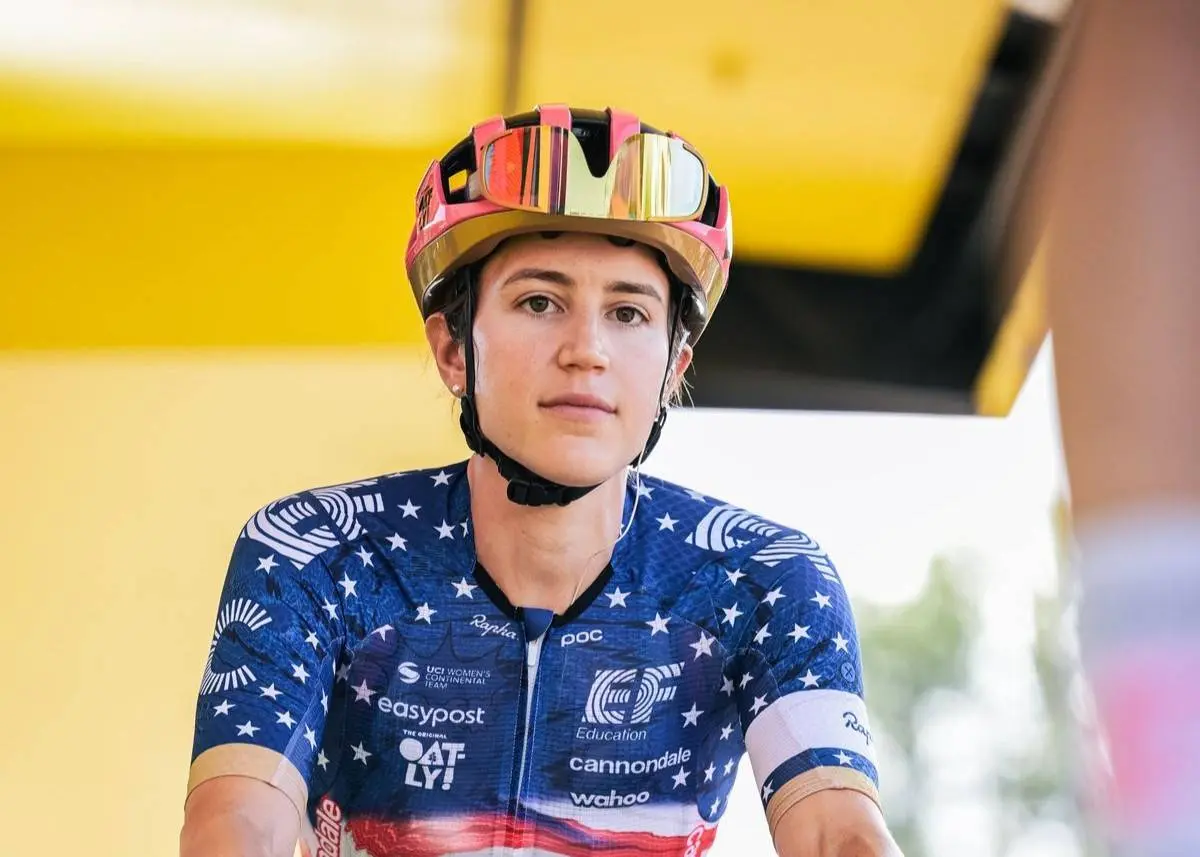
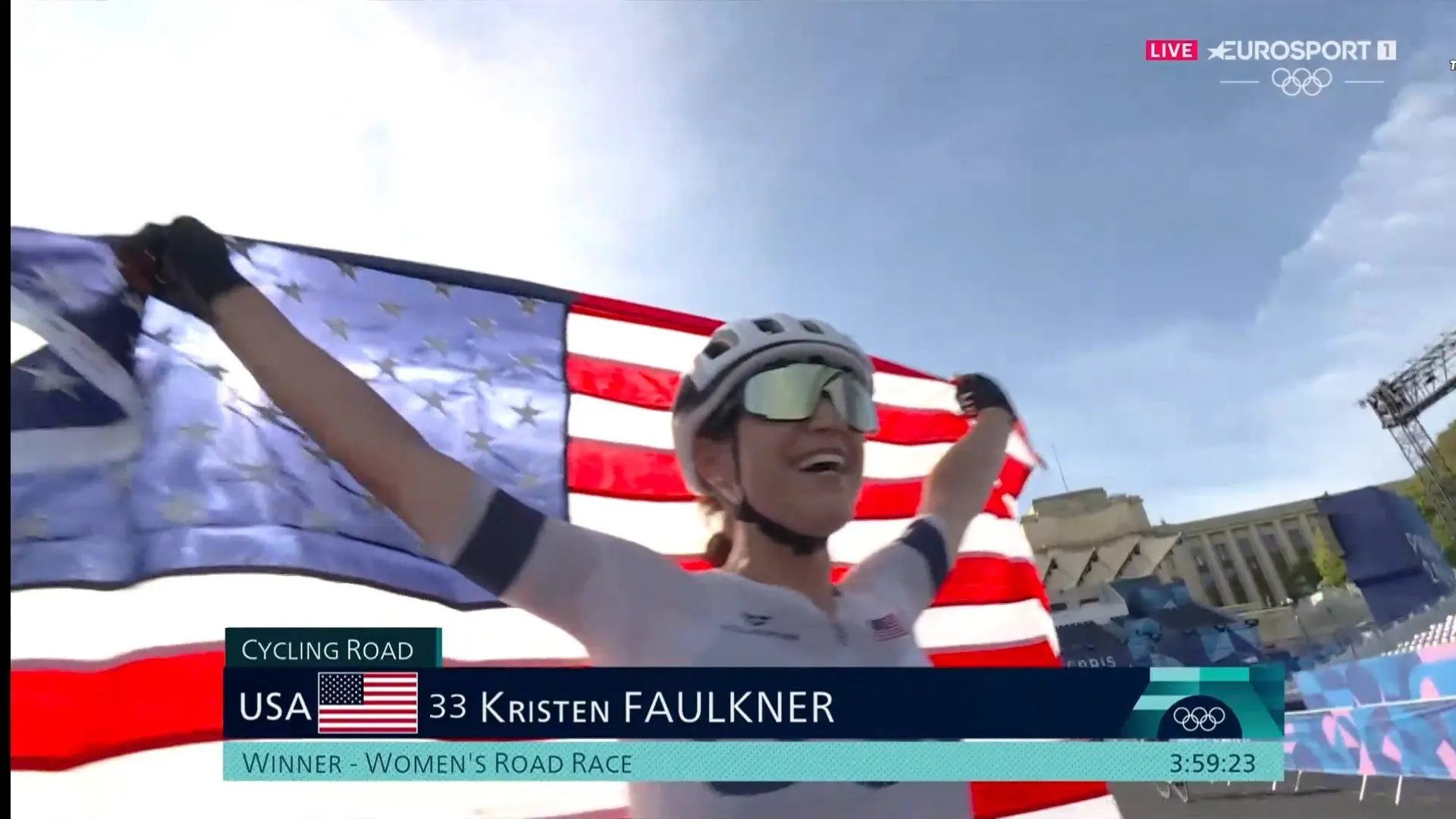
Follow us on GoogleAnyone looking for the reigning Olympic road race champion in the women's peloton in 2026 has had to look hard. Kristen Faulkner, who won gold in Paris in 2024, has made just one European appearance this season — but says she is breaking her power records. She has shared an update on LinkedIn.
ADVERTISEMENT
Faulkner's only race so far has been the Tour of Flanders, which ended with a DNF. Last year she was forced to end her season early after failing to finish stage five of the Tour de France Femmes. We have seen relatively little of her since her triumphant day in Paris. Which makes her latest update all the more interesting.
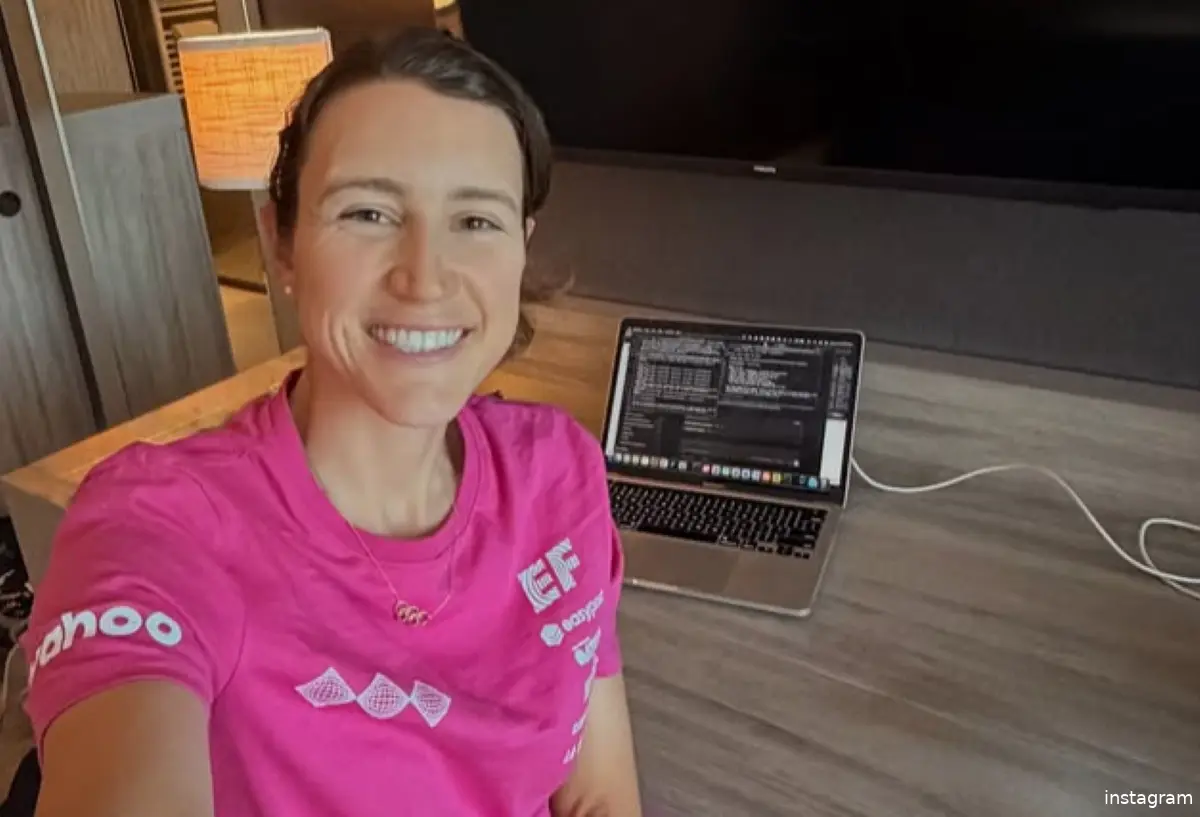
"For the last two months, I've been coding whenever I’m not training. 10+ hours a day. My training data open in front of me. I have a lot of questions I want to answer and a lot of data to synthesize," the Alaska-born rider begins.
"Sometimes I'd get back from my ride and jump onto my laptop in kit before putting my bike away. I'd start a coding session and let it run while I showered. I studied computer science in college, and I have always loved building. It gives me so much energy. When I spent my winter in SF and watched the AI boom up close, I wanted to build again."
"So little performance research is done on women, particularly regarding the needs of elite female athletes," Faulkner explains. "So I took matters into my own hands, and I started writing the research myself. I did not want to keep waiting for someone else to study the questions that matter to my body."
Continue reading below the photo!
Faulkner collected 9 years of data
All of her own data feeds her personal research. "For nine years, I collected biometric data that I struggled to synthesize. Heart rate. HRV. Sleep. Weight. Power. Temperature. Training load. Menstrual cycle phases. Bloodwork. DEXA scans."
"Every app gave me one piece of the story, but the answer was never in one app. It was in how it all interacted. So I built a system that pulls in the data sources I actually use as an athlete and runs them against 4,400 hours of my own training history. It does not just show me dashboards. It builds personal models of my physiology."
That does not translate directly to other athletes.
Every model is trained on my body. "Every finding is specific to my history. And every output is actionable, not just interesting. I used this to help me prepare for the Pan Am Championships, where I won 3 gold medals this year. Today [Wednesday], I produced my best 20-minute power ever with training help from this app.'
Continue reading below the photo!
Faulkner believes AI can change women's sport
The 33-year-old intends to take her new obsession further. "AI is going to change women’s performance research from the bottom up, and I want to be a part of it," she writes. "I studied computer science at Harvard. I worked in venture capital. I actively invest in AI companies. I race on the Women’s WorldTour. I am training to defend Olympic gold on home soil in LA 2028. I’ve applied all of that knowledge to building this."
She closes with a glimpse into her own story. "I came into cycling late. I did not win because I had the deepest race history or the most experience. I won because I used my brain as much as I could. Before my first European race, I made flashcards of the riders, I studied every corner of every course, and I analyzed my data rigorously. I am doing the same thing now, with AI."
Read also
Tom van der Salm (27) comes from the charming town of Zeilberg (Deurne) in the Netherlands and has been working as editor-in-chief & journalist at IDL Pro Cycling's parent site, In de Leiderstrui, since 2019. He travels with the peloton from the Tour de France to the AlUla Tour and from the World Championships in Rwanda or Canada to the Zilvermeercross in Mol. In his spare time he enjoys playing football, mountain biking, running, walking with his Labrador/Stabyhoun, investing, holidays, (specialty) beers, reading, cooking and watching sports & documentaries!
Contact: [email protected]
IDL-productions
Demi Vollering take note: Elite debutant Zoe Bäckstedt's previous World Championship results show why she's a contender
With Pogačar sidelined, UAE teammate Brandon McNulty has a genuine shot at the World Championships for Team USA

Female stars from across cycling disciplines, including Demi Vollering, condemn Sydney Sweeney 'sports' video

2026 GP Montreal preview | Evenepoel and Pidcock face World Championships dress rehearsal
2026 Vuelta a España Stage 21 preview | Route change boosts Van Aert as Granada circuit sparks safety debate
Latest Cycling News
Mathieu Van der Poel signs another big sponsorship deal just before the World Cycling Championships
Covered in mud and fully geared up: Pidcock is well prepared for a unique World Championship opportunity
Demi Vollering take note: Elite debutant Zoe Bäckstedt's previous World Championship results show why she's a contender
New Zealand's World Championship team forced to pay their own way to Montreal: 'It's a strange dynamic'
2026 World Time Trial Championships Elite Men Preview | Evenepoel and Ganna, but can anyone else win the rainbow bands?
Popular Cycling News
Cycling transfers 2026/2027 | Lotto Intermarché add experience with veteran GC rider
Ben Turner's departure from Netcompany INEOS isn't all that surprising once you hear his story: 'The team I looked up to'
Female stars from across cycling disciplines, including Demi Vollering, condemn Sydney Sweeney 'sports' video
Dutch national coach explains why he dropped Anna van der Breggen and Marianne Vos for the World Cycling Championships
Sepp Kuss is a special kind of cyclists, one we’re seeing less and less: 'It's a good formula for me'
Latest Comments
- - Vamos Aotearoa! Finn en forma después de la Vuelta y Pologne. Allez les Kiwis, bring it home.andrewf18-09-2026
- - Bit sceptical tbh. Saying “prioritise the track” feels like a convenient excuse when your best recent Worlds result is on the road. If you want results, back the athletes. This policy almost incentivises selfish racing.samanthak18-09-2026
- - Stoked to see Niamh back after silver in Kigali. Hard to believe that podium didn’t unlock any change. If the men ride with numbers into the final, Corbin Strong’s kick plus Finn on the climbs could be a nice one-two.jennifer1918-09-2026
- - Wait, why doesn’t the federation cover flights if they’re sending a team? If CNZ has $70k for “delivery,” what does that actually mean in practice—staff, cars, hotels?jeremya18-09-2026
- - Really solid piece. Finn’s honesty about the “everyone pays their own way” dynamic is eye-opening and explains why NZ often rides more opportunistically at Worlds. Montreal’s punchy laps suit him and Pithie—top 10 isn’t crazy.sprocketspiny18-09-2026
- - Love the Simmons/Jorgenson/Powless trio for USA. That’s a lot of horsepower to keep Brandon fresh. If they time the bridge before the final ascent, it’s game on. Vamos USA!velodromevirtuoso118-09-2026
- - Del Toro winning while Yates policed moves was classic UAE chess. Without that structure at Worlds, can McNulty read the chaos as a sole leader? He’s earned the shot, but the race will be messy.cadencekingm18-09-2026
- - Question: why does the climb being6 km matter so much? Is it more about punch vs pure climbers? Trying to understand why McNulty suits this course over, say, Remco.jeremya18-09-2026
- - Not sure I buy the “favourite” tag. Montréal one-day is not Worlds with national teams and weird alliances. Evenepoel and Pidcock will race totally different next time. Cautious optimism, not hype.sprocketspiny18-09-2026
- - Huge ride from McNulty. Third on the Worlds circuit against that field is no fluke. If Simmons and Jorgenson mark the early fireworks, Brandon can launch on Camillien-Houde last lap. USA actually looks stacked for once.julien18-09-2026
Loading