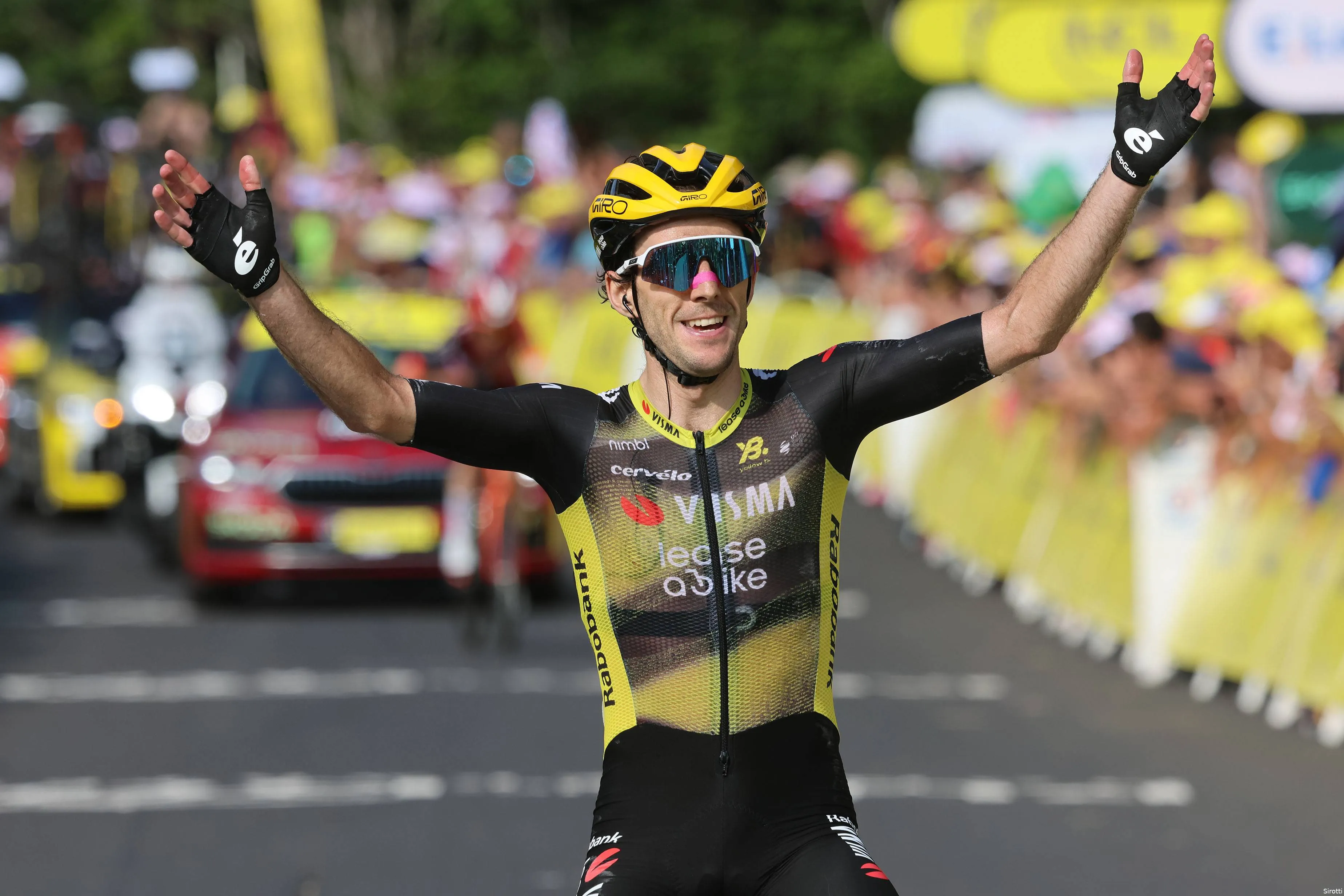
A Race Where History, Suffering, and Brilliance Keep Colliding… Yet Shining
ADVERTISEMENT
Why the Tour de France Still Produces Sporting Myth
The Tour de France is probably the most famous cycling race in the world, and that reputation did not happen by accident. It is one of the oldest events in the sport, dating back to 1903, and is still one of the hardest to survive. Not just hard to win—hard to endure. That is why only the very best riders ever manage to leave a real mark on it. With the French mountains, especially the Pyrenees and the Alps, acting as the backdrop, some of the greatest Tour de France moments have moved well beyond cycling itself and settled into sporting folklore.
ADVERTISEMENT
Most Memorable and Famous Tour de France Moments
The list of Tour de France iconic moments is long, and every fan has their own version of it. That is part of the beauty of the race. Some people remember pure dominance, others remember suffering, weather, chaos, or a single attack that cracked the whole Tour open. Still, a few moments keep showing up no matter who is telling the story.
Tour 1952: Fausto Coppi
ADVERTISEMENT
Fausto Coppi arrived at the 1952 Tour with one clear goal after winning the Giro d’Italia: complete the double and confirm what many already believed, that he was operating on a different level. On the long 266-kilometer stage, Coppi broke away with French rider Jean Robic at the start of the Alpe d’Huez climb. They opened a gap, but with six kilometers left, Coppi delivered the move that mattered, and he reached the summit alone, claimed the stage, and took the yellow jersey by only five seconds.
That alone would have been enough, but the next day he went even further. On a brutal 182-kilometer route that included the Croix de Fer, Télégraphe, Galibier, and Montgenèvre, Coppi crested every major climb in front and finished the stage with more than nine minutes over Stan Ockers and more than ten over Gino Bartali, making this one of the most memorable Tour de France moments because it felt bigger than a stage win. It felt like a rider taking ownership of the whole race.
Tour 1958: Charly Gaul
The 1958 Tour gave the race one of its great comeback stories through Charly Gaul of Luxembourg. On July 16, in weather that suited him perfectly, Gaul began a remarkable recovery during the stage from Briançon to Aix-les-Bains. Rain and cold broke others down, but not Gaul; he was in his element. He distanced rivals like Federico Bahamontes and Jacques Anquetil and kept building his advantage in the mountains.
That ride still matters because the weather has always shaped famous Tour de France moments. Rain, wind, heat, and fog can turn a strong rider into a vulnerable one in a matter of kilometers.
ADVERTISEMENT
Tour 1969: Eddy Merckx
When Eddy Merckx made his Tour debut in 1969, he wasted no time making it his race. He took the lead on stage six at Ballon d’Alsace, and from there the tone changed. Everyone else was suddenly riding behind him.
One of the defining images came at the stage in Mourenx. Merckx had promised, “When the others arrive, I will already have showered,” and then backed it up in the most brutal way possible. After responding instantly to an attack on the Tourmalet, he went alone with 140 kilometers still to ride, racing like he wanted to embarrass the clock as much as his rivals. He finished 7:56 ahead of the chase group, creating one of the greatest Tour de France moments.
Tour 1998: Marco Pantani
The 1998 Tour, forever tied to the Festina scandal, also produced one of the most explosive mountain raids the race has seen. Marco Pantani had already shown his class that year, but not everyone believed he would win the Tour. Then came the stage on the Galibier. In terrible conditions, Pantani attacked in his familiar low, aggressive style while Jan Ullrich and Telekom struggled in the storm. He swept past the remains of the break and reached the top alone with nearly three minutes in hand.
ADVERTISEMENT
How Has TV Coverage Shaped Iconic Tour de France Moments?
Television has magnified the race and turned local feats into global memory. The Tour is broadcast in more than 190 countries and reaches billions of viewers, which helps explain why so many of the greatest Tour de France moments live in the memory of many folks from all walks of life.
Which Moments Changed Team Tactics in the Tour de France?
The race evolved from a far more individual contest into one built around team systems.
In the early decades, it was much more individual, with riders often relying on instinct, personal strength, and raw endurance rather than a carefully managed team plan. The major shift came when teams began to understand the value of controlling the peloton, especially in flat stages and key mountain days.
In the 1990s and 2000s, technology pushed the evolution into a new dimension. Thanks to data and power meters, performance modeling changed the sport from one driven mostly by feel into one built around calculated effort.
How Does Weather Impact Memorable Tour de France Moments?
Weather has always been one of the most important forces in the Tour, and many of the most memorable Tour de France moments would not feel the same without it. Rain, wind, heat, and even cold can completely transform a stage. A climb that looks manageable in dry conditions can become brutal in the rain, and a strong rider can suddenly look vulnerable when the weather turns.
Which Rider Rivalries Created the Most Iconic Tour de France Moments?
One of the most legendary was the rivalry between Gino Bartali and Fausto Coppi. Their rivalry defined an era and carried social and cultural weight beyond cycling itself. They were so driven to beat one another that even team harmony could become secondary.
More recently, Tadej Pogačar versus Jonas Vingegaard has brought the race back into a rivalry-driven era. Both are already seen as favorites to win Tour de France 2026, and their battles have reminded fans that the Tour is often at its best when two great riders force each other into something extraordinary.
IDL-productions
Casper van Uden won the first sprint stage at last year's Giro — can he do it again today?
Dylan Groenewegen, from a Bulgarian family hotel, on the unique Giro opportunity for himself and Unibet Rose Rockets
British, American, Canadian and Australian riders to watch at the 2026 Giro d'Italia
'Fresher than ever': why Leemreize could be Picnic PostNL's secret weapon at the Giro
'Women's cycling is built on fragile foundations' — The Cyclists' Alliance president Grace Brown calls on the UCI to act
Latest Cycling News
Giro d'Italia 2026 stage 2 preview | In a potentially wet finale, the scenarios are almost endless
🎥 Giro Stage 1 crash updates: Groenewegen partially dislocated shoulder — but he starts stage 2
Campenaerts, celebrating double good news, sounds a warning for stage 2: 'That's where our Giro really begins'
La Vuelta Femenina 2026 | Blasi beats Van der Breggen in thrilling final stage
The Angliru breaks Van der Breggen as phenomenal Blasi snatches the Vuelta Femenina
Popular Cycling News
Giro d'Italia 2026 GC favourites | Who can challenge Vingegaard for the pink jersey?
🎥 Giro Stage 1 crash updates: Groenewegen partially dislocated shoulder — but he starts stage 2
Giro d'Italia 2026 start list so far: Q36.5 with first dropout of the Giro after stage 1 crash
Giro d'Italia 2026 stage 2 preview | In a potentially wet finale, the scenarios are almost endless
Race organisation warns: bad luck in the stage 2 finale could have serious consequences
Latest Comments
- The only cyclist who can beat Tadej is Tadej.
 Brucegel09-05-2026
 - Enough of this b.s. already.Just tell the world all you suspicious people what would satisfy you that he is not doping.live real time urinating and testing?.Live real time blood draws 5 seconds after a race is over?.Fecal analysis.WTF will satisfy you?Brucegel03-05-2026
- This suspicion could be laid to rest by what? What would make all doubters happy that Pogi is clean? Just tell the world all you Frenchmen et al what you want as protocol.You will never be satisfied.That is your level of mindless groundless suspicions.Brucegel03-05-2026
- Here is a novel idea......it's a road bike race, stick to smooth asphalt courses! Cobble is like mild off-road cross riding!!!!Germanrazor14-04-2026
- To lose a race like that on a mechanical problem in this day and age is unforgivable. Why aren't all riders using the same (interchangeable) gear? It is the job of the team manager to manage and reduce risk variables. The fact that he not only didn't pick up on the potential issue but actually ok'd it is just madness.fatehasfans13-04-2026
- Rider X, y and z? Could you update?yaNzKEWL21-03-2026
- Can anyone help me understand the thinking behind the two punishments? Are the commissaires saying you get thrown out of the race for a second inadvertent disposal of a bidon (even to the delight of fans) but that as long as you can afford it you can show off your phalangeal cuticles all day long on international TV? Aking for a friend.packfiller7112-03-2026
- It's a bit embarrassing that. Isn't the main sponsor supposed to keep them at 36.5 ?tomjacques03-03-2026
- They were close to cracking a very tired Tadej that wasn't fully focused on the TdF with a team of riders focused solely on cracking Tadej. And if they cracked him, he would have still won. Tadej won't be racing the giro this year. It'll be an even easier win for him.Veganpotter09-02-2026
- Nice!Bea22-01-2026
Loading