The lonely life of the breakaway rider is much more futile under Pogačar's reign, and the data proves it
Cycling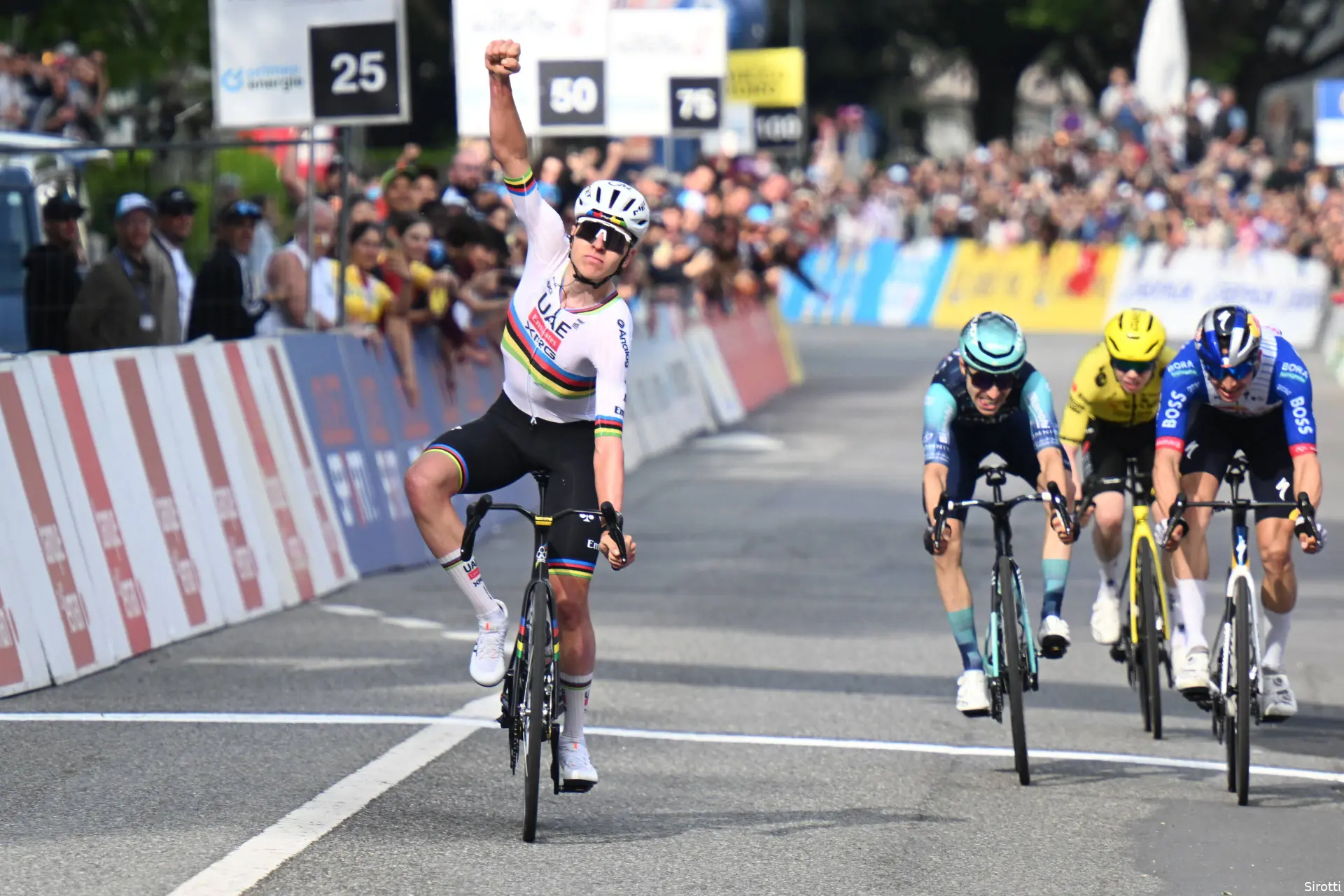
Follow IDL Pro Cycling on Google
Stay up to date with the best cycling news by making us a preferred source on Google.
Follow us on GoogleThe start list of 184 riders includes a whole host of riders who are aiming for a stage win from the breakaway at the Tour de France. Ambitious statements are everywhere, but how realistic is it that breakaway riders will succeed in a Tour de France set to be dominated by Tadej Pogačar? IDL Pro Cycling took a look at the results from 2024 and 2025—Tours won by that same Tadej Pogacar.
ADVERTISEMENT
The Slovenian world champion has made it his mission to chase success with UAE Emirates-XRG, even if that doesn’t always win him friends in the peloton. Very occasionally, UAE would throw in the towel, but then it’s often other teams that ultimately ensured Pogacar and his teammates could smell the stage victory as they headed into the final stretch.
And in the end, it was once again the man who, in 2026, wins virtually everywhere he races. Of the 42 stages contested in the last two editions of the Tour de France, Pogacar won 23.8 percent of them. He was the strongest rider in no fewer than ten stages in 2026. In 2025, his UAE teammate Tim Wellens added another victory to the tally, on one of the rare days when a breakaway held on.

Continue reading below the photo

Pogacar has won ten stages in the past two editions.
2024 Tour de France: Pogačar six times, no fewer than eight sprints
The 2024 Tour de France got off to a great start for the breakaway riders. Romain Bardet won on the opening day, in a much-discussed two-man attack with Picnic PostNL teammate Frank van den Broek. On the second day, he did it again. Although Pogacar had already attacked on the San Luca climb toward Bologna, Kévin Vauquelin (Arkéa-B&B Hotels) won the stage from the breakaway group.
After that thrilling opening weekend in Italy, the breakaway group was a thing of the past. There were four sprints in the first week alone. Pogacar went on to win his first stage by attacking on the Col du Galibier and staying ahead, while Remco Evenepoel was the best for Soudal Quick-Step in an individual time trial.
In Stage 9, on the gravel roads of Troyes, a breakaway rider—Anthony Turgis—did win. Aside from three more sprints in the second week, the 2024 Tour came down to a battle between Pogacar and Jonas Vingegaard. The Slovenian won two stages, while the Dane from Visma | Lease a Bike won one. In the third week, Pogi added three more stage wins in the year we finished in Nice.
Since there was also one sprint stage—bringing the total to eight bunch sprints—the remaining two stages of that Tour were breakaway stages. Richard Carapaz was the only breakaway rider in that Tour to win a mountain stage, while Victor Campenaerts struck in a transition stage.
Continue reading below the photo

Campenaerts won the 2024 Tour de France as part of a breakaway.
2025 Tour de France: Pogačar less dominant against breakaway riders
In 2024, we ultimately saw five stage wins for the breakaway group, two of which came during the opening weekend. The team leaders didn’t let that happen in 2025, as the first two weeks saw a battle for stage wins between the punchers and the general classification contenders almost every day. In addition to two bunch sprints, including the opening day, which saw Jasper Philipsen claim the yellow jersey.
During the first week, Pogacar, Vingegaard, and Mathieu van der Poel, in particular, fought fierce battles. Pogacar and Van der Poel each won a stage, while Evenepoel once again excelled in the time trial. Pogacar also won at Mûr de Bretagne; stages 8 and 9 were sprints. The only other stage win came on Day 6, when Ben Healy won from the breakaway, followed by Simon Yates in a relatively easy mountain stage on Day 10.
Read also
Jonas Abrahamsen won the next day in a punchy stage around Toulouse, and then it was up to Pogacar twice to effectively seal the Tour de France. That was ideal for the breakaway riders, because it gave Thymen Arensman the space he needed to attack uphill in Superbagneres and claim the stage victory. As mentioned, Wellens also claimed a stage win once, breaking away from a leading group heading toward Carcassonne.
It said it all about the tension in the general classification. Pogacar had built up such a lead that UAE considered stage wins less important, especially since Pogacar was clearly getting tired in the third week. As a result, Valentin Paret-Peintre won on Mont Ventoux, Ben O’Connor on Col de la Loze, and Arensman struck again in the mountains.
In the third week, there was only one sprint opportunity, limiting the number of bunch sprints in that Tour to five. Kaden Groves did win one of those typical third-week transition stages, before Wout van Aert proved too strong for Pogacar on Montmartre in Paris. Pogacar was spent, but he was still the overall winner.
The breakaway riders thus racked up a total of no fewer than ten stage wins. The hope for riders with breakaway ambitions will therefore be that Pogacar quickly decides the race again, as he did in 2025, or that he becomes physically exhausted once more or encounters some setback. If that doesn’t happen—if the Tour remains exciting or if Pogacar continues to struggle—then the 2026 Tour de France route might also suit him.
Read also

Bram van der PloegEditor-in-chief
Bram van der Ploeg (35) is the proud founder of In de Leiderstrui, IDL Pro Cycling's parent site, launched in 2018. Finally, he could create stories about the sport he had followed since childhood. He is the editor-in-chief on paper, but prefers to be with his recorder next to a rider, a team bus, or in the mud at a cyclocross race. Every year, from February to the end of May, Bram follows the entire Italian cycling season, from the Trofeo Laigueglia to the Giro d'Italia, with the grand finale in October in Lombardy. During that time, he lives in Tuscany, where he has since come to call Italy his 'home'.
IDL-productions
16-day Grand Tours, AI, VAR, drones and more: The UCI's new document has a potentially major impact from 2029 onwards
Quinn Simmons' Strava shows exactly what it takes to compete at the World Championships: ‘I said, Hey guys, anything is possible'
Despite losing the World Championships, Del Toro and Seixas rank high mentally and physically on the Pogačar scale
Van der Poel loves it, but a lack of race radios gave McNulty and USA the chaos it needed to slip away
Pogačar hails the 'King of Montréal', but McNulty already has a plan for 2027: 'Maybe Tadej will have to ride for me'
Latest Cycling News
Retiring Slovenian pro appointed as team director at Red Bull-BORA-hansgrohe from 2027, but not for Evenepoel
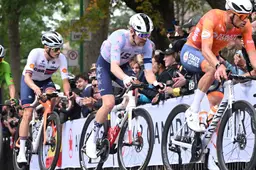
Oscar Onley on his day in the break with Van der Poel, Van Aert & Simmons: "I still have to figure that out"
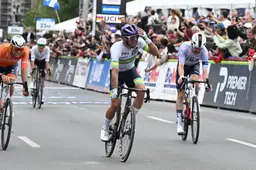
Matthews joins the Pidcock Del Toro row after World Championships: 'If fewer teams had ridden together across national borders...'
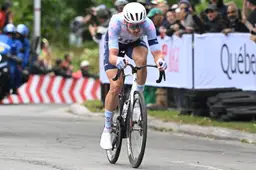
Pogačar's Lombardia absence puts world champion McNulty back in the spotlight, against some 'motivated' rivals
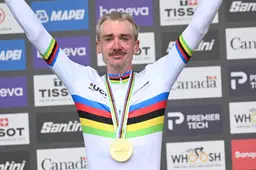
Rasmussen isn’t looking forward to a year of McNulty as World Champion: ‘With his jersey full of water bottles’
Popular Cycling News
Cycling transfers 2026/2027 | Izagirre calls it quits, Astana bags an emerging sprinter
Matthews joins the Pidcock Del Toro row after World Championships: 'If fewer teams had ridden together across national borders...'
Oscar Onley on his day in the break with Van der Poel, Van Aert & Simmons: "I still have to figure that out"
Rasmussen isn’t looking forward to a year of McNulty as World Champion: ‘With his jersey full of water bottles’
Following Demi Vollering, Remco Evenepoel also slapped with a hefty fine at the World Cycling Championships
Latest Comments
- - Pidcock throwing shade about del Toro in Montréal felt a tad salty. Teams always ride tactics; it’s worlds, not a club race. If Tom wants revenge at Lombardia, he’ll need to mark Ayuso and Remco too, not just McNulty. Vamos Brandon, forza UAE!velodromevirtuoso101-10-2026
- - Wait, so Pogačar is “finished for 2026” but also only back at Tour Down Under 2027? Bit confusing—does that mean he’s out for the whole of 2026 season, or is it just no racing until Jan 2027? Can someone clarify the timeline?lindae01-10-2026
- - Brilliant piece. McNulty in the maglia iridata at San Luca is going to be class. If he measures the final laps and doesn’t overcook it early, he can outsprint most on that ramp.raceready701-10-2026
- - Is October 3 correct for Giro dell’Emilia this year? Thought it usually lands the first weekend but the date here looks off by a day. Either way, stacked UAE roster—curious how they juggle Yates/Wellens/Narváez with the new rainbow stripes.jeremya01-10-2026
- - Wild to think Pogačar wanted to race already when Mir said the collarbone was fine, but Gianetti’s playing the long game. If McNulty carries that Montréal snap into Emilia and Lombardia, watch out. His TT engine plus those short climbs = trouble for Remco and Pidcock.davidm01-10-2026
- - McNulty solo win gets one line? Come on, give Brandon some kudos—his timing on Camillien-Houde was spot on, and MvDP covered a lot to set that finale up. Grande artículo, pero faltan detalles de la táctica en Montréal.patriciaw01-10-2026
- - Not sure why the piece keeps circling back to “we’ll see” without new info. Feels a bit padded. Either he races CX or he doesn’t—tell us when he’ll decide.raceready701-10-2026
- - I’d miss the cross battles if he sits out. The last winter run from Namur onwards—13 straight wins and Hulst rainbow—was insane. But resting might be the only way to consistently match Pog next April.jeremya01-10-2026
- - Quick question: the article says the baby is due around the time of the 2027 CX Worlds in Ostend, but earlier it says January with the 2026/this winter schedule. Is that a typo on the year?julien01-10-2026
- - Brilliant season wrap from MvDP. Eight wins, two TDF stages, E3 + Omloop, and bronze in Montréal. If he skips cross, that could sharpen the spring peak for Sanremo/Ronde/Roubaix. Family comes first though—proficiat to him and Roxanne.breakawaybikerd01-10-2026
Loading