Johan Bruyneel questions the Picnic PostNL whistleblowers: ‘Isn't that a conflict of interest?’
Cycling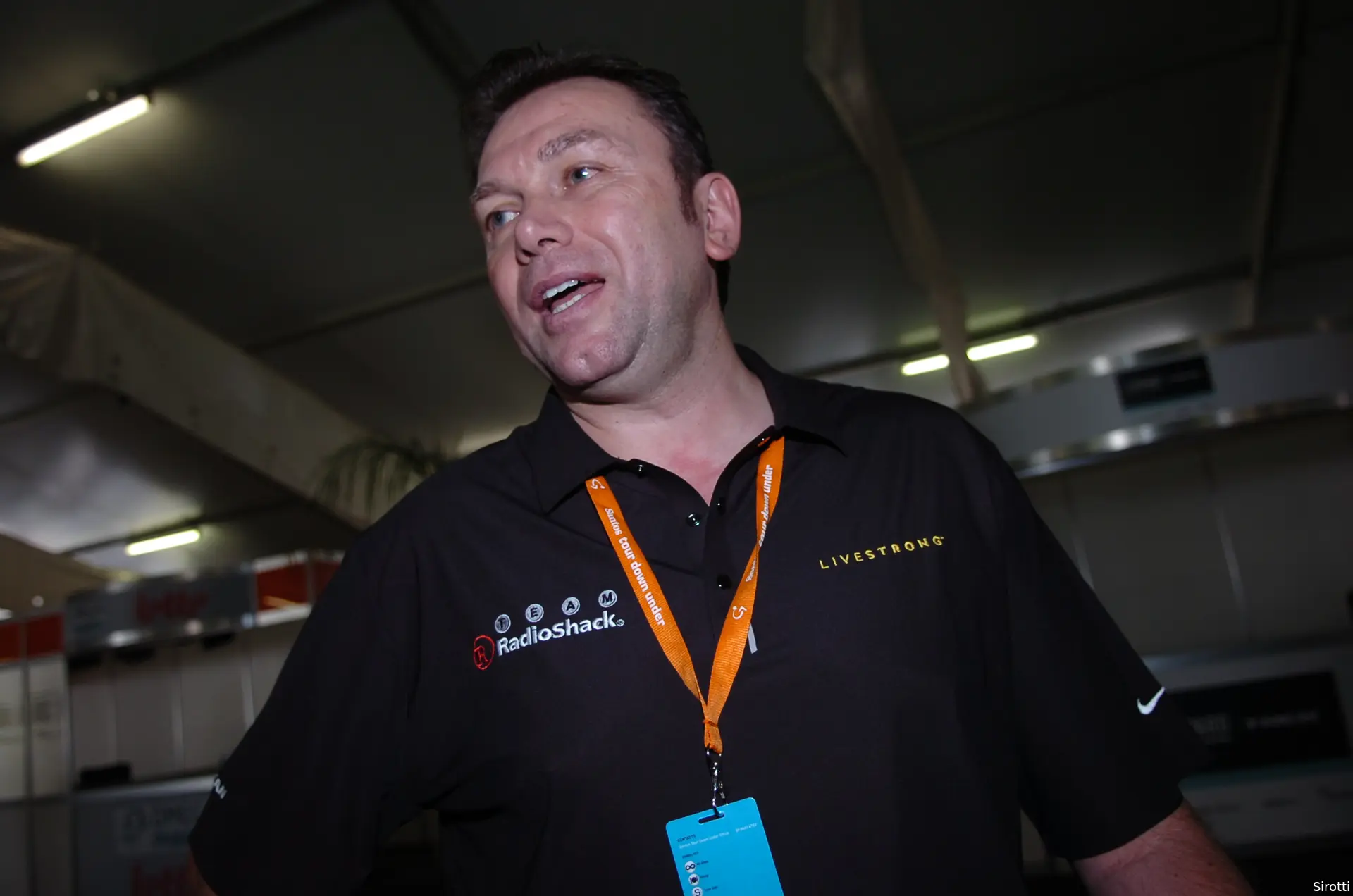
Follow IDL Pro Cycling on Google
Stay up to date with the best cycling news by making us a preferred source on Google.
Follow us on GoogleThe revelations surrounding Picnic PostNL have put the Dutch team in an even more precarious position than before. The team is struggling financially—and on the competitive front as well. But the toxic work environment? Johan Bruyneel has read all about it, and he has his doubts—particularly regarding the roles of Thijs Zonneveld and Martijn Tusveld.
ADVERTISEMENT
On his podcast *In de Waaier*, produced in collaboration with the NOS, Zonneveld revealed various abuses at Picnic PostNL. Seventy-one former employees were interviewed and spoke of a culture of fear and a toxic work environment.
Tusveld was one of the few former employees who spoke out without remaining anonymous. And that is precisely what Bruyneel points out as a problem.
"Zonneveld is the general manager of a Dutch cycling team, BEAT Cycling," the Belgian explains in his podcast THEMOVE.
"And one of the key witnesses—one of the few who came forward by name—is Martijn Tusveld. I’ve been told that he’s now the sports psychologist at BEAT. Isn’t that a conflict of interest?” After leaving Picnic PostNL, Tusveld rode for BEAT for a year before retiring.
Tusveld has also set up his own mental coaching program, called Tusveld Coaching. Bruyneel also questions his time with the Dutch team.
Read more below the photo!

Picnic PostNL had a disappointing year in 2026
Bruyneel is pessimistic about Picnic PostNL's future
It remains to be seen whether Picnic PostNL will still be in the (WorldTour) peloton next year. Iwan Spekenbrink’s team missed the deadline for applying for a UCI license, though that doesn’t mean all is lost.
However, the criteria for the team are stricter than those for other teams. On top of that, bicycle manufacturer Lapierre has gone bankrupt.
That made it all even more difficult. “Of course, that’s the explanation they’re giving now, but the problem runs deeper than that,” says Bruyneel.
Given all the problems, including the reports of a culture of fear, the question is whether a new sponsor can even be found.
David Bavin-HobbsChief Editor
David has been working in the sports & cycling industry for 16 years. Covering racing, business and technology, he has worked in communications for cycling companies, teams, and as a journalist. His proudest achievement is winning the first bike race he ever entered. He hasn't won a race since.
IDL-productions
Team GB dominate, China on the rise, Lavreysen the best ever? Five takeaways from the 2026 Track World Championships
Track World Championships day 2: A golden day for Team GB, Levreysen goes 2 for 2, and Kopecky eliminates the competition
Rumours, speculation and guesswork: 2027 Tour de France route will be revealed live on October 22 in Paris
Vollering adds the Women’s European Championships road race jersey to her rainbow wardrobe
16-day Grand Tours, AI, VAR, drones and more: The UCI's new document has a potentially major impact from 2029 onwards
Latest Cycling News
False start or not, Joran Wyseure moves from 32nd to 1st at HG cyclocrosst: 'I was out for revenge'
Marlen Reusser critical after 2027 Tour de France route presentation: 'Where is the Tour de France Hommes?'
Lance Armstrong has a warning about the 2027 Tour de France route: 'Won’t make it across the English Channel'
2026 Superprestige Overijse Cyclocross preview| Start times, start list and race favourites
Picnic PostNL's WorldTour uncertainty has five rival teams, and Tom Pidcock, watching the UCI closely
Popular Cycling News
Lance Armstrong has a warning about the 2027 Tour de France route: 'Won’t make it across the English Channel'
Tadej Pogačar to skip Paris-Roubaix in 2027: 'The easier it becomes to stay away from racing'
The 2027 Tour de France route is out; here's where Pogačar could win or lose his record sixth title
Picnic PostNL's WorldTour uncertainty has five rival teams, and Tom Pidcock, watching the UCI closely
Here's the 2027 Tour de France route, including 71 time trial kilometers and 'just' 3 mountain-top finishes
Latest Comments
- More time trials sounds good, but could Remco actually win the whole race? I thought the Tour was mostly about climbing.gearguru3323-10-2026
- If Pogačar crashed badly, does that mean he might not be fully fit for the Tour?julien23-10-2026
- Edinburgh for the Grand Départ is brilliant news. The crowds in Yorkshire were incredible, and Scotland could be just as special.pedalpowe2923-10-2026
- Froome’s point about the mountains is spot on: the extra TT distance gives the other GC contenders a real reason to race aggressively before the final climbs.tourdeforce923-10-2026
- 71km of time trialling should make things much more interesting. Remco will fancy his chances, but you can never write Pogačar off.lindae23-10-2026
- I’m still figuring out how time trials affect the overall race. If Evenepoel gains time there, will Pogačar have enough mountain stages left to make it back? The route sounds exciting, but I’m not sure how much difference 71km makes.davidm22-10-2026
- Two 223km stages in the opening week could make for a proper nervous start. Those narrow British roads and potholes might have the GC favourites watching every corner.jennifer1922-10-2026
- That Pau–Portet stage sounds absolutely savage: Tourmalet, Soulor, Hourquette d’Ancizan and then the Portet. Vingegaard should suit those long climbs, though Pogačar is hardly easy to shake.julien22-10-2026
- Seventy-one kilometres against the clock gives Evenepoel a real chance to put pressure on Pogačar, but those Pyrenean stages look brutal. Could be a cracking final week if the time gaps stay close.sprocketspiny22-10-2026
- Not sure we can call this a perfect Evenepoel route before we’ve seen the start list. Plenty of time-trialling, yes, but those Pyrenees stages look absolutely savage. Could be a great Tour, though.julien22-10-2026
Loading