Recovered from a big crash, Pavel Bittner hopes to win Picnic PostNL some much needed points at the Tour de France
Cycling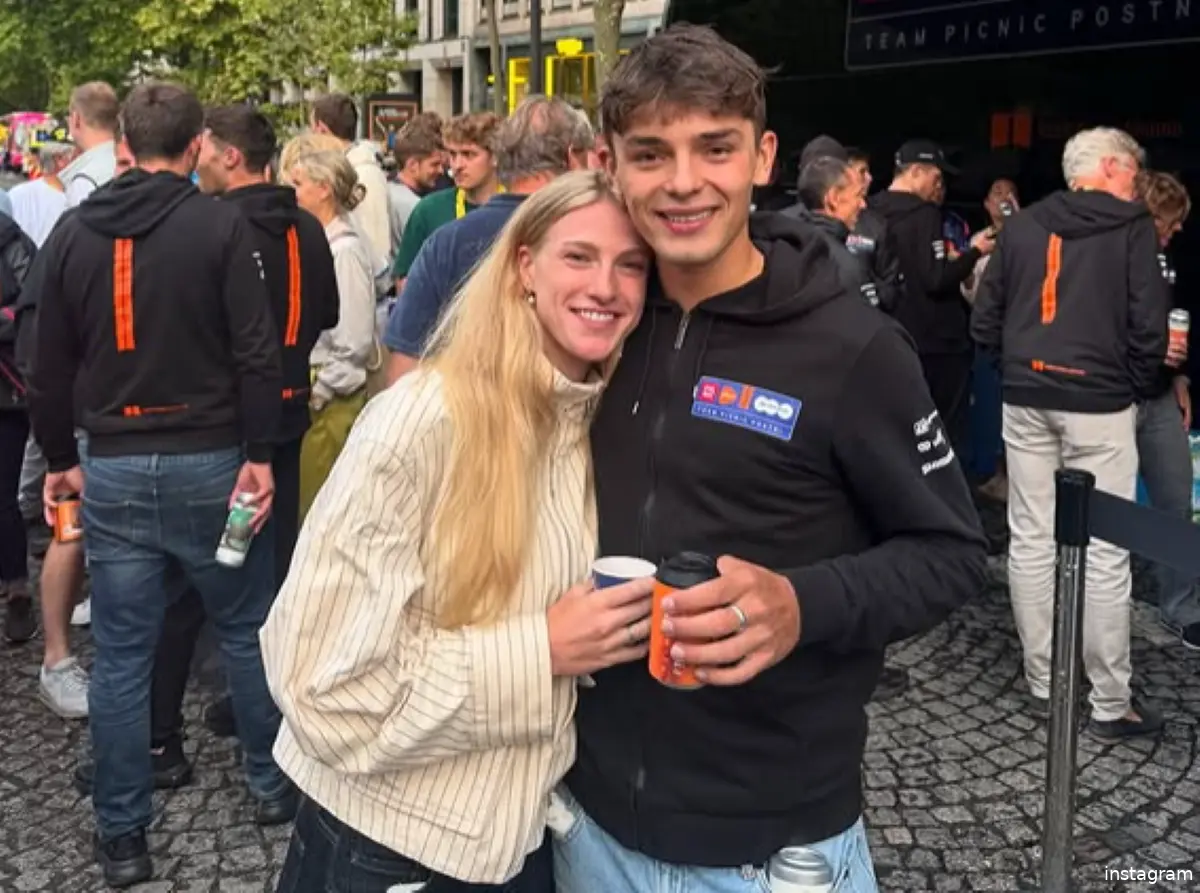
Follow IDL Pro Cycling on Google
Stay up to date with the best cycling news by making us a preferred source on Google.
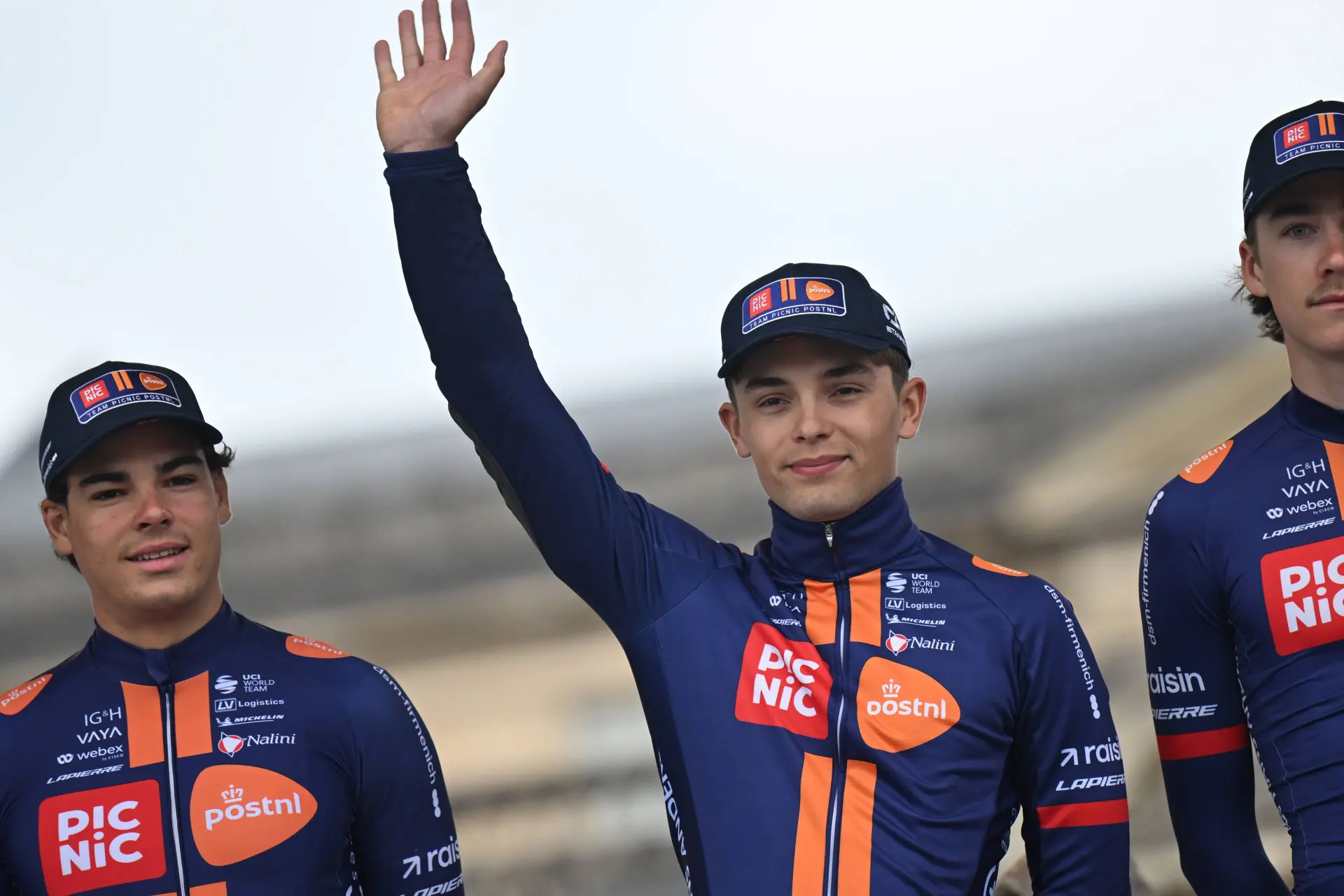
Follow us on GoogleIf there’s one person on the Picnic PostNL team who should be considered capable of winning a stage at the Tour de France in 2026, it’s definitely Pavel Bittner. The Czech rider won a stage in the Vuelta a España in 2024 and went on to finish in the top ranks, but he’d like to build on that Grand Tour success. IDL Pro Cycling spoke with him at length the day before the Tour de France starts.
ADVERTISEMENT
Bittner’s run-up to the Tour wasn’t exactly smooth. His last race was way back on May 20, when he took a hard fall in Dunkirk. For a moment, it looked as though he might have to miss the race, but in the end, things still worked out for the boyfriend of EF rider Mirre Knaven, daughter of Dutch cyclist Servais Knaven.
Read more below the photo!

Interview with Pavel Bittner at the Tour de France
Are you looking forward to it?
"Yes, really, really bad. To be honest, it feels like I've already won a little bit here. Especially when you consider that I'm coming back from an injury. But I feel 100% ready. I've had a good preparation with three weeks of solid training, so it should go well."
"Can you tell me exactly what happened during that fall in Dunkirk?"
"Yes, it was a pretty cold and rainy day. We were heading into the final stretch, toward the final sprint. I think the road was going up slightly. With about 400 to 350 meters to go, I started my sprint right next to the crowd barriers. There was a small gap behind another rider, but just as I was about to pass him, the gap closed. I crashed right into the crowd barriers and went down.”
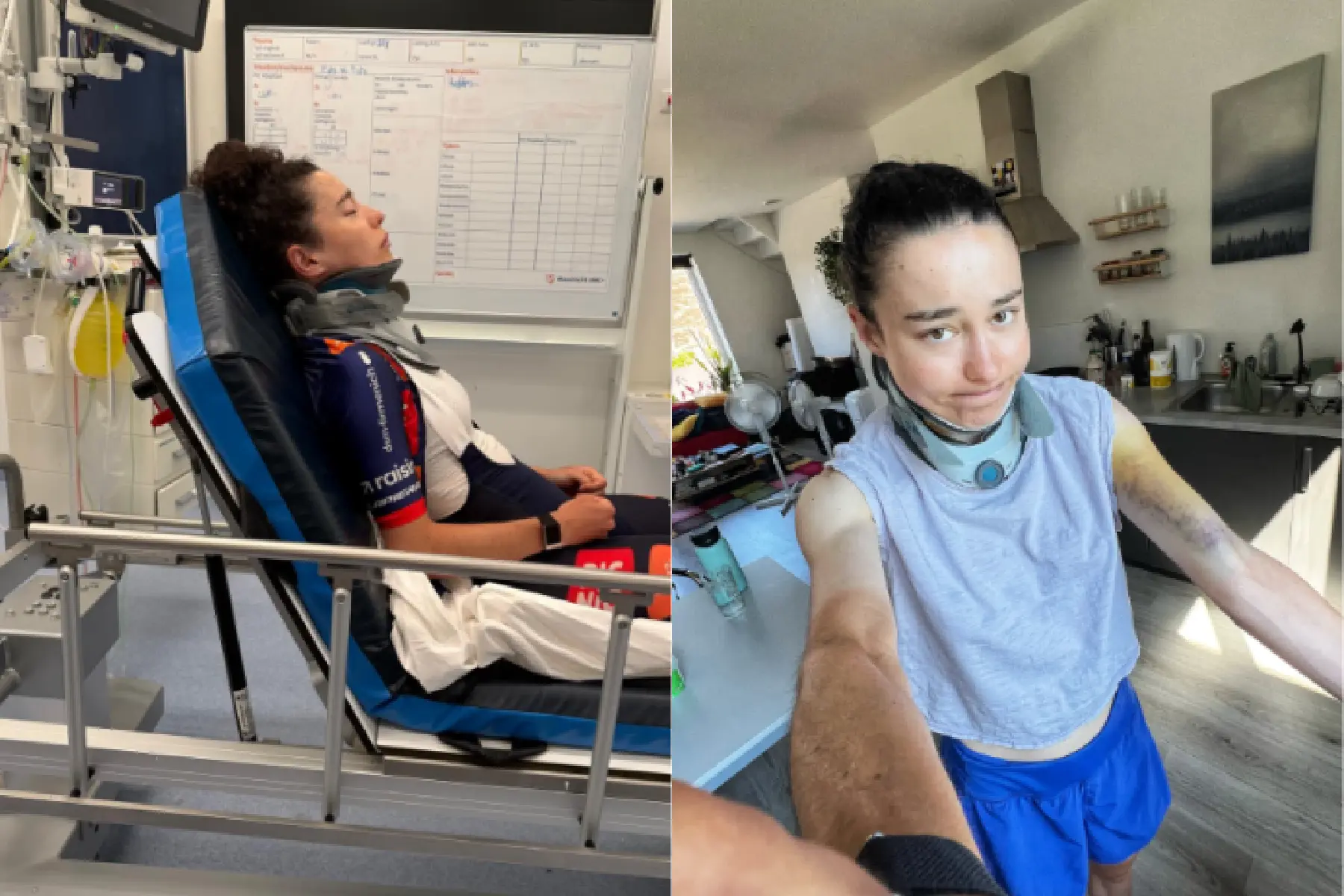
"After that, I couldn't stand on my foot anymore and my shoulder was in a lot of pain, so we went with the ambulance. At the hospital, we found out that I also had a deep cut on my foot. As it turned out, that was the biggest—and actually the only—problem; luckily, everything else was okay."
How many stitches did you need, and how did the wound heal?
"I had a few stitches. I think two in my ankle ligaments, and my foot was also stitched up quite a bit. I can’t show it in the video, but I think there were six stitches in my foot. (shows the large cut) My foot got pretty swollen for the first two weeks afterward, but after that, the recovery actually went pretty quickly.”
What was the biggest problem: the ankle braces or the cut and the swelling?
"The ankle ligament was partially torn, but I think the swelling was so severe partly because the cut was so big. Fortunately, while riding my bike, I couldn't really bend my foot downward with the toes. On a bike, you have to pedal that way anyway, so I think that helped with my recovery. Because of that, I was able to start biking again pretty quickly.”
Read more below the photo!

Pavel Bittner as he left the hospital.
Did you ever wonder if you'd even be standing here?
"Yeah, absolutely. I really had no idea how long it would take. The first doctor I spoke to said, 'Yeah, it'll be six weeks before you can start exercising again.' I thought, 'Okay, but the Tour starts in just seven weeks.' That was really close."
But luckily—I think the fall happened on a Wednesday—I was able to start doing exercises that didn’t require me to use my ankle as early as the following Friday. So I did some rowing, used the cross-trainer, and things like that. Four days later, I was able to slowly get back on the bike, first on the stationary bike and then outside. So in the end, it wasn’t as bad as I thought.'
When was the decision made that you would make it to the start of the Tour de France?
"To be honest, we took a very laid-back approach. We just wanted to make sure we did everything we possibly could. If we made it, that would be great, and if not, oh well. We didn’t want to stress too much about it. But I think it was already clear more than two weeks ago that I would make the cut. Of course, the official roster wasn’t announced until later, but all my training sessions were already geared toward that by then. That’s why I skipped the national championships and events like that, so I could train for this.”
How's your fitness level right now? Are you at, say, 90%, 80%, or 100%?
"Well, that's really hard to say. My training stats and how I felt were really good, so that’s a great start. Of course, getting back into the rhythm of racing is a little different, but I can usually race pretty well even without many races under my belt. We’ll see how it goes, but I hope it works out.'
Is it an advantage for you that the first sprint—since you're a sprinter—isn't until day five? That way, you'll have some time and stages to get into a rhythm.
"Yes, I hope so. We can already do a few good rides here. We'll start with the team time trial, which is also good for getting into a rhythm and loosening up our legs a bit. After that, we basically have four days to get ready for the sprint."
What are your goals?
"Well, that’s a good one. Ultimately, we have a very strong team here. The goal, in any case, is for the whole team to make it to Paris—that’s our number one goal. It would be great if everyone stayed healthy. And besides that, we’re obviously just going to do our best in the sprints. If, at the end of the Tour, we can look back and say, ‘Okay, we gave it our all and this is the result,’ then I think we can be satisfied.”
I think we can call you a “sprinter plus.” After all, you can handle the more classic stages as well. Do you also have stages like Stage 17 and Stage 21 in mind, in addition to the pure sprint stages?
"Yes, definitely. I really love Stage 21. I’d love to give it a shot someday on the regular stage to the Champs-Élysées—it’s truly iconic. But I actually don’t mind Mont Ventoux either. I really enjoyed it last year; that’s when I tried my best to help Tobi (Lund Andresen, ed.). He just missed the breakaway at the end because of a small gap, which was a shame, but I thought it was wonderful. Even in the rain—which makes it a bit more technical—and the atmosphere was amazing. This year, the climb is a bit further from the finish, so that might be a bit more favorable for the sprinters. We’ll see.’
Read more below the photo!

Pavel Bittner also rode the Tour last year.
How important is it to already have last year's Tour de France experience under your belt? Not just the racing itself, but everything that goes along with it.
"Yeah, I think that’s something you take with you, because it’s really very different. There’s so much media attention, and so many other factors at play. You really have to focus purely on racing and make sure the team takes care of all the other details to make things as easy as possible for you. Ultimately, it’s just a Grand Tour: three weeks of racing where you have to make sure you save as much energy as possible for the next day. But at the end of the day, I’m really looking forward to it, because this is the highest level you can reach in cycling.”
As a rider, how do you experience that difference? The media, the fans, the longer transfers because it's so busy everywhere...
"I actually really love the part with the fans. Sometimes it can get a little overwhelming, of course, but you can't really blame them. For them, it’s the only time they get to see the riders in person, so I don’t get upset easily if someone asks for a water bottle or something like that. It’s just part of the experience."
I especially loved that even fans from the Czech Republic came out to the big climbs. It was incredible last year; you could see a Czech flag every 300 meters. I really thought: How is that possible? I didn’t even know we had so many cycling fans in the Czech Republic! That’s something I’m really looking forward to again: enjoying the show. Those are the kinds of things that stay with you for the rest of your career and your life.'
How does that feel to you as a Czech cyclist? You're there, Mathias Vacek is doing really well... How is the Tour de France being received in the Czech Republic?
"It's really huge there. Everyone knows the Tour de France. It's even a little different there than in other countries, because everyone knows the Tour from TV, but they often don't know much about other races. They only know the Tour. So if I were to stop cycling now and someone asked me, ‘You were a cyclist—did you ride the Tour?’, I could at least say ‘yes.’ That’s really cool. It’s really a huge event, and I’m glad that we’ll have three Czech riders at the start this year. That’s also great for the Czech fans who are watching.’
Read also
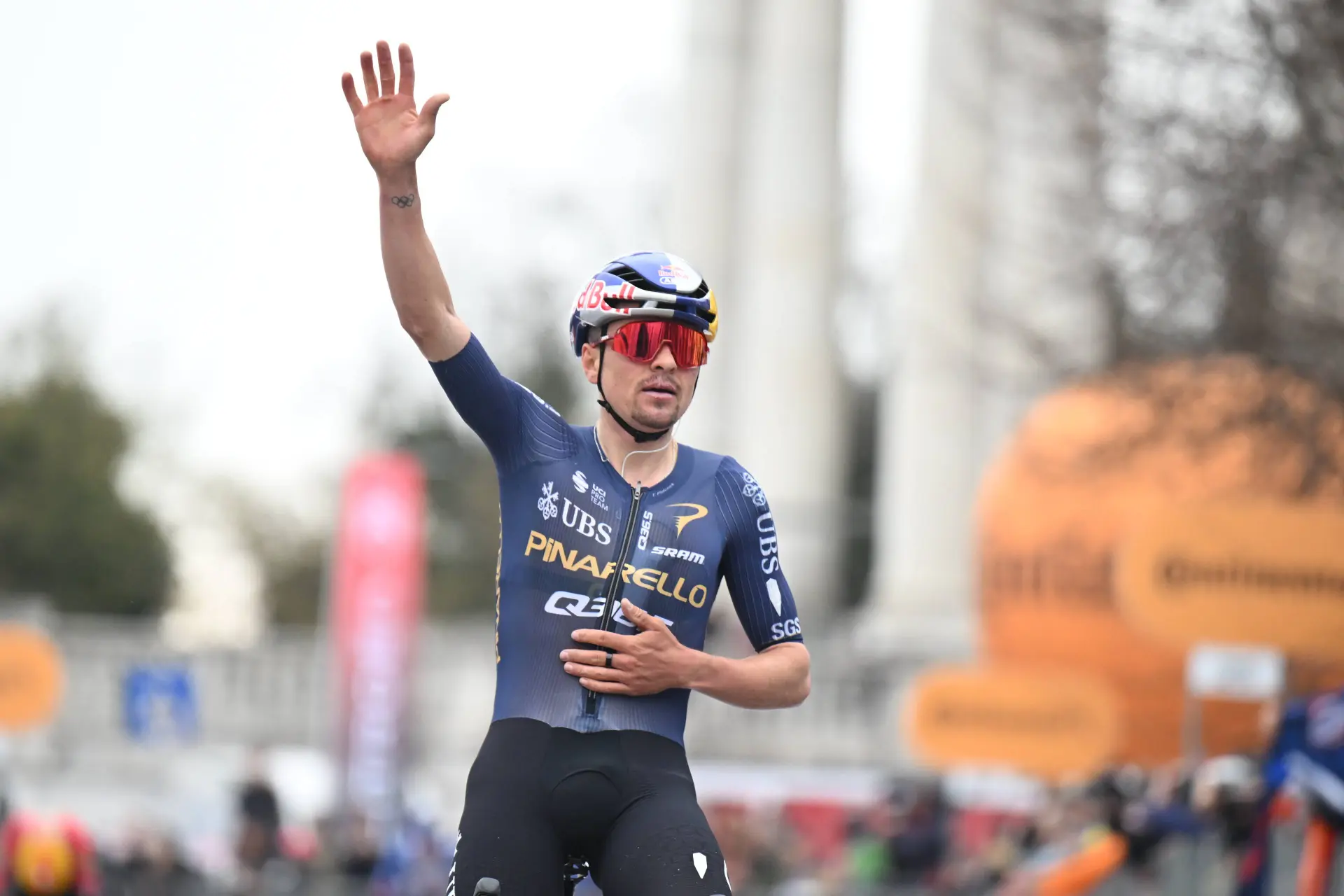
Tobias was there last year too, but now you're the only sprinter on the team. Does that put any pressure on you—either from yourself or from the team?
"No, actually, I haven't really thought about it that much. I just wanted to make sure I could prepare as well as possible for the Tour. But to be honest: on the sprint stages themselves, you naturally feel the pressure to perform. But I think you can also channel that pressure into healthy excitement and enthusiasm. I’m just looking forward to competing against the best sprinters in the world and being here.”
What does the plan for the sprint stages look like, considering your train and your lead-out? Or is the plan to just go along with the other teams a bit?
No, with the horsepower we have here, I think we can race our own final. Of course, in the first few sprints, we’ll have to see how the other teams are doing and adjust our strategy a bit if necessary. But with the guys we have here, we can do our own thing. Of course, you’ll be watching the competition in the final, but we can do our own thing.
Is the green jersey on the back of your mind?
"To be honest: yes. I'd really love to win it in the future—that's one of my career dreams. But first, I want to win a stage. These days, the green jersey requires much more than just sprinting for the finish; you need the support of the entire team for the intermediate sprints. I’d hate to focus entirely on the intermediate sprints and miss out on winning a stage because of it, only to possibly lose that jersey at the end as well. So we have to set the right priorities.”
Read more below the photo!

Pavel Bittner won a stage in the Vuelta in 2024.
If you look back 12 months ago, when it all started in Lille, and compare that to today, what has changed in Pavel Bittner's life?
"I've definitely gained a bit more confidence that I'm among the best sprinters and that I can win sprints. I've been competing in the finals for a while now, and I've come very close to some great results. I haven’t really won anything since the Vuelta, which is a shame, but I believe that success will come again at the right time. On top of that, the support and trust from the team are even greater now than before, and I really appreciate that.'
Does that confidence come from the mental aspect, or also from the physical side? Is it because your training stats are better and your “engine” has gotten stronger thanks to last year’s Tour de France?
"I think those two go hand in hand. You gradually get better and better, which boosts your confidence and helps you achieve better results. Of course, you always have to believe in yourself, even when the results aren’t there yet, because otherwise you won’t get there. But good results do confirm that it’s possible to compete against the best sprinters.”
Read also

Tom van der Salm (27) comes from the charming town of Zeilberg (Deurne) in the Netherlands and has been working as editor-in-chief & journalist at IDL Pro Cycling's parent site, In de Leiderstrui, since 2019. He travels with the peloton from the Tour de France to the AlUla Tour and from the World Championships in Rwanda or Canada to the Zilvermeercross in Mol. In his spare time he enjoys playing football, mountain biking, running, walking with his Labrador/Stabyhoun, investing, holidays, (specialty) beers, reading, cooking and watching sports & documentaries!
Contact: [email protected]
IDL-productions
Vollering adds the Women’s European Championships road race jersey to her rainbow wardrobe
16-day Grand Tours, AI, VAR, drones and more: The UCI's new document has a potentially major impact from 2029 onwards
Quinn Simmons' Strava shows exactly what it takes to compete at the World Championships: ‘I said, Hey guys, anything is possible'
Despite losing the World Championships, Del Toro and Seixas rank high mentally and physically on the Pogačar scale
Van der Poel loves it, but a lack of race radios gave McNulty and USA the chaos it needed to slip away
Latest Cycling News
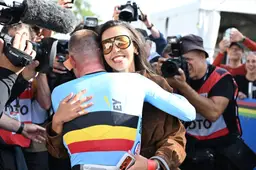
Evenepoel’s wife Oumi addressed Belgian fans and media after Remco won the European Championships title
Tadej Pogacar sets record straight after missing home European Championships: 'I'm not in good shape'
Pidcock tactically outmanoeuvred again in Coppa Agostoni, McNulty also couldn't deliver win
‘That's cycling’; Giulio Ciccone shows maturity after losing European Championship to Evenepoel in photo finish
Millimeter sprint decides magnificent European Championship, full of crashes, tactical ingenuity and crucial bike throw.
Popular Cycling News
Millimeter sprint decides magnificent European Championship, full of crashes, tactical ingenuity and crucial bike throw.
Rasmussen isn’t looking forward to a year of McNulty as World Champion: ‘With his jersey full of water bottles’
Tom Pidcock again frustrated by Matteo Jorgenson's race tactics at the Giro dell'Emilia
Boonen and others think Van Aert rode 'recklessly' at World Championships: 'We thought he'd get the message after Roubaix'
The peloton bids an incredible farewell to Nairo Quintana—except for one rider
Latest Comments
- - Un poco corto en la parte técnica de la bici de McNulty, no? Colnago nero con detalles arcoíris suena brutal — queremos más fotos, per favore.pedalpowe2902-10-2026
- - Demi finally gets her stripes! Team Oranje tactics on point again — recon, lead-out, and that patient regroup. Textbook. Chapeau.sprocketspiny02-10-2026
- - Wait, does the world champ jersey apply to all disciplines or just road race? Can McNulty wear it in a TT too, or is that only if he won the TT worlds?davidm02-10-2026
- - Brilliant coverage. The early flight back to beat jet lag is elite-level thinking. Those marginal gains matter before a punchy Euros course.samanthak02-10-2026
- - Not sure the “surprised everyone” line about McNulty is fair. He’s been knocking on the door all season in one-day races and TTs. Emilia in rainbows is going to slap.patriciaw02-10-2026
- - Love seeing the rainbow bands back on Slovenian roads. Demi looks sharp in that kit. Hope she gets a full custom bike soon, not just a tiny stripe under the seatpost. Come on, give the champ a proper paint job!cadencekingm02-10-2026
- - Quick one: why can’t McNulty wear the rainbow at Euros? Is it only for world champs from Europe or something about national teams vs trade teams?lindae02-10-2026
- - That Dutch masterclass was something else. Vollering timed that second move perfectly after the first dig didn’t stick. Proper teamwork — Wiebes and the crew deserve as much credit as Demi.julien02-10-2026
- - Boonen’s line about trusting teammates is gold. World’s is chess, not crit. Belgium tried to cover every scenario and covered none. Harsh lesson, but needed before next year.samanthak02-10-2026
- - Great read, but the piece leans a bit too harsh on Wout for me. He wasn’t at leader-level form, true, yet the team didn’t set up a plan B well enough. Segaert the bright spot, agreed.julien02-10-2026
Loading