The story becomes even more impressive: Pogačar won Milan-Sanremo on a damaged frame
CyclingTuesday, 24 March 2026 at 11:48
Follow IDL Pro Cycling on Google
Stay up to date with the best cycling news by making us a preferred source on Google.
Follow us on Google
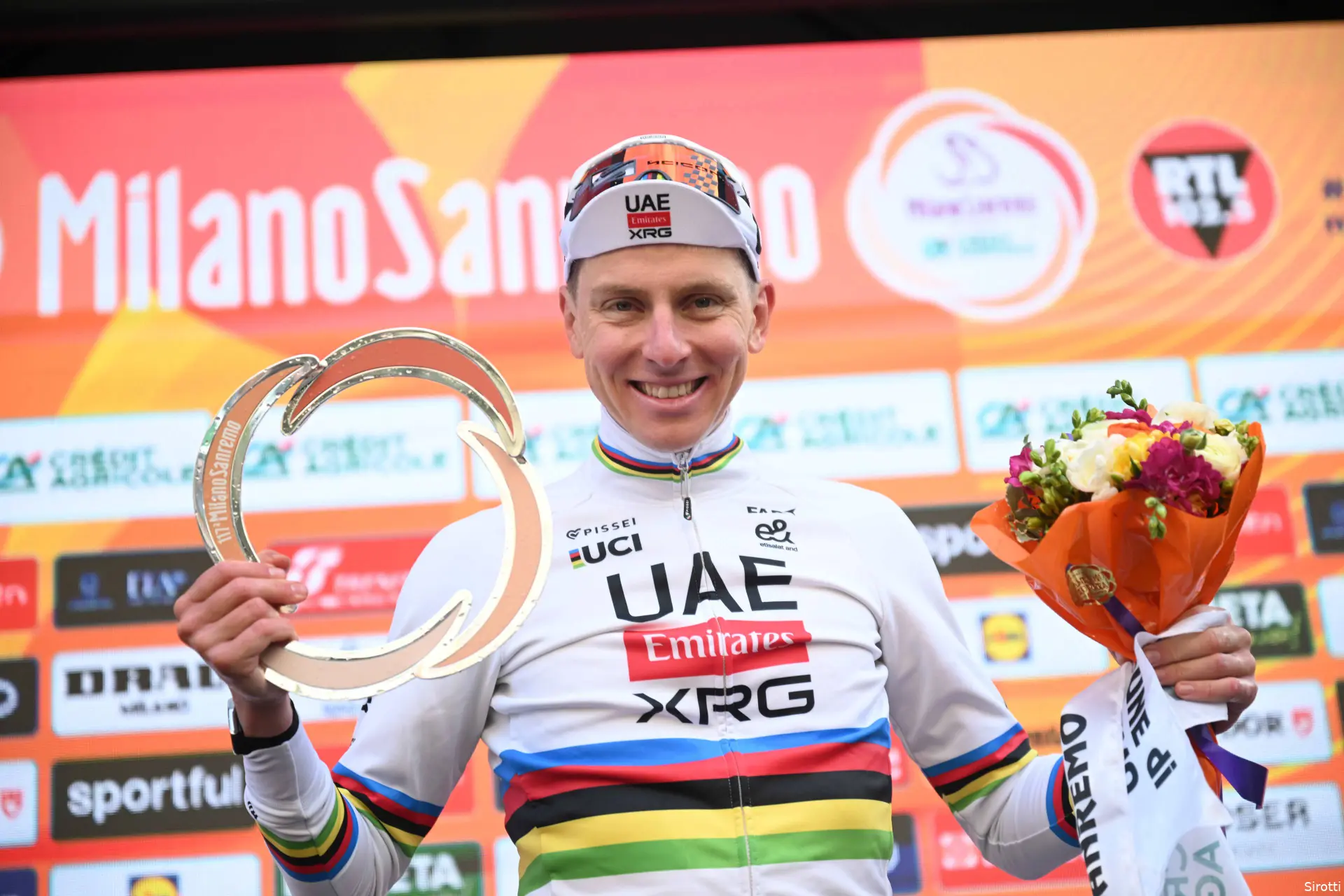
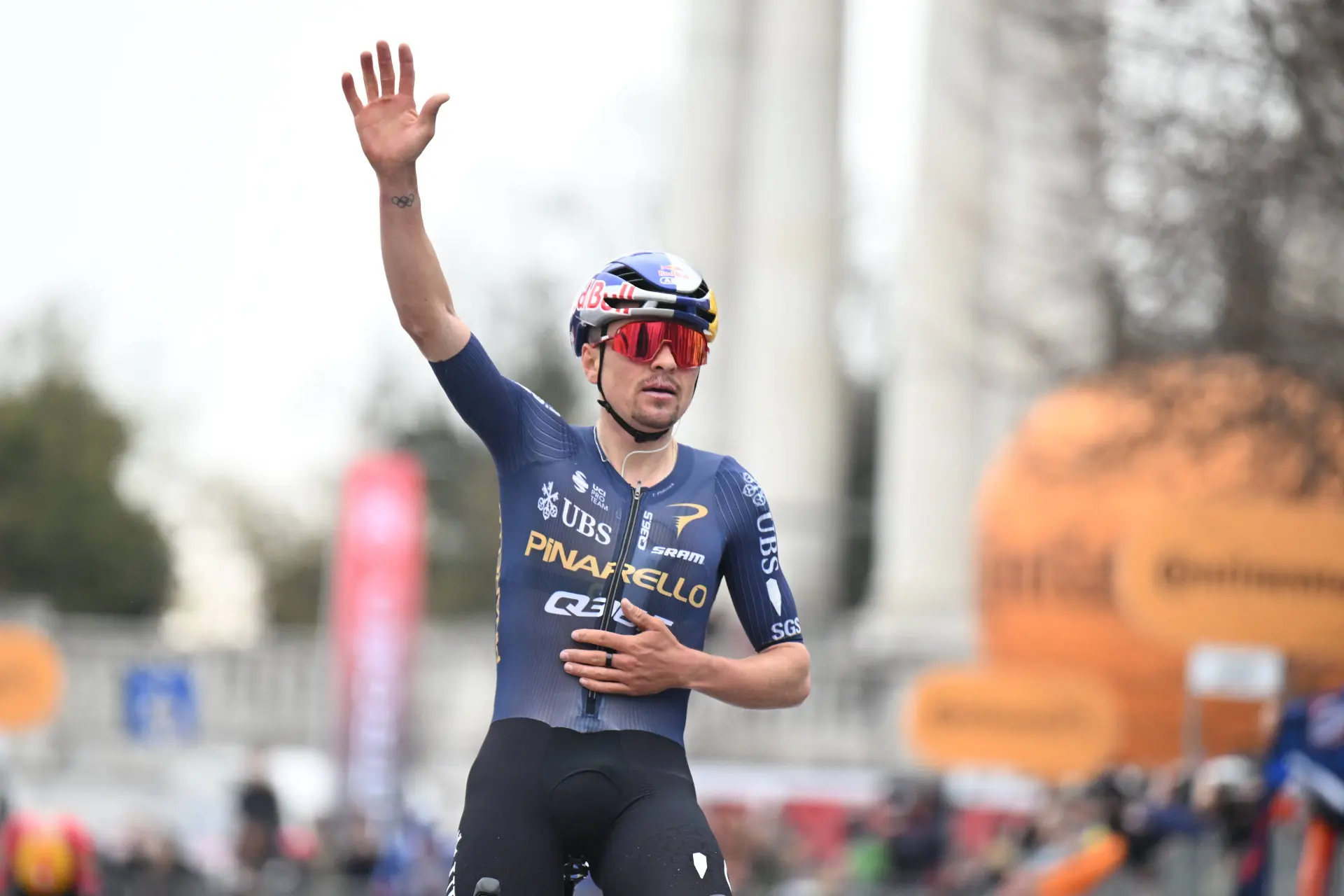
That Milan-Sanremo will go down as one of the most impressive victories of Tadej Pogačar’s career is already beyond doubt. The Slovenian of UAE Team Emirates-XRG fought his way back after a crash and eventually beat Tom Pidcock in the sprint. But the story has now become even more remarkable, after the world champion’s mechanic revealed a striking detail.
ADVERTISEMENT
A great deal has been said and written about how Milan-Sanremo unfolded, and we can still conclude that almost nobody could have expected a scenario like this. A crash in which many of the favourites were delayed, or brought down altogether, at one of the most crucial points of the race... it was the perfect set-up for a blockbuster finish. For IDL Procycling readers wanting the broader race recap, Pogačar does the near-impossible with stunning fightback to win first Milan-San Remo is the most logical internal reference point.
In the end, it was Pogačar who took the win, crossing the line with several injuries on his left side. The crash had clearly caused physical damage to the rider and, judging by Pogačar’s own comments afterward, some mental damage as well. But as it turns out, the bike also suffered more than first thought.
Because what emerged afterward? “Only after the finish did we realise that Tadej had ridden the finale on a damaged frame,” his mechanic, Bostjan Kavcnik, said in an interview with Delo. The rear stay had been damaged in the crash. “Luckily, it held together,” the mechanic said.
Continue reading below the photo!
Pogačar did not know about the damaged frame — and according to his mechanic, that was probably for the best
So Pogačar did not change bikes after the crash. According to the team, there was no immediate reason to do so. “Tadej crashed on his left side, where there is no shifter. Still, the crash mode was activated. He reset it himself and did not notice anything else unusual, so we decided not to make a change,” was the explanation.
In fact, there was another reason not to swap bikes. “It was the first time Tadej chose a single chainring. By removing the front derailleur and the extra chainring, we saved weight and improved aerodynamics.” The wheels were also slightly narrower: 28 millimetres instead of the 30-millimetre setup used a year earlier.
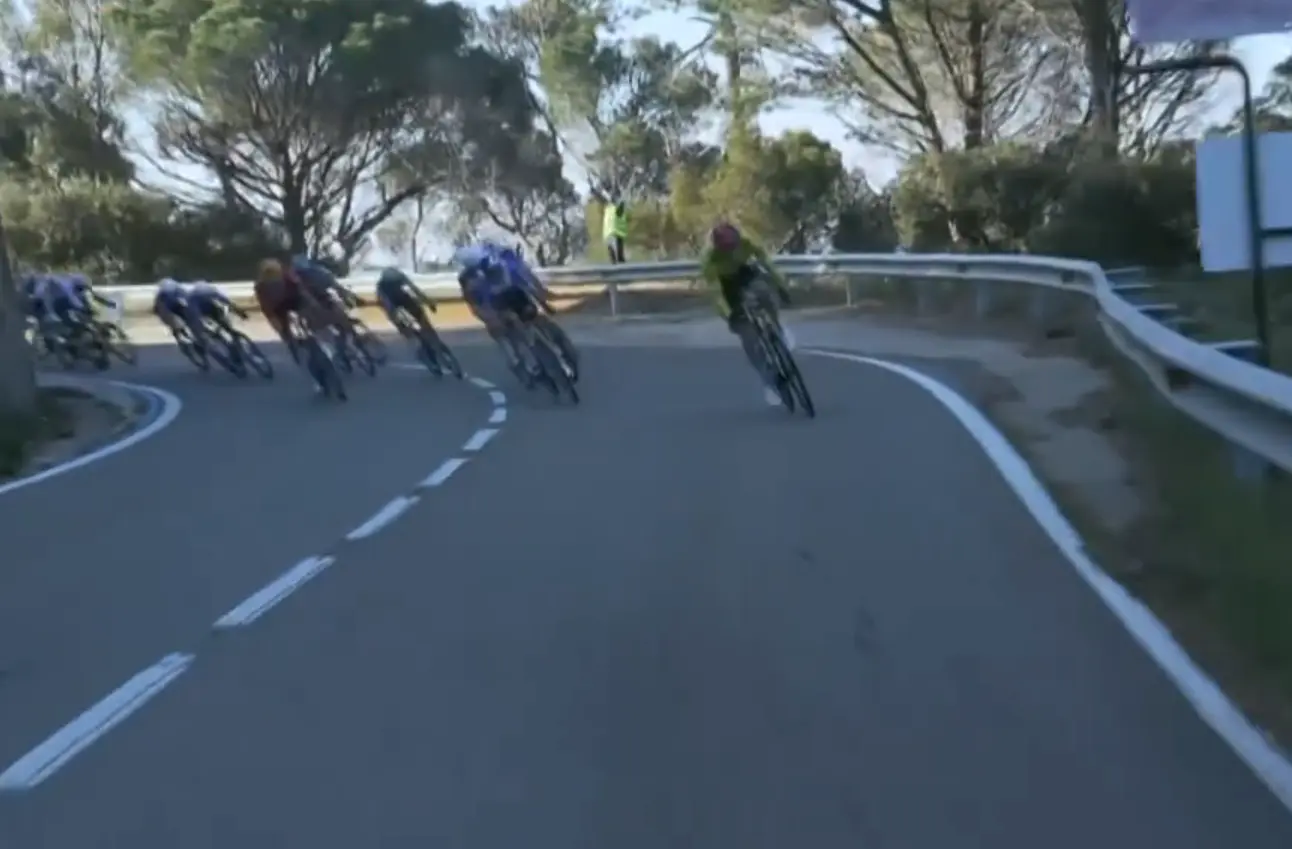
That was reason enough to stay on the same bike, and Pogačar himself did not know the full extent of the damage. Kavcnik believes that was actually a good thing. “If Tadej had known the true condition of his bike, he would never have descended so aggressively. Not even when he attacked on the descent of the Poggio and tried to push Pidcock to the absolute limit.” Knowledge may be power, but not always.

IDL-productions
Three world titles, two heart surgeries, and one last U23 chance: the Rogers family story behind Cameron's World Championship heartbreak
Mathieu van der Poel sees '1,000 scenarios' for the World Cycling Championships road race: 'Actually reminds me a bit of Glasgow'

Here's why the 2032 World Championships were awarded to India, not the Netherlands
Who is Isabella Holmgren, the 21-year-old Canadian who is the clear favourite for the women's U23 world championship?
Australia leave team spots empty, USA riders pay $1,000 to race: the World Championships' national team model faces serious financial problems
Latest Cycling News
2026 Women's World Cycling Championships Preview | Saturday's big race sees Demi Vollering take on the world
Wout van Aert speaks about working with Evenepoel at the World Championships: 'We have to be able to make choices'
Van der Poel likes Del Toro's chances at the World Championship road race: 'Strong enough to do his own thing even without a team'
Evenepoel makes bold prediction about one rider at the World Championships: 'He can definitely dominate everyone and everything here'
Sivakov is impressed by 20-year-old Seixas at the World Championships: 'Paul reminds me of Tadej'
Popular Cycling News
Disappointed Belgian Driesen has his doubts about the legitimacy of Barry's victory: 'They'll say I'm a sore loser'
2026 World Cycling Championships Route & Schedule | America wins its first medal, here is the weekend schedule
Tom Pidcock has four specifically picked domestiques in his hunt for a record-breaking rainbow jersey
Who is Isabella Holmgren, the 21-year-old Canadian who is the clear favourite for the women's U23 world championship?

🎥 UCI cracks down hard after insane footage of flying car at Junior World Championships
Latest Comments
- - Wout + Remco “riding in sync” gives me Leuven vibes. If they play it smart—Remco long-range, Wout sprint from a reduced group—Belgium could realmente dominar. Go on lad!michael5426-09-2026
- - Not sure I buy the jet lag bit. Late travel to North America has bitten riders before. Why risk that when others have been in Canada for a week?jennifer1926-09-2026
- - Love that he addressed Pogačar’s absence without gloating. Still, let’s be honest—no Pog means the Belgians have to control different threats, especially MvdP and maybe Hirschi. Gonna be a chess match late doors.sprocketspiny26-09-2026
- - Quick question: when they say the course is “a lot longer now,” how many kilometres are we talking compared to the GP Montréal? And does extra distance really suit Wout over Remco?cadencekingm26-09-2026
- - Proper interview! Wout sounds calm and dialled after that Vuelta block. If he’s carrying that points jersey form into Montréal, he’ll be in the mix on Camillien-Houde every lap.velodromevirtuoso126-09-2026
- - Vamos Isaac! But the article’s right—Mexico won’t be able to support Del Toro if Remco and MVDP turn the screws. Sin equipo fuerte es muy difícil. Still, I’d love a shock podium from him.michael5426-09-2026
- - Quick one: does “same course” literally mean identical to GP Montréal, or just similar laps/elevation? Trying to understand why that rehearsal is such a big indicator.samanthak26-09-2026
- - Is Seixas really 19? That’s a huge load for a Worlds road race. One bad moment and France has no plan B. Seems risky when you’ve got Sivakov and Paret-Peintre there.robert6526-09-2026
- - Remco + WVA with “two strategies” sounds terrifying. If Belgium launches Wout early and keeps Remco in the wheels, who’s marking both? The Brits and Dutch won’t have numbers if it kicks off on the penultimate climb.velodromevirtuoso126-09-2026
- - Love the unity from Les Bleus. Voeckler turning a camp into a proper team-building bootcamp (laundry and cooking!) is genius. If they control the Montreal laps like they did at GP Montréal, Seixas has a real shot. Allez!cadencekingm26-09-2026
Loading