Follow IDL Pro Cycling on Google
Stay up to date with the best cycling news by making us a preferred source on Google.
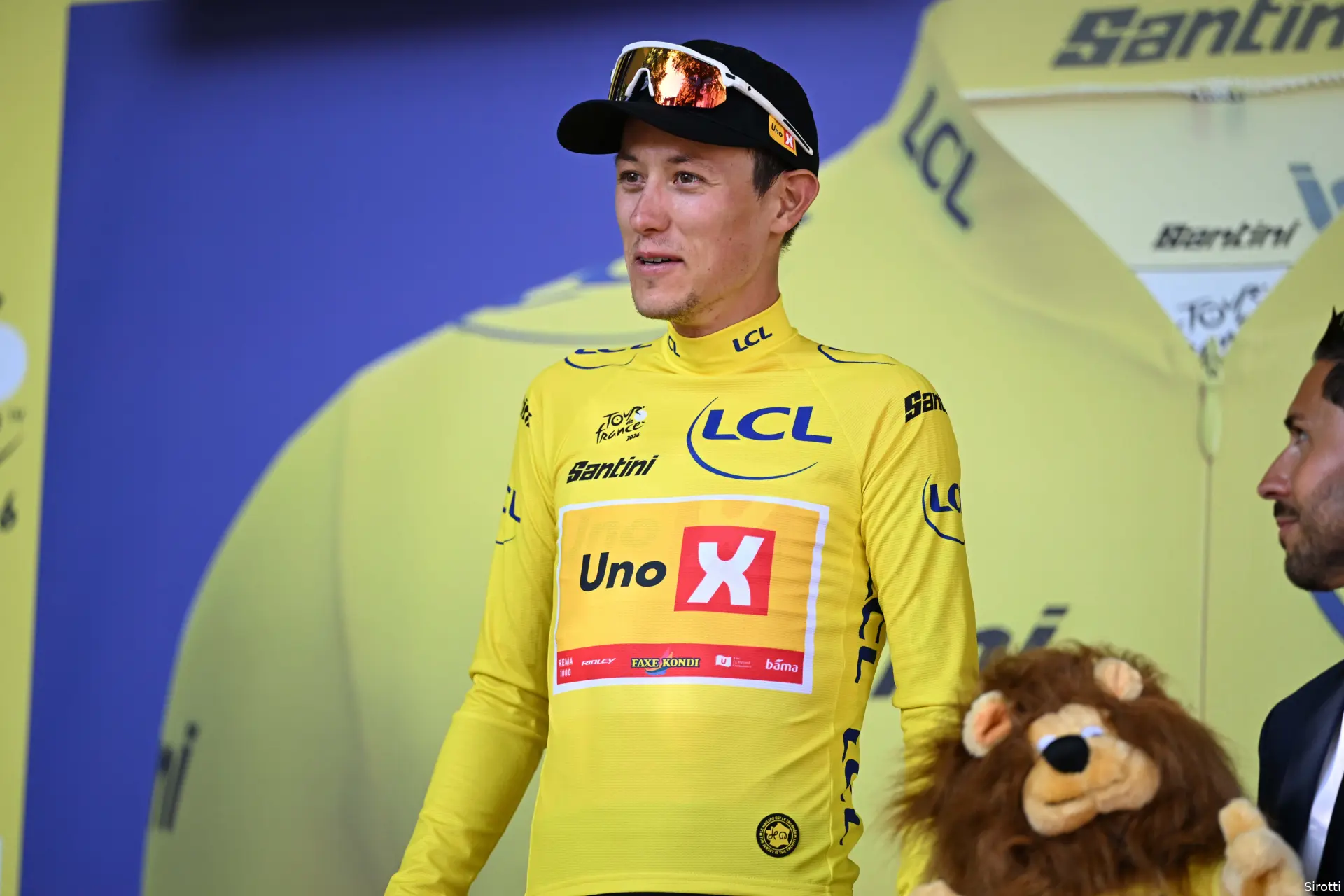
Follow us on GoogleFour years ago, Torstein Træen was battling testicular cancer. On Tuesday, the 30-year-old Norwegian pulled on the Tour de France's yellow jersey. On a battling stage 4, where a strong breakaway group took nearly 12 minutes on Tadej Pogacar’s yellow jersey group, Traen was the best placed of the front group. Træen’s road to the 2026 Tour de France is as inspiring as it gets, and it all started with a positive doping test.
ADVERTISEMENT
Only three Norwegians have ever led the Tour de France. Træen’s team boss, Thor Hushovd, is one of them. And now so is Torstein Træen. For Uno-X Mobility, it is a moment that has been years in the making.
"I'm very proud of Torstein and the whole team," Hushovd told CyclingNews at the finish, reflecting on what the moment meant for a squad built entirely from Norwegian and Danish riders. One of the images of the day was the entire Uno-X team waiting at the podium to cheer for their first yellow jersey, despite the sweltering heat. But who is Torstein Træen?
“It’s quite hard for me to understand how big it is," Træen said to the media at the finish. "You can see the face of my old coach, the face of the soigneur, you can see how special it is. In a couple of days it will sink in [for me], but the Tour is the biggest race in the world and now I just have to enjoy it.
Read also
From Volta a Catalunya to a cancer ward
Træen's route to that yellow jersey began when the then 26-year-old failed a doping test at the Volta a Catalunya in May 2022. The Uno-X rider returned elevated levels of hCG, a hormone that can signal certain cancers. Days later, doctors confirmed a tumour.
The team doctor told Træen that he had returned a positive for hCG from the Volta a Catalunya by phone. It was a call that arrived just as he was enjoying the best form of his career, having also won the mountains classification at that year's Tour of the Alps.
Træen has since admitted the diagnosis initially felt unreal. "I thought it was nonsense at first," he said, before doctors explained what the test result meant. Surgery to remove the affected testicle followed within weeks. A 15mm tumour was found, but caught early enough that Træen avoided chemotherapy altogether.
By the following spring, he was already racing again. Returning to the Tour of the Alps in 2023, the race where his illness had gone undetected a year earlier, he came within a whisker of a stage win. "I raced here last year with cancer and didn't know it," he said afterwards, visibly moved to be back competing at the same race.
Wearing red at La Vuelta
The comeback did not stop there. In 2024, riding for Bahrain Victorious, Træen won a stage of the Tour de Suisse on the climb nicknamed after Gino Mäder, the young Swiss rider who died in a crash at the same race the year before. "This win was for Gino," Træen said, dedicating the victory to his memory.
A year later came the 2025 Vuelta a España, where Træen wore the red leader's jersey for four stages and finished ninth overall. It was proof that his climbing legs, and his career, had fully returned.

2026 Tour de France stage 4 and the yellow jersey
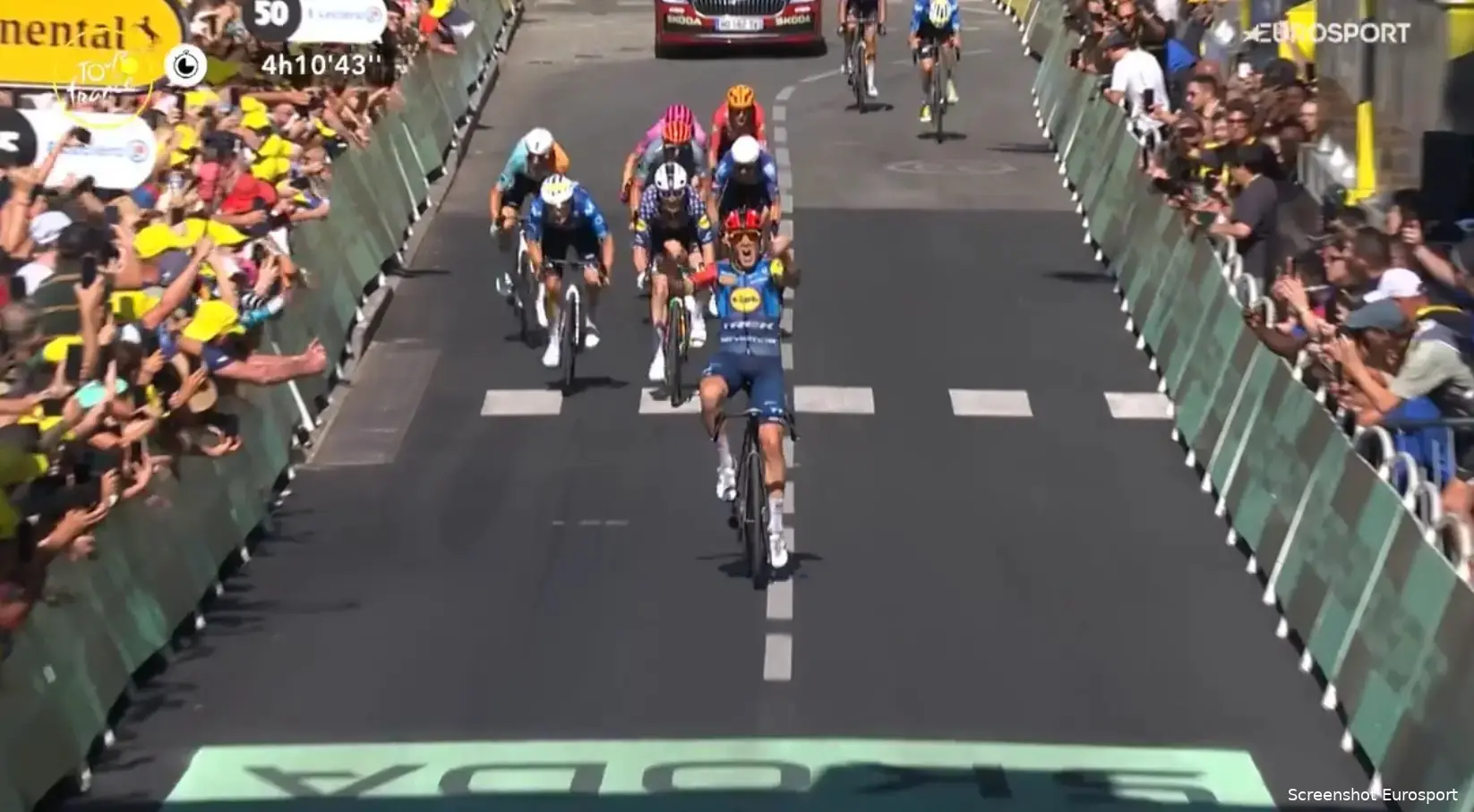
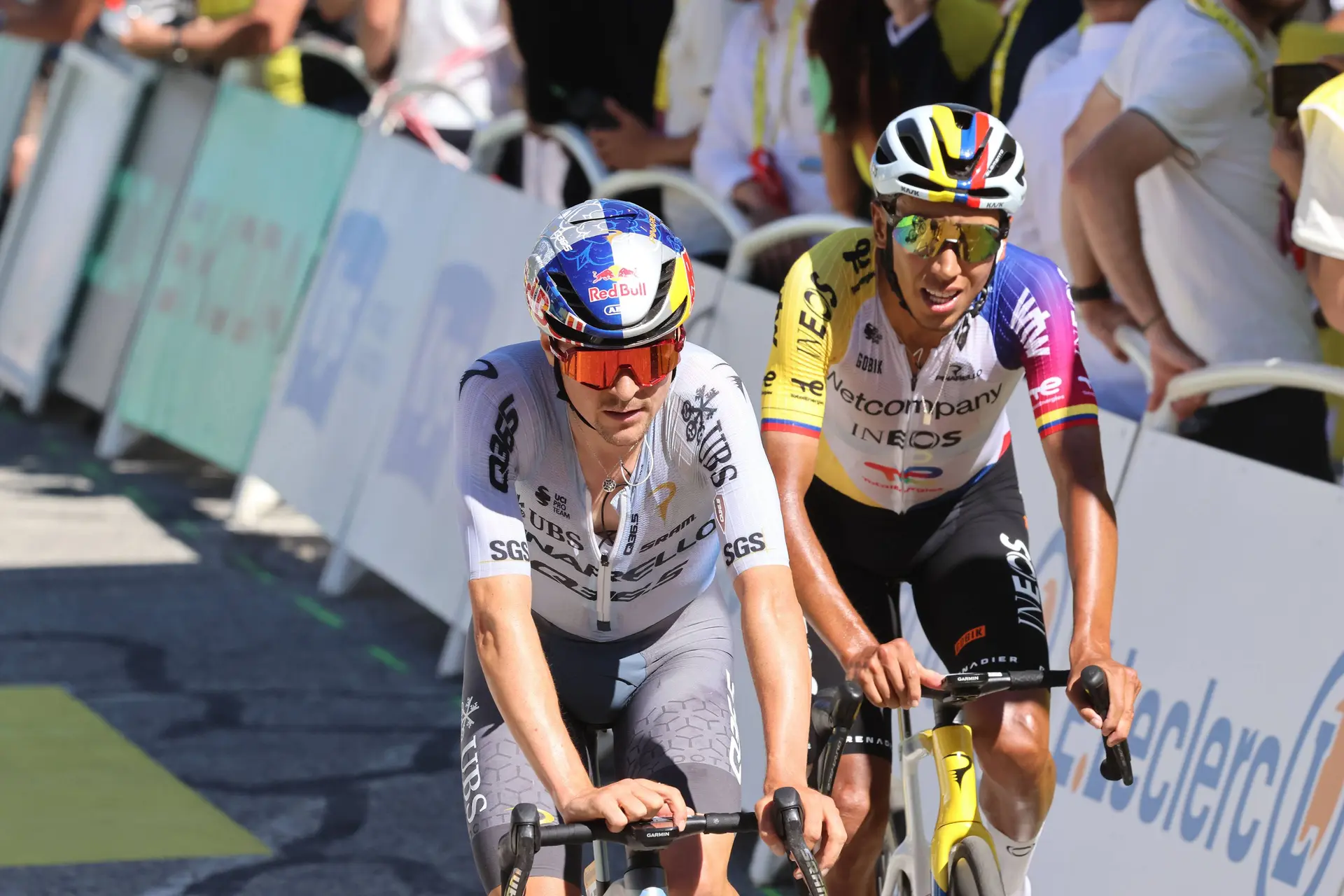
That form carried Træen, now back at Uno-X Mobility, into the decisive breakaway on stage 4 of the 2026 Tour de France. Riding through searing heat, Træen and American rival Sean Quinn (EF Education-EasyPost) were the biggest threats to Tadej Pogačar's overall lead.
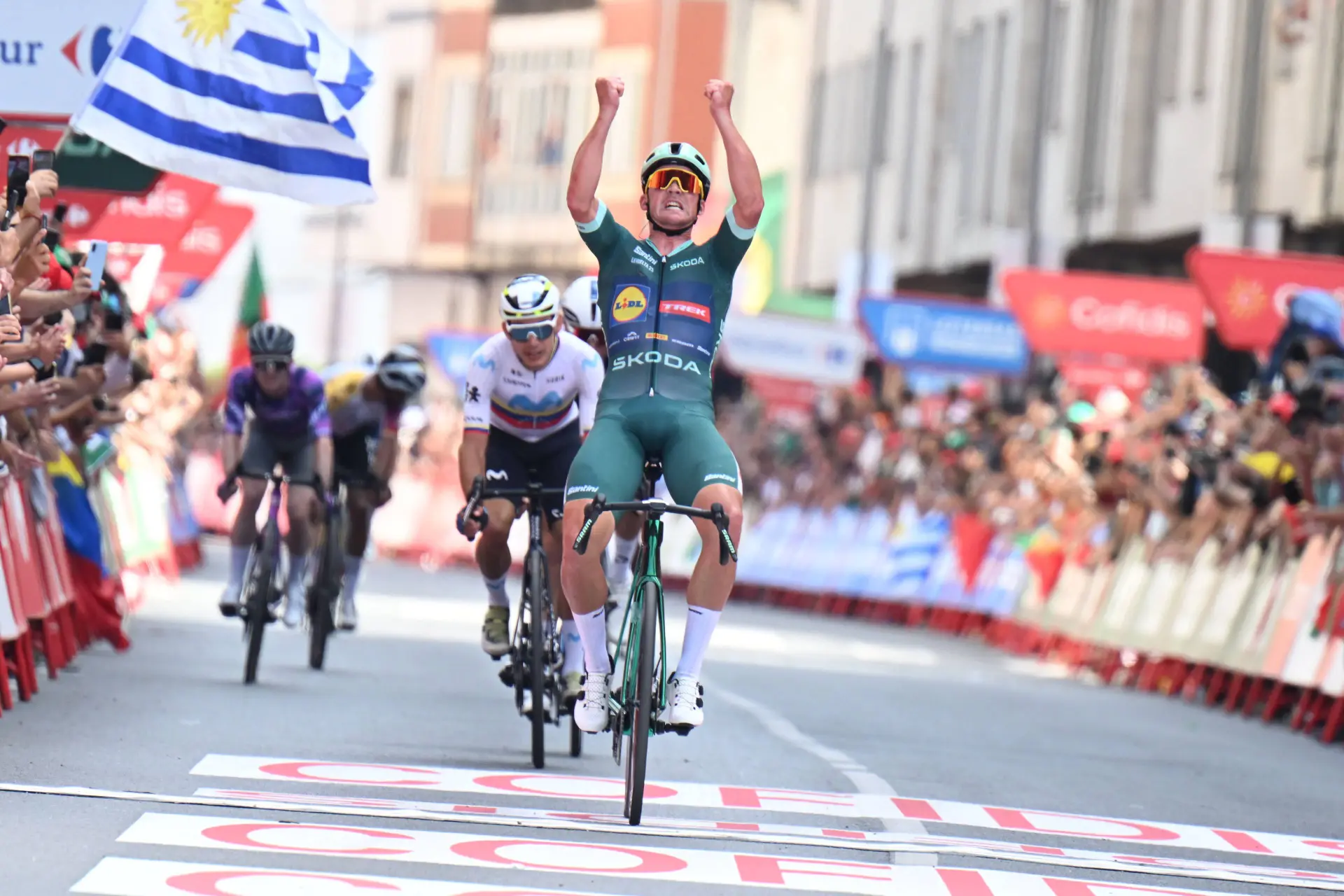
Træen played it smart, matching Quinn's moves and profiting from Lidl-Trek’s hard work to deliver Mads Pedersen the win. "The possibility of wearing the yellow jersey was real," he said of the closing kilometres, though he was careful not to celebrate before the finish line.
He now leads Quinn by 28 seconds overall, with Mathias Vacek (Lidl-Trek) third at 3:53. Pogačar sits fourth, 7:53 down, the furthest he has ever trailed in yellow.
For Hushovd and Uno-X Mobility, a team that recruits exclusively from Norway and Denmark, it is a landmark achievement. "We have a different team compared to others," Hushovd said. "It makes us very proud when we pull off a major goal like taking the Tour de France yellow."
What is 'hCG', and why is it banned by the UCI?
Human chorionic gonadotropin, or hCG, is a hormone naturally produced during pregnancy. In women, its presence is entirely normal and is, in fact, the basis of standard pregnancy tests. In men, however, elevated hCG has no natural explanation. It can be a marker of testicular cancer, but it is also used as a performance-enhancing drug, since it stimulates the testes to produce more testosterone.
For that reason, hCG is prohibited in male athletes under the World Anti-Doping Agency's Prohibited List, a code the UCI applies to professional cycling. Riders are tested for it both in and out of competition. It was exactly this kind of test, a routine, unannounced doping control rather than any symptom, that first flagged Træen's illness in 2022.
How long Træn will be able to hold onto the yellow jersey will be a fascinating question over the next (possibly) 10 stages. With such an inspiring backstory, there will be a lot of support for Træen and Uno-X in the coming days.
David Bavin-HobbsChief Editor
David has been working in the sports & cycling industry for 16 years. Covering racing, business and technology, he has worked in communications for cycling companies, teams, and as a journalist. His proudest achievement is winning the first bike race he ever entered. He hasn't won a race since.
IDL-productions
Rumours, speculation and guesswork: 2027 Tour de France route will be revealed live on October 22 in Paris
Vollering adds the Women’s European Championships road race jersey to her rainbow wardrobe
16-day Grand Tours, AI, VAR, drones and more: The UCI's new document has a potentially major impact from 2029 onwards
Quinn Simmons' Strava shows exactly what it takes to compete at the World Championships: ‘I said, Hey guys, anything is possible'
Despite losing the World Championships, Del Toro and Seixas rank high mentally and physically on the Pogačar scale
Latest Cycling News
Giulio Ciccone agrees Pinarello-Q36.5 deal despite Lidl-Trek contract, opening the door for Ganna
Hincapie's Modern Adventure reflect on debut year: 'All the guys are really eager for next season.'
2026 Gravel World Championships Elite Men's Preview | Florian Vermeersch vs the dominant Specialized trio
2026 Women's Gravel World Championships preview | Marianne Vos has her work cut out in Australia
Netcompany-INEOS's young signing has dominated European and World Championships: Noval hailed as 'new Seixas'
Popular Cycling News

Lance Armstrong was diagnosed with cancer 30 years ago but is still here today; celebrates with wife Anna Hansen
Netcompany-INEOS's young signing has dominated European and World Championships: Noval hailed as 'new Seixas'
European Championship organiser answers Giulio Ciccone's photo finish complaint: 'In the case of minimal differences'
Lidl-Trek terminate multiple contracts, lucrative transfer season in full swing at German team
Sensational Primož Roglič gives home fans something to cheer about by winning the mens' European time trial title
Latest Comments
- - ¡Qué ilusión para el ciclismo español! If Noval can combine climbing, time trialling and that mental strength, Spain may have another superstar on its hands.davidm08-10-2026
- - I’m still learning the sport—how can someone be the second-youngest WorldTour pro ever if his contract starts in 2027? Does that record depend on his exact birthday and debut date?pedalpowe2908-10-2026
- - “Once-in-a-generation talent” is a huge claim. What power numbers did Noval actually produce in Asturias, and how do they compare with riders of the same age?jeremya08-10-2026
- - The Contador comparisons are exciting, but also a bit premature. Time-trial ability is a major advantage, though the jump from juniors to the WorldTour can be brutal. Hopefully INEOS gives him time to develop rather than expecting instant results.patriciaw08-10-2026
- - Noval’s junior season has been absolutely ridiculous. Winning both world titles and the European time trial title suggests he isn’t just a climber—his versatility could be what separates him from the other big prospects.gearguru3308-10-2026
- Great drama, but the article leans a little too hard into the “what if” angle. Evenepoel still had to recover from a crash and finish the job—credit where it’s due.robert6507-10-2026
- What exactly is a pacer in this situation, and why was Ciccone listening to that information instead of just watching the race? I’m still learning the tactics, but it seems like Scaroni being behind changed everything.andrewf07-10-2026
- The photo finish sounds far too vulnerable to tiny setup errors. If the line is curved and the camera alignment is even slightly off, can we really call a one-pixel victory completely definitive?jennifer1907-10-2026
- Ciccone’s final turn was excellent, but I agree with Zonneveld that he probably worked too much before the finish. With Scaroni behind, sitting on Remco’s wheel would have been the smarter gamble.bikebuffj07-10-2026
- Evenepoel showed serious resilience after that crash. Coming back, attacking on the descent and still winning the sprint is a proper champion’s performance.cadencekingm07-10-2026
Loading


