Follow IDL Pro Cycling on Google
Stay up to date with the best cycling news by making us a preferred source on Google.
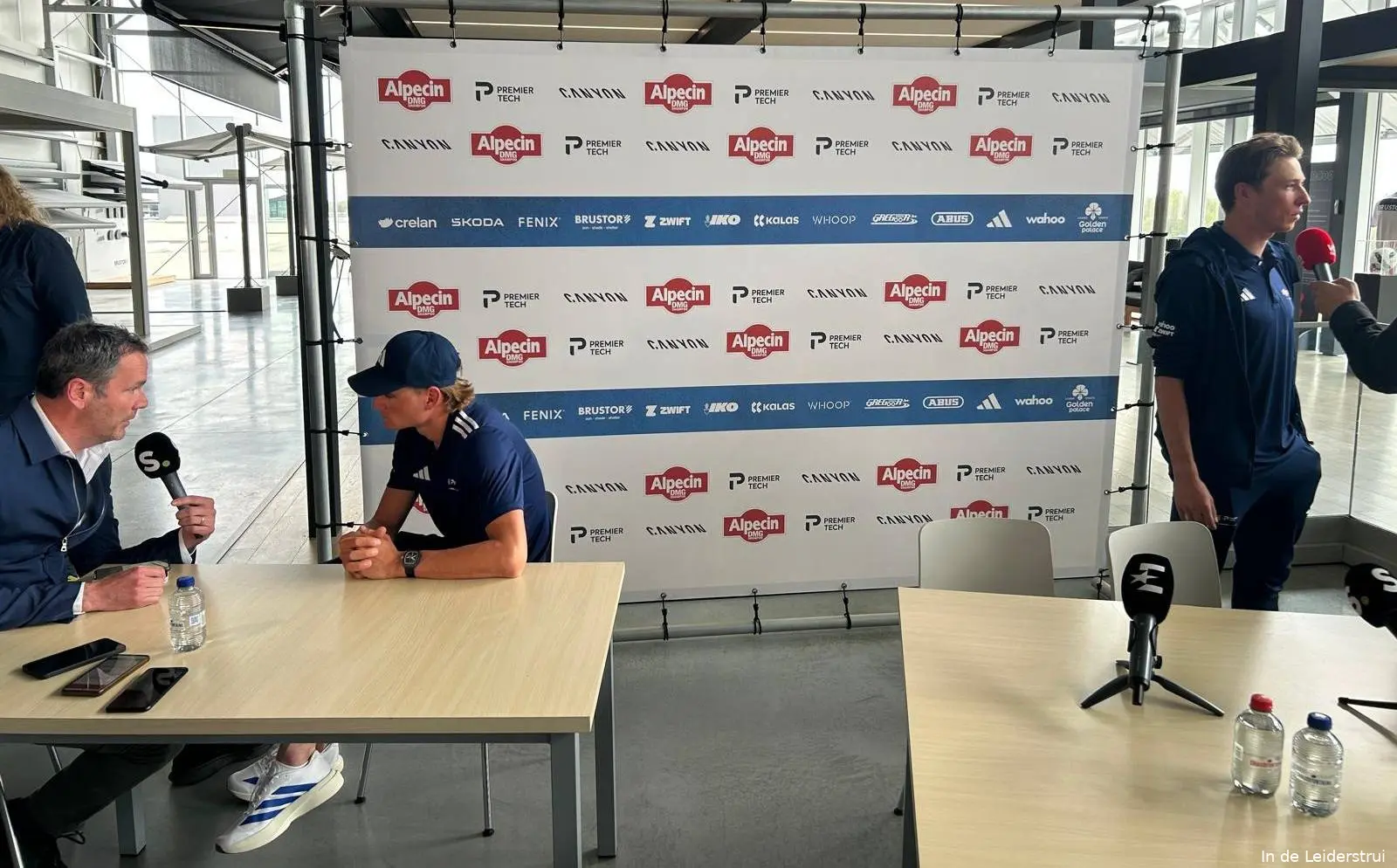
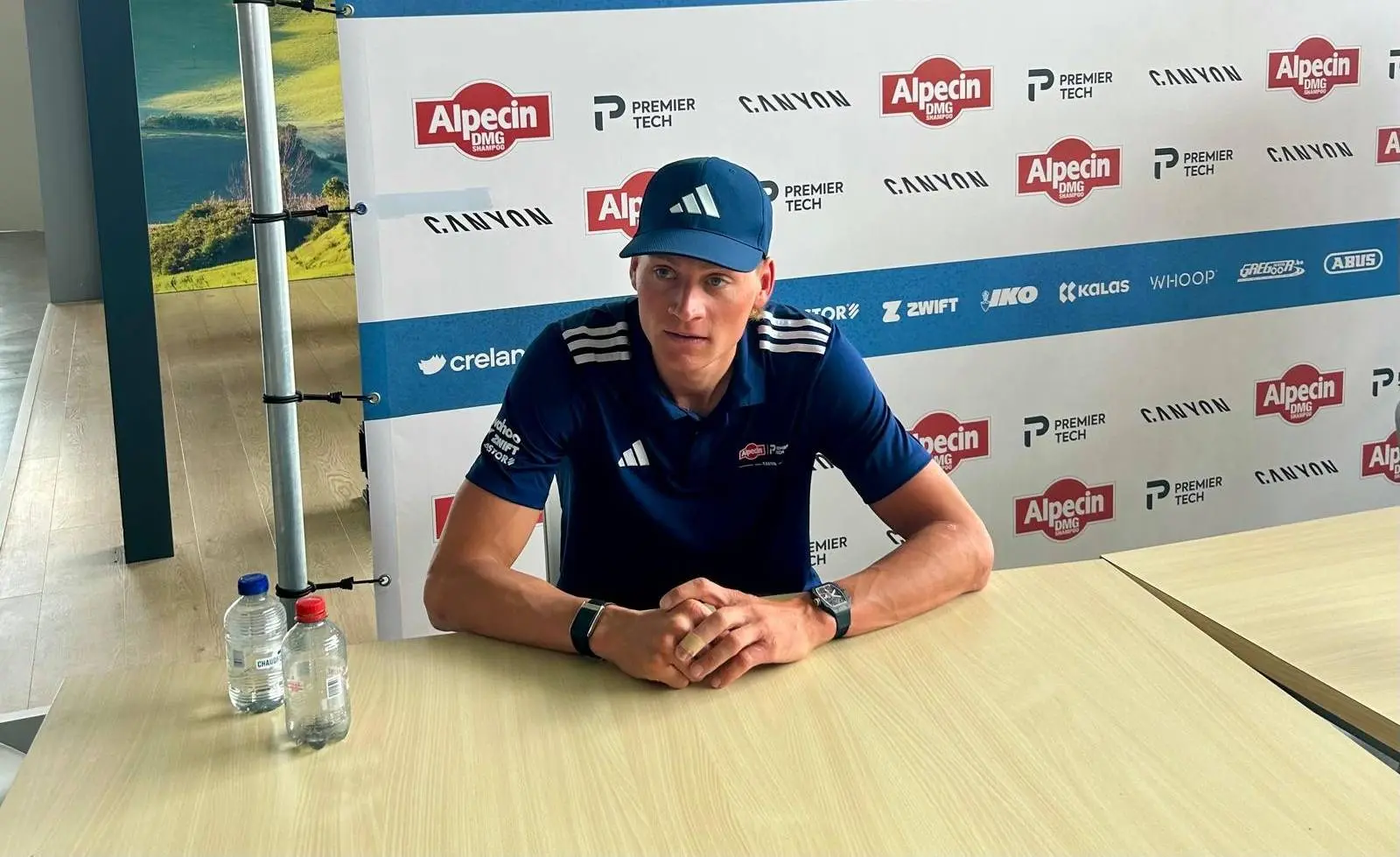
Follow us on GoogleJasper Philipsen and Mathieu van der Poel had a lot to say about increasing race speeds at the Alpecin-Premier Tech press conference on Thursday. With multiple records on the line this Sunday, will we see yet another 'fastest ever Roubaix?' Van der Poel, for one, doesn't think that's a good thing for the sport.
ADVERTISEMENT
"I think it's a combination of a lot of different things," said van der Poel. "The bikes and all the equipment are getting faster. Also, the nutrition changed. In my opinion, this is a bit the limit. We cannot go faster and faster, otherwise they’ll have to add certain kilometers to get a longer race, so I think this is a bit the limit, to be honest."
"It's crazy that every year they break records. I don't know how long it will continue like that," added Philipsen. "It's not that we do specifically different things, but the speed gets higher, apparently, or they race longer. You see it in many races, but yeah, I'm curious to see how long this trend will continue."

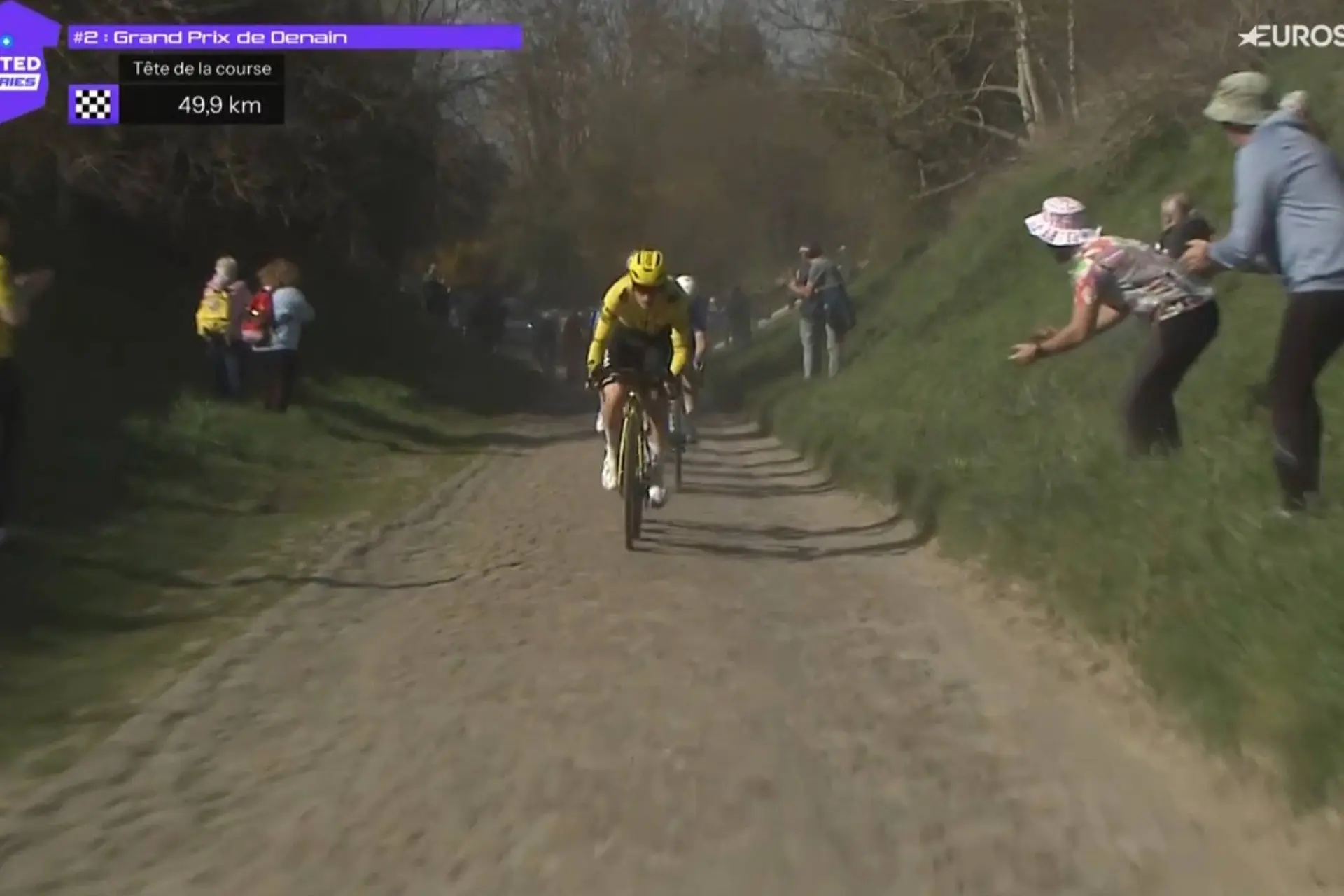
Van der Poel wins Roubaix in 2025
Higher speed = shorter races
When asked if it the added speed was something that could be felt on the bike, both riders were quick to explain the effect on the overall race length. "Yeah, you feel the speed is high, but you feel the time in the race is shorter", said Philipsen. "We don't race seven hours anymore on a classic like that. It's just a race of five hours thirty, or six hours."
Van der Poel explained that it is not just the fight for the finish that is driving up speeds, but the inevitable fight at the beginning too. "If you already race one hour or two hours to get in the breakaway, of course, the speed is high. And then also the final starts way sooner than it was in the past. So it's normal that the last 100 km is faster than it was in the past."
Is professional cycling really getting faster?
Undoubtedly, yes. Pro Cycling Stats has been recording the average speed of professional cycling races since 2001, and the increase is clear to see. From 2020 to 2025 the average speed of all WorldTour races shot up from 40.4 KMPH (41.2 in just the classics) to 42.9 KMPH (43.5 in the classics).
An increase of 2-3 KMPH for the world's best cyclists may not seem like a lot, but when you take into account these numbers include the most mountainous Grand Tour stages, as well as the fast and flat races, it's quite staggering.
And what about Paris-Roubaix? The fastest ever edition of the race ever in 2024, recroded at a whopping 47.8 KMPH. That year, van der Poel had to wait a whole 3 minutes for Philipsen to win the sprint for second. There was a dip of nearly 1 KMPH in average race speed in 2025 (46.9), but it will be interesting to see if the trend continues on Sunday afternoon.
After Thursday's press conference, it is clear that van der Poel himself will be doing nothing to slow things down.

Increasing race speeds from Pro Cycling Stats
Van der Poel likes it fast
While van der Poel might have reservations about the increasing average speeds year on year, the Paris-Roubaix favourite is in no doubt that it plays to his strengths. "I think for sure it's better that the races are harder for me. I like it," he said, with a small grin. "I think it's also just a few races, of course, so for me, it's nice to just try and focus on these ones. I don't mind it being really hard from start to finish."
We wait with baited breath until Sunday afternoon to see if his competitors agree with him. We doubt it.
David Bavin-HobbsChief Editor
David has been working in the sports & cycling industry for 16 years. Covering racing, business and technology, he has worked in communications for cycling companies, teams, and as a journalist. His proudest achievement is winning the first bike race he ever entered. He hasn't won a race since.
IDL-productions
Rumours, speculation and guesswork: 2027 Tour de France route will be revealed live on October 22 in Paris
Vollering adds the Women’s European Championships road race jersey to her rainbow wardrobe
16-day Grand Tours, AI, VAR, drones and more: The UCI's new document has a potentially major impact from 2029 onwards
Quinn Simmons' Strava shows exactly what it takes to compete at the World Championships: ‘I said, Hey guys, anything is possible'
Despite losing the World Championships, Del Toro and Seixas rank high mentally and physically on the Pogačar scale
Latest Cycling News
2026 Il Lombardia Preview | Evenepoel, Del Toro, Seixas and Pidcock all fight to win Pogacar’s crown
Il Lombardia Favourites: Del Toro on his knee, fiery Seixas, laid-back Pidcock, and dangerous underdogs
LIVE 2026 Tour of Lombardy | Who will claim their first victory after Pogacar’s dominance?
🎥 Emotional Marianne Vos celebrates with family in Australia after Gravel World Championship win
2026 Tour of Lombardy start list | These riders will try to take Pogačar's crown on Saturday
Popular Cycling News
INEOS's young talent dominated the European and World Championships: Noval hailed as 'new Seixas'
Cycling transfers 2026/2027 | Riders come and go at Netcompany INEOS
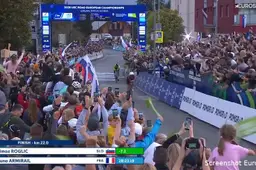
Sensational Primož Roglič gives home fans something to cheer about by winning the mens' European time trial title
Giulio Ciccone agrees Pinarello-Q36.5 deal despite Lidl-Trek contract, opening the door for Ganna
2026 Il Lombardia Preview | Evenepoel, Del Toro, Seixas and Pidcock all fight to win Pogacar’s crown
Latest Comments
- I’m a bit confused by the photo finish explanation—if the image shows time rather than distance, how can it prove who crossed first? And why was the result not explained immediately after the race?velodromevirtuoso109-10-2026
- 13,000 captures per second is some serious technology! Still, I can understand why Ciccone felt frustrated when the margin was so tiny. Hopefully the organisers publish the full image so fans can see exactly what happened.patriciaw09-10-2026
- Evenepoel handled this well. No need to turn a razor-thin result into a bigger argument, especially with the governing body confirming the procedure. That jersey and Specialized bike combination should look absolutely brilliant in Lombardy.cadencekingm09-10-2026
- A finish decided by fractions of a second will always create debate, but the UEC’s explanation of the EtherLynx system sounds pretty conclusive. Photo finishes are often misunderstood—the image represents time, not a normal view of the riders’ position. Fair play to Ciccone for accepting it graciously.pedalpowe2909-10-2026
- This feels a bit overdramatic from the media. Until Roglic or his agent confirms it, all these “insiders” are just guessing. Still, seeing him line up with Pidcock would be pretty cool.breakawaybikerd09-10-2026
- I’m still learning the team side of cycling: if a team has 29 contracts already signed, how can it still add Roglič? Do riders leave, or are there limits on how many can be registered?samanthak09-10-2026
- So many conflicting reports — Tudor favourite one week, completely out the next. Surely someone in the camps knows what’s happening? Either way, Roglic deserves a team built around him rather than another uncertain setup.jeremya09-10-2026
- Pinarello-Q5 with Roglič, Pidcock and Ciccone would be a seriously interesting project. Plenty of firepower, although three big personalities sharing one team could get complicated during the Grand Tours.sprocketspiny09-10-2026
- The transfer rumours are becoming a race of their own! Tudor still makes sense, but a clear leader role at Lotto-Intermarché could be exactly what Roglič wants at this stage of his career. Let’s see what comes out after Lombardia.gearguru3309-10-2026
- Big challenge ahead—bonne chance, Grischa!lindae09-10-2026
Loading