Follow IDL Pro Cycling on Google
Stay up to date with the best cycling news by making us a preferred source on Google.
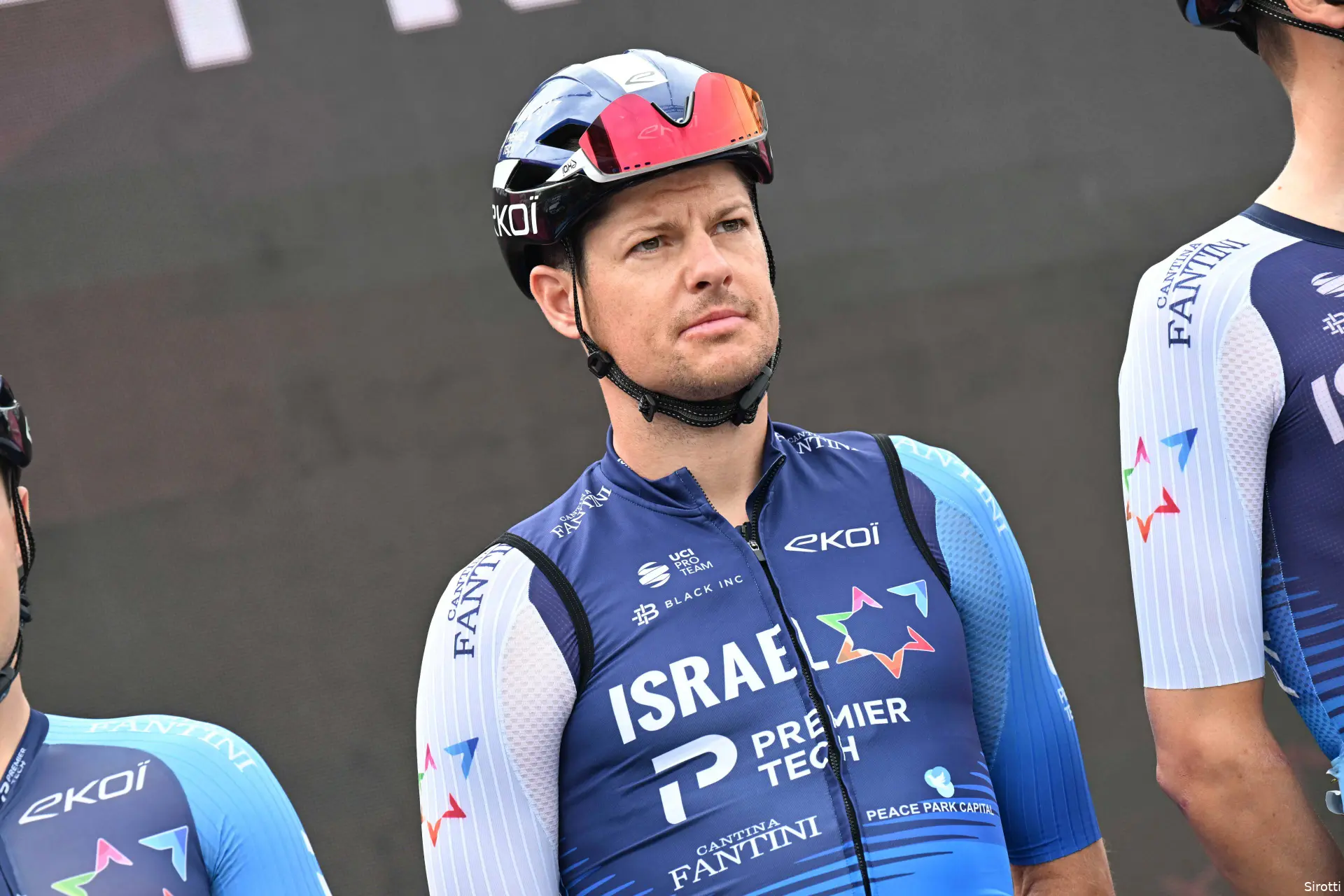
Follow us on GoogleMotorcycles in the peloton have long been a major talking point in professional cycling. Riders can benefit too much from the slipstream of vehicles in front of them, or just as easily be hindered by them at decisive moments. Former pro Jakob Fuglsang has now added his voice to that debate in comments to Danish outlet Feltet .
ADVERTISEMENT
The issue of vehicles either helping or obstructing riders has been around for years. One of the most discussed examples came in the 2023 Amstel Gold Race, when there was a storm of criticism over a car carrying race director Leo van Vliet that stayed in front of Tadej Pogačar for too long, helping the Slovenian stay out of reach of the peloton.
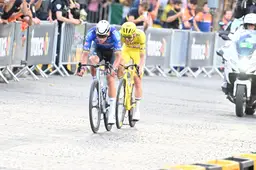
The same year, at the Tour de France, Pogačar was on the other side of the problem when two motorcycles got in his way as he tried to attack Jonas Vingegaard. In the end, Vingegaard took bonus seconds on the stage after that incident disrupted the Slovenian’s move.
Read on after the video!
Fuglsang: “Without a motorcycle in front, Van der Poel probably wouldn’t have won E3”
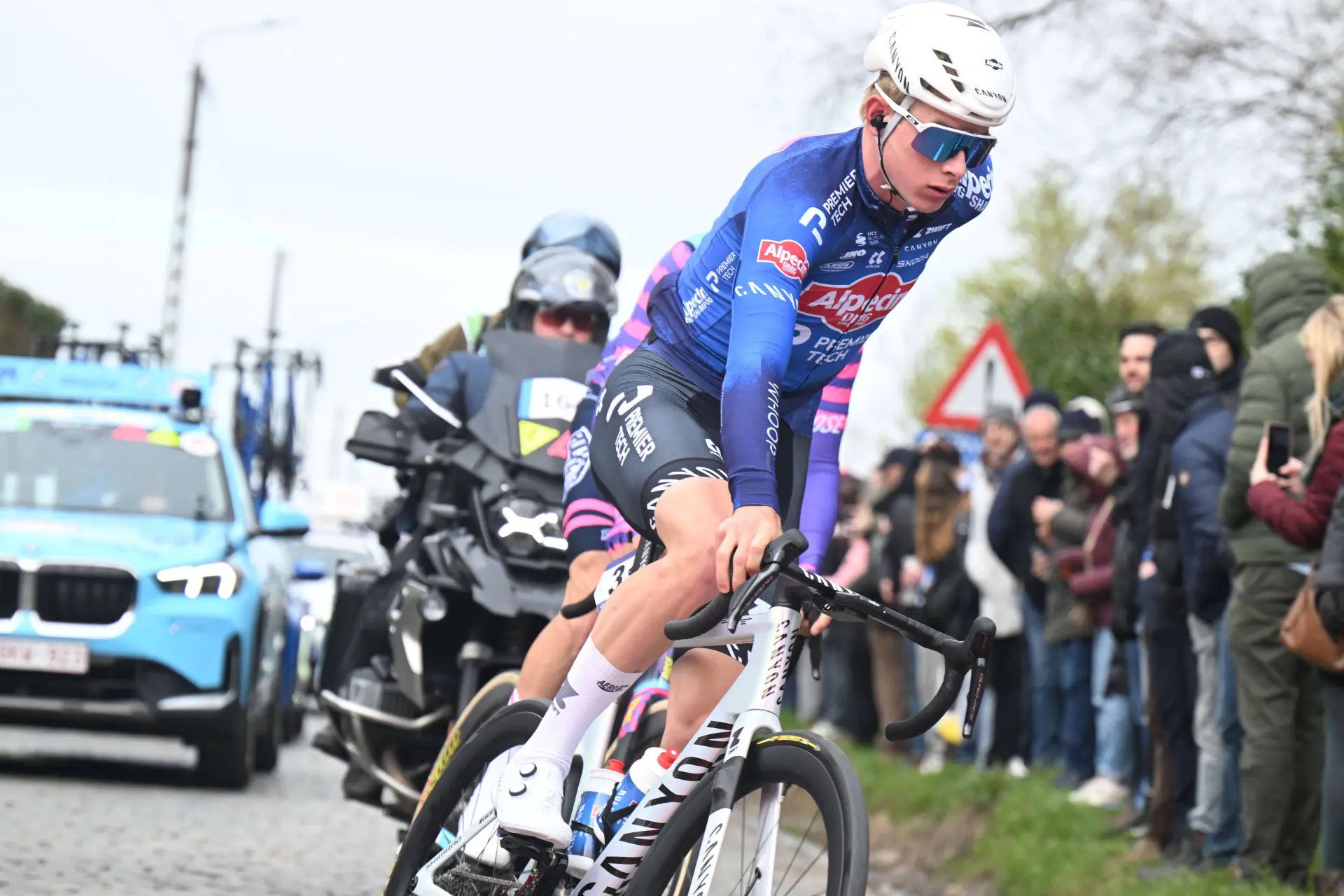
Those are just two examples of the influence vehicles, and motorcycles in particular, can have on a race. Fuglsang says he has been watching the problem unfold for years. “I’ve believed for a long time that the motorcycles are more decisive than many other factors,” he said. “They help determine whether the rider who gets away actually stays away.”
According to the Dane, that depends heavily on how closely a motorcycle stays in front of a rider. “It’s all about being the first to attack. If you do that, you get the motorcycle with you and they can’t catch you anymore.” Fuglsang even pointed to a very recent example. “Without a motorcycle in front, Mathieu van der Poel probably wouldn’t have won E3.”
Continue reading below the photo!
Fuglsang: “Quick-Step used motorcycles as a tactic in the past”
The influence of TV motorcycles is not just a recent issue. Research from Eindhoven University of Technology in 2019 found that when a motorcycle rides 30 metres in front of a rider, that rider can travel as much as 2.6 seconds faster per minute. Over the course of a race, that can absolutely make the difference between winning and losing.
Fuglsang went a step further, saying teams were well aware of it in the past. “At Quick-Step, using the motorcycles almost used to be part of the tactic,” he explained. “In the Belgian classics, it’s all about attacking first, because on those twisting roads it’s hard for motorbikes to get away. And of course they need good TV pictures.”
Continue reading below the photo!

Fuglsang points not only at the UCI, but also at the peloton: “We should make a gentlemen’s agreement”
The 41-year-old Dane first pointed the finger at the UCI. “They talk about limiting gears for safety reasons, but that’s not what really makes the difference. It’s the motorcycles,” he said bluntly. Still, Fuglsang also believes riders themselves are part of the equation. “When a group is chasing the leaders, a psychological mechanism quickly appears where everyone starts racing after the motorcycle — a kind of Schrödinger’s motorbike.”
If the UCI were to take a first step, Fuglsang says he would also support an agreement within the peloton. “It will probably never really be possible, but we should agree not to race behind the motorcycles.” At the same time, the Dane, who retired in 2025, knows it is far from an easy problem to solve.
Read also
PD
Pim van der Doelen
IDL-productions
Track World Championships day 2: A golden day for Team GB, Levreysen goes 2 for 2, and Kopecky eliminates the competition
Rumours, speculation and guesswork: 2027 Tour de France route will be revealed live on October 22 in Paris
Vollering adds the Women’s European Championships road race jersey to her rainbow wardrobe
16-day Grand Tours, AI, VAR, drones and more: The UCI's new document has a potentially major impact from 2029 onwards
Quinn Simmons' Strava shows exactly what it takes to compete at the World Championships: ‘I said, Hey guys, anything is possible'
Latest Cycling News
Dutch Red Bull talent realises there is still a lot of work to be done to secure his dream role

Lidl-Trek’s top time-trialist on what Filippo Ganna’s arrival might mean for him: 'The team is ambitious'
Rumours fly about Tour de France 2027, which seems set to miss Montmartre show down
Jakobsen posts his strongest WorldTour result in years: 'It feels like a small victory'
Track World Championships day 2: A golden day for Team GB, Levreysen goes 2 for 2, and Kopecky eliminates the competition
Popular Cycling News
The Tour de France responds to the UCI's radical Grand Tour plan; the Giro and Vuelta are also opting out
Primož Roglič isn't sure whether he'll continue cycling, but his wife Lora has already spoken out.
Evenpoel's 'unflattering' new jersey ridiculed by David Millar and others: 'Just the most absurd display'
Roche adds his voice, speaks out against Picnic PostNL: 'Management isn't cut out for cycling'
Riders who felt afraid and powerless expose 'unworkable' conditions at Picnic PostNL: 'It's like a cult'
Latest Comments
- A self-promoting billboard for the psychologically insecure Evenpoel, who should do as much work on his psyche as he does on his road training. It seems as if he's always looking for and desperately needing acclaim and external validation, and often miserable, as well as argumentative and accusatory unless he wins the race. And even when he does cross the finish line ahead of the pack, he seems to experience relief. more than joy. It's as if he can't win, even when he finishes first, because there's always a trap door, always someone there who will say, 'Not good enough,' or, 'But can you do it again?'rjb15-10-2026
- How does a team actually get a wildcard for a Grand Tour? Is it mainly based on ranking, or do organisers have more choice? I’m still trying to get my head around how the divisions work.andrewf15-10-2026
- The points gap to the top 18 is huge, so Picnic PostNL’s licence situation sounds precarious. Still, the allegations about conditions within the team deserve proper scrutiny, not just transfer-window speculation.cadencekingm15-10-2026
- Pidcock finishing ninth at the Tour as a ProTeam rider is impressive. WorldTour status would give the squad a more settled calendar, though the obligation to start almost every WorldTour race could stretch a team that’s still building.pedalpowe2915-10-2026
- Pinarello-Q5 are making a serious case on the road, and Ciccone is a big signing. But points alone won’t tell the whole story if Picnic PostNL meet the UCI’s financial conditions.michael5415-10-2026
- The article calls the Giro the likely option, but Seixas has said the Tour is his lifetime goal. That seems a bit premature—wouldn’t the team want him back at the Tour after finishing fourth?gearguru3314-10-2026
- Five weeks between the Tour and Worlds sounds like plenty of time to recover and get ready again. I’d love to see him go for both.sprocketspiny14-10-2026
- Why does the Vuelta start just six days after the Worlds? Do riders ever compete in both, or is that turnaround generally too short?davidm14-10-2026
- He’s had an extraordinary season, but there’s no need to rush him into targeting everything at once. A gradual build towards the Tour could pay off in the long run.lindae14-10-2026
- That Worlds course sounds tailor-made for Seixas. Twenty ascents of Domancy is savage, and racing at home could make it a huge day for him.andrewf14-10-2026
Loading
