La Vuelta Femenina unveils brutal route with Angliru finale, Ferrand-Prévot set to start
CyclingTuesday, 10 March 2026 at 12:15
Follow IDL Pro Cycling on Google
Stay up to date with the best cycling news by making us a preferred source on Google.
Follow us on GoogleLa Vuelta a España for women has revealed its 2026 route. La Vuelta Femenina will take the peloton through seven stages in the north of the Iberian Peninsula, and not just any seven stages either: the clear centrepiece of the race will be the final day, when the riders tackle the Alto de l’Angliru. The start list also already looks world-class. This one promises to be a treat.
ADVERTISEMENT
The sprinters are unlikely to find much to work with in this year’s edition. No fewer than five stages include over 2,000 metres of climbing, even if there are “only” two summit finishes. The race starts in Marín, in Galicia, before heading through a demanding opening block in north-west Spain. Stage 1 on Sunday, May 3, looks like the kind of day that could suit aggressive riders rather than pure sprinters.
The same applies to stage 2, which finishes in San Cibrao das Viñas, near Ourense. Stage 3, into A Coruña, appears to be the easiest of the week and may be the best opportunity for a bunch sprint. Stage 4 to Antas de Ulla returns to hillier terrain, with an uphill finish likely to create differences. Stage 5 starts in León and heads to Astorga, where a sprint is possible again, although the organisers have already warned about the potential role of crosswinds.
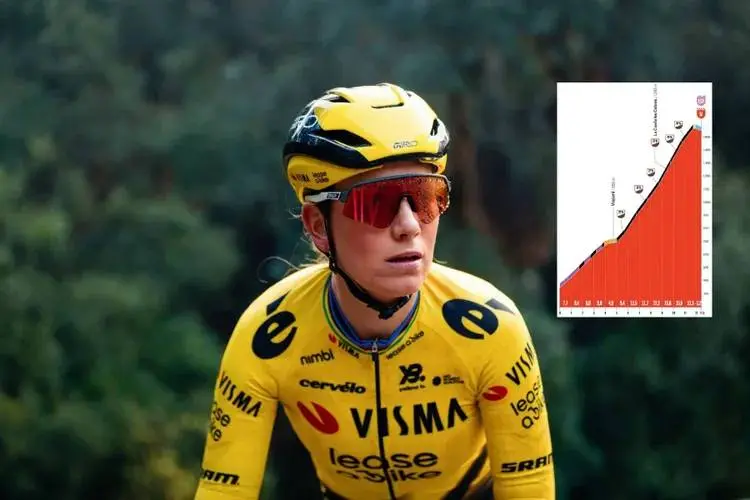
The final two stages are where the race truly comes alive. Stage 6 starts in Asturias, and once you arrive there, you know what that means: climbing, and steep climbing at that. After a rugged day in the hills, the penultimate stage finishes on Les Praeres, a short but savage ascent where Simon Yates won in the men’s Vuelta in 2018 and Louis Meintjes did the same in 2022. Pedro Delgado once described it as “the mini Angliru,” and that tells you plenty.
Read more below
Angliru awaits Ferrand-Prévot, Vos, Kopecky and Reusser
The “mega-Angliru” follows a day later. It will be the first time the women’s peloton finishes on Spain’s most feared climb, and it is expected to become an all-out battle of attrition. At 132 kilometres, it is the longest stage of the week, and the riders will have to cover more than 3,200 vertical metres. According to the official race announcement, it will be the hardest stage in the history of La Vuelta Femenina. The Angliru itself climbs for 12.4 kilometres at an average of 9.7%, with ramps reaching 23%.
That alone would be enough to guarantee a spectacle, but the expected field adds even more weight to the race. Tour de France Femmes champion Pauline Ferrand-Prévot has already committed to the event, along with her Visma | Lease a Bike teammate Marianne Vos. Among those expected to challenge them are Marlen Reusser, Lotte Kopecky, Mavi García and Paula Blasi. One major name who will not return is Demi Vollering, who won the race in 2025 but is not expected to be on the start line this time around.



IDL-productions
Demi Vollering take note: Elite debutant Zoe Bäckstedt's previous World Championship results show why she's a contender
With Pogačar sidelined, UAE teammate Brandon McNulty has a genuine shot at the World Championships for Team USA

Female stars from across cycling disciplines, including Demi Vollering, condemn Sydney Sweeney 'sports' video

2026 GP Montreal preview | Evenepoel and Pidcock face World Championships dress rehearsal
2026 Vuelta a España Stage 21 preview | Route change boosts Van Aert as Granada circuit sparks safety debate
Latest Cycling News

Mathieu Van der Poel signs another big sponsorship deal just before the World Cycling Championships
Covered in mud and fully geared up: Pidcock is well prepared for a unique World Championship opportunity
Demi Vollering take note: Elite debutant Zoe Bäckstedt's previous World Championship results show why she's a contender
New Zealand's World Championship team forced to pay their own way to Montreal: 'It's a strange dynamic'
2026 World Time Trial Championships Elite Men Preview | Evenepoel and Ganna, but can anyone else win the rainbow bands?
Popular Cycling News

Cycling transfers 2026/2027 | Lotto Intermarché add experience with veteran GC rider
Ben Turner's departure from Netcompany INEOS isn't all that surprising once you hear his story: 'The team I looked up to'
Female stars from across cycling disciplines, including Demi Vollering, condemn Sydney Sweeney 'sports' video

Dutch national coach explains why he dropped Anna van der Breggen and Marianne Vos for the World Cycling Championships
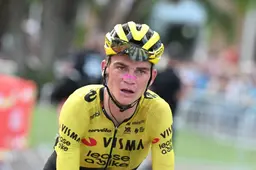
Sepp Kuss is a special kind of cyclists, one we’re seeing less and less: 'It's a good formula for me'
Latest Comments
- - Vamos Aotearoa! Finn en forma después de la Vuelta y Pologne. Allez les Kiwis, bring it home.andrewf18-09-2026
- - Bit sceptical tbh. Saying “prioritise the track” feels like a convenient excuse when your best recent Worlds result is on the road. If you want results, back the athletes. This policy almost incentivises selfish racing.samanthak18-09-2026
- - Stoked to see Niamh back after silver in Kigali. Hard to believe that podium didn’t unlock any change. If the men ride with numbers into the final, Corbin Strong’s kick plus Finn on the climbs could be a nice one-two.jennifer1918-09-2026
- - Wait, why doesn’t the federation cover flights if they’re sending a team? If CNZ has $70k for “delivery,” what does that actually mean in practice—staff, cars, hotels?jeremya18-09-2026
- - Really solid piece. Finn’s honesty about the “everyone pays their own way” dynamic is eye-opening and explains why NZ often rides more opportunistically at Worlds. Montreal’s punchy laps suit him and Pithie—top 10 isn’t crazy.sprocketspiny18-09-2026
- - Love the Simmons/Jorgenson/Powless trio for USA. That’s a lot of horsepower to keep Brandon fresh. If they time the bridge before the final ascent, it’s game on. Vamos USA!velodromevirtuoso118-09-2026
- - Del Toro winning while Yates policed moves was classic UAE chess. Without that structure at Worlds, can McNulty read the chaos as a sole leader? He’s earned the shot, but the race will be messy.cadencekingm18-09-2026
- - Question: why does the climb being6 km matter so much? Is it more about punch vs pure climbers? Trying to understand why McNulty suits this course over, say, Remco.jeremya18-09-2026
- - Not sure I buy the “favourite” tag. Montréal one-day is not Worlds with national teams and weird alliances. Evenepoel and Pidcock will race totally different next time. Cautious optimism, not hype.sprocketspiny18-09-2026
- - Huge ride from McNulty. Third on the Worlds circuit against that field is no fluke. If Simmons and Jorgenson mark the early fireworks, Brandon can launch on Camillien-Houde last lap. USA actually looks stacked for once.julien18-09-2026
Loading

