Milan-Sanremo 2026 | Everything may hinge on how Van der Poel — and especially Pogacar — attacks the Cipressa
CyclingFriday, 20 March 2026 at 08:58
Follow IDL Pro Cycling on Google
Stay up to date with the best cycling news by making us a preferred source on Google.
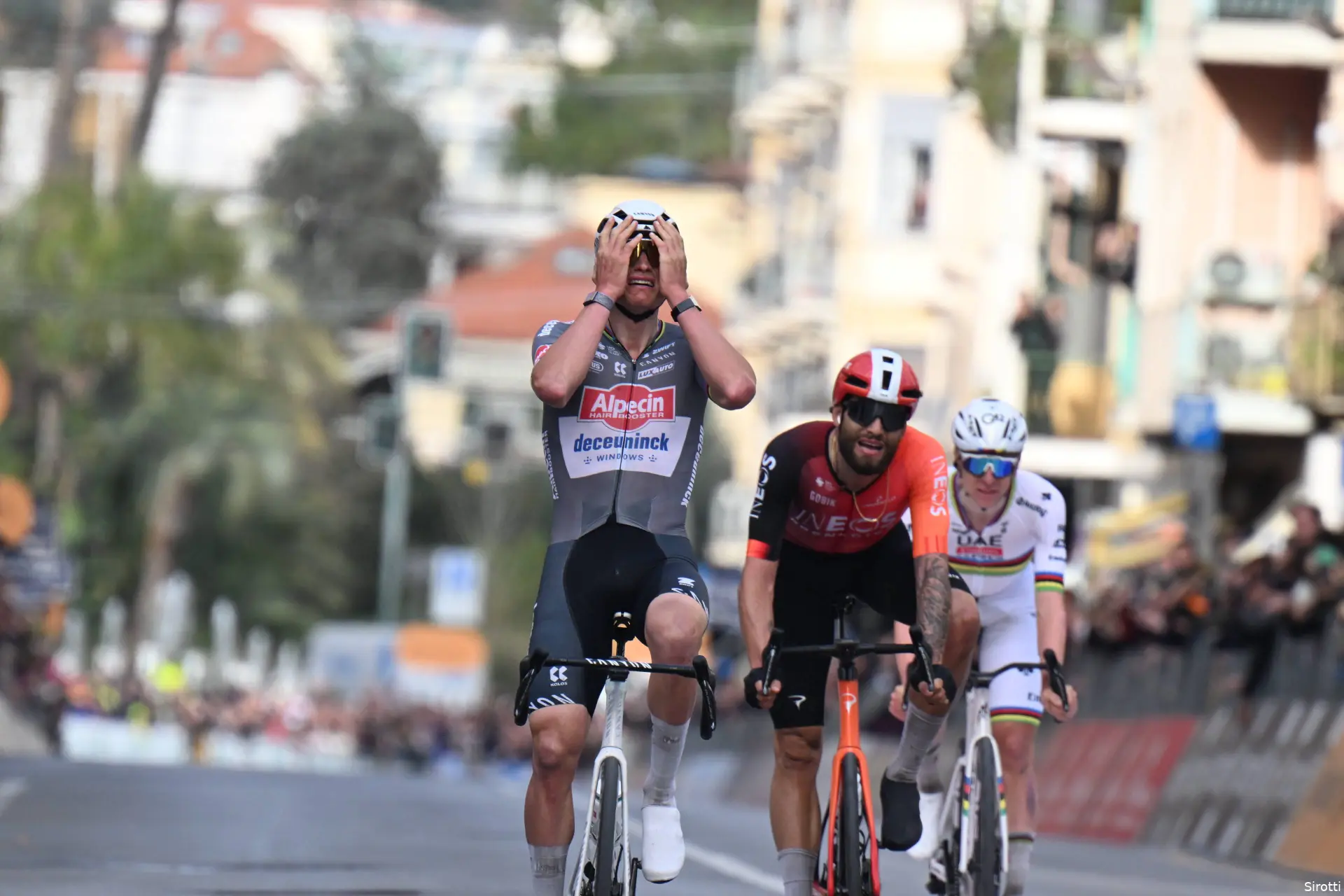
Follow us on GoogleThe 2026 cycling season has already delivered plenty of excitement in recent weeks, and that promises a lot for the first Monument of the year: Milano–Sanremo. On the Italian Riviera we can look forward to what could be another titanic battle between Mathieu van der Poel and Tadej Pogacar, chapter one of their rivalry in 2026. Or will a third contender steal the show? IDLProCycling.com breaks it down.
ADVERTISEMENT
Milano–Sanremo has been anything but disappointing in recent seasons. Once labelled a relatively dull sprinters’ race, the final hour of the event has become one of the most thrilling hours of the cycling year.
Fans have witnessed spectacular descending attacks from Matej Mohorič and Vincenzo Nibali, memorable victories for Wout van Aert, Julian Alaphilippe and Jasper Stuyven, and in recent years one rider in particular has shaped the race: Mathieu van der Poel.
The Dutchman won the race in 2023 and 2025, and in 2024 — riding in the rainbow jersey — he helped set up sprinter Jasper Philipsen for victory. That means the Alpecin team has managed to derail the plans of Tadej Pogacar three times already, with the Slovenian still chasing his first victory in Sanremo.
Latest winners Milan-Sanremo
2025 Mathieu van der Poel
2024 Jasper Philipsen
2023 Mathieu van der Poel
2022 Matej Mohoric
2021 Jasper Stuyven
2020 Wout van Aert
2019 Julian Alaphilippe
2018 Vincenzo Nibali
2017 Michal Kwiatkowski
2016 Arnaud Démare
2015 John Degenkolb
2024 Jasper Philipsen
2023 Mathieu van der Poel
2022 Matej Mohoric
2021 Jasper Stuyven
2020 Wout van Aert
2019 Julian Alaphilippe
2018 Vincenzo Nibali
2017 Michal Kwiatkowski
2016 Arnaud Démare
2015 John Degenkolb
Course, weather and times Milan-Sanremo 2026
Milano–Sanremo measures 298 kilometres this year, meaning the magical 300-kilometre mark will officially not be reached — although with the neutralised start included, the riders will still exceed that distance.
The race no longer starts in Milan itself, but in the city of Pavia, slightly further south. From there the riders head across the Po Valley. The route travels south-west toward the Passo del Turchino, after which — 153 kilometres into the race — the peloton reaches the coast at Voltri and begins following the Ligurian shoreline westward.

The Passo del Turchino is the first climb of the day. It measures 5.6 kilometres at an average gradient of 2.9 percent. The approach gradually climbs beforehand, and the descent is steep, making it a section where caution is required. After this climb the riders pass two small hills in Arenzano and Varazze, before the race traditionally waits until around kilometre 220 for the eagerly anticipated Capi.
The Capo Mele (1.8 km at 3.6%), Capo Cervo (2.1 km at 2.5%) and Capo Berta (2.0 km at 6.3%) follow one another in quick succession and always create the first serious selection. Here you can lose the race — but rarely win it.
At the foot of the Cipressa (5.6 km at 4.1%), riders must be well positioned, because the pace has been brutally high there in recent years. “Scary, because everyone wants to be at the front,” Pogacar once said about the approach.

After a rapid descent comes the final climb: the Poggio. This ascent is 3.7 kilometres at an average of 3.7 percent, though it includes ramps exceeding 5.5 percent. Riders like Pogacar often have to slightly ease their speed on parts of the climb due to the corners, which limits the chance to ride it flat-out.

After cresting the Poggio, a technical and fast descent leads toward Sanremo. Once the riders reach the bottom, there is barely any time left to organise a proper sprint. The final two kilometres are flat, with a last corner at 750 metres from the line before the finish on the iconic Via Roma.

Climbs
148.3 km: Passo del Turchino (5.6 km at 2.9%)
246,4 km: Capo Mele (1,8 km at 3,6%)
251,3 km: Capo Cervo (2,1 km at 2,5%)
259,1 km: Capo Berta (2,0 km at 6,3%)
276,4 km: Cipressa (5,6 km at 4,1%)
294,4 km: Poggio (3,7 km at 3,7%)
148.3 km: Passo del Turchino (5.6 km at 2.9%)
246,4 km: Capo Mele (1,8 km at 3,6%)
251,3 km: Capo Cervo (2,1 km at 2,5%)
259,1 km: Capo Berta (2,0 km at 6,3%)
276,4 km: Cipressa (5,6 km at 4,1%)
294,4 km: Poggio (3,7 km at 3,7%)
Weather
The riders may not stay dry on Saturday. The chance of rain is considered realistic during the day, with around 40–50 percent probability toward the finale. Wind is always an important factor in Milano–Sanremo. Current forecasts suggest a tailwind in the finale, which could offer opportunities for attackers. Tadej — does that suit your plan?
The riders may not stay dry on Saturday. The chance of rain is considered realistic during the day, with around 40–50 percent probability toward the finale. Wind is always an important factor in Milano–Sanremo. Current forecasts suggest a tailwind in the finale, which could offer opportunities for attackers. Tadej — does that suit your plan?
Times
Start: 10 AM local time
Finish: approximately 4:55 PM local time
Start: 10 AM local time
Finish: approximately 4:55 PM local time
Favorites Milan-Sanremo 2026
Note: the official start list has not yet been confirmed, so this section may still change.
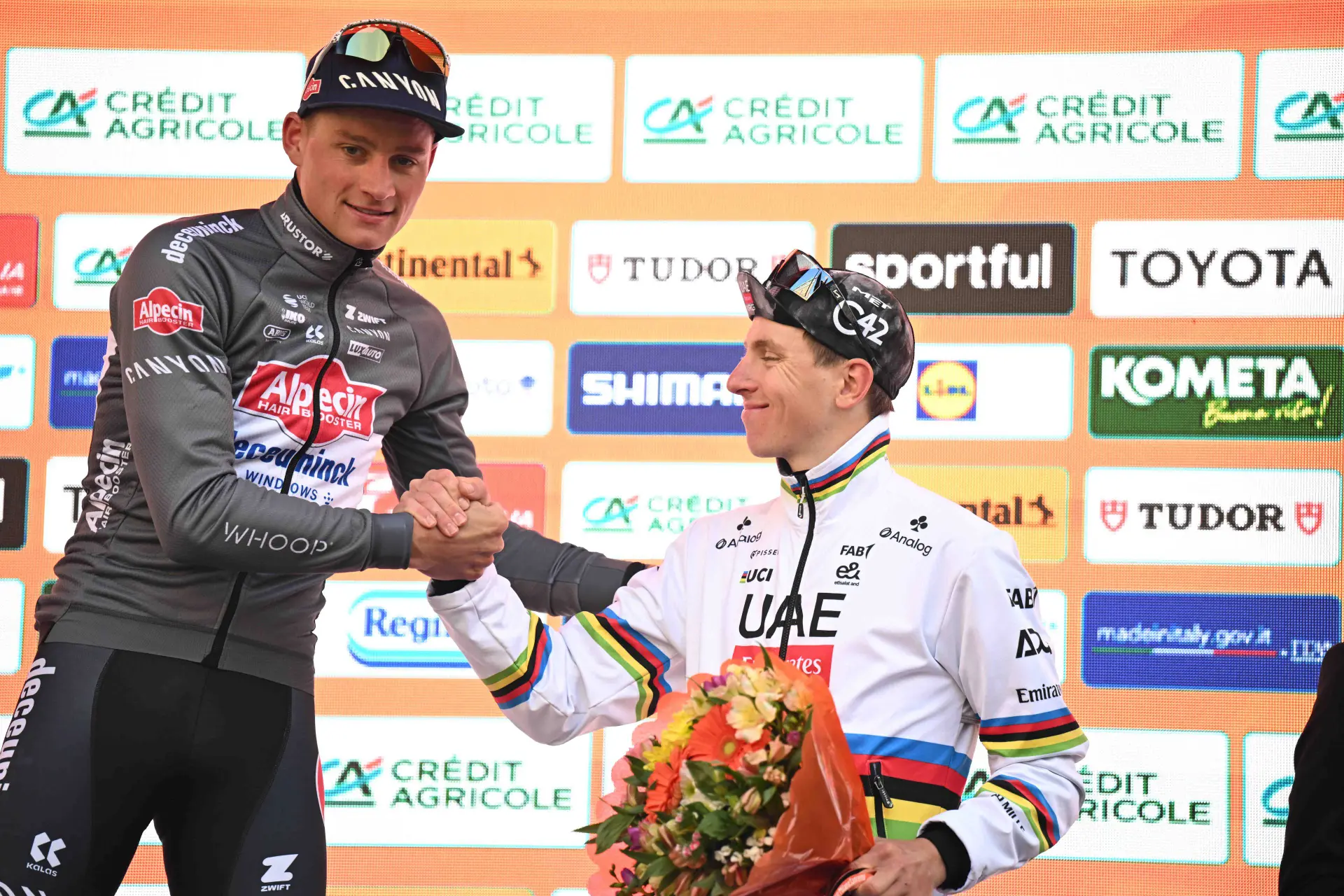
In the lead-up to Milano–Sanremo, the conversation largely revolves around two riders: Tadej Pogacar (UAE Team Emirates-XRG) and Mathieu van der Poel (Alpecin-Deceuninck). The way the Slovenian attacks the Cipressa could prove decisive for how the race unfolds.
If Pogacar can start that climb in a strong position — ideally with teammates like Florian Vermeersch, Isaac del Toro and Jan Christen setting the pace — then it could be full gas. “We have to go 110 percent to make the difference,” was the message after Strade Bianche regarding the team’s “Via Roma project”.
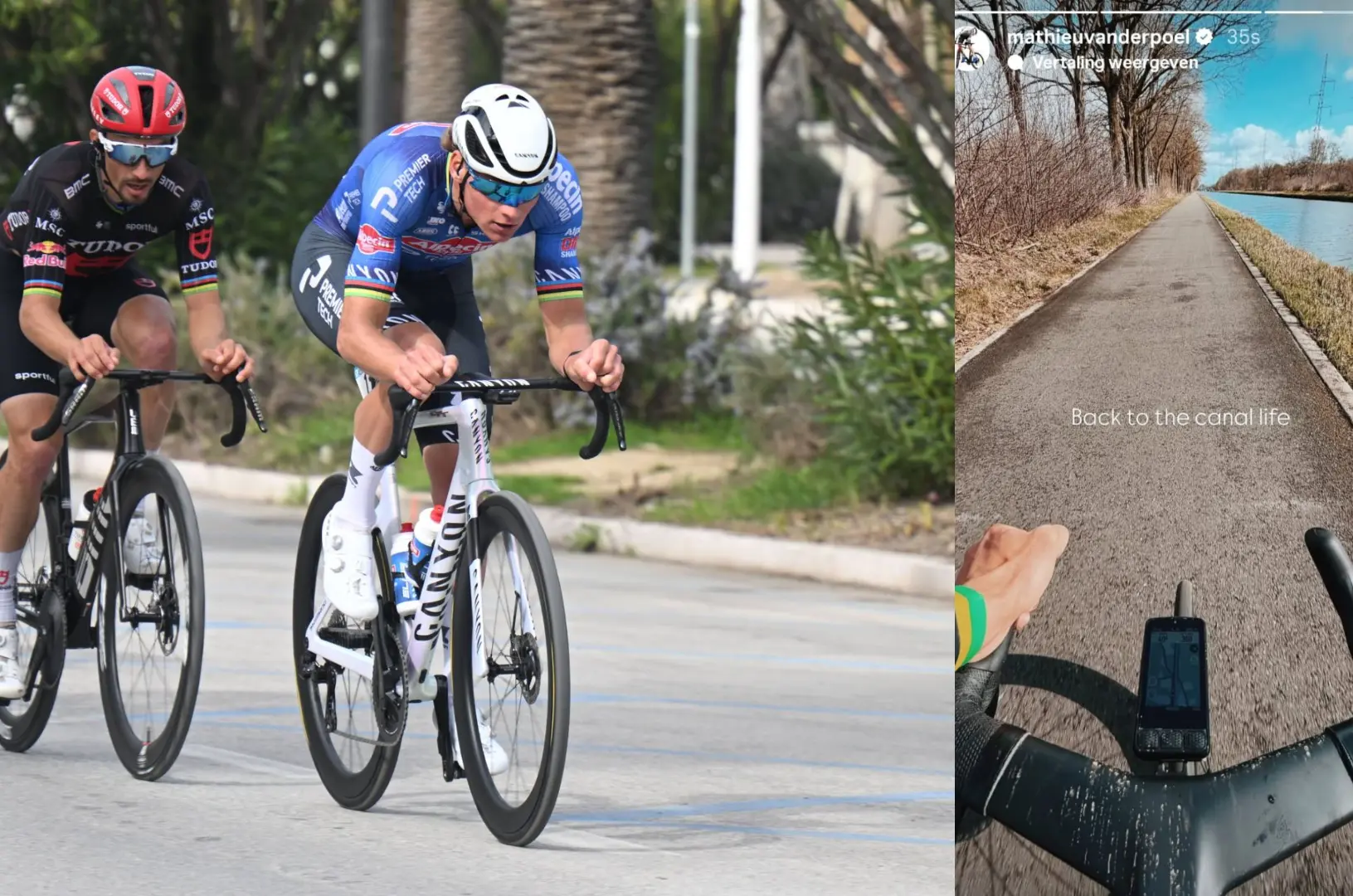
Van der Poel, meanwhile, has shown in Omloop Het Nieuwsblad and Tirreno–Adriatico that his form is excellent, and he appears to have cracked the Sanremo code. On the Poggio he has been at least the equal of Pogacar in recent years, even dropping the Slovenian there during his first victory in La Primavera in 2023.
However, the race is about far more than just Pog and Poel. Filippo Ganna has consistently been in the mix for INEOS Grenadiers in recent editions, and the Italian has had Saturday 21 March circled in red in his calendar for weeks, if not months. Last year he was the only rider able to follow the two superstars deep into the finale.
Visma | Lease a Bike may even have the strongest team overall. The Dutch squad is expected to line up with Wout van Aert, Matteo Jorgenson, Christophe Laporte and Matthew Brennan. Van Aert and Jorgenson showed strong form in Tirreno–Adriatico, while Laporte and Brennan impressed earlier during Opening Weekend.
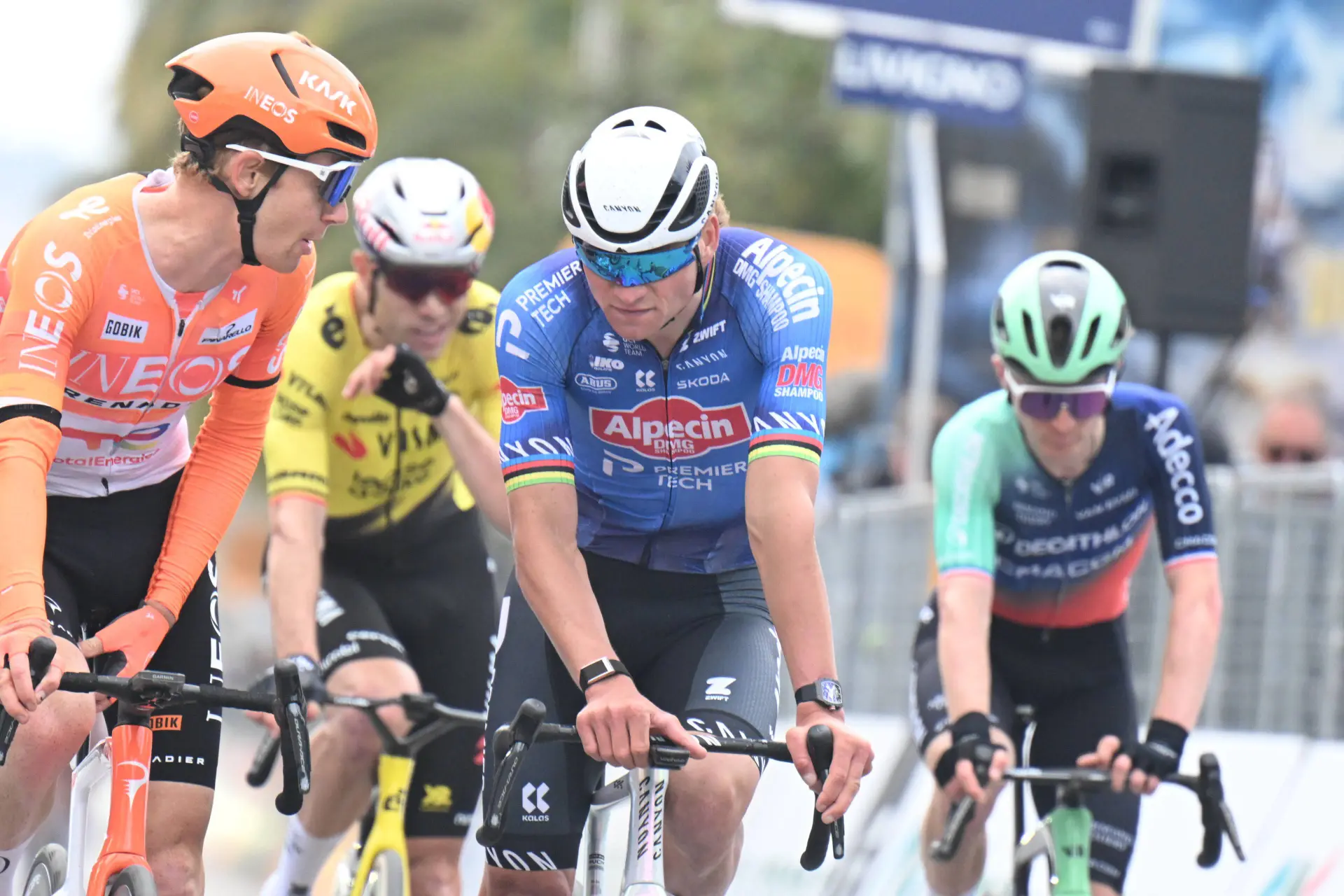
Van der Poel’s Alpecin team is also extremely strong, with 2024 winner Jasper Philipsen as a backup option. The Belgian has not yet won this season but has looked particularly impressive in the hills in recent races. If he survives the Poggio, Van der Poel may well shift his focus to the Philipsen scenario.
Other fast men who can get over a hill are Tobias Lund Andresen (Decathlon CMA CGM), Paul Magnier (Soudal Quick-Step), Laurence Pithie (Red Bull-BORA-hansgrohe), Luke Lamperti (EF Education-EasyPost), Matteo Trentin (Tudor) and Lukas Kubis (Unibet Rose Rockets), where we rate it too tough for say Jonathan Milan and/or Soren Waerenskjold.
From the climbers c,q, punchers category we meet Romain Grégoire (Groupama-FDJ, who tried to follow on the Cipressa last year), Tom Pidcock (Pinarello-Q36.5), Lennert Van Eetvelt (Lotto-Intermarché), Paul Lapeira (Decathlon CMA CGM), Giulio Pellizzari (Red Bull-BORA-hansgrohe) Axel Laurance (INEOS Grenadiers), Mauro Schmid (Jayco AlUla), Julian Alaphilippe (Tudor) and Alberto Bettiol (XDS-Astana) still on the provisional start list.
And of course the classic juggernauts are also in attendance. Former winners Jasper Stuyven (Soudal Quick-Step) and Matej Mohoric (Bahrain Victorious) are back, as are Mathias Vacek (Lidl-Trek), Tim van Dijke (Red Bull-BORA-hansgrohe), Mike Teunissen (XDS-Astana), Jonas Abrahamsen (Uno-X) and Fred Wright of Pinarello-Q36.5.
Top favorites: Mathieu van der Poel (Alpecin-Premier Tech) and Tadej Pogacar (UAE Emirates-XRG)
Outsiders: Filippo Ganna (INEOS Grenadiers), Jasper Philipsen (Alpecin-Premier Tech), Wout van Aert and Matthew Brennan (Visma | Lease a Bike)
Long shots: Tobias Lund Andresen (Decathlon CMA CGM), Tom Pidcock (Pinarello - Q36.5), Isaac del Toro (UAE Emirates-XRG), Matteo Jorgenson, Christophe Laporte (Visma | Lease a Bike), Romain Gregoire (Groupama-FDJ), Paul Magnier (Soudal Quick-Step), Matej Mohoric (Bahrain Victorious), Laurence Pithie (Red Bull-BORA-hansgrohe) and Luke Lamperti (EF Education-EasyPost)
Outsiders: Filippo Ganna (INEOS Grenadiers), Jasper Philipsen (Alpecin-Premier Tech), Wout van Aert and Matthew Brennan (Visma | Lease a Bike)
Long shots: Tobias Lund Andresen (Decathlon CMA CGM), Tom Pidcock (Pinarello - Q36.5), Isaac del Toro (UAE Emirates-XRG), Matteo Jorgenson, Christophe Laporte (Visma | Lease a Bike), Romain Gregoire (Groupama-FDJ), Paul Magnier (Soudal Quick-Step), Matej Mohoric (Bahrain Victorious), Laurence Pithie (Red Bull-BORA-hansgrohe) and Luke Lamperti (EF Education-EasyPost)
TV broadcast Milan-Sanremo 2026
Just like previous editions, die-hard cycling fans can settle in for a full day of racing. Eurosport will begin live coverage at 09:35 CET. On Eurosport 1, coverage runs until 12:30 CET before switching briefly to the women’s race finale. The broadcast returns to the men’s race from 14:30 CET onward.
Tom van der Salm (27) comes from the charming town of Zeilberg (Deurne) in the Netherlands and has been working as editor-in-chief & journalist at IDL Pro Cycling's parent site, In de Leiderstrui, since 2019. He travels with the peloton from the Tour de France to the AlUla Tour and from the World Championships in Rwanda or Canada to the Zilvermeercross in Mol. In his spare time he enjoys playing football, mountain biking, running, walking with his Labrador/Stabyhoun, investing, holidays, (specialty) beers, reading, cooking and watching sports & documentaries!
Contact: [email protected]
IDL-productions

2026 GP Montreal preview | Evenepoel and Pidcock face World Championships dress rehearsal
2026 Vuelta a España Stage 21 preview | Route change boosts Van Aert as Granada circuit sparks safety debate
2026 Vuelta a España route | 7 times Visma | Lease a Bike, now finally success for Mas

2026 Vuelta a España Stage 20 preview | The monstrous mountain stage everyone has feared for weeks
From the Scottish Borders to leading the Vuelta a España time trial: the rapid rise of Britain's Callum Thornley
Latest Cycling News
Sepp Kuss is a special kind of cyclists, one we’re seeing less and less: 'It's a good formula for me'
Tom Pidcock wants to win the 2026 Road World Championships as the leader of this British sqaud

Dutch national coach explains why he dropped Anna van der Breggen and Marianne Vos for the World Cycling Championships
🎥 Watch as a spectator kicks a water bottle back into the peloton, causing a crash; Italian Fancellu wins stage 1
Tadej Pogačar updates his fans with a video of him cycling again: 'At least we have good company'
Popular Cycling News
Cycling transfers 2026/2027 | The 2027 transfer market merry-go-round continues apace
Oscar Onley wins Vuelta a España white jersey after difficult three weeks
Isaac del Toro powers past Paul Seixas to victory on World Championship course in Montreal, Remco Evenepoel unable to follow
2026 World Cycling Championships Route & Schedule | Road & time trial teams are starting to be announced
Matthew Brennan’s words show how much the peloton will miss Steven Kruijswijk
Latest Comments
- - Grande artículo, pero una duda: if “you don’t have to be the strongest to win,” does that mean we’ll see more negative racing? Seems a bit defeatist, no?raceready715-09-2026
- - Pidcock managing his efforts will be key. He was too eager in Montreal; hold fire until the final lap and he’s dangerous. Also, no Pogačar = more tactical chaos. Brilliant.davidm15-09-2026
- - Can someone explain why the Worlds route is that much longer than Montreal GP but on a similar circuit? Is it just extra laps, or are there added climbs too?patriciaw15-09-2026
- - Not sure about naming Del Toro and Seixas as top favorites over MvdP and WVA. Feels a tad contrarian—class usually tells in a 270k attrition day.michael5415-09-2026
- - Love the honesty from Pidcock. Montreal GP as a dress rehearsal makes sense—those last two laps bite. If GB keeps numbers late, he’s got a real medal shout.julien15-09-2026
- No matter the results, the intervening difficulties, or even the crashes, including two within minutes of each other last month when Sepp appeared headed for a long-hoped for stage win at the Tour de France, Seth Kuss always finds a reason to be grateful, an an ability to project positivity and a smile. Chapeau to Sepp,rjb13-09-2026
- Pogi is the Road Warrior par excellence. Come back even stronger much to the chagrin of all other competitors.
 Brucegel12-09-2026
 - - Félicitations in advance si ça se concrétise. Line-up looks très britannique mais con ambición grande. Tour 2027 en Edimbourg sería épico si les invitan.gearguru3310-09-2026
- - Vamos Ethan! Breakaway king of this Vuelta and super combative. Today’s flat chrono is perfect terrain—just keep it clean through the Jerez crosswinds.breakawaybikerd10-09-2026
- - Bit cautious here. Hayter’s had stop-start seasons with crashes/illness and I still don’t know if he’s a GC week-long guy or a TT/sprint hybrid. Curious whether they build around him or Pidcock first.pedalpowe2910-09-2026
Loading