“That actually makes it a little scary”; Tadej Pogacar on the key moment in Milan–Sanremo
CyclingTuesday, 17 March 2026 at 08:27
Follow IDL Pro Cycling on Google
Stay up to date with the best cycling news by making us a preferred source on Google.
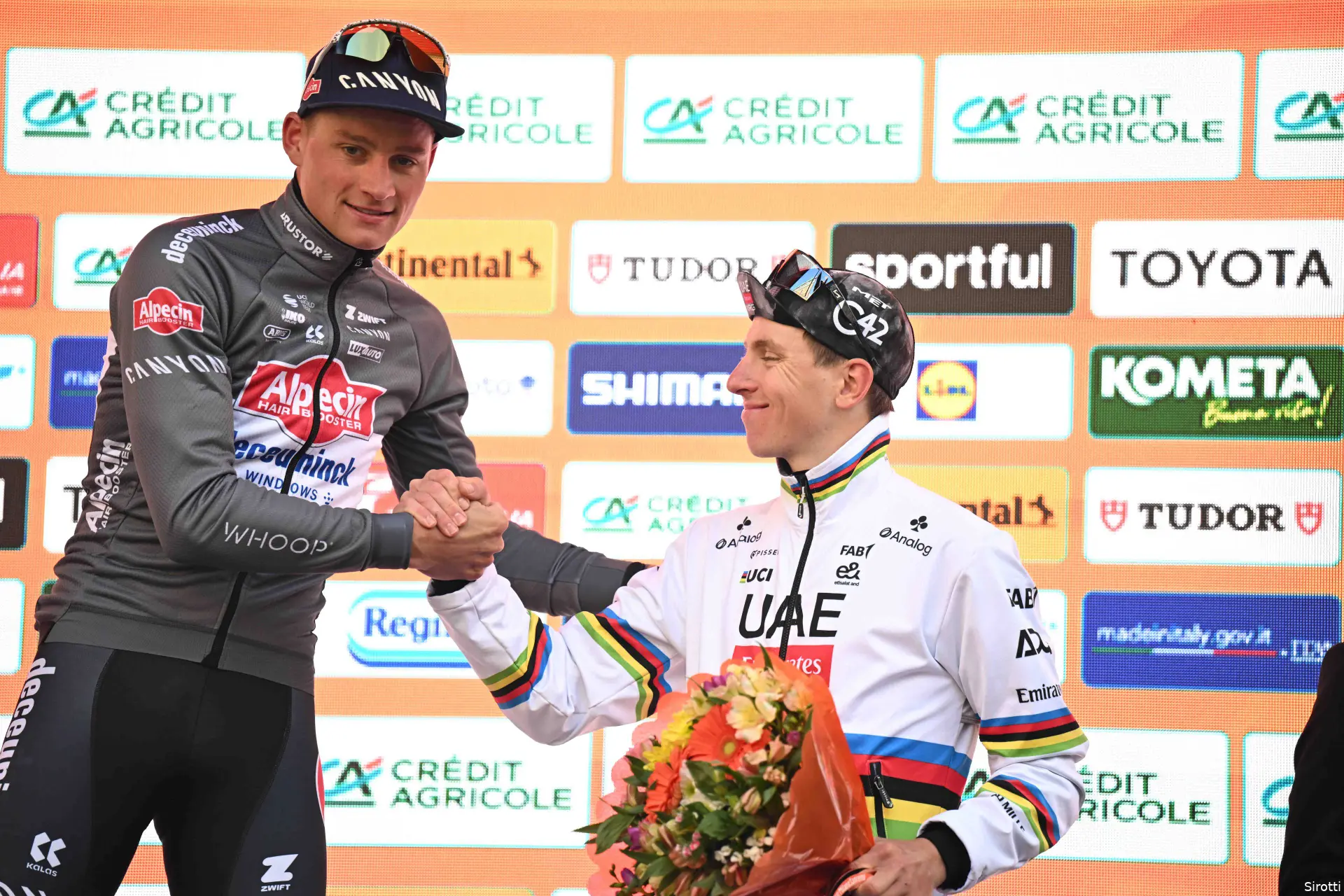
Follow us on GoogleSaturday is the day: the first showdown between Tadej Pogacar and Mathieu van der Poel of the spring cycling season. The winner of the Omloop Het Nieuwsblad looked ahead to Milan-Sanremo during Tirreno-Adriatico, just as his Slovenian counterpart had done after his victory in his first race of the season: Strade Bianche.
ADVERTISEMENT
Van der Poel has already won La Primavera twice, while Pogacar is still chasing his first victory in Sanremo. The Slovenian reiterated in Siena that, as far as he’s concerned, Milan-Sanremo is the hardest race to win.
“It’s completely different from Strade Bianche, the Omloop, Flanders, or any other spring race,” said the UAE Emirates-XRG team leader.
“Until we reach the coast, it’s a very easy race. But then it immediately gets extremely tense, from the moment we hit the coast,” said Pogacar. “It’s constantly left, right, through villages at high speed.”
In the final, positioning is crucial, he knows. “The run-in to Cipressa in particular is very dangerous, partly because all the strong riders—classic types, sprinters, and riders like me—want to be at the front. That actually makes it a bit scary,” he admits honestly.
Continue reading below the video.
Del Toro supports Pogacar
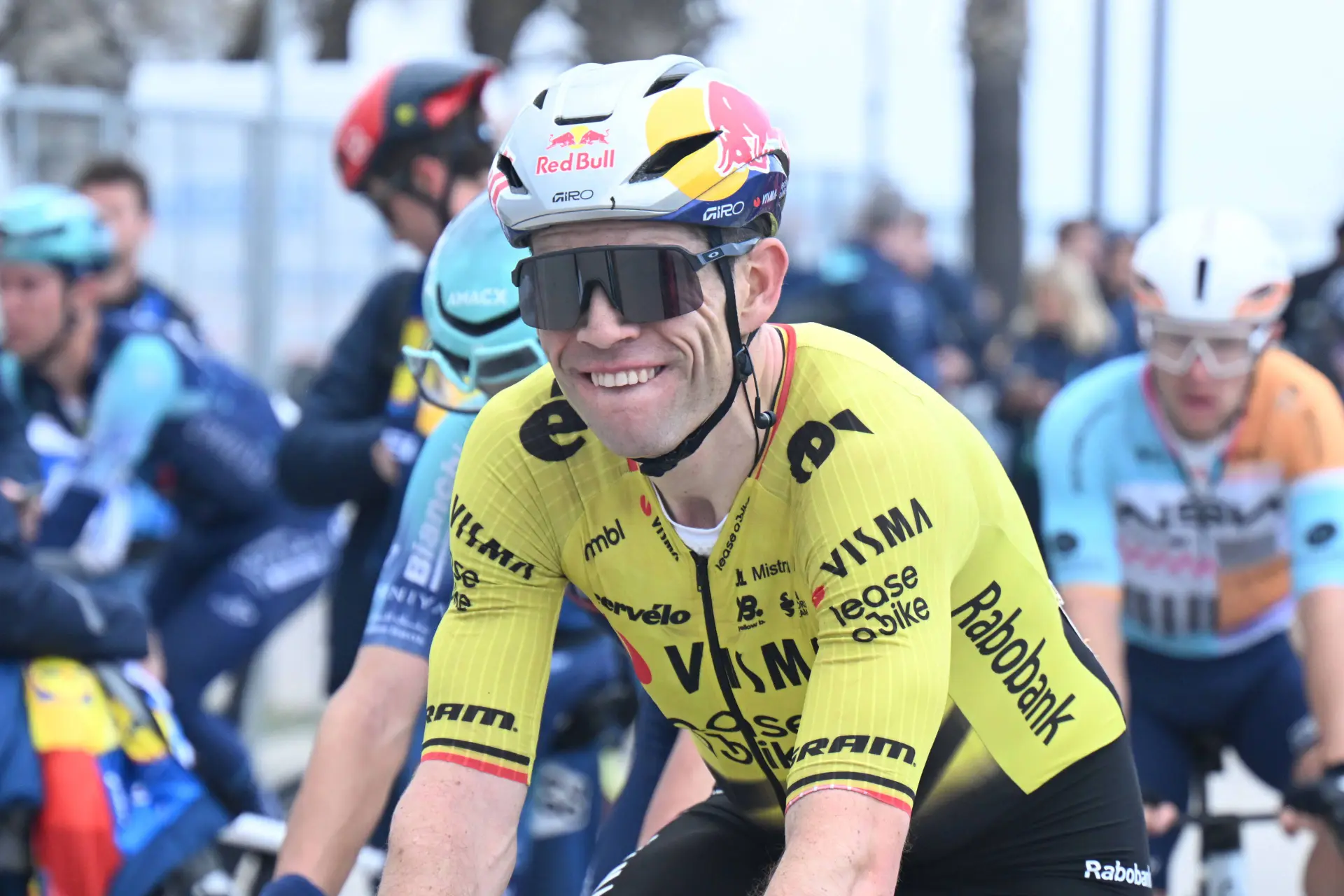
On that climb this year, Pogacar is missing Tim Wellens and Jhonatan Narvaez, who were sidelined by injury—the riders who gave him a boost in previous seasons. Instead, Florian Vermeersch, who scouted the final stretch again on Sunday, and Isaac del Toro are on hand.
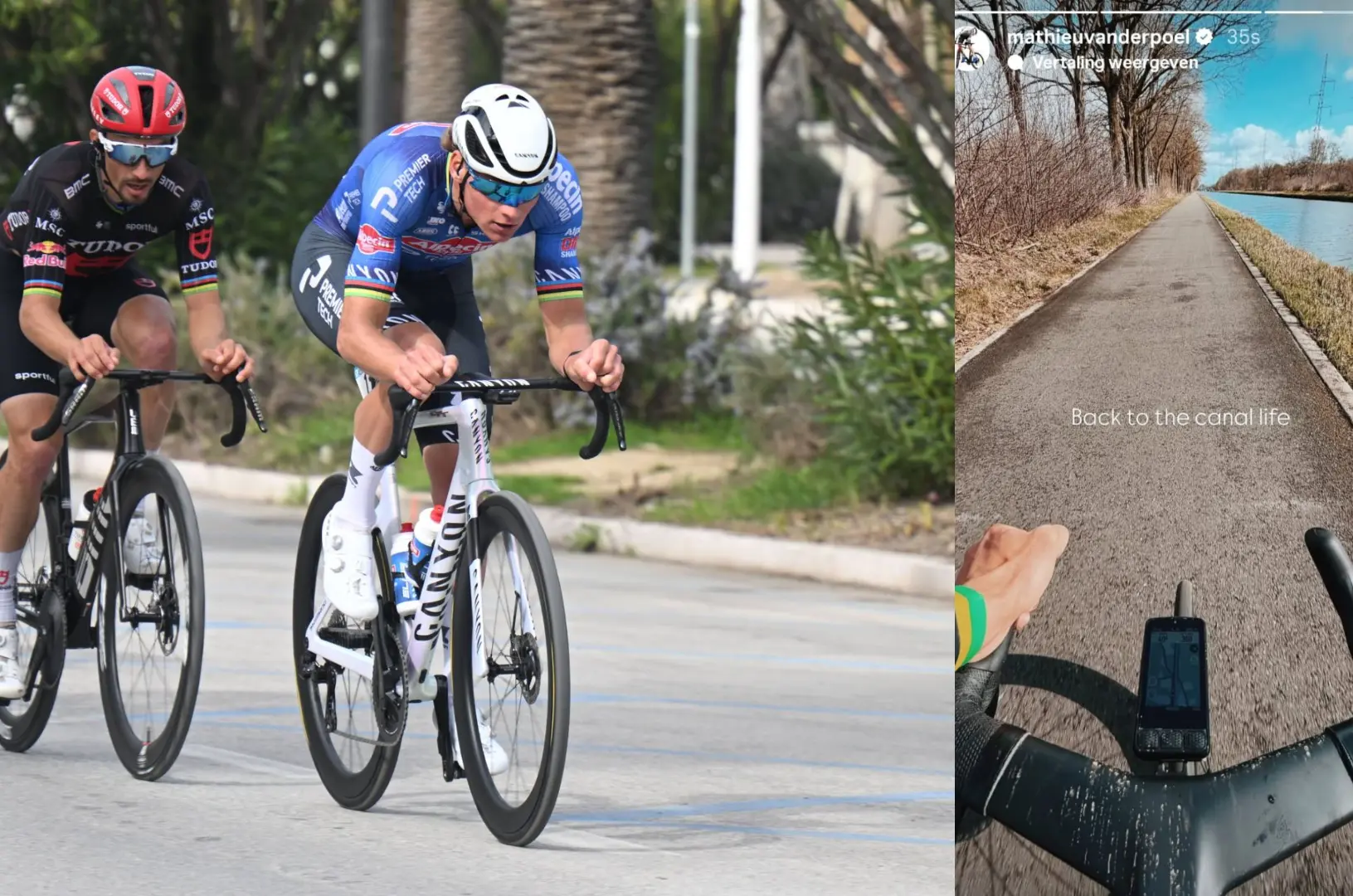
“I’ve been in Van der Poel’s slipstream a lot this week; maybe that will help in Milan-Sanremo,” the Mexican said after winning Tirreno-Adriatico. “I’m riding for Tadej and not for my own result. Narvaez and Wellens won’t be there, so I want to do my best as a teammate.”
Continue reading below the photo.
Pogacar: “You have to give it 110 percent”
Del Toro will likely take on that role on the Cipressa, where Pogacar explained it further. “Once you get to the Cipressa, 100 percent isn’t enough. You have to give it 110 percent to make a difference.”
“And that also applies to the Poggio, where you need even more than 110 percent. We’re climbing those ascents at 40 kilometers per hour, so it’s advantageous to be in the wheel,” the Slovenian knows from experience in recent years, when he couldn’t shake off Van der Poel.
“And then you have to descend to Sanremo, which is a technical descent. All in all, it’s a very unusual race, but that’s exactly what makes it interesting. And beautiful.”
Tom van der Salm (27) comes from the charming town of Zeilberg (Deurne) in the Netherlands and has been working as editor-in-chief & journalist at IDL Pro Cycling's parent site, In de Leiderstrui, since 2019. He travels with the peloton from the Tour de France to the AlUla Tour and from the World Championships in Rwanda or Canada to the Zilvermeercross in Mol. In his spare time he enjoys playing football, mountain biking, running, walking with his Labrador/Stabyhoun, investing, holidays, (specialty) beers, reading, cooking and watching sports & documentaries!
Contact: [email protected]
IDL-productions

2026 GP Montreal preview | Evenepoel and Pidcock face World Championships dress rehearsal
2026 Vuelta a España Stage 21 preview | Route change boosts Van Aert as Granada circuit sparks safety debate
2026 Vuelta a España route | 7 times Visma | Lease a Bike, now finally success for Mas

2026 Vuelta a España Stage 20 preview | The monstrous mountain stage everyone has feared for weeks
From the Scottish Borders to leading the Vuelta a España time trial: the rapid rise of Britain's Callum Thornley
Latest Cycling News
Sepp Kuss is a special kind of cyclists, one we’re seeing less and less: 'It's a good formula for me'
Tom Pidcock wants to win the 2026 Road World Championships as the leader of this British sqaud

Dutch national coach explains why he dropped Anna van der Breggen and Marianne Vos for the World Cycling Championships
🎥 Watch as a spectator kicks a water bottle back into the peloton, causing a crash; Italian Fancellu wins stage 1
Tadej Pogačar updates his fans with a video of him cycling again: 'At least we have good company'
Popular Cycling News
Cycling transfers 2026/2027 | The 2027 transfer market merry-go-round continues apace
Oscar Onley wins Vuelta a España white jersey after difficult three weeks
Isaac del Toro powers past Paul Seixas to victory on World Championship course in Montreal, Remco Evenepoel unable to follow
2026 World Cycling Championships Route & Schedule | Road & time trial teams are starting to be announced
Matthew Brennan’s words show how much the peloton will miss Steven Kruijswijk
Latest Comments
- - Grande artículo, pero una duda: if “you don’t have to be the strongest to win,” does that mean we’ll see more negative racing? Seems a bit defeatist, no?raceready715-09-2026
- - Pidcock managing his efforts will be key. He was too eager in Montreal; hold fire until the final lap and he’s dangerous. Also, no Pogačar = more tactical chaos. Brilliant.davidm15-09-2026
- - Can someone explain why the Worlds route is that much longer than Montreal GP but on a similar circuit? Is it just extra laps, or are there added climbs too?patriciaw15-09-2026
- - Not sure about naming Del Toro and Seixas as top favorites over MvdP and WVA. Feels a tad contrarian—class usually tells in a 270k attrition day.michael5415-09-2026
- - Love the honesty from Pidcock. Montreal GP as a dress rehearsal makes sense—those last two laps bite. If GB keeps numbers late, he’s got a real medal shout.julien15-09-2026
- No matter the results, the intervening difficulties, or even the crashes, including two within minutes of each other last month when Sepp appeared headed for a long-hoped for stage win at the Tour de France, Seth Kuss always finds a reason to be grateful, an an ability to project positivity and a smile. Chapeau to Sepp,rjb13-09-2026
- Pogi is the Road Warrior par excellence. Come back even stronger much to the chagrin of all other competitors.
 Brucegel12-09-2026
 - - Félicitations in advance si ça se concrétise. Line-up looks très britannique mais con ambición grande. Tour 2027 en Edimbourg sería épico si les invitan.gearguru3310-09-2026
- - Vamos Ethan! Breakaway king of this Vuelta and super combative. Today’s flat chrono is perfect terrain—just keep it clean through the Jerez crosswinds.breakawaybikerd10-09-2026
- - Bit cautious here. Hayter’s had stop-start seasons with crashes/illness and I still don’t know if he’s a GC week-long guy or a TT/sprint hybrid. Curious whether they build around him or Pidcock first.pedalpowe2910-09-2026
Loading
