New coach ‘200% convinced’ that ‘V8 engine’ Van Baarle can go toe-to-toe with Van der Poel and Pogacar
Cycling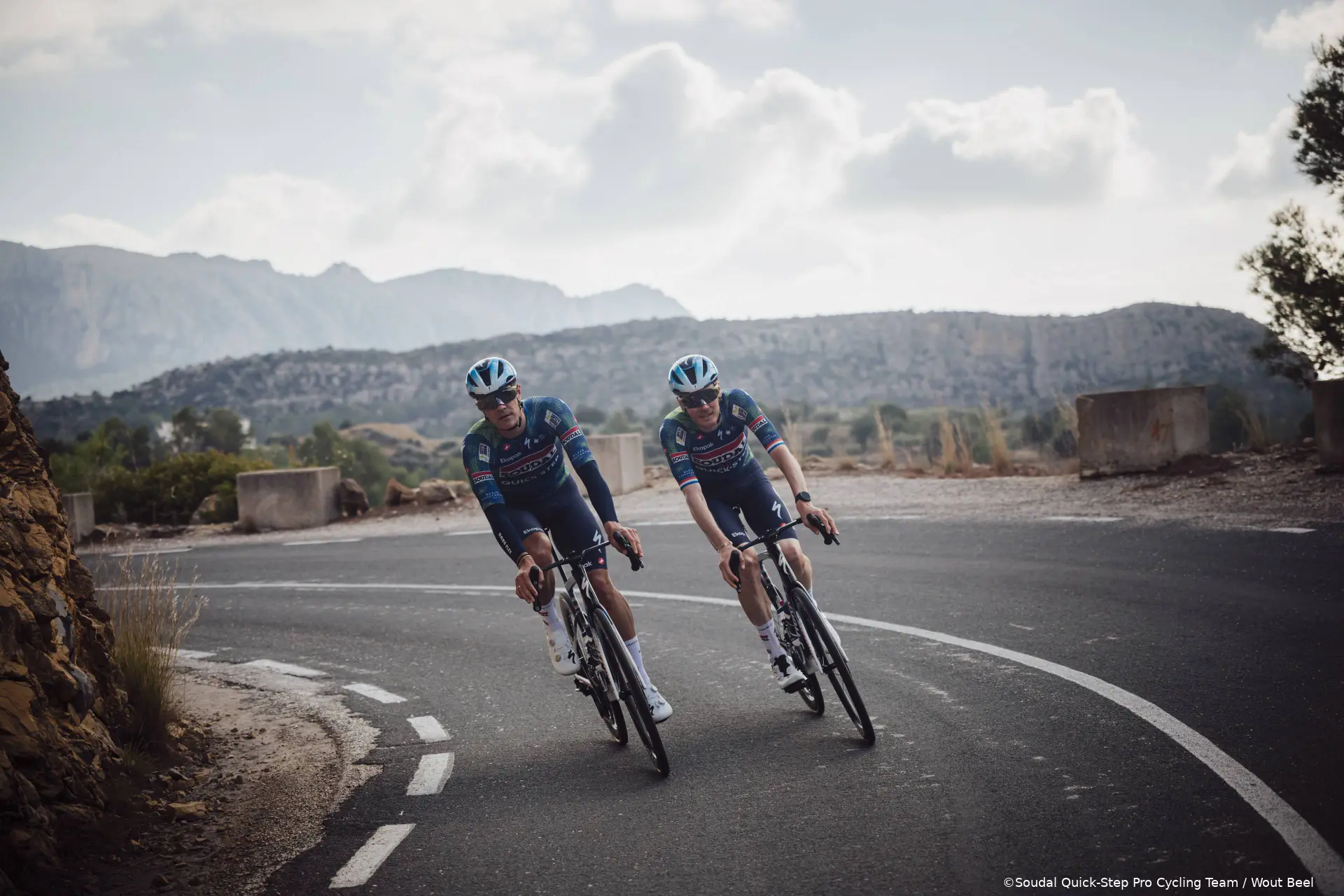
Follow IDL Pro Cycling on Google
Stay up to date with the best cycling news by making us a preferred source on Google.
Follow us on Google“Coaching is an art. Training is science,” reads the social media bio of Michel Geerinck. The Belgian has built a strong reputation in recent years as a trainer and coach in elite sport — including his work with Jasper Stuyven. Last winter, Stuyven brought Geerinck with him to Soudal Quick-Step, where the coach also took Dylan van Baarle under his wing. IDLProcycling.com spoke at length with the man guiding The Wolfpack’s new Classics tandem — and got answers to the key questions.
ADVERTISEMENT
Hi Michel, nice to meet you. Can you briefly explain who we’re talking to here?
“I’m someone who, after studying physical education, specialised in exercise physiology — specifically training and coaching cyclists. For about twenty years I ran a practice where we worked with athletes on a freelance basis, until last year when I got in touch with Soudal Quick-Step. We had a good conversation and eventually the question came: would I like to join the team? I officially started in October.”
You’ve been Jasper Stuyven’s coach for several years, but not as part of Lidl-Trek, his former team. How did that work?
“We had several riders in the peloton who had permission to work with an external coach. Jasper was one of them — and at Lidl-Trek that wasn’t immediately a problem. Of course it’s an added value for an athlete if someone is active within the team, so especially the communication between coaches and sports directors at Soudal Quick-Step is now going very well. That’s why it was important for me to take this step, to use the possibilities within the team fully.”
How did you first get in touch with Jasper?
“He called me himself back then because he was looking for a different coach. Through mutual contacts he’d already heard a lot about me and we had some good conversations. In the end Jasper gave the green light. We started a year before his win at Milan–San Remo (2021), so it’s been a while.”
Continue reading below the photo

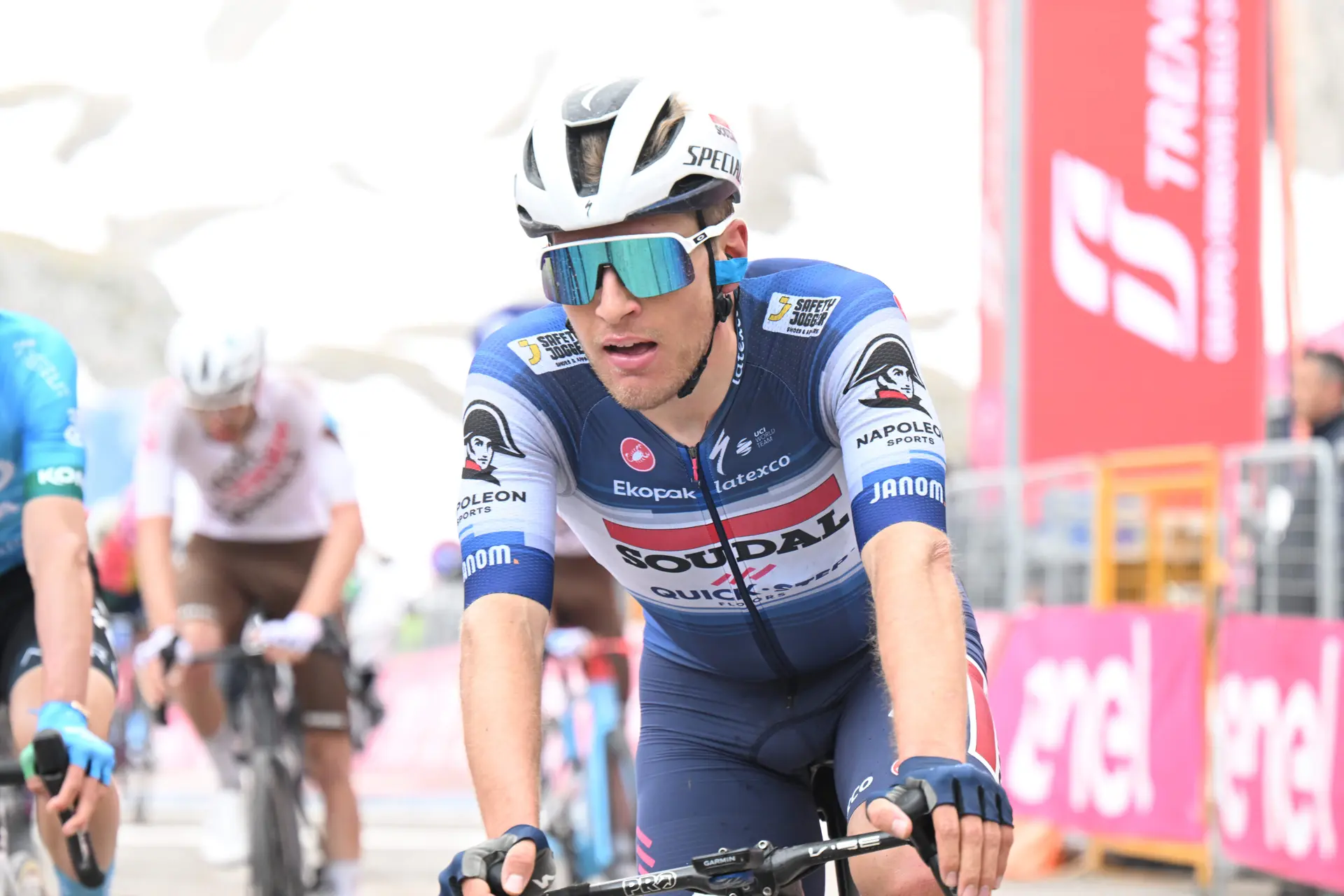
Jasper Stuyven flourished in recent years at Lidl-Trek, under Geerinck's leadership.
Relationship between Van Baarle and his new coach is very strong at Soudal Quick-Step
With Dylan van Baarle you’ve also got that other Classics powerhouse Soudal Quick-Step signed. How has the collaboration been in the first months?
“That collaboration came about partly because over the years I’ve built a lot of experience and knowledge around Classics preparation. My build-up for the spring Classics is very well developed, so it’s an honour to work with a rider like Dylan. He’s a very strong rider with a strong palmarès.”
“In our first conversations during the team days I was immediately surprised by him — I instantly felt we shared the same vision in terms of training and how to continue his career. That connection is super important; otherwise it’s not easy to train someone. With Dylan it’s going well and he’s highly motivated, so hopefully we can turn it into results.”
“Dylan is very professional and understands how his body functions. We want to combine his experience with my knowledge into a training structure that helps him return to the level of his very best years. He’s very ambitious for the Classics, but also think of time trials and even general classifications in certain stage races.”
What’s your vision — the one that apparently matches Dylan’s so well?
“We’ve mainly gone back through Dylan’s history as a rider. Riders of that calibre — I like to call them V8 engines — need a lot of volume to function at their best. In recent years he didn’t feel that was worked out well for him. So we brought back big volumes at low intensity.”
“At the same time, we’ve also stimulated him with intensity so he can ride finales again. In modern cycling you need to handle the accelerations — or be able to anticipate them. When I explained my approach, Dylan said it matched the story of his best years very well. So we were up and running quickly, because we were on the same page.”
At Visma | Lease a Bike there were a lot of setbacks — crashes and injuries — and Dylan often didn’t reach his very best form. But he also said he didn’t feel he could do things his way. Did you have to change a lot in his training?
“I don’t think there are any secrets left in cycling. Good riders have to train a lot — train volume, train intensity, have a well-balanced programme… My main feeling is that Dylan has regained some freedom again, also as a team leader. He can do things a bit more his way, and that’s been a good стимул. It also ties in directly with the vision that looks back to the past: the accents shift a little. And if results come from it, that’s great — because otherwise, as a top athlete, you quickly start to doubt again.”
“It’s not more than that — it’s not that we know things other teams don’t. But if a rider feels mentally healthy and good, and you give him the freedom to do it a bit more the way he wants, you increase the chance of success. That’s very much the working method with Dylan now again: a mix of training on the bike and alongside it. Those puzzle pieces are being put together again, by him and for him.”
Continue reading below the photo

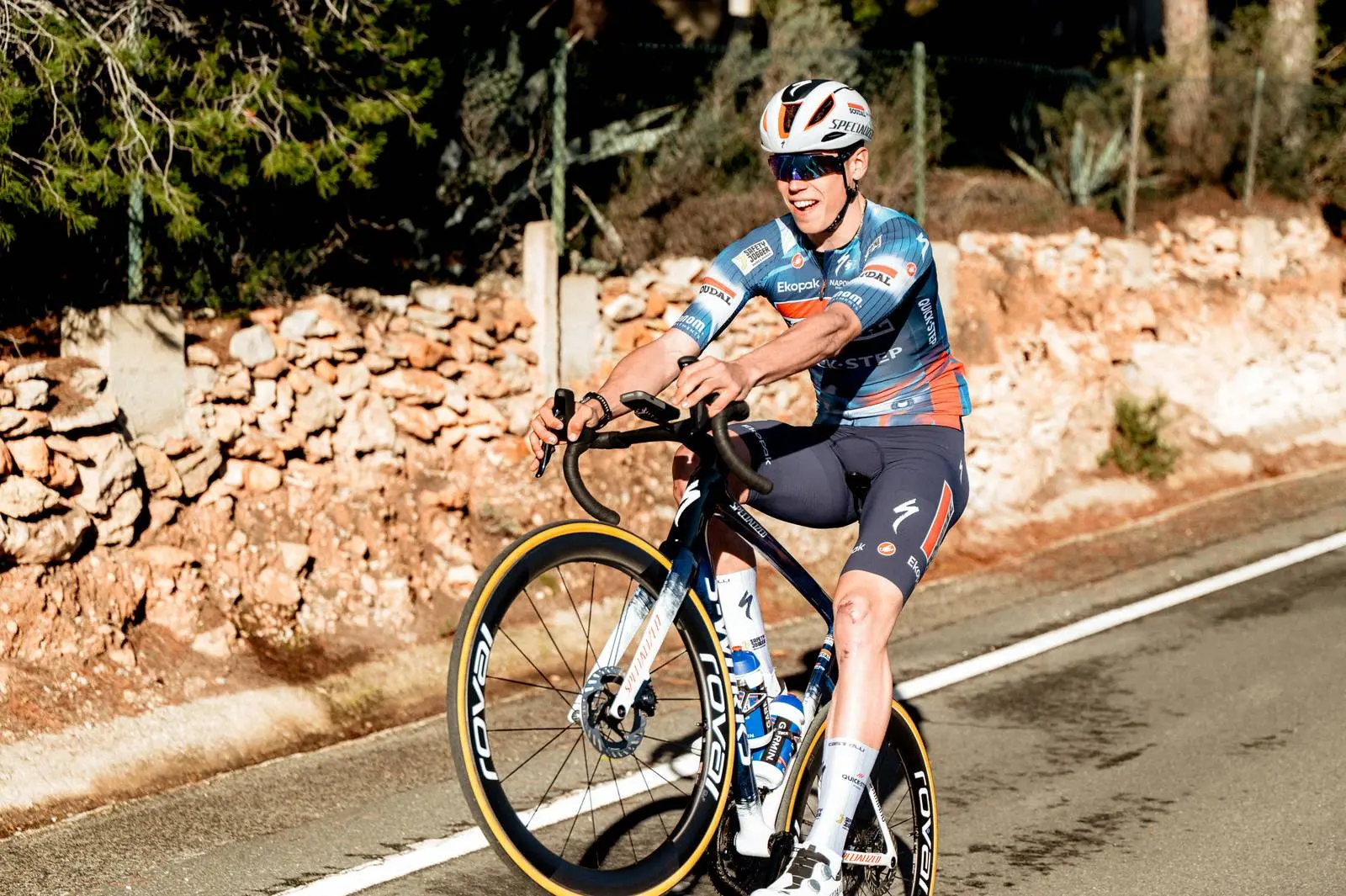
Dylan van Baarle in his new jersey from Soudal Quick-Step.
Can Van Baarle follow Van der Poel and Pogacar?
Even as an exercise scientist, do you still learn things when you suddenly get access to all of Dylan van Baarle’s documentation?
“Not that much. The real secrets in elite sport aren’t there, also because coaches are in contact with each other a lot. The main thing is finding the right road to Rome — because many roads lead there, but many don’t. For rider X it might be better to train one hour longer, steadier and easier; for rider Y it can be one hour shorter at higher intensity. It depends on what best fits an athlete’s profile.”
“Dylan is an extreme endurance athlete and you have to respond to that. Add his role as a leader, and we can really go all-in. His own input is also worth gold. I learn more from his own view and what he feels good or bad with, than from an old training plan at INEOS or Visma. There are a lot of similarities there. It’s the tiny details that bring worlds together.”
Does the picture of Dylan van Baarle fit the person and athlete you’re seeing now?
“I always watched him as a fan. I saw how well he can read races — and when you talk about that, you immediately notice he has huge knowledge of his body. He knows what he needs to perform at his very best. So I’m not going to make him ten percent better — that’s impossible at his level — but we can try to get back close to that peak period from the past. And it doesn’t have to be more than that.”
Soudal Quick-Step, like many teams, says Tadej Pogacar and Mathieu van der Poel have to be beaten with strength in depth. But in your eyes, isn’t a top-form Dylan van Baarle also a rider who can take them on one-on-one?
“I’m 200 percent convinced of that — but the strength of the team is that we’ve put together an experienced Classics squad, with a young Paul Magnier behind that. Van der Poel and Pogacar are extreme athletes, so you really need a good plan to beat them. But don’t give Van Baarle 20 seconds, because then he’s gone.”
“If Dylan can be coached well and adds his experience… Physically, the tests have already shown he’s back to his old top level. That’s fantastic news for him and it gives him confidence. So if he can use all of that in the race, then something is possible. But of course we’re watching Van der Poel and Pogacar with our mouths open too.”
Right — and Van Baarle probably isn’t going to ride those guys off his wheel. But like you say: if he has a gap, try bringing him back…
“Exactly. I’m convinced he can get back to that level. And with the strength of the team — with Stuyven, Magnier and also a young Laurenz Rex (who I also coach) — the task will be to put as many riders as possible in the position to use their strengths. Give Dylan an advantage in a Classic and he’s gone.”
Continue reading below the photo

Van Baarle in the jersey of Visma | Lease a Bike, the team he left after 2025.
Van Baarle and Stuyven have grown closer
How did you get Jasper Stuyven flying over the past few years?
“When he came to me, I felt he was a bit stuck. So we turned everything upside down and truly started from a clean slate. I was allowed to work out my full vision. In the first months, we did almost everything differently than he was used to.”
“Jasper was labelled as a top sprinter, but in my eyes he wasn’t that at all. I wanted to increase his fatigue resistance, so he could handle finales better. And Jasper is super intelligent, so he also had to dare to attack more. He did that at Milan–San Remo in 2021, and that win immediately built a lot of confidence.”
“I see many similarities between Jasper and Dylan. But physically we tried to use Jasper’s qualities to the fullest. Being half a climber — we dropped that idea. He had to focus fully on the Classics work, and he made that click. In recent years he’s ridden strong springs.”
How is the relationship between Stuyven and Van Baarle?
“It’s actually nice, because I consciously brought them into contact more. They’ve been on altitude camp together and I think it can be a good tandem. I also felt that was my task, because they both live in Monaco — but they basically never trained together. They didn’t have contact, partly because they rode for different teams. But now I see them growing closer. Then you’re riding times two, right?”
Did you find it strange they basically had no contact?
“Yes, because they both want the best and are really critical — of themselves and of the people they work with. I like that, because when we draw up a training plan, the first thing we do is consult: what do they think? There’s room for adjustments, because I don’t like an authoritarian schedule. For me, a training plan isn’t a law book — it’s a workbook. Their input is huge. In that sense, they’re very similar.”
Can Jasper in top form go as hard as Dylan this spring?
“It’s slightly different. Dylan has more time trial capacity, which Jasper doesn’t have. But they both have tactical insight, they know all the races inside out, and they’re very professional and perfectionistic. They work extremely hard. Jasper, meanwhile, is a bit more explosive — that’s why he’s also a good lead-out. Two big engines who can ride finales in the big Monuments.”
Is it realistic to already talk about winning Monuments this spring?
“Let’s hope so, but I’d rather not make statements like that. You can’t control everything, because anything can happen in this sport. The things we can control, we keep tight: training, nutrition, health and mental wellbeing. If that’s all good, success can be the result — where or when, we’ll see.”
“But I’m not going to say now: Jasper will win Paris–Roubaix and Dylan will win the Tour of Flanders. The riders feel good, so let the races come. We’ve done what we needed to do — but they’re still humans, not machines.”
But for Dylan specifically: after a few years with slightly less volume, can you make that up in one winter?
“You’d be surprised how quickly riders with those qualities adapt. Muscles have memory and can switch back to a certain trigger quite quickly. It can be done in one winter — by doing what we need to do. We’re at the level we want to see.”
In the programme you’ve set for Van Baarle we see the Algarve and Opening Weekend, but unlike Stuyven, no Paris–Nice or Tirreno-Adriatico after that. He’s going to altitude in Andorra. Is that partly because of all the crashes he’s had in races in recent years?
“Racing before Opening Weekend is important, but it’s true that we discussed with the sports directors that after Opening Weekend he’ll go to Andorra. It gives him, in my view, a bit more calm heading into the Flemish Classics. Planning-wise it fit — also with his own experiences of how he comes out of an altitude camp in terms of form. Let’s hope it all falls into place.”
Program Dylan van Baarle - Soudal Quick-Step
Tour of theAlgarve
Omloop Het Nieuwsblad
Kuurne-Brussels-Kuurne
High tour Andorra
Flemish spring
Omloop Het Nieuwsblad
Kuurne-Brussels-Kuurne
High tour Andorra
Flemish spring
Program Jasper Stuyven - Soudal Quick-Step
Tour of theAlgarve
Omloop Het Nieuwsblad
Kuurne-Brussels-Kuurne
Paris-Nice
Flemish spring
Omloop Het Nieuwsblad
Kuurne-Brussels-Kuurne
Paris-Nice
Flemish spring
Read also
Bram van der PloegEditor-in-chief
Bram van der Ploeg (35) is the proud founder of In de Leiderstrui, IDL Pro Cycling's parent site, launched in 2018. Finally, he could create stories about the sport he had followed since childhood. He is the editor-in-chief on paper, but prefers to be with his recorder next to a rider, a team bus, or in the mud at a cyclocross race. Every year, from February to the end of May, Bram follows the entire Italian cycling season, from the Trofeo Laigueglia to the Giro d'Italia, with the grand finale in October in Lombardy. During that time, he lives in Tuscany, where he has since come to call Italy his 'home'.
IDL-productions
16-day Grand Tours, AI, VAR, drones and more: The UCI's new document has a potentially major impact from 2029 onwards
Quinn Simmons' Strava shows exactly what it takes to compete at the World Championships: ‘I said, Hey guys, anything is possible'
Despite losing the World Championships, Del Toro and Seixas rank high mentally and physically on the Pogačar scale
Van der Poel loves it, but a lack of race radios gave McNulty and USA the chaos it needed to slip away
Pogačar hails the 'King of Montréal', but McNulty already has a plan for 2027: 'Maybe Tadej will have to ride for me'
Latest Cycling News
Swapping skinsuits for space suits: American cyclist is named as NASA astronaut
Vollering shows off rainbow jersey at the European Championships; McNulty also takes to the road for the first time as World Champion
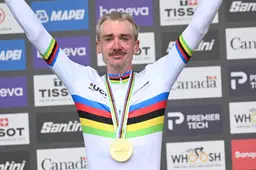
Rasmussen isn’t looking forward to a year of McNulty as World Champion: ‘With his jersey full of water bottles’
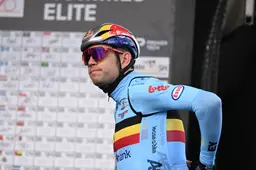
Boonen and others think Van Aert rode 'recklessly' at World Championships: 'We thought he'd get the message after Roubaix'
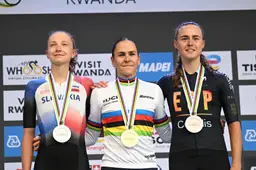
One of Vollering's biggest rivals drops out a day before European Championships road race
Popular Cycling News
Cycling transfers 2026/2027 | Izagirre calls it quits, Astana bags an emerging sprinter
Matthews joins the Pidcock Del Toro row after World Championships: 'If fewer teams had ridden together across national borders...'
Rasmussen isn’t looking forward to a year of McNulty as World Champion: ‘With his jersey full of water bottles’
Oscar Onley on his day in the break with Van der Poel, Van Aert & Simmons: "I still have to figure that out"
Following Demi Vollering, Remco Evenepoel also slapped with a hefty fine at the World Cycling Championships
Latest Comments
- - Un poco corto en la parte técnica de la bici de McNulty, no? Colnago nero con detalles arcoíris suena brutal — queremos más fotos, per favore.pedalpowe2902-10-2026
- - Demi finally gets her stripes! Team Oranje tactics on point again — recon, lead-out, and that patient regroup. Textbook. Chapeau.sprocketspiny02-10-2026
- - Wait, does the world champ jersey apply to all disciplines or just road race? Can McNulty wear it in a TT too, or is that only if he won the TT worlds?davidm02-10-2026
- - Brilliant coverage. The early flight back to beat jet lag is elite-level thinking. Those marginal gains matter before a punchy Euros course.samanthak02-10-2026
- - Not sure the “surprised everyone” line about McNulty is fair. He’s been knocking on the door all season in one-day races and TTs. Emilia in rainbows is going to slap.patriciaw02-10-2026
- - Love seeing the rainbow bands back on Slovenian roads. Demi looks sharp in that kit. Hope she gets a full custom bike soon, not just a tiny stripe under the seatpost. Come on, give the champ a proper paint job!cadencekingm02-10-2026
- - Quick one: why can’t McNulty wear the rainbow at Euros? Is it only for world champs from Europe or something about national teams vs trade teams?lindae02-10-2026
- - That Dutch masterclass was something else. Vollering timed that second move perfectly after the first dig didn’t stick. Proper teamwork — Wiebes and the crew deserve as much credit as Demi.julien02-10-2026
- - Boonen’s line about trusting teammates is gold. World’s is chess, not crit. Belgium tried to cover every scenario and covered none. Harsh lesson, but needed before next year.samanthak02-10-2026
- - Great read, but the piece leans a bit too harsh on Wout for me. He wasn’t at leader-level form, true, yet the team didn’t set up a plan B well enough. Segaert the bright spot, agreed.julien02-10-2026
Loading