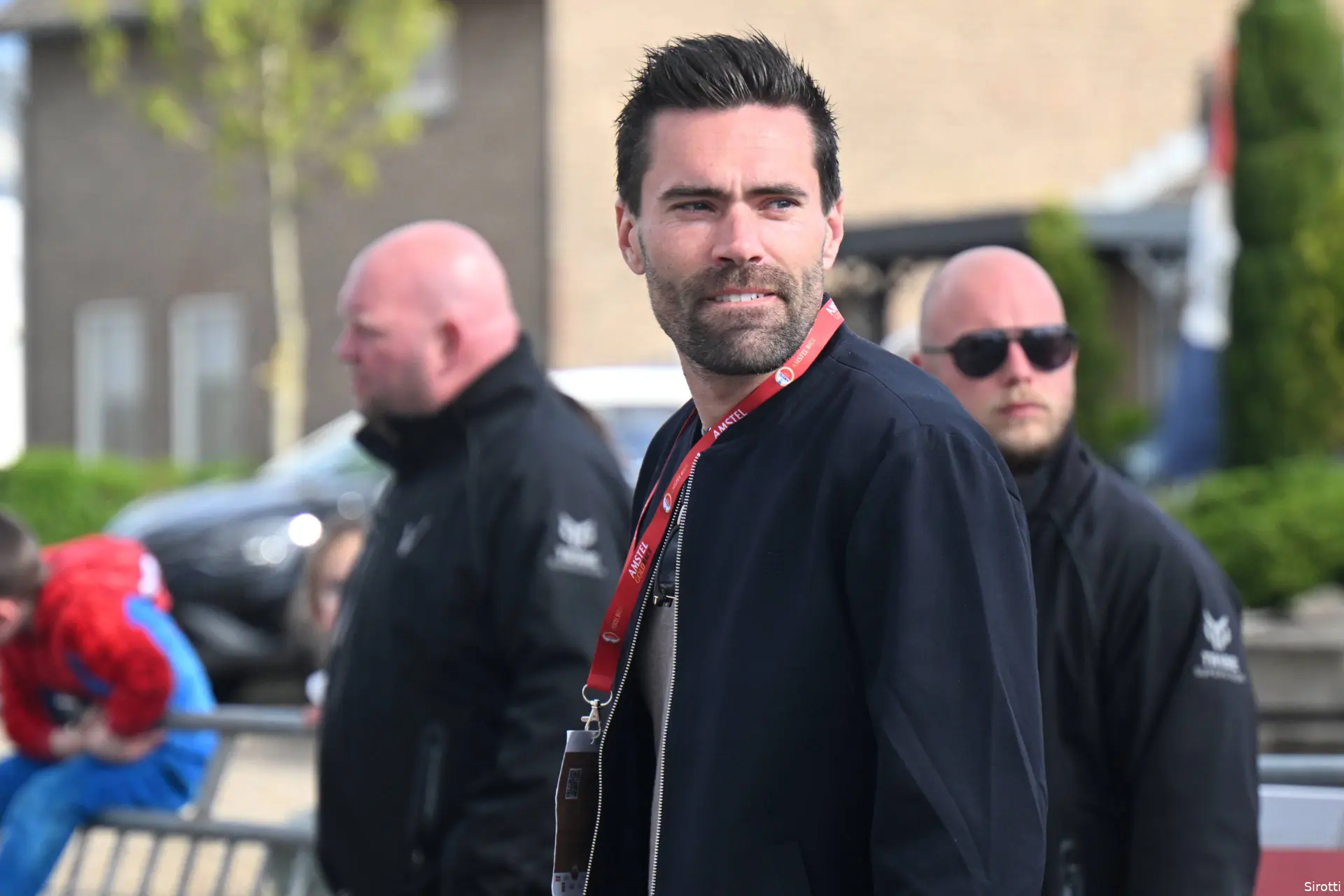
'What a sh*t sport' — Tom Dumoulin reflects on Giro carnage in Bulgaria and asks: how do we fix it?
CyclingTuesday, 12 May 2026 at 15:25
Follow IDL Pro Cycling on Google
Stay up to date with the best cycling news by making us a preferred source on Google.
Follow us on GoogleThe Giro d'Italia has arrived in Italy after three chaotic stages in Bulgaria more than left their mark. The crashes were frequent, and the brutal stage two incident will take a while to forget. What should we take from the Bulgarian opening weekend? Former professionals and NOS cycling analysts Tom Dumoulin and Stef Clement turned their attention to exactly that question on the Dutch-language NOS Wielerpodcast.
ADVERTISEMENT
First, the racing itself — from which Dumoulin draws an immediate conclusion: "We're not much wiser." Well, apart from one thing: "Except that it won't be Yates," the former Giro winner said, referring to the UAE team leader's withdrawal from the race. "We haven't really had any demanding stages yet, apart from that second one — where the big crash happened. That was our first real moment of insight."
And in that moment, Dumoulin saw "a very good" Vingegaard. "And also a very good Van Eetvelt, and a good Pellizzari. The three of them eventually rode clear. But that effort was so short — it tells you nothing about where someone will be in the final week. Or well, not nothing, but very little. So much is still going to happen. The high mountains are a completely different proposition."
Yet it was the repeated, heavy crashes that overshadowed the opening weekend. How many times did Dumoulin find himself thinking: what a terrible sport this is? "Honestly, quite a few times. You catch yourself sitting there thinking: if I'm being honest, what a sh*t sport it can be sometimes. How much I love this sport, how much passion and devotion I have for it, and yet, what a sh*t sport. It's just so dangerous sometimes. That's the sad part."
Continue reading below the photo!

Clement proposes a solution: 'It's the pressure from within the peloton that creates the danger'
And so Dumoulin found himself turning the question over. "You immediately start asking: what can we all do about this? How can we make the sport safer?" The answer? "I have to be honest — I come to the conclusion that I don't know either."
Protective clothing is sometimes raised as a possible solution in cycling. "But when you slide across wet tarmac at 60 km/h and hit a barrier... what do you do about that? There's no protection against that. You'd have to ride circles around an airfield, and none of us wants that either."
NOS colleague Clement, however, has an idea. He sees the root cause in how stages are structured. "I think we need to move away from these opening weekends where there is too little room to make real time differences. Once a general classification has begun to take shape, you do see that the peloton changes its behaviour."
Because: "Then far more riders let themselves drift back in the final kilometres. Right now it's just too congested, and the pace is simply too high. Whether that road on Friday had been as wide as an airfield or somewhat narrower — it wouldn't have mattered. It's the pressure from within the peloton that makes it dangerous," he said with conviction.
David Bavin-HobbsChief Editor
David has been working in the sports & cycling industry for 16 years. Covering racing, business and technology, he has worked in communications for cycling companies, teams, and as a journalist. His proudest achievement is winning the first bike race he ever entered. He hasn't won a race since.
IDL-productions
Three world titles, two heart surgeries, and one last U23 chance: the Rogers family story behind Cameron's World Championship heartbreak
Mathieu van der Poel sees '1,000 scenarios' for the World Cycling Championships road race: 'Actually reminds me a bit of Glasgow'

Here's why the 2032 World Championships were awarded to India, not the Netherlands
Who is Isabella Holmgren, the 21-year-old Canadian who is the clear favourite for the women's U23 world championship?
Australia leave team spots empty, USA riders pay $1,000 to race: the World Championships' national team model faces serious financial problems
Latest Cycling News
🎥 Women's World Cycling Championships marred by severe crash, favourite Paula Blasi abandons
'First day back, last in the rainbow'; Pogačar shows off his scars on his first ride back on the bike
World Champion Vollering brought back down to earth by hefty penalty from the UCI
Reusser lashes out at fellow World Championship chasers: 'I was the only one racing for gold'
Niewiadoma has mixed feelings finishing second to Vollering again: 'I lost the rainbow jersey'
Popular Cycling News
Disappointed Belgian Driesen has his doubts about the legitimacy of Barry's victory: 'They'll say I'm a sore loser'
🎥 Women's World Cycling Championships marred by severe crash, favourite Paula Blasi abandons
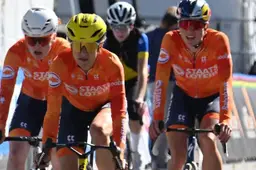
2026 World Cycling Championships Route & Schedule | Vollering gets her rainbow finish after thrilling race
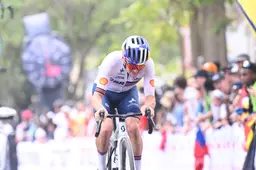
Tom Pidcock has four specifically picked domestiques in his hunt for a record-breaking rainbow jersey
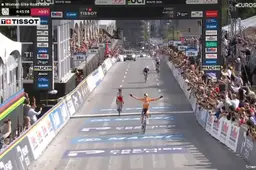
World champion at last! Demi Vollering made the race her own but is pushed all the way to the end
Latest Comments
- - Bienvenido de vuelta, Pogi! Forza per la prossima stagione — zdravje naj bo na prvem mestu.bikebuffj27-09-2026
- - Was the vertebra a C6 or C7? Curious what the expected timeline is before he can do threshold work outdoors again.breakawaybikerd27-09-2026
- - That first-week domination at the Vuelta was scary good—three stage wins and time gaps on wide, windy roads. Shame a stray rock changed everything. Vamos Tadej!cyclechamp4527-09-2026
- - “You’re not a real cyclist until you’ve broken your collarbone” made me wince. Bit macho, innit? Recovery isn’t a badge—just glad he’s riding safely again.patriciaw27-09-2026
- - Why wasn’t the ride on Strava if he’s okay to post videos? Is there a reason pros sometimes skip Strava uploads after injury?cadencekingm27-09-2026
- - Loved the context about Urska, Dunbar and Verhulst-Wild all dealing with similar surgeries. The titanium plate club is real. Heal up, champ. Paris 2025 focus?samanthak27-09-2026
- - Five Tours “won” is a big claim—did you mean five-time strongest performer, or are we counting something unofficial? He’s got two yellow jerseys officially. Article needs a quick fact-check there.gearguru3327-09-2026
- - Great to see Tadej back spinning the legs. That Vuelta crash was brutal, but collarbone + C-vertebra recovery in this timeframe is impressive. Hope they’re not rushing—concussion protocols matter more than an Insta reel.jennifer1927-09-2026
- - Qué carrera, magnifique esprit! Niewiadoma mostrando coraje total, pero Demi otra vez imparable en el sprint. Respect to both.sprocketspiny26-09-2026
- - Not sure the article gives enough tactical detail. Who was in the chase group and what teams were actually pulling? That context matters if we’re judging Kasia’s options in the finale.jennifer1926-09-2026
Loading