What can we expect this spring from the man who stayed with Pogačar, Van der Poel and Pedersen in Roubaix 2025?
Cycling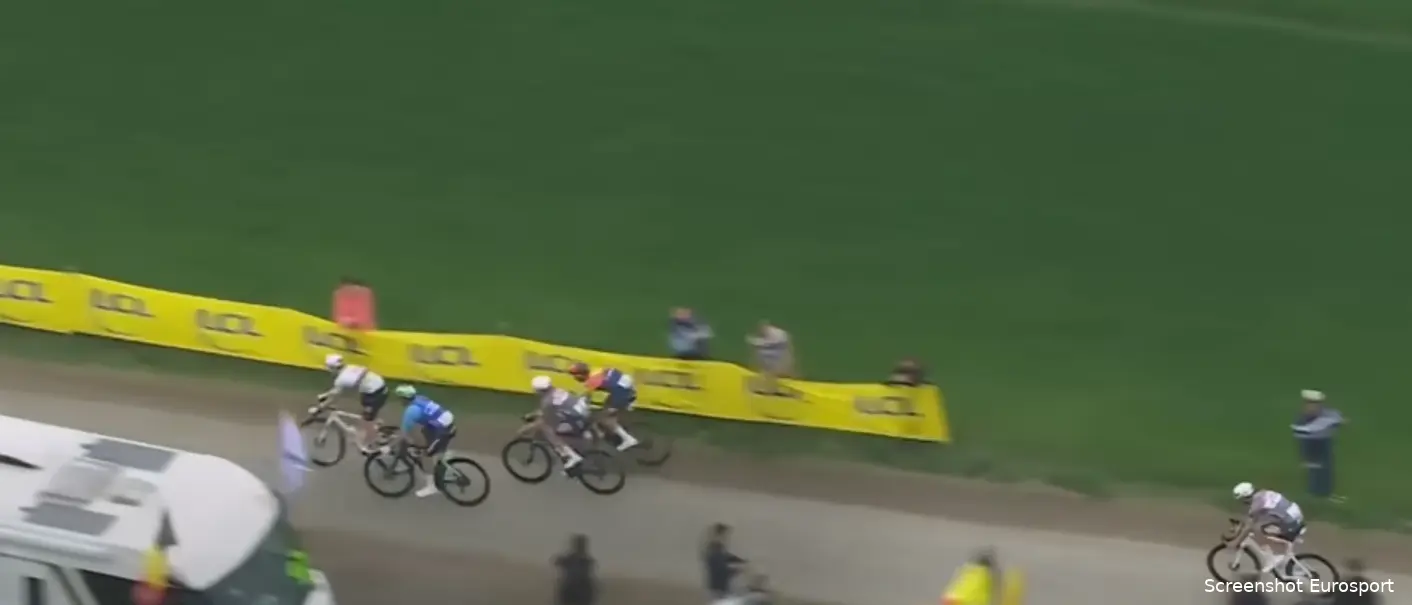
Follow IDL Pro Cycling on Google
Stay up to date with the best cycling news by making us a preferred source on Google.
Follow us on GoogleIf there is one team that has been hit by bad luck heading into spring 2026, it is Decathlon CMA CGM. The French squad saw big-money signings Tiesj Benoot and Olav Kooij ruled out before a single kilometre had been raced, and so it will have to hope for a breakthrough from other riders. Stefan Bissegger is one of them, and IDLProcycling.com spoke with the Swiss rider.
ADVERTISEMENT
For many fans, Bissegger’s name still rings loudest as one of the top time triallists of a few years ago. In 2022 he became European time trial champion in Fürstenfeldbruck, and around that period he was a rider you could pencil in for strong WorldTour results against the clock. What is less widely known is that he has also been quietly holding his own in the Flemish classics for several seasons.
Not necessarily by winning, but by repeatedly finishing in the 10-to-20 range and therefore shaping the finale. “I can still improve in the classics,” he says. “Last year, I also shifted my training more towards the classic races, whereas before I focused more on time trials. Now I’ve got a new coach again and we’re going all-in on spring, with a more classic approach.”
Continue reading below the photo!

Benoot, Kooij and Bissegger: only one of them is riding the classics this year.
Bissegger wants to do better in the classics
“Winning might not be the direct goal straight away, but I definitely want to finish higher,” says Bissegger, who was seventh at Paris–Roubaix last year, 19th at the Tour of Flanders and sixth at Paris–Tours. He starts his spring on Saturday at Omloop Het Nieuwsblad, where he also wants to improve on his 2025 result (20th).
“I still have the image of last year’s Omloop in my head,” he sighs. “After the Bosberg we were in that group of around the best ten riders in the race, and there were three Visma riders in it. I saw Stefan Küng attack and I hesitated for that one moment too long because I thought Visma would neutralise him. But nothing happened and I immediately thought: damn, I should have gone with him — and then we would have made it.”
“Then I would have had a podium, but instead I ended up sprinting from the wrong side of the bunch and I only just made the top 20. That’s the difference between something and nothing. In Gent–Wevelgem I was also with the best riders over the Kemmelberg, but that doesn’t buy you much either. Well… that’s the classics,” the 27-year-old now knows.
When we ask Bissegger to pick out one race in particular, he doesn’t hesitate for a second. “Roubaix is one of the most important races we have in this team. Decathlon comes from Lille and that’s practically next door to Roubaix, so that race means an incredible amount to them. If we could win that race, you make the whole team very happy.”
Continue reading below the photo!

Bissegger at the Roubaix Velodrome.
Bissegger came close in Roubaix 2025
In 2025 he could have had a real shot, because he was the only one who could follow “the aliens” from last year in the Hell of the North. “I was with the leaders until I got a puncture. I was there with Van der Poel, Pedersen, Philipsen and Pogačar. When Pogačar attacked at the moment Pedersen punctured, 100 metres later I had a flat as well. After that it was the same story for me as for Mads: you have no chance of coming back.”
“I had to wait for the car and I wasted a lot of energy there. When Pedersen, Van Aert and Vermeersch rode away from that chasing group, I was ten metres short of being able to follow them. They went on to ride for the podium — I finished seventh,” he sums up.
Still, that edition gave him confidence. “If I hadn’t punctured, I would have been racing with the best. And unfortunately it’s something I’ve run into a few times already. In 2024 I was also in the group with Van der Poel when I punctured. I just need a bit of luck — or at least less bad luck.”
“I don’t need a miracle to be able to win Paris–Roubaix, and I don’t have to be afraid of anyone. And that actually goes for a lot of riders,” the experienced Swiss rider says. “There aren’t many races where I can follow them, but Paris–Roubaix is one of the few. In Roubaix, besides the physical side, you also have the tactical skills, the race intelligence and of course luck and bad luck. And that can catch them out too.”
Continue reading below the photo!

Bissegger in the Forest of Wallers.
Bissegger: “Van der Poel and Pogačar make the difference with those one-minute numbers”
“The high-intensity blocks are simply less in Roubaix than, say, in Flanders. And that’s where they really make the difference,” he says of Van der Poel and Pogačar. “Take the Oude Kwaremont or the Paterberg — there they can really show those huge numbers for one minute, or several minutes. In Roubaix it’s full gas all day.”
So Roubaix Sunday is again circled in red for next year. “With team-mates you can get further. It would be nice to survive Arenberg with multiple riders. In my opinion we’re looking very good for that race, with the arrival of Daan Hoole for example. I can see him going a long way,” says the Swiss rider of his new Dutch team-mate.
They also feel strongly supported by Decathlon. “We do a lot of equipment testing, but luckily I don’t always have to go out on the cobbles. The Belgians in the team do that, because they don’t live far away — and I trust them completely. But for example I also ride GP de Denain to get used to the set-up and become more aware of it, because it saves you a lot of stress heading into Paris–Roubaix if you know what you can rely on.”
Continue reading below the photo!

Bissegger set for an important Tour role
After spring, Bissegger moves into the build-up towards the Tour. “I’ll keep focusing on the time trials, but last year I made some wrong choices. I had to deal with a parasite during an altitude camp, then I crashed out of the Tour straight away with a concussion… all of that cost me more than a month, and basically the rest of my season — even though I still finished sixth at Paris–Tours.”
“The team time trials, with my experience, will also become important for the team,” he says, referring among other things to the Tour start in Barcelona. “That’s where I have to take on the leadership role. It’s very tempting to ride incredibly hard on the front during a TTT, but then you run the risk of going out too hard. Especially for someone like me: I have to carry the responsibility for the final part as a time trial specialist.”
“Equipment matters there too, and I’m convinced we’re among the better teams in that area. We test a lot of innovative things and that process is very fast at Decathlon,” says Bissegger. “Where other brands might take two years for something, Decathlon sometimes does it in six months. We are playing with the best.” Also in spring?
Tom van der Salm (27) comes from the charming town of Zeilberg (Deurne) in the Netherlands and has been working as editor-in-chief & journalist at IDL Pro Cycling's parent site, In de Leiderstrui, since 2019. He travels with the peloton from the Tour de France to the AlUla Tour and from the World Championships in Rwanda or Canada to the Zilvermeercross in Mol. In his spare time he enjoys playing football, mountain biking, running, walking with his Labrador/Stabyhoun, investing, holidays, (specialty) beers, reading, cooking and watching sports & documentaries!
Contact: [email protected]
IDL-productions
Rumours, speculation and guesswork: 2027 Tour de France route will be revealed live on October 22 in Paris
Vollering adds the Women’s European Championships road race jersey to her rainbow wardrobe
16-day Grand Tours, AI, VAR, drones and more: The UCI's new document has a potentially major impact from 2029 onwards
Quinn Simmons' Strava shows exactly what it takes to compete at the World Championships: ‘I said, Hey guys, anything is possible'
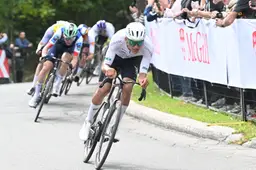
Despite losing the World Championships, Del Toro and Seixas rank high mentally and physically on the Pogačar scale
Latest Cycling News
Lidl-Trek announces 'homecoming' arrival of Filippo Ganna: Italian signs 3-Year contract
Ciccone is looking forward to partnering with Pidcock at new team: 'I hope we can build something special together.'
Laurens ten Dam labels Evenepoel 'vulnerable ' after Lombardy performance: 'He puts on weight quickly'
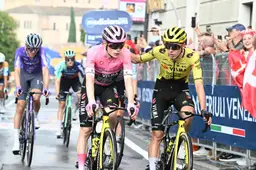
Piganzoli will desperately need Vingegaard for major plans at Visma: 'A source of inspiration'
Primož Roglič isn't sure whether he'll continue cycling, but his wife Lora has already spoken out.
Popular Cycling News
The Tour de France responds to the UCI's radical Grand Tour plan; the Giro and Vuelta are also opting out
UAE and Del Toro explain Tour of Lombardy collapse with (very) few words: ‘ Proud of the efforts in Italy’
Primož Roglič isn't sure whether he'll continue cycling, but his wife Lora has already spoken out.
Il Lombadria Strava analysis shows 2026 Paul Seixas outshines 2022 Tadej Pogačar on the Civiglio
Not Laporte, but Per Strand Hagenes wins Paris-Tours for Visma | Lease a Bike
Latest Comments
- The “king is dead” line feels premature. Pogačar has dominated this race for years, and one brilliant Seixas win doesn’t mean his reign is over. The article leans a bit too hard into the hype.patriciaw12-10-2026
- How does Seixas’s win compare with Gerbi’s in 1905? Was the race anything like the Lombardia riders face today?michael5412-10-2026
- Evenepoel finishing fourth while apparently struggling is still a solid result, though it’s surprising he couldn’t carry his European title form into the race.bikebuffj12-10-2026
- Nibali’s point about Del Toro racing Gran Piemonte makes sense. UAE needed him fresh for Lombardia, especially with Pogačar absent.jeremya12-10-2026
- Seixas looked completely in control on Civiglio. Winning Lombardia at that age is extraordinary; the comparisons with Pogačar are inevitable, but he deserves to be judged on his own ride.tourdeforce912-10-2026
- How can he race a mountain-bike event just 15 hours after Lombardia? Does that mean he had to recover on the way there? I’m still figuring out how these races fit together!sprocketspiny12-10-2026
- Winning Lombardia without Pogačar there is still a huge achievement, though the headline makes it sound like Seixas is already chasing him personally. Is there any indication he’s actually considering UAE for 2028?andrewf12-10-2026
- The UAE interest is worth watching, but he’s under contract through 2027 and Decathlon clearly have a major talent to build around. No need to rush the transfer speculation.samanthak12-10-2026
- He’s right to keep Pogačar as the benchmark rather than claiming he’s already there. Second at Strade and Liège, plus fourth on his Tour debut at 19, is an incredible platform.robert6512-10-2026
- Seixas attacking on the Civiglio and then lining up at Roc d’Azur the next day is wild. The win matters, but that appetite to race says a lot about him.julien12-10-2026
Loading