Traumatised riders expose toxic culture of fear at Picnic PostNL: 'I thought about hurting myself'
Cycling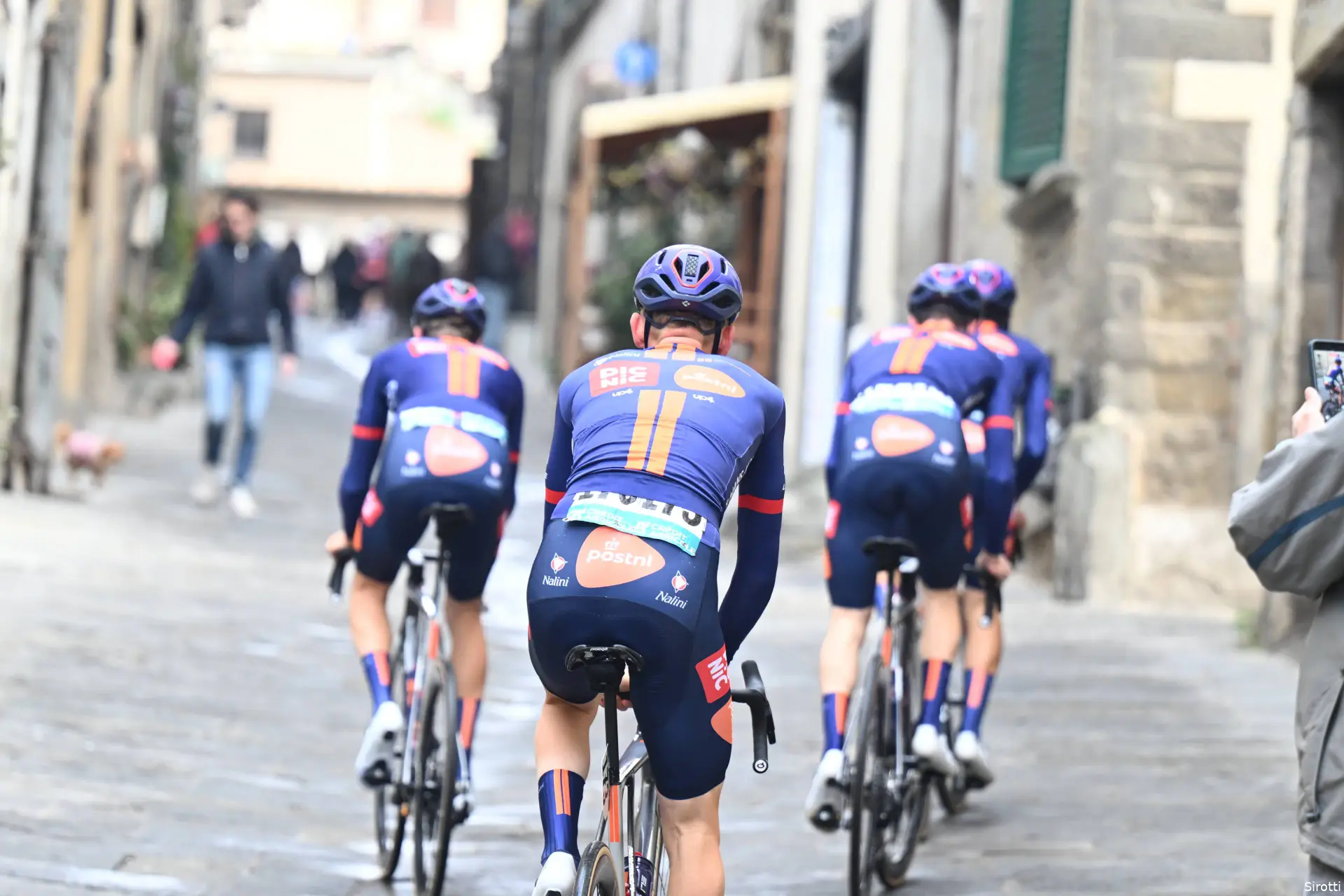
Follow IDL Pro Cycling on Google
Stay up to date with the best cycling news by making us a preferred source on Google.
Follow us on GooglePicnic PostNL is hitting an all-time low this year. The Dutch team is struggling to stay afloat and is on the verge of being excluded from the WorldTour. But more stories have emerged about the team. The NOS [Nederlandse Omroep Stichting (Dutch Broadcasting Foundation)], in collaboration with the podcast “In de Waaier” has revealed that a culture of fear prevailed for years.
ADVERTISEMENT
Riders felt powerless in the team structure
The NOS and In de Waaier—which released a four-part podcast series on the circumstances—conducted confidential interviews with 71 anonymous individuals involved in the matter, who work or have worked for the team as riders, staff members, or team managers.
Read more below the photo.

Tusveld has spoken out against the team
People have been traumatised by their time with the team. There is talk of a culture of fear and an unsafe work environment.
Riders felt punished when they questioned authority
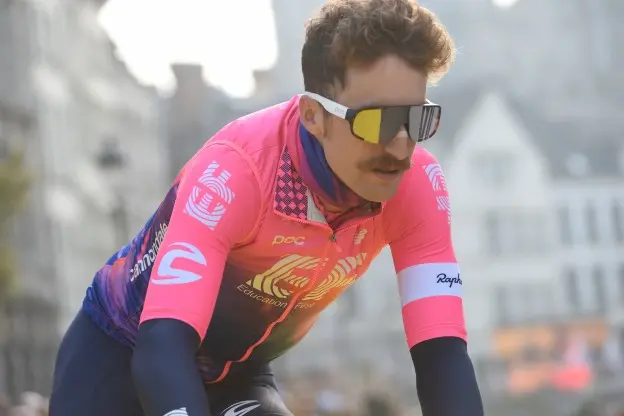
Martijn Tusveld is one of the people who is stepping forward. The now 33-year-old Dutchman rode for Sunweb, DSM, and dsm-firmenich PostNL between 2019 and 2024—all predecessors of Picnic PostNL. At first, he felt at home, but the turning point came during the 2020 Giro d’Italia. Team leader Wilco Kelderman dropped back, and Jai Hindley was suddenly chosen instead. Tusveld didn’t immediately agree with that decision. And that didn’t go well.
Read also
"Two months later, I was put on a new program," Tusveld says in a mini-documentary. "Even though I’d earned so much trust before, suddenly I wasn’t riding in any Grand Tours or major races anymore." Team manager Rudi Kemna brushed it off again. “He didn’t really want to talk about it. He said, ‘Aren’t there plenty of other great races besides the Grand Tours?’ I felt powerless.”
Tusveld: "I didn't dare speak my mind anymore"
Tusveld then found himself in a difficult situation. In the years that followed, he had to keep proving himself to keep his spot on the team. So he just kept his mouth shut and smiled at all the plans. “That was my strategy for survival. I did get anxious, though.” At first, the climber didn’t get a new contract. That is, until two riders left for another team. Then there was room for the Dutchman.
"But I wasn't the same person anymore. The fear remained: for years, I didn't dare give feedback or share my feelings. No matter what situation I found myself in, I no longer dared to truly speak my mind. Because of that, I was also unable to develop into a good captain because I didn’t feel I was allowed to speak up,” Tusveld wrote in a letter to Kemna.
Read more below the photo

Several reports filed with the Association of Professional Cyclists
Tusveld’s accounts are corroborated by his former colleagues. Several reports have been filed with the Association of Professional Cyclists, says attorney Jeroen van Keulen. “In recent years, I’ve picked up on several signs and heard stories that align with what Martijn has said."
"A culture of fear? I can’t speak to individual cases, but I do recognise that there is an overlap in the stories of the various riders I’ve spoken with.”
Several anonymous sources shared their stories. “This is an unsafe work environment. No doubt about it. It’s only safe for employees when you have a say, when you feel connected.” Other sources said the following: “They gave me the impression that they were complicated. And I held onto that feeling for a long time as my career progressed. I doubted myself for a long time. That experience really took its toll on me.” And: “If you voice criticism, you’re pushed out.”
Continue reading below the photo

Relationships between coaches and riders severed
Coach Adriaan Helmantel, who worked with the team between 2013 and 2018, tells his story on camera for the NOS. He mentions an altitude training camp with Tom Dumoulin, just before the Giro d'Italia. “He was completely burned out; we’d reached our limit. I said, ‘You know what? Just get in the car.’"
"I thought it was the right choice. But Iwan thought I’d made a mistake. He felt that I’d prioritized the mental over the physical by cutting the training session from 6.5 hours to 4 hours.”
That year, Dumoulin won the Giro. In Bergen, both the men’s and women’s teams won the World Championship team time trial. But after that, the ties between coaches and riders were severed. Asking a rider how he or she is doing is no longer allowed. “Maybe because we were so successful, they thought they had to step in and keep things the same. I feel like they took a wrong turn there,” says Helmantel.
Read more below the photo

Tusveld isn't alone: 'Many people have been affected'
More strange decisions were made. For example, riders were only allowed to drink sports drinks during races because they’re more nutritious. “How do they come up with this stuff? It was sometimes over forty degrees during the Tour de France,” says an anonymous source. “It’s a form of tyranny.”
“It’s indoctrination over there. It’s like a cult. If you give feedback, you’re going against the philosophy.” “Everyone there is afraid. Afraid of management.” Plain and simple.
And so there are many riders and staff members who are still feeling the effects of their time at Picnic PostNL and its predecessors. “It’s taken a toll on me, at any rate,” says Tusveld. “And from the stories I’ve heard, a lot of people didn’t leave on good terms, and a lot of people have been affected by it.”
In his letter to Kemna, he spoke about depressive thoughts. “I’ve thought about hurting myself.” Fortunately, Tusveld has recovered. “Things are going a lot better now. Last year, I was still sad and angry about how things turned out, but I’m gradually coming to terms with it. I’m also happy as a non-cyclist these days.”
Read also
Clarice WebsterEditor
Clarice has been following cycling her whole life, wroting about Thibaut Pinot (among others) for her university magazine while earning her masters in Journalism. She is passionate about furthering equality in sports coverage, and has taken huge inspiration from pillars of women’s cycling like Beryl Burton, Marianne Vos, and Laura Kenny.
IDL-productions
Rumours, speculation and guesswork: 2027 Tour de France route will be revealed live on October 22 in Paris
Vollering adds the Women’s European Championships road race jersey to her rainbow wardrobe
16-day Grand Tours, AI, VAR, drones and more: The UCI's new document has a potentially major impact from 2029 onwards
Quinn Simmons' Strava shows exactly what it takes to compete at the World Championships: ‘I said, Hey guys, anything is possible'
Despite losing the World Championships, Del Toro and Seixas rank high mentally and physically on the Pogačar scale
Latest Cycling News
Netcompany INEOS turn the tide in the 2026 transfer season, sign two British talents: 'We believe there is a lot more to come'
Taylor Phinney's LA28 comeback takes a hit as Team USA fail to reach Team Pursuit medal race
Big problems at Netcompany INEOS as the British team lose Filippo Ganna and Sam Welsford. What is the plan for 2027?
2026 Track Cycling World Championships Preview & Results | Wiebes and the Dutch star on day 1
The Tour de France responds to the UCI's radical Grand Tour plan; the Giro and Vuelta are also opting out
Popular Cycling News
The Tour de France responds to the UCI's radical Grand Tour plan; the Giro and Vuelta are also opting out
Primož Roglič isn't sure whether he'll continue cycling, but his wife Lora has already spoken out.
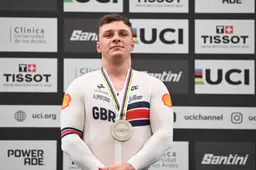
British track star Matthew Richardson sent home before the Track Cycling World Championships for 'misconduct'
Richardson under official investigation after alleged racial slur and unpleasant behaviour towards teammates
Matthew Richardson responds to Track Cycling World Championships dismissal: 'I will co-operate fully'
Latest Comments
- The article calls the Giro the likely option, but Seixas has said the Tour is his lifetime goal. That seems a bit premature—wouldn’t the team want him back at the Tour after finishing fourth?gearguru3314-10-2026
- Five weeks between the Tour and Worlds sounds like plenty of time to recover and get ready again. I’d love to see him go for both.sprocketspiny14-10-2026
- Why does the Vuelta start just six days after the Worlds? Do riders ever compete in both, or is that turnaround generally too short?davidm14-10-2026
- He’s had an extraordinary season, but there’s no need to rush him into targeting everything at once. A gradual build towards the Tour could pay off in the long run.lindae14-10-2026
- That Worlds course sounds tailor-made for Seixas. Twenty ascents of Domancy is savage, and racing at home could make it a huge day for him.andrewf14-10-2026
- The Giro looks like a sensible next step: a chance to lead a Grand Tour team without the full weight of the Tour-Pogačar hype. But with Evenepoel and Del Toro potentially on the start list, it won’t be an easy podium.jennifer1914-10-2026
- I’m still learning about these races—was the lamppost on the course, or did he hit it after going off the road? Either way, a frightening crash, and I hope his recovery keeps moving forward.julien13-10-2026
- That “streetlights can put up quite a fight” line is some gallows humour. Incredible resilience from Caudell and everyone helping him through rehab.cyclechamp4513-10-2026
- The ECMO details really put the seriousness of the crash into perspective. It’s good to hear he’s making progress, and I hope the cycling community continues to support his family.raceready713-10-2026
- Walking and communicating after injuries this severe is a huge milestone. Wishing Ezra and his family strength for the long road ahead.bikebuffj13-10-2026
Loading