20 Years on from 'DisneyLandis', the too-good-to-be-true 130km alpine raid, where is Floyd Landis now?
Cycling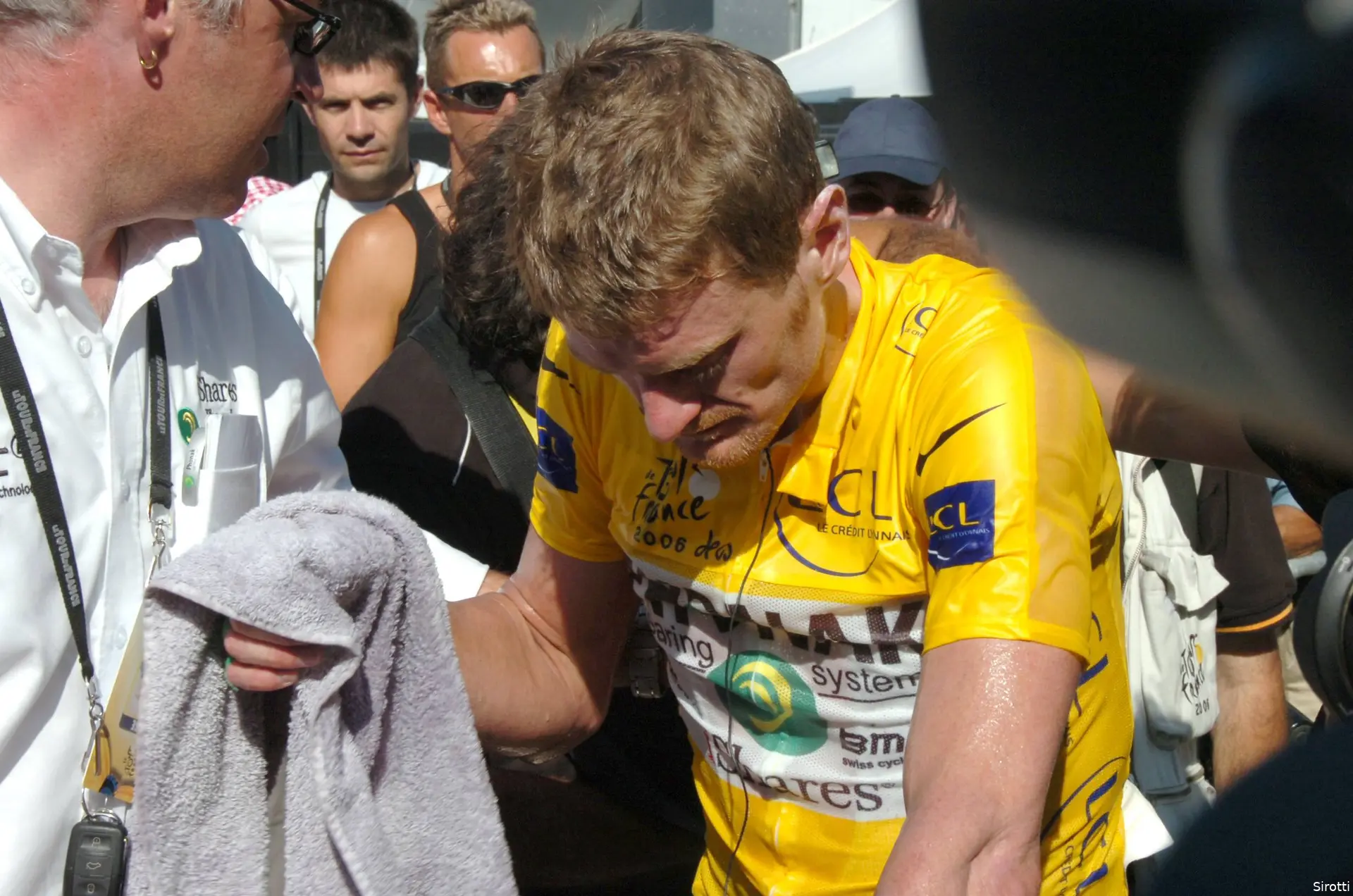
Follow IDL Pro Cycling on Google
Stay up to date with the best cycling news by making us a preferred source on Google.
Follow us on GoogleJuly 20, 2026. That means it’s been 20 years since we witnessed one of the most bizarre Tour de France stages in history. In a Tour de France that was on edge from day 1, the red-haired Floyd Landis from Farmerville, USA, achieved the seemingly impossible. And that turned out to be… indeed impossible. What happened back then, and how is Landis doing now?
ADVERTISEMENT
Let’s start at the beginning: Landis was born on October 14, 1975, in Farmerville, Pennsylvania. In the heart of the Amish community, and although The Amish might lead you to believe otherwise, Landis was not officially a member of said community. Landis grew up in a Mennonite community (Anabaptists) and was allowed, for example, to use electricity and cars, which is not the case among the traditional Amish.
Who is Floyd Landis?
Landis’s parents, however, did not allow television, radio, or pop culture in the house. Watching sports on television or playing professional sports was seen as a distraction, but their son Floyd really wanted to ride a bike. He found a workaround. At night, without his parents’ knowledge, he would head out in his sweatpants, because shorts (including athletic shorts) were considered immodest.
At the age of 19, Landis moved to California to pursue his dream of cycling and broke away from the faith he was raised in. Because the Mennonites, unlike the Amish, do not excommunicate people, he did remain in contact with his parents. Landis Jr. did, however, let go of the strict rules of the faith, cutting his hair shorter and wearing Western-style clothing.
Read also
Landis and the US Postal Years
In 1999, Landis made his debut in Europe, where he immediately took third place in the Tour de l'Avenir riding for Mercury. One season later, he finished fourth in that race, while also claiming his first professional victories in Langkawi and Poitou-Charentes. In 2001, however, that team ran into financial difficulties, after which Lance Armstrong and Johan Bruyneel’s US Postal team signed him.
With that team, the no-nonsense American managed to take another big step forward. Landis made a huge impression by finishing second—behind Armstrong—in the Dauphiné in his first year and by ending the Tour de France as one of Armstrong’s key domestiques. In late 2002, he suffered a serious crash and broke his femur, but despite that, he remained a key support rider in both 2003 and 2004.

Landis and Armstrong in better times.
For 2005, Landis was offered a contract as team leader with the Swiss Phonak team, where he would thus be racing against Armstrong for the first time. Shortly after the American signed his contract, Tyler Hamilton, another former domestique for Armstrong, and Santiago Perez became embroiled in doping scandals. This put Phonak’s, and therefore Landis’s, participation in the 2005 Tour in jeopardy. Through the CAS, they ultimately secured their participation.
Landis finished ninth in the last Tour de France won by Armstrong, but the following year he won the Tour of California and Paris-Nice, confirming that he had taken another step forward. One day before the start of the 2006 Tour de France in Strasbourg, the Operacion Puerto scandal broke, resulting in Jan Ullrich, Ivan Basso, Francisco Mancebo, and, indirectly, Alexandr Vinokourov (the 2nd through 5th place finishers) from 2005 were barred from participating.
Who was left? Among others, Levi Lepheimer in sixth place, Michael Rasmussen in seventh, Cadel Evans in eighth, Landis, and Oscar Pereiro—who had switched from Phonak to Caisse d'Epargne—along with the young Alejandro Valverde. The group of favorites—which also included riders such as Andreas Klöden, Carlos Sastre, Damiano Cunego, Iban Mayo, Gilberto Simoni, Paolo Savoldelli, Denis Menchov, and Danilo di Luca—was thus significantly reduced.
Landis at the 2006 Tour de France
On Day 7, Landis scored his first victory by finishing the individual time trial in Rennes as the best of the general classification contenders, and then claimed the yellow jersey in the stage to Pla d'Beret (Stage 11), which was won by Menchov. However, Phonak had also been weakened by Operacion Puerto, as its shadow leader Santiago Botero and lead-out man Jose Enrique Guiterrez, who had finished second in the Giro, were barred from participating due to the scandal.
So Phonak wasn’t strong enough to carry the weight of the yellow jersey and decided to call on the help of an old acquaintance, Pereiro, by awarding him, despite his deficit of nearly half an hour, the yellow jersey in Stage 13. And so it happened, as Landis reclaimed the maillot jaune on Alpe d’Huez—Stage 15.
One day later, the Tour took another unexpected turn. Landis seemed to have everything under control, but on the final climb to Toussiere, he suffered a full-blown bonk and lost 8 minutes to his rivals. Landis dropped to 10th place in the general classification and seemed to have to put his dream of winning the Tour de France on hold. “The Tour is about to explode. Landis is only human,” the NOS broadcast reported.
Until… July 20, Stage 17. A stage featuring four Alpine giants, and on the very first one—the Col de Saisies, with 130 kilometers still to go—Landis went on the attack. He continued his attack over the Aravis, Colombière, and Joux Plane, and—while dousing himself with water on this sweltering day—built a 9-minute lead, of which roughly 6 minutes remained by the finish in Morzine. In the general classification, he jumped to third place, 30 seconds behind Pereiro and 18 behind Sastre.
A metaphor for the race, but also for Landis’s youth. On the penultimate day, there was a 57-kilometer time trial on the schedule, in which Landis was significantly better than the two Spaniards. As a result, he rode into Paris in the yellow jersey after a seven-year reign by Armstrong.

Landis breaks away from his competitors early in the race.
The DisneyLandis fairy tale turned out to be too good to be true
However, the DisneyLandis fairy tale turned out to be too good to be true. The Tuesday after the Tour, he competed in the post-Tour criterium in Stiphout, but just one day later, he suddenly let Chaam pass him. This fueled speculation, which was ultimately confirmed: on July 27, four days after the Tour, it was announced that the American had tested positive for excessive testosterone, and a few weeks later, Pereiro was declared the winner of the Tour.
Landis categorically denied using performance-enhancing drugs (and claimed that he had drunk a lot of whiskey the day before after losing time) and was supported in this by his parents, who, because of his moral convictions, did not believe he would cheat or lie. The cyclist himself even established the Floyd Fairness Fund to pay his legal fees and, after his suspension ended, made several attempts to return to the peloton. Meanwhile, he also struggled with mental health issues and addictions.
Landis turns whistleblower after Armstrong snub
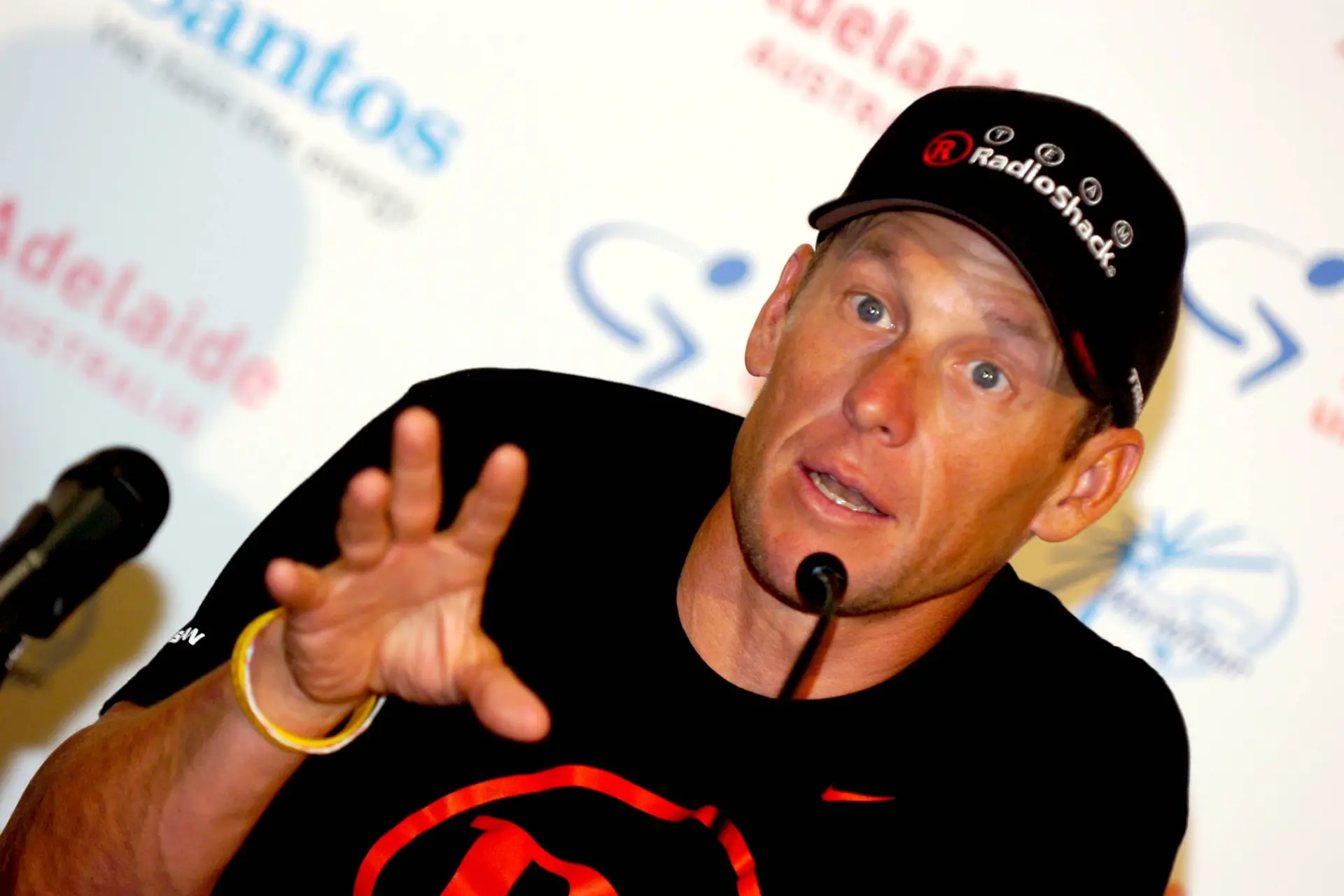
When RadioShack—with Armstrong having since returned to the peloton—refused to sign him, Landis spilled the beans and became a whistleblower in one of the most famous doping cases in sports history: the USADA investigation into Armstrong. For that “role” as a whistleblower, he reportedly received more than $1.1 million—but also earned Armstrong’s enmity.
"It could be worse—I could be Floyd Landis, waking up as a piece of shit every day," he said in his 2020 LANCE documentary when asked how he was doing. Landis, incidentally, responded very mildly to that: "I do have some empathy for him, because I’ve gone through a very public humiliation myself, and that hurts. You want to blame someone, and sometimes it’s easiest to blame the most obvious person. He can blame me. Maybe it would still have been a secret if I hadn’t been there, but I had to come clean. I hope he finds some peace in his life.”

Landis with water pouring over his head: a familiar sight during his 2006 raid.
How is Landis doing in 2026?
Landis has also managed to get his own life back on track to some extent. In 2016, he founded Floyd’s of Leadville in Colorado: a company in the cannabis and CBD industry, directly linked to his cycling past. After breaking his hip in 2002, he became addicted to strong painkillers, after which cannabis and CBD helped him manage his pain and recover.
In 2026, 20 years after Morzine, the man responsible for one of the most incredible—and implausible—Tour de France stages in history, is now an entrepreneur in the cannabis industry. This is also an absolute taboo in the Mennonite community where Landis grew up, by the way.
Tom van der Salm (27) comes from the charming town of Zeilberg (Deurne) in the Netherlands and has been working as editor-in-chief & journalist at IDL Pro Cycling's parent site, In de Leiderstrui, since 2019. He travels with the peloton from the Tour de France to the AlUla Tour and from the World Championships in Rwanda or Canada to the Zilvermeercross in Mol. In his spare time he enjoys playing football, mountain biking, running, walking with his Labrador/Stabyhoun, investing, holidays, (specialty) beers, reading, cooking and watching sports & documentaries!
Contact: [email protected]
IDL-productions
Track World Championships day 2: A golden day for Team GB, Levreysen goes 2 for 2, and Kopecky eliminates the competition
Rumours, speculation and guesswork: 2027 Tour de France route will be revealed live on October 22 in Paris
Vollering adds the Women’s European Championships road race jersey to her rainbow wardrobe
16-day Grand Tours, AI, VAR, drones and more: The UCI's new document has a potentially major impact from 2029 onwards
Quinn Simmons' Strava shows exactly what it takes to compete at the World Championships: ‘I said, Hey guys, anything is possible'
Latest Cycling News
Tom Pidcock pays special tribute to retiring brother Joey, but isn't totally happy: 'We had to settle for second place'
On the final race day of 2026, Tadej Pogacar reveals his goals for 2027
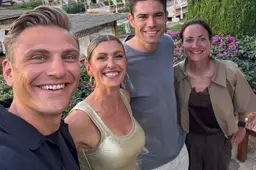
Marcel Kittel, Wout van Aert, and Marianne Vos partied at a cycling festival in Ibiza: 'To avoid a major hangover'
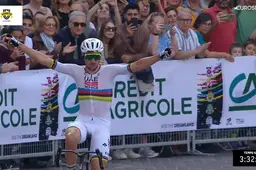
McNulty finally flies the rainbow flag and ends his season on a high at the Veneto Classic
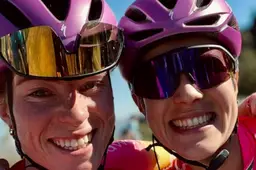
'One of the most special teammates': tributes roll in from World Champion Demi Vollering, and others, for retiring Cecchini
Popular Cycling News
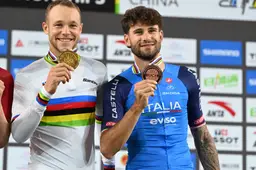
Milan rewrites the record books as Great Britain strike gold twice on day 3 of the Track World Championships
On the final race day of 2026, Tadej Pogacar reveals his goals for 2027
Quinn Simmons not satisfied with World Championship glory and has big 2027 plans: ‘Even a few percent better'
McNulty finally flies the rainbow flag and ends his season on a high at the Veneto Classic
Marcel Kittel, Wout van Aert, and Marianne Vos partied at a cycling festival in Ibiza: 'To avoid a major hangover'
Latest Comments
- - The bike may be quick, but the article seems a bit too ready to credit the equipment for the result. Remco’s the one producing those watts—though I’ll admit, two minutes is a pretty convincing test ride.jennifer1918-10-2026
- - I’m still learning how time trials work: if Evenepoel caught Jay Vine, does that mean Vine started earlier, and do riders set off at fixed intervals?tourdeforce918-10-2026
- - A flat Tour TT on these roads would be brilliant viewing. Wide, fast courses really let the specialists show what they can do.davidm18-10-2026
- - Fourteen wins in a season is some going. He sounded focused on his own effort rather than the riders ahead, which is exactly the mindset you want in a race against the clock.michael5418-10-2026
- - Catching Vine and putting over two minutes into him is an enormous statement. That new Specialized clearly suits Remco—keen to see how it performs over a longer Tour time trial.raceready718-10-2026
- I’m still trying to understand the history here—why was insulin being used alongside amphetamines? Was that common in cycling at the time?cyclechamp4518-10-2026
- Hard to take the article’s “recovered” line at face value when it ends by raising concerns about team entourages. Cycling has made huge changes, but scrutiny still matters.velodromevirtuoso118-10-2026
- The detail about riders deliberately pushing him off the road is shocking. Do we know whether anyone ever faced consequences for that?pedalpowe2918-10-2026
- Bassons’ story is a grim reminder of what speaking up could cost in that era. Fair play to him for holding his ground when it meant being isolated by his own team.tourdeforce918-10-2026
- I’m still learning how team contracts work: if Barguil had ended his deal before 2018, could the team have left him out of the Tour, or was his place already agreed?sprocketspiny18-10-2026
Loading