Bruyneel joins UAE tyre debate with insider information — and a 2003 story that feels familiar
CyclingFriday, 15 May 2026 at 16:48
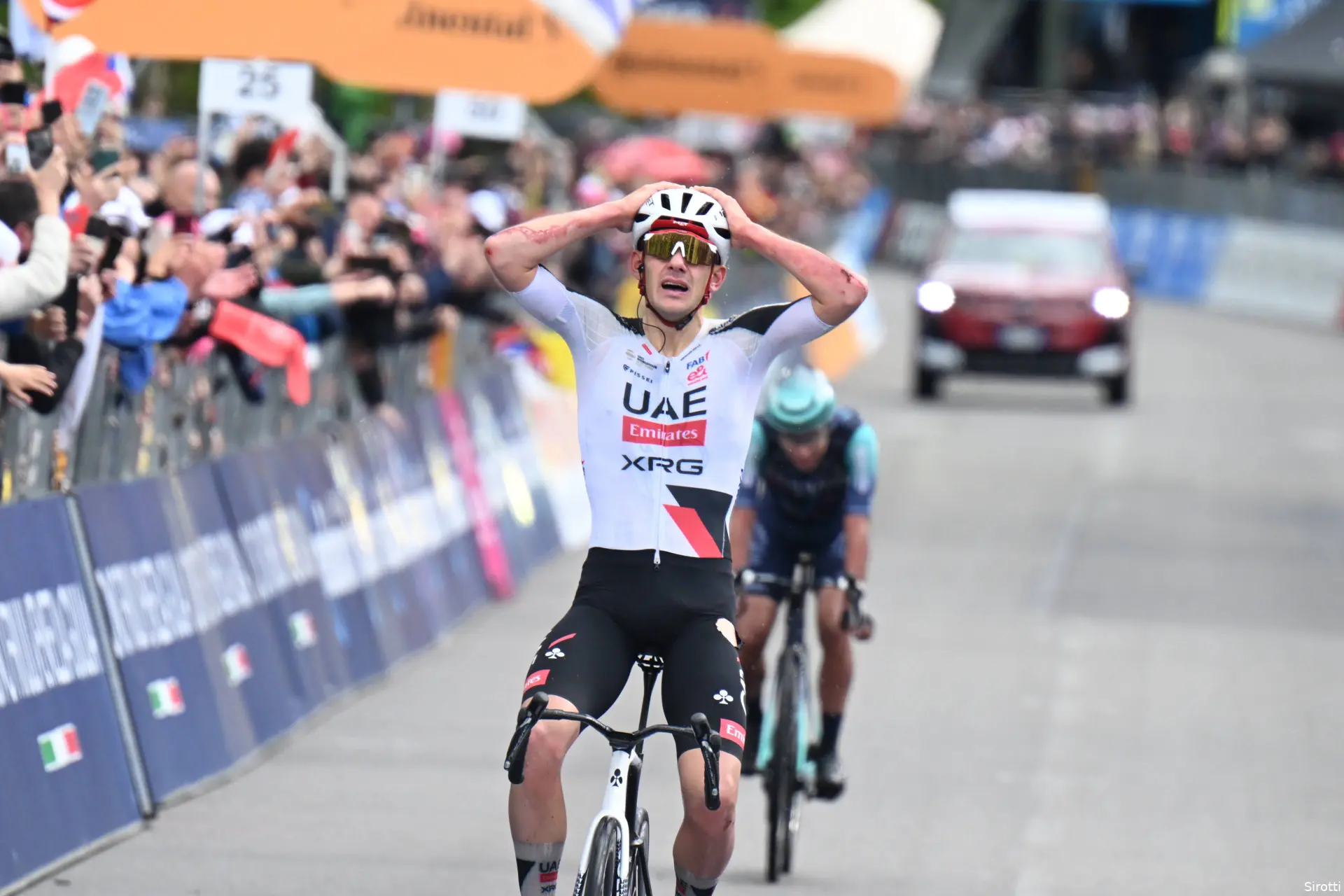
Follow IDL Pro Cycling on Google
Stay up to date with the best cycling news by making us a preferred source on Google.
Follow us on GoogleThe debate over UAE Team Emirates-XRG's tyre choice at the Giro d'Italia is not going away. After Geraint Thomas and Luke Rowe raised the question on their podcast, and now former Lance Armstrong team director Johan Bruyneel has weighed in on THE MOVE. His interest in the tyre debate was piqued by Thomas and Rowe. With a memory from a 2003 team time trial rattling around his brains, he decided to speak to a contact inside Continental to get the full picture.
ADVERTISEMENT
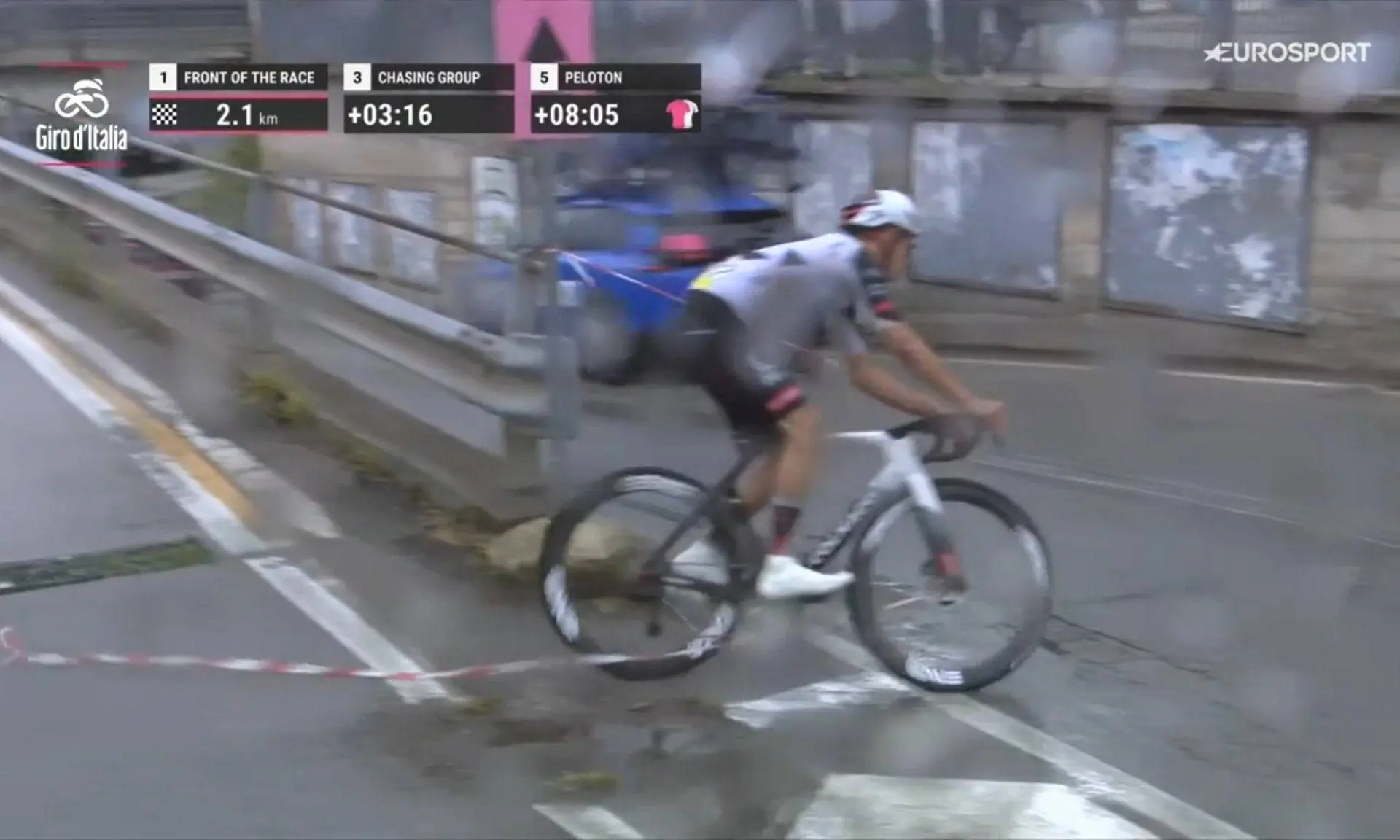
The Giro crashes story is well know by now. UAE went down first on a wet bend in stage 2, losing Jay Vine, Marc Soler and Adam Yates. More importantly, they took out around 30 riders in the process, many of whom also had to abandon. The question asked by Thomas and Rowe was direct: should the team have been riding time trial tyres in those conditions?
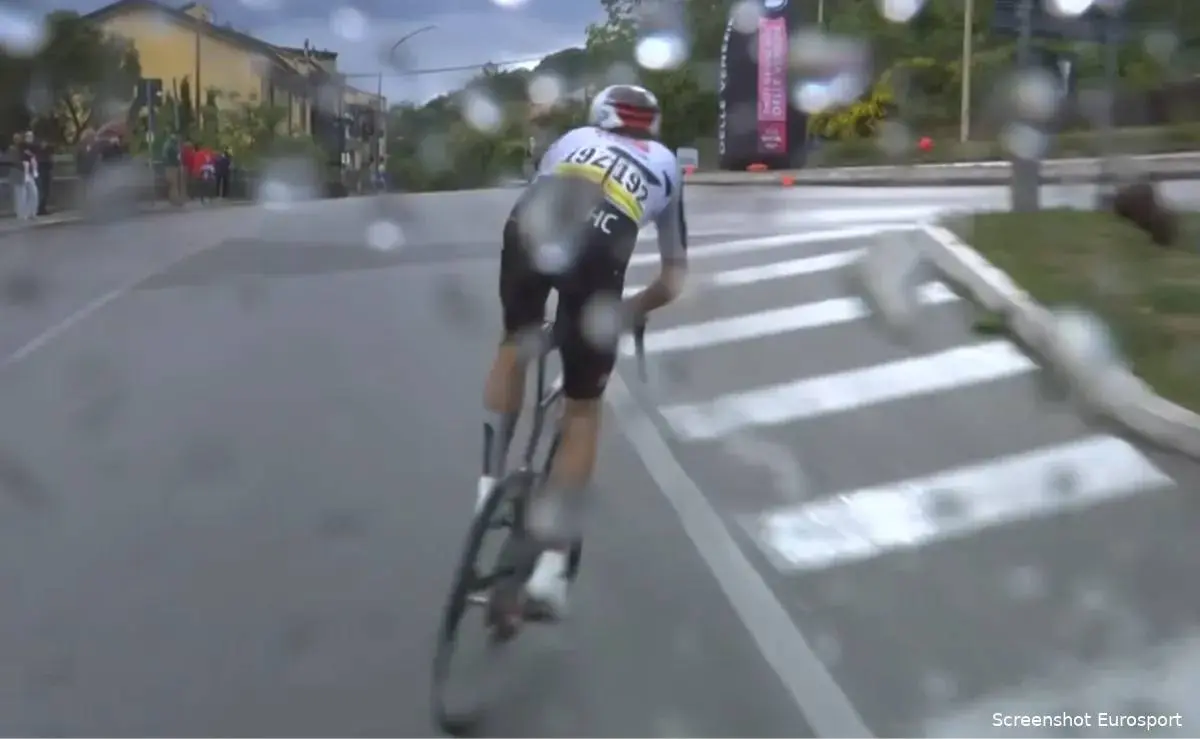
After watching Igor Arrieta sliding all over the place on stage 5, Bruyneel went into investigation mode.
What Continental said and what Bruyneel deduced
Bruyneel identified the specific tyre at the centre of the discussion. UAE ride on Continental rubber, and their tyre of choice for most stages — wet or dry — is the GP5000 TT. It is a model designed for time trials, valued for being faster and lighter than all-round alternatives.
Bruyneel went to the source. "I've spoken to somebody from inside Continental," he said on the podcast. "I asked him: does the GP5000 TT have less grip than the S model or the AS model?"
The answer was careful, but telling. His contact did not explicitly say the TT tyre has less grip. What he did confirm is that it is a lighter tyre. A lighter tyre, he explained, with more chances of puncturing.
Bruyneel drew his own conclusion: "I'm personally going to think that the TT has less grip."
His overall verdict? "I think it's not a great decision to ride with time trial tyres just because they're fast. I know the riders will probably want them — you can feel the difference when it's a super fast tyre. But man, when it's a rainy day…"
History repeating itself? Bruyneel took us back to 2003
UAE’s tyre nightmares took Bruyneel back to his time running US Postal Service in the early 2000s. Yes, that Postal Service — the team of Tour de France super-villain Lance Armstrong.
"It brought me back to 2003," he said. "Back in those days, we were riding 23-millimetre tubulars for road stages. Then there was a special time trial tubular — 21mm, sometimes even 19mm. Unthinkable now, but that was the standard."
The difference in philosophy between teams was stark, even then. Bruyneel made a deliberate choice at Postal. "I made the decision, especially in team time trials, to always go with the normal road tubulars. The all-rounders. The 23mm Hutchinsons. But some of our biggest competitors were obsessed with time trial tyres."
One particular team time trial in 2003 became his evidence. He cannot remember the exact stage, but the result stuck. "We won that time trial on our usual normal road tyres. Our two rival teams — CSC and Phonak — were convinced they had to be on time trial tyres. Well, guess what? They both crashed. And it was also raining."
He is careful to contextualise the comparison. "It's not the same as now. But there was already a difference between the normal road tyre and the time trial tyre in terms of grip — even then."
The gap has arguably narrowed. Modern TT and road tyres share the same width — unlike the 19mm versus 23mm split of two decades ago. But Bruyneel believes the composition of the rubber still makes a difference, even when the dimensions do not.
When tyre choice becomes and unbreakable habit
Bruyneel also identified something that Thomas had touched on: the way tyre choice can drift from choice into habit. "Once you get used to it, it's hard to say: I want a different tyre because it might rain or the terrain is rough. But they did end up switching for stages where there was a possibility of rain — so clearly the assessment can be made."
He was careful not to strip UAE of the benefit of the doubt. "They've probably done their research and have a reason to use them." But the conclusion was firm: "I think sometimes giving a little in terms of performance and going for safety is probably worth it — especially in a Grand Tour."
Read also
David Bavin-HobbsChief Editor
David has been working in the sports & cycling industry for 16 years. Covering racing, business and technology, he has worked in communications for cycling companies, teams, and as a journalist. His proudest achievement is winning the first bike race he ever entered. He hasn't won a race since.
IDL-productions
Van der Poel loves it, but a lack of race radios gave McNulty and USA the chaos it needed to slip away
Pogačar hails the 'King of Montréal', but McNulty already has a plan for 2027: 'Maybe Tadej will have to ride for me'
Quinn Simmons' Strava shows exactly what it takes to compete at the World Championships: ‘I said, Hey guys, anything is possible'
An American rider can win the Elite Men’s World Championship road race, but the smart money isn’t on Quinn Simmons!
McNulty fell 12 seconds short of a World TT medal but sees a road race opportunity: 'We have our work cut out'
Latest Cycling News
Lance Armstrong slams UAE team manager's behaviour following Brandon McNulty's Worlds win: 'Give me a break, honestly!'
Isaac del Toro hits back at Pidcock's criticism: 'All the other teams remained passive'
McNulty, Pidcock and Del Toro know these 22.2km were decisive at the World Championship road race in Montreal
Tadej Pogačar's European Championship rivals are preparing to race him in Slovenia: 'I won’t believe that'
Pogačar reportedly pushing his team for an early comeback at European Championships; contacted doctor who operated on him
Popular Cycling News
Brandon McNulty could be the winning difference for Pogačar at the 2026 Tour de France: 'I'm back in shape'
Brandon McNulty wins the men's World Championship road race as USA rides the perfect race
Pidcock accuses Del Toro of helping UAE teammate McNulty to the rainbow jersey: 'Obviously working for McNulty in the end'
2026 World Cycling Championships Route & Schedule | McNulty closes the show with a dominant USA performance
World Champion Vollering brought back down to earth by hefty penalty from the UCI
Latest Comments
- - Grande análisis pero una duda: por qué dicen que “nadie del Vuelta en top 13” si Ayuso fue 13º? ¿Cuenta o no? Also, was Carapaz really ill or just saving bullets for Euros?patriciaw29-09-2026
- - The podcast nailed it: Vuelta fries you, especially crossing continents. Still, Wout cracking when it mattered was a surprise. He’d looked invincible—maybe over-raced? Organisers shifting Worlds back to August makes sense to me.tourdeforce929-09-2026
- - Valverde’s comments were telling. If Mas truly hadn’t recovered, why name him co-leader? Spain’s tactic looked muddled once Enric climbed off 105 km out. Poor support for Ayuso once it split, no?cadencekingm29-09-2026
- - Wait, I’m confused—if Van der Poel flew in last minute, how did he still get in that move with Roglic? Isn’t jet lag supposed to ruin your legs? Does he just handle travel better than others?raceready729-09-2026
- - Fascinating how the Montreal course + jet lag flipped the script. You could see the North America-acclimated guys had snap, while the Vuelta legs looked cooked. Ayuso hanging on for 13th felt like a minor win given how “empty” he said he was.pedalpowe2929-09-2026
- - Great write-up but a tad harsh on Del Toro. He’d been drilling it for 50k, of course he faded. Also, Belgium moaning after Wellens sat out for “loyalties” is a bit rich, no? Sport’s messy. C’est la vie, así es el ciclismo.pedalpowe2929-09-2026
- - I’m with Matthews and a bit with Pidders here—Del Toro shutting down the Ciccone/Pidcock bridge when the gap was ~10s looked sus. Even if he was cooked, why close your own chance? Smells off.jennifer1929-09-2026
- - Can someone explain why riders from the same trade team would help each other at Worlds when they’re on different national teams? Is that actually allowed or just kind of… unspoken?tourdeforce929-09-2026
- - That move from McNulty was textbook GP Montréal stuff: late, from a few wheels back, into the motorbike draft zone, and everyone looking at each other. Perfect timing, no need for conspiracies.cadencekingm29-09-2026
- Brilliant from McNulty, deserved the arcoíris. Matthews gracious in public but clearly frustrated—understandable. Worlds always blurs lines with trade teammates; c’est la vie of modern cycling.sprocketspiny29-09-2026
Loading