"They're hitting the cobbles with far more intensity": Hincapie and Bruyneel explain the Roubaix puncture epidemic
Cycling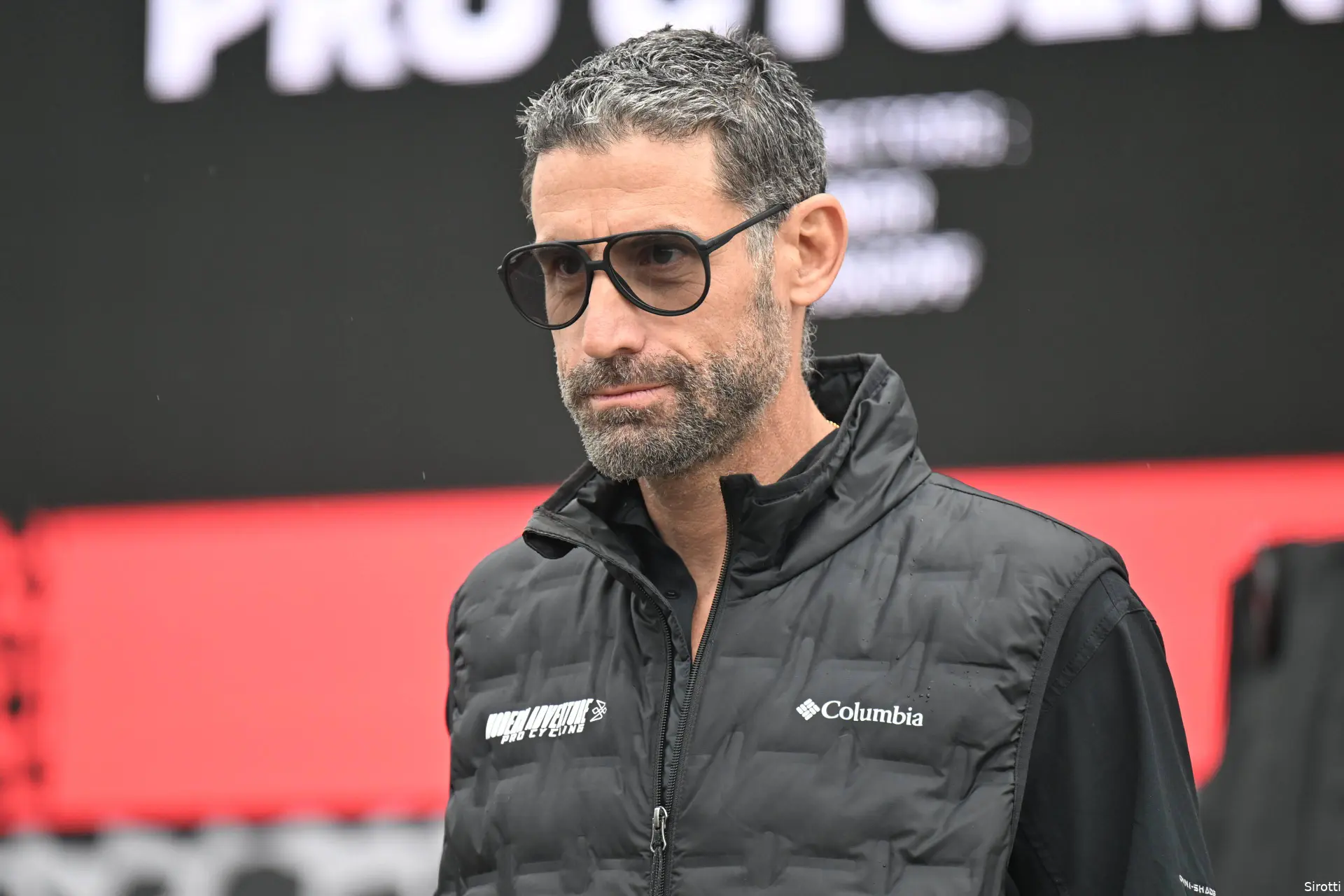
Follow IDL Pro Cycling on Google
Stay up to date with the best cycling news by making us a preferred source on Google.
Follow us on GoogleIt was three hours of complete chaos at Paris-Roubaix. From the moment the riders hit the cobbles, punctures were everywhere. Every major favourite flatted at least once, with Mathieu van der Poel the biggest victim. But how is this possible, given that every team is obsessed with new innovations and selecting the perfect tyres?
ADVERTISEMENT
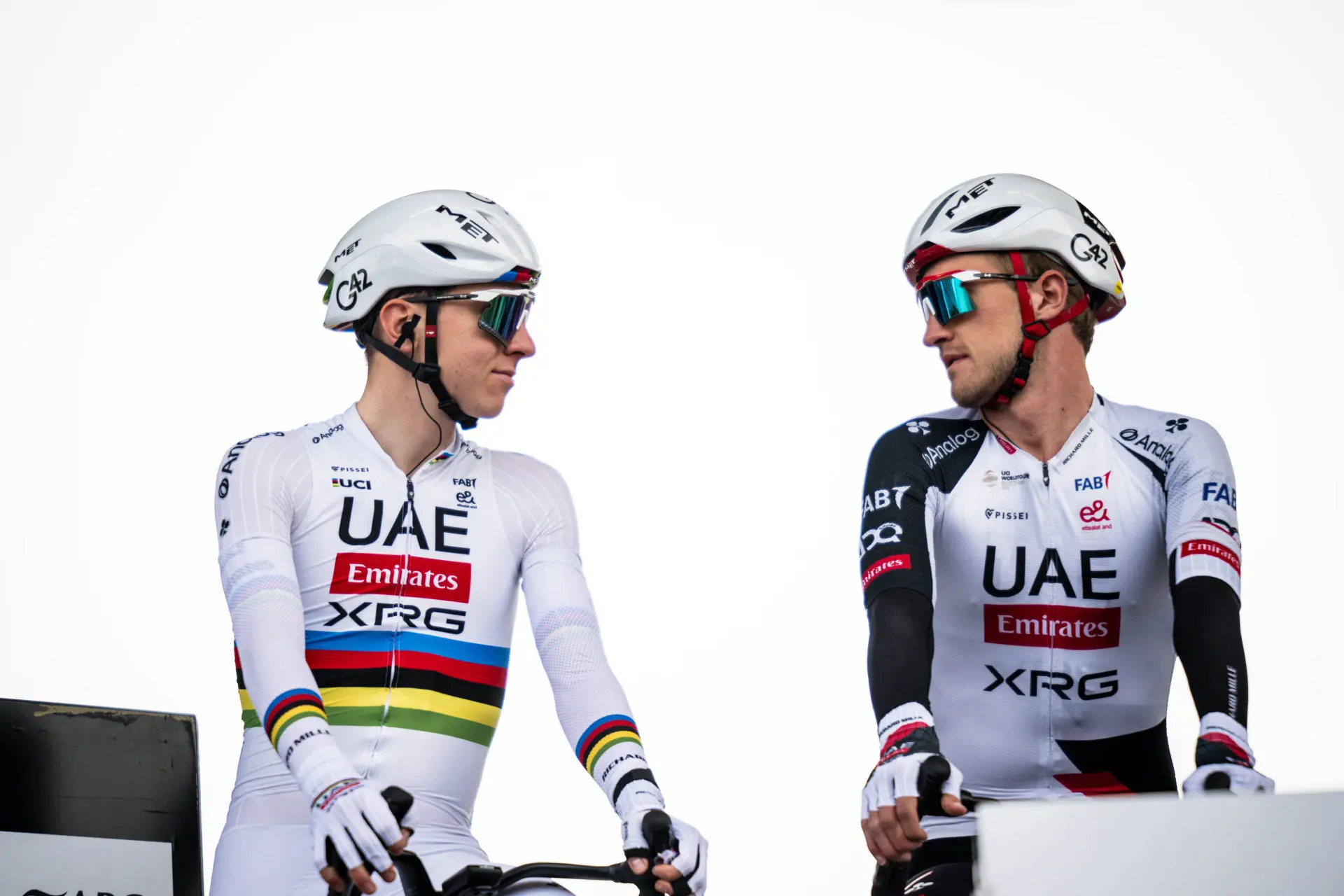
Johan Bruyneel found it striking too. "The equipment has definitely improved," he said on his THEMOVE podcast. "The wheels are better, the tyres are better and wider. Pogačar was even riding 35-millimetre tyres at the front. When George [Hincapie] raced, the maximum was 27 millimetres at Roubaix. But we saw so many punctures today. We keep hearing that the manufacturers are constantly improving."
Visma | Lease a Bike were not allowed to start with the Gravaa tyre pressure system on Sunday — it was banned by the UCI. Wout van Aert won the race regardless. Lidl-Trek did have a clever gadget: they borrowed from BMX and used the so-called Odyssey system. "Lidl-Trek used something special. Their manager said: our riders won't puncture. That wasn't true," Bruyneel laughed.
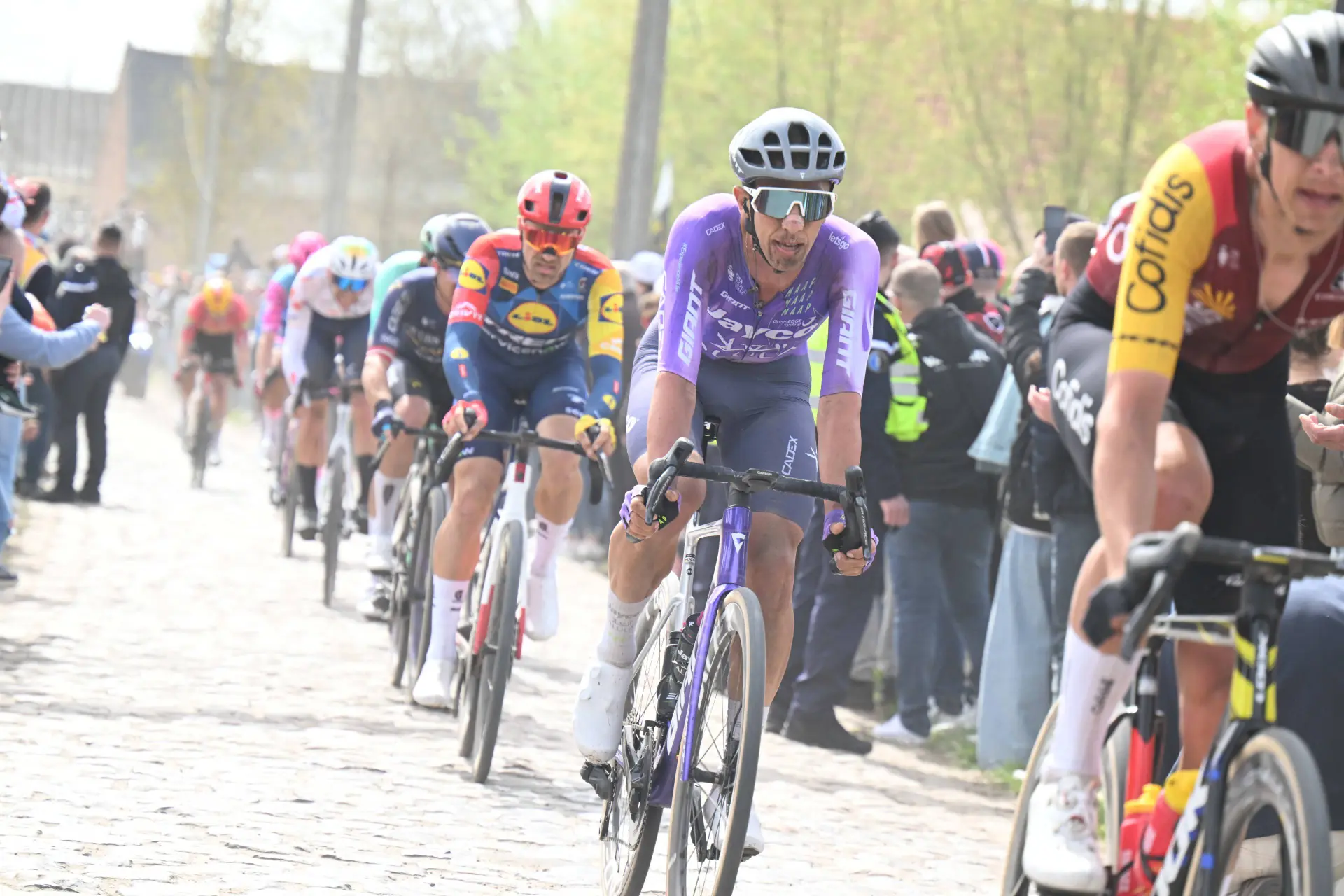
All jokes aside, the number of riders who flatted was certainly remarkable. Mads Pedersen had early problems. Tadej Pogačar followed shortly after. Mathieu van der Poel suffered a double puncture in the Arenberg Forest. Wout van Aert rode with a flat tyre later in the day. "I do think there were many more punctures than normal today. But it was perhaps also more noticeable because all the big names flatted," Bruyneel said.
Continue reading below the photo!

Hincapie explains: 'Then it doesn't matter what tires you have'
But how on earth is it possible that so many top riders would puncture? Teams use special Roubaix-specific tyres, fit ingenious systems to the wheels to prevent flats, and ride wider rubber. Hincapie — who debuted at Roubaix as a team director this year with his Modern Adventure Pro Cycling squad — thinks he knows the answer.
It is not the equipment, according to the American, who finished second himself in 2005 and holds the record with 17 participations.
"The speed is so much higher that they have a much harder time picking the right lines. Then it doesn't matter what tyres you have: if you're going through a corner at 50 kilometres per hour, you can't choose which stone you hit. They're hitting them with far more intensity than they do on the recon rides."
Continue reading below the photo!

Bruyneel defends Alpecin: "Normally Van der Poel would never take Philipsen's bike"
It is a plausible explanation. Not that it helps Van der Poel after his double puncture on the Trouée d'Arenberg. It was a painful sequence: he first took a bike from Jasper Philipsen, but the pedals were different from his own. He had to wait for Tibor Del Grosso, who fitted a new wheel to his leader's bike. Van der Poel then punctured again a minute later. His chance of a fourth victory up in smoke.
Bruyneel understands the panic at Alpecin-Premier Tech. He would, however, have preferred a different approach. "Apparently Philipsen has been riding new prototypes all year, which require different shoes. You can say it wasn't smart, but normally Van der Poel would never take his bike. Van der Poel knew that Del Grosso wasn't far behind him, and should have taken his bike straight away."
But the Belgian also knows: when a teammate hands you a bike, you get on it fast. "From that moment on, his goal was to get out of Arenberg as quickly as possible. On whatever bike." Still, he is also critical of Del Grosso. "I don't know why Del Grosso didn't just give him his bike. Maybe he had the same pedals as Philipsen. If that's the case, it was a big mistake."
Bruyneel clearly not aware at the time of recording the podcast that Del Grosso had also punctured in the Forest, and was giving his teammate his one remaining good wheel.
Read also
IDL-productions
Track World Championships day 2: A golden day for Team GB, Levreysen goes 2 for 2, and Kopecky eliminates the competition
Rumours, speculation and guesswork: 2027 Tour de France route will be revealed live on October 22 in Paris
Vollering adds the Women’s European Championships road race jersey to her rainbow wardrobe
16-day Grand Tours, AI, VAR, drones and more: The UCI's new document has a potentially major impact from 2029 onwards
Quinn Simmons' Strava shows exactly what it takes to compete at the World Championships: ‘I said, Hey guys, anything is possible'
Latest Cycling News
Dutch Red Bull talent realises there is still a lot of work to be done to secure his dream role

Lidl-Trek’s top time-trialist on what Filippo Ganna’s arrival might mean for him: 'The team is ambitious'
Rumours fly about Tour de France 2027, which seems set to miss Montmartre show down
Jakobsen posts his strongest WorldTour result in years: 'It feels like a small victory'
Track World Championships day 2: A golden day for Team GB, Levreysen goes 2 for 2, and Kopecky eliminates the competition
Popular Cycling News
The Tour de France responds to the UCI's radical Grand Tour plan; the Giro and Vuelta are also opting out
Primož Roglič isn't sure whether he'll continue cycling, but his wife Lora has already spoken out.
Evenpoel's 'unflattering' new jersey ridiculed by David Millar and others: 'Just the most absurd display'
Roche adds his voice, speaks out against Picnic PostNL: 'Management isn't cut out for cycling'
Riders who felt afraid and powerless expose 'unworkable' conditions at Picnic PostNL: 'It's like a cult'
Latest Comments
- A self-promoting billboard for the psychologically insecure Evenpoel, who should do as much work on his psyche as he does on his road training. It seems as if he's always looking for and desperately needing acclaim and external validation, and often miserable, as well as argumentative and accusatory unless he wins the race. And even when he does cross the finish line ahead of the pack, he seems to experience relief. more than joy. It's as if he can't win, even when he finishes first, because there's always a trap door, always someone there who will say, 'Not good enough,' or, 'But can you do it again?'rjb15-10-2026
- How does a team actually get a wildcard for a Grand Tour? Is it mainly based on ranking, or do organisers have more choice? I’m still trying to get my head around how the divisions work.andrewf15-10-2026
- The points gap to the top 18 is huge, so Picnic PostNL’s licence situation sounds precarious. Still, the allegations about conditions within the team deserve proper scrutiny, not just transfer-window speculation.cadencekingm15-10-2026
- Pidcock finishing ninth at the Tour as a ProTeam rider is impressive. WorldTour status would give the squad a more settled calendar, though the obligation to start almost every WorldTour race could stretch a team that’s still building.pedalpowe2915-10-2026
- Pinarello-Q5 are making a serious case on the road, and Ciccone is a big signing. But points alone won’t tell the whole story if Picnic PostNL meet the UCI’s financial conditions.michael5415-10-2026
- The article calls the Giro the likely option, but Seixas has said the Tour is his lifetime goal. That seems a bit premature—wouldn’t the team want him back at the Tour after finishing fourth?gearguru3314-10-2026
- Five weeks between the Tour and Worlds sounds like plenty of time to recover and get ready again. I’d love to see him go for both.sprocketspiny14-10-2026
- Why does the Vuelta start just six days after the Worlds? Do riders ever compete in both, or is that turnaround generally too short?davidm14-10-2026
- He’s had an extraordinary season, but there’s no need to rush him into targeting everything at once. A gradual build towards the Tour could pay off in the long run.lindae14-10-2026
- That Worlds course sounds tailor-made for Seixas. Twenty ascents of Domancy is savage, and racing at home could make it a huge day for him.andrewf14-10-2026
Loading