Follow IDL Pro Cycling on Google
Stay up to date with the best cycling news by making us a preferred source on Google.
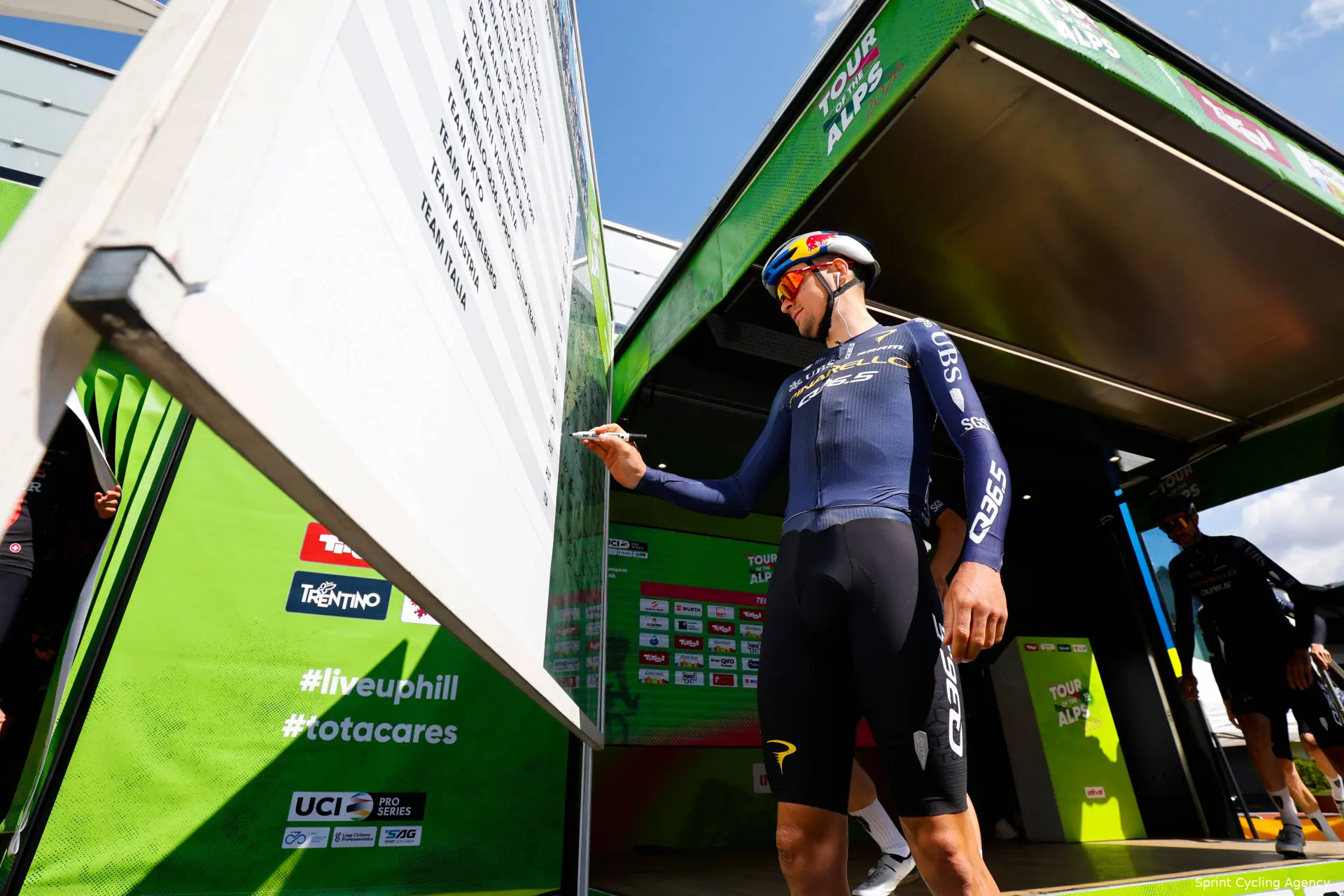
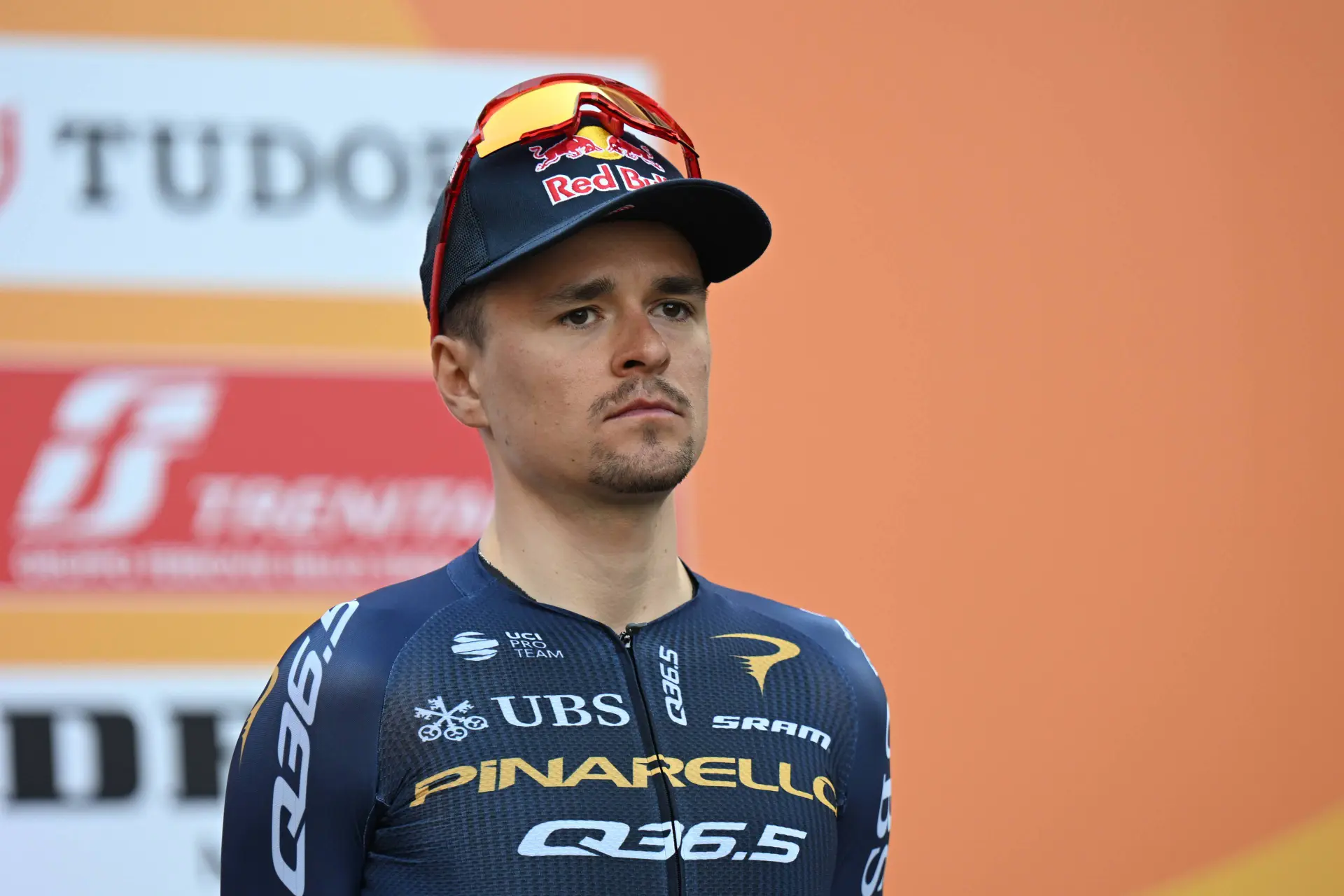
Follow us on GoogleTom Pidcock is not built to simply ride along, get dropped and lose. But at his comeback race in the Tour of the Alps, that is exactly what the Pinarello-Q36.5 rider is going to have to learn to accept. Despite an encouraging result on stage one, it is clear that the heavy crash in Catalonia has robbed him of the superb early spring form he had worked so hard to build up. His team are doing their best to keep pushing him.
ADVERTISEMENT
That Pidcock was even on the start line on Monday could already be called a medical miracle. After his fall into a ravine in the Volta a Catalunya, the all-rounder looked set for a lengthy absence — yet he was back on the bike in just three weeks. On Sunday, at the team presentation before the race, he was still quietly talking up his own chances to the press. Monday changed all that.
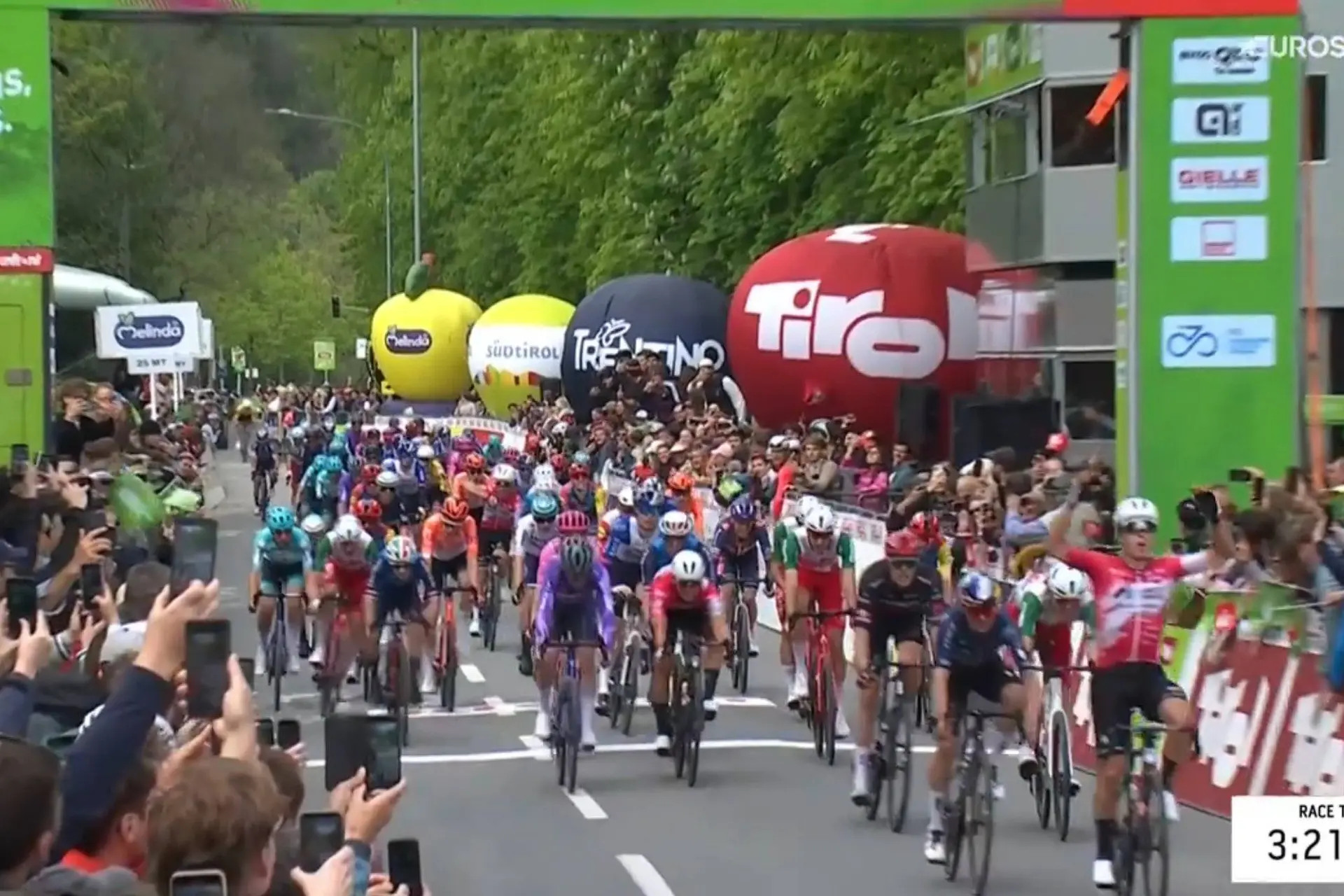
Despite finishing second in what became a bunch sprint, Pidcock described it as 'the worst day on the bike of my life'. Directeur sportif Gabriele Missaglia was able to laugh about it when speaking to IDL Pro Cycling at the start of stage 2 on Tuesday morning. "It was a good result — better than I expected. Tom is simply not in form at the moment, he hasn't ridden for nearly two weeks."
"During the stage he was suffering a great deal. Over the radio he told us several times that he wasn't feeling okay. But we pushed him a little to keep his morale up," the Italian said. "I know Tom — when the finish line comes into view, it's like a red rag to a bull. Something changes in his head, and that was the case again on Monday. Second place was not bad. We were happy with that."
Continue reading below the photo
Forced rest taking its toll on Pidcock
Before the start of stage two, Missaglia emphasised that Pidcock had not experienced any physical pain on the first day. But the impact of the Catalonia crash — and particularly the enforced period of inactivity that followed — is clearly significant. "I know that Tom has never in his life been off the bike for more than ten days, so his engine has had to reset somewhat."
Coach Kurt Bogaerts echoed that after the second stage, in which Pidcock finished 76th, nearly seven minutes down, on the first mountain stage of the week. "I've already told Tom that even in the off-season he's working virtually every day. He never sits still. I don't think he's ever had a period of eleven days doing nothing in his career until now, to recover from the injury to his knee."
That Pidcock still arrived at the Tour of the Alps harbouring quiet ambitions is something Bogaerts understands. "He was in superb form in Catalonia, and that was his last race memory. Then he disappeared and didn't know where he stood — but the reality check came quickly. He realised that we race at an extremely high level and that what he's going through is completely normal in this situation."
Continue reading below the photo

This is what Pidcock's knee looked like three weeks ago, a day after his fall in Catalonia.
Brit needed time to accept his current form
It took Pidcock a little longer to come to terms with where he is right now. According to Bogaerts, the reality only fully landed after the first stage. "It's difficult to accept, but by Tuesday it already felt better mentally. Tom has a clearer picture of the situation now and understands why we're here. We just need to race five days, make progress and climb."
After a spring of one-day races and a punchy Ruta del Sol, a week of proper climbing is exactly what Pidcock needs. "That's also what we missed in Catalonia, because of the crash. So it's good that he's here. A week ago, I would have signed for the scenario where he could start here. It's very good that he still has some race days before he goes into a rest and training block."
"The first goal — and it remains the only goal — is to suffer through every stage of this race and come out the other end in better shape," Missaglia added. "We talk to him a lot, but he's obviously not a normal rider. He's a leader and a true champion — he starts every race to win, not to train. Fortunately, we are realistic enough."
Continue reading below the photo
Liège-Bastogne-Liège still on the cards
A starring role at Liège-Bastogne-Liège — the Monument he spent the entire spring building towards and where he still quietly hopes to perform — looks a stretch at this point. But Bogaerts stressed on Tuesday that form can return quickly. "He needs to push his limits every day and keep pressing, so that he gets a little further with each stage."
"We can assess the situation day by day, with Chris Harper, who is racing with the best despite a collarbone fracture, as an example. That's motivating for Tom too," said the Belgian coach, who is glad his rider is still accumulating racing days at the Tour of the Alps for more than just form reasons.
There is a scheduling consideration too. "He still needs a certain number of racing days, and after this there will be a period of training before the Tour de Suisse and the Tour de France. That's why this is so important — without it, the gap from Catalonia to Switzerland would have been very long. Far from ideal."
Bram van der PloegEditor-in-chief
Bram van der Ploeg (35) is the proud founder of In de Leiderstrui, IDL Pro Cycling's parent site, launched in 2018. Finally, he could create stories about the sport he had followed since childhood. He is the editor-in-chief on paper, but prefers to be with his recorder next to a rider, a team bus, or in the mud at a cyclocross race. Every year, from February to the end of May, Bram follows the entire Italian cycling season, from the Trofeo Laigueglia to the Giro d'Italia, with the grand finale in October in Lombardy. During that time, he lives in Tuscany, where he has since come to call Italy his 'home'.
IDL-productions
Team GB dominate, China on the rise, Lavreysen the best ever? Five takeaways from the 2026 Track World Championships
Track World Championships day 2: A golden day for Team GB, Levreysen goes 2 for 2, and Kopecky eliminates the competition
Rumours, speculation and guesswork: 2027 Tour de France route will be revealed live on October 22 in Paris
Vollering adds the Women’s European Championships road race jersey to her rainbow wardrobe
16-day Grand Tours, AI, VAR, drones and more: The UCI's new document has a potentially major impact from 2029 onwards
Latest Cycling News
Lipowitz looks for a change in 2027 says Red Bull's Denk: 'That’s exactly what Florian excels at'
Michael Valgren leaves EF and joins Netcompany INEOS: 'I’ve come full circle'
Paula Blasi joins Movistar in emotional move: 'It makes me even prouder to wear the jersey'
Tadej Pogačar to skip Paris-Roubaix in 2027: 'The easier it becomes to stay away from racing'
Transfer rumours fly as Roglič's retirement deadline looms: New potential team enters conversation
Popular Cycling News
Cycling transfers 2026/2027 | The road season has ended, but the transfer market is in full swing
Marcel Kittel, Wout van Aert, and Marianne Vos partied at a cycling festival in Ibiza: 'To avoid a major hangover'
Tadej Pogačar to skip Paris-Roubaix in 2027: 'The easier it becomes to stay away from racing'
Greg LeMond on Pogačar, Seixas and living with cancer: 'He is the next Hinault'
Wiggins Jr. gets his call up to the Jayco AlUla WorldTour team, alongside 3 other emerging talents
Latest Comments
- TotalEnergies’ sponsor situation makes this whole race for an invitation feel a bit academic unless they can secure funding. Hope they get it sorted—I’d love to see more teams get a crack at the Tour.cadencekingm21-10-2026
- Why do some teams get automatic invitations while others need a wildcard? Is it mainly based on their ranking from last year?robert6521-10-2026
- The paperwork deadline matters, but it’s odd that the UCI hasn’t explained what happens if a licence is vacated. Surely teams should know the process before the season is underway?velodromevirtuoso121-10-2026
- A guaranteed Tour start for the Rockets would be massive. Groenewegen has already shown he can deliver at WorldTour level, and the team looked well up to it at the Giro.gearguru3321-10-2026
- Pinarello-Q5 have made a strong case on the road, but a mid-cycle promotion would be messy if the UCI’s rules for filling a vacant licence aren’t clear. The riders and staff need certainty soon.jennifer1921-10-2026
- - The bike may be quick, but the article seems a bit too ready to credit the equipment for the result. Remco’s the one producing those watts—though I’ll admit, two minutes is a pretty convincing test ride.jennifer1918-10-2026
- - I’m still learning how time trials work: if Evenepoel caught Jay Vine, does that mean Vine started earlier, and do riders set off at fixed intervals?tourdeforce918-10-2026
- - A flat Tour TT on these roads would be brilliant viewing. Wide, fast courses really let the specialists show what they can do.davidm18-10-2026
- - Fourteen wins in a season is some going. He sounded focused on his own effort rather than the riders ahead, which is exactly the mindset you want in a race against the clock.michael5418-10-2026
- - Catching Vine and putting over two minutes into him is an enormous statement. That new Specialized clearly suits Remco—keen to see how it performs over a longer Tour time trial.raceready718-10-2026
Loading