Van Vleuten on the rise of women’s cycling: “I earned 800 euros a month and paid 200 euros in rent”
Cycling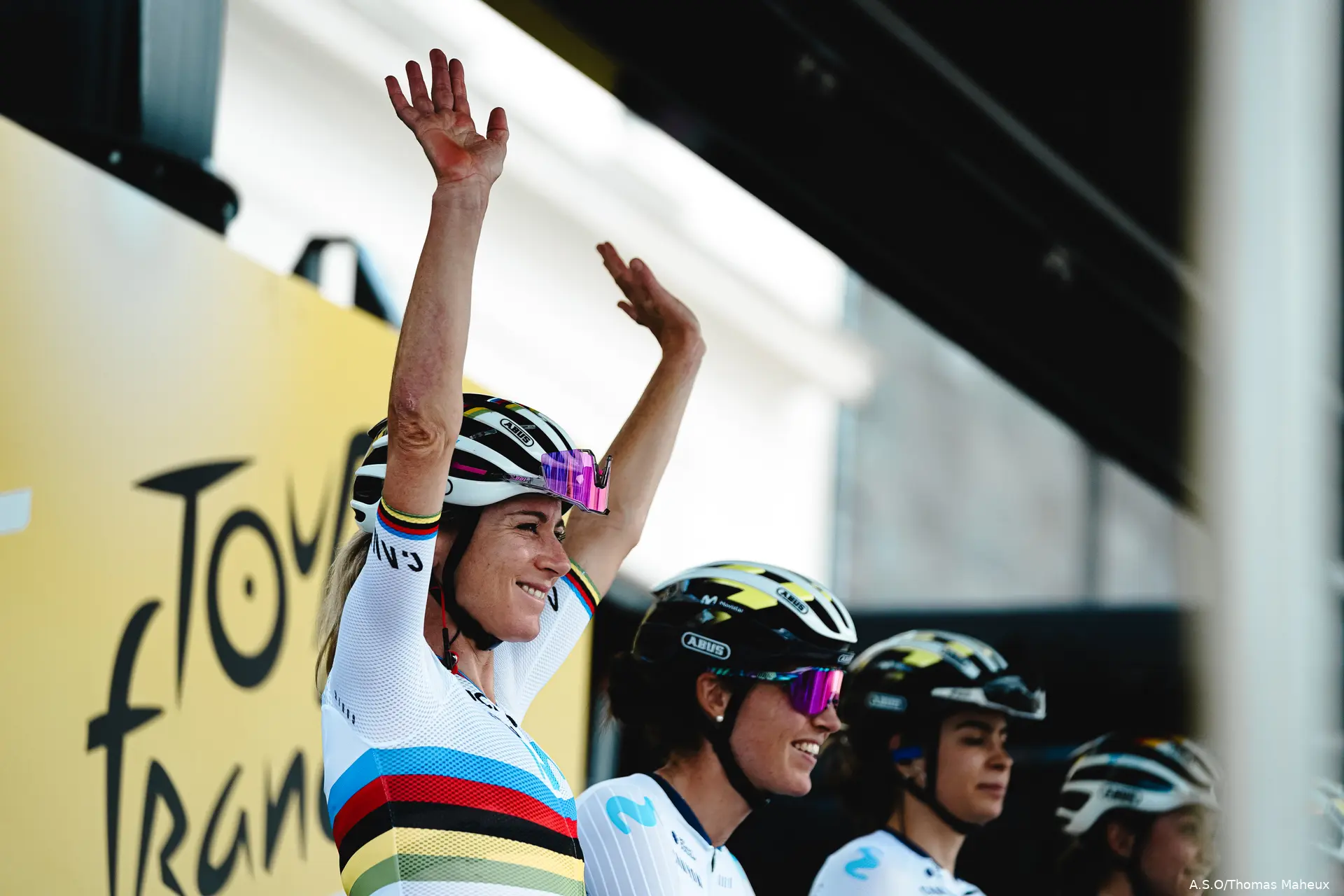
Follow IDL Pro Cycling on Google
Stay up to date with the best cycling news by making us a preferred source on Google.
Follow us on GoogleThis Sunday, the Tour of Flanders will once again be one of the standout races on the calendar. After the men’s finish, the women will line up for their own edition. It is now a race many fans eagerly look forward to, but the riders know it was not always like that. Annemiek van Vleuten saw the development of women’s cycling from the front row. When she started out, the gap to the men’s side of the sport was enormous.
ADVERTISEMENT
The Dutchwoman signed her first contract with a UCI team in 2008, but there was little sign of a truly professional sport at the time. “When I started, it was actually an amateur sport,” Van Vleuten said on the Domestique Hotseat podcast. “I really grew together with the sport.” She explained that hardly anyone was a full-time rider back then, adding that in her second year she was already racing the Tour of Flanders, something that would now be almost impossible in a far more developed peloton.
From 2011 onward, Van Vleuten could begin to think about making a living from cycling, although life was still far from glamorous. “I earned 800 euros with cycling, I paid 200 euros rent, and I made the decision to go full time,” she said. “I still lived a little bit cheaply as a student, but that’s how I could start and follow my dream.” At that point, only five or six riders in the women’s peloton were earning a proper salary.
That same year, riding for Nederland Bloeit, she won the Tour of Flanders for the first time. The team, which also featured Marianne Vos and Pauline Ferrand-Prévot, was later transformed into Rabobank Women Team. Van Vleuten said that move was decisive for her own career. Her first real full-time salary arrived in 2012, and she admitted that timing and circumstance played a role. With Rabobank involved, conditions improved to the point where she could earn more from cycling than she could with her university degree.
Continue reading below the photo!

TV coverage changed everything in women’s cycling: “It gave us so much more attention”
For Van Vleuten, stepping into the sport full time was a major moment personally, but women’s cycling as a whole still lagged a long way behind the men’s side. She recalled that from 2012 until after the Rio Olympic Games in 2016, the progress of the sport stalled somewhat. Not many riders had real salaries, and television coverage was still missing. That, in her view, was the key issue, because without broadcasts there was little broader interest in the women’s races. “I really felt in those years that they were not interested in women’s cycling,” she said.
That began to change when more races started appearing on television. The conditions were still far from ideal, with women’s races often scheduled at very early times in the morning, but simply being shown live made a major difference. Van Vleuten pointed to that media exposure as one of the biggest breakthroughs in the sport’s growth. “We were still racing at crazy times, like nine o’clock in the morning, but we were on TV,” she said. “That gave us so much more attention.”
Continue reading below the photo!

Longer Grand Tours as the next step? “Only if it really makes the racing more interesting”
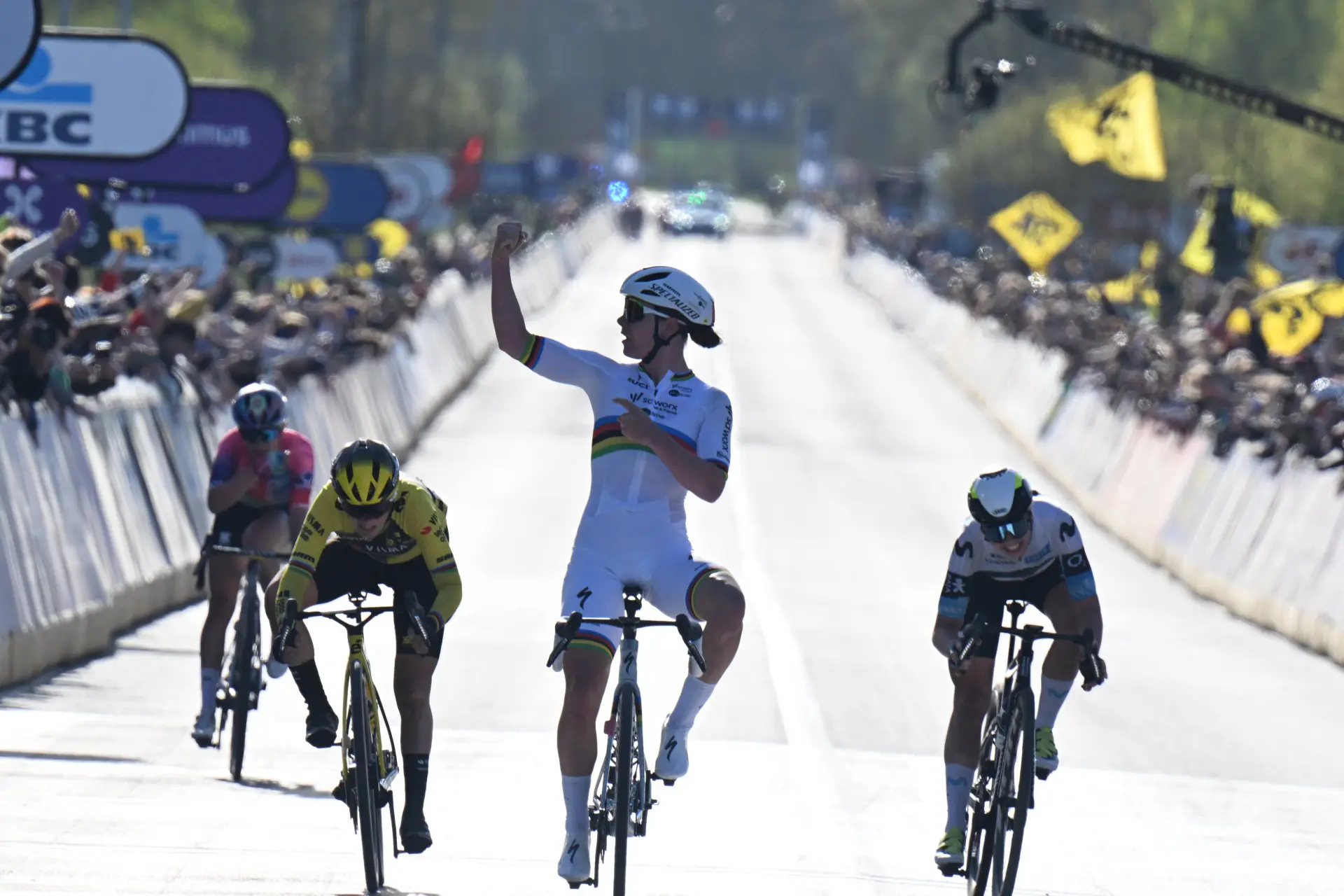
Van Vleuten believes women’s cycling today is almost impossible to compare with the version she entered roughly 15 years ago. The differences can be seen in visibility, salaries, race calendars, and prestige. When she won the Tour of Flanders in 2021, her winner’s cheque was 1,365 euros. Prize money for that race has since been brought into line with the men’s version, at around 20,000 euros. The women’s calendar has also expanded significantly, while stage races have become longer and more prominent. The Tour de France Femmes has arrived, and there are now several Women’s WorldTour races with five stages or more.
At the same time, Van Vleuten feels there is still room for the women’s Grand Tours to grow further. She would like to see those races become genuinely longer so they stand apart more clearly from other week-long stage races on the calendar. In her view, that would help give events such as the Vuelta a España Femenina a more distinct identity.
But Van Vleuten also stressed that more days do not automatically mean better racing. The 43-year-old former world champion argued that extending a race should only happen if it genuinely improves the sporting spectacle. She questioned whether a longer Tour de France Femmes would necessarily be more exciting, suggesting the answer depends on whether the extra days create a different kind of race and perhaps even a different winner. In other words, growth should be meaningful, not just symbolic.
IDL-productions
Vollering adds the Women’s European Championships road race jersey to her rainbow wardrobe
16-day Grand Tours, AI, VAR, drones and more: The UCI's new document has a potentially major impact from 2029 onwards
Quinn Simmons' Strava shows exactly what it takes to compete at the World Championships: ‘I said, Hey guys, anything is possible'
Despite losing the World Championships, Del Toro and Seixas rank high mentally and physically on the Pogačar scale
Van der Poel loves it, but a lack of race radios gave McNulty and USA the chaos it needed to slip away
Latest Cycling News
Just 0.00028 seconds decided it; why Ciccone seemed to ride a child's bike in the European Championships photo finish
2026 European Time Trial Championships start list | Demi Vollering is going for the double, Remco Evenepoel is not
Noa Isidore takes the win at Coppa Bernocch: Decathlon's second win in 2 days, Ganna among crash victims
Ciccone casts doubt on European Championship photo finish with Remco Evenepoel: 'I'm asking for something very simple'
Italian support car wasn't impressed by moody Evenepoel at European Championships: 'He can get as angry as he wants'
Popular Cycling News
Photo finish decides magnificent European Championship, full of crashes, tactical ingenuity and a crucial bike throw
Tom Pidcock again frustrated by Matteo Jorgenson's race tactics at the Giro dell'Emilia
The peloton bids an incredible farewell to Nairo Quintana—except for one rider
2026 European Cycling Championships Elite Men Preview | Evenepoel hopes to do better one week after the World Championships
Longo Borghini furious after ‘rookie mistakes’ by Niewiadoma and herself cost them medals at European Championships
Latest Comments
- - Wait, what does “qualified in age group 35–39” mean—does that race separately from the elites at Worlds, or is it all together? And do you need a UCI license for that? Gracias por la info, cheers.andrewf05-10-2026
- - While others are relaxing on their boats… he’s grinding gravel. Legend. Go VB77!michael5405-10-2026
- - That 56 km first leg looks like a shakeout ride. Does he plan to split it over 3–4 days? Heat/humidity in SEA is brutal—electrolytes will be key.sprocketspiny05-10-2026
- - “Undertakeke” made me laugh but edit pls. Also, is the course in Nannup more climby or flat farm roads? Would’ve suited Valtteri’s diesel engine, I reckon.julien05-10-2026
- - Tiffany Cromwell shoutout is deserved. They recon together and you can see her influence in his pacing and position on dirt. Great duo.pedalpowe2905-10-2026
- - How long does a 350 km gravel ride take between GPs? Is he riding solo with a support car, or fully self-supported? Curious about recovery before FPjennifer1905-10-2026
- - Small correction: he raced Gravel Worlds in 2023, right? Article says 2024 but we’re still before that event? Timing feels a bit off. Otherwise good read.raceready705-10-2026
- - Love this crossover. Fifth in Hlinsko to qualy for Worlds is no joke—those UCI gravel fields are stacked. Shame the Singapore GP clash means he can’t start in Nannup, but riding KL to Singapore on a gravel rig between races is peak Bottas.cadencekingm05-10-2026
- - Isaac was immense pero al final el arcoíris es de Brandon. Qué carrera, emoción total. Bravo Mexico y USA!patriciaw05-10-2026
- - Not buying the “Del Toro was strongest” line. If you’re strongest, you don’t let it come to a sprint you can’t win. Feels like Matxin’s spinning it after the fact.bikebuffj05-10-2026
Loading