Visma | Lease a Bike put Van Aert and Vingegaard on Cervélo ‘aero monster’ — even for the hardest climbing races
Cycling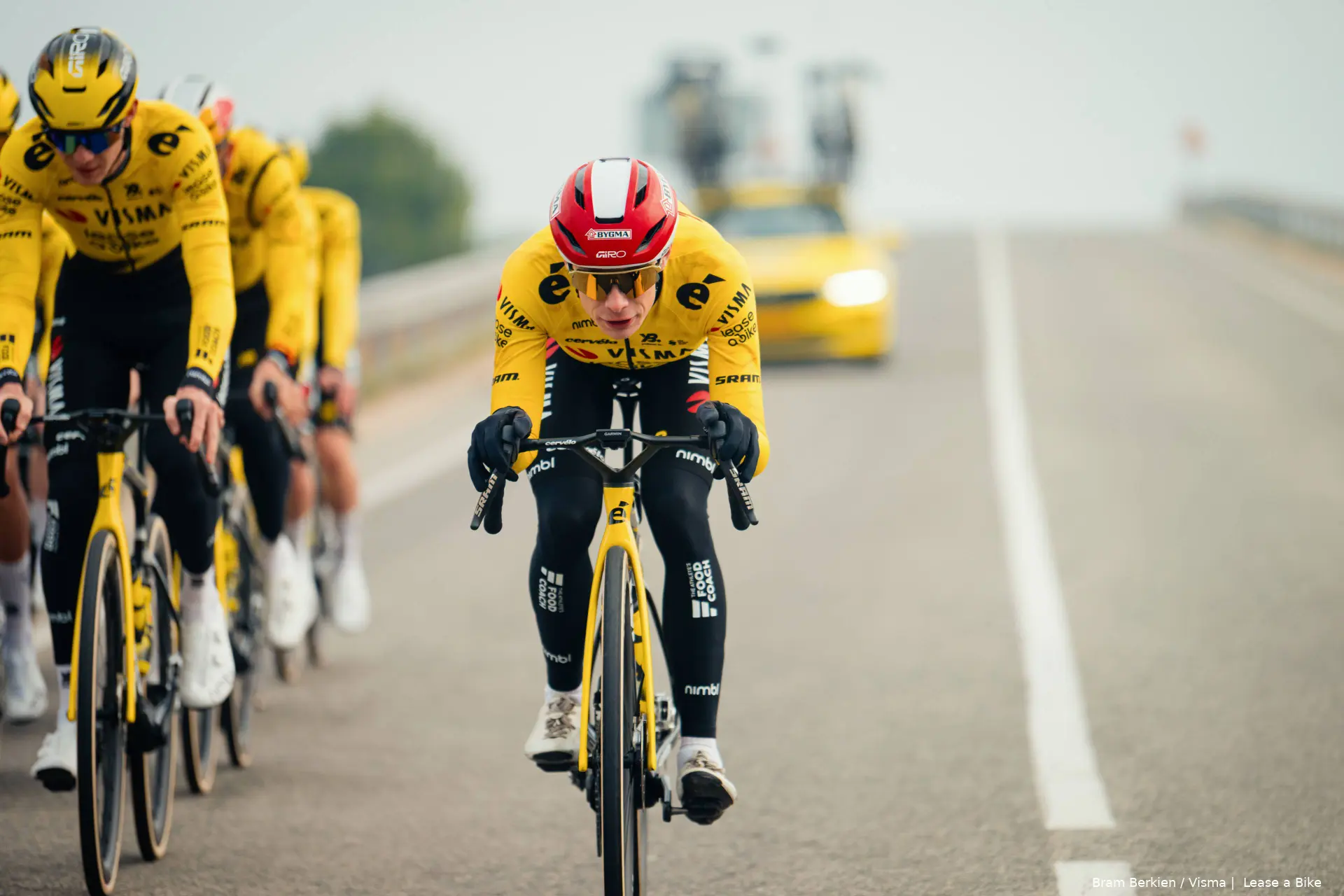
Follow IDL Pro Cycling on Google
Stay up to date with the best cycling news by making us a preferred source on Google.
Follow us on GoogleDo you remember the sprint in stage 11 of the Tour de France in 2024? The uphill sprint-à-deux between Jonas Vingegaard and Tadej Pogačar, surprisingly won by the Dane from Visma | Lease a Bike. Those were different times: where Vingegaard still made the difference that day on Cervélo’s lightweight climbing bike, he will normally use the so-called R5 barely — if at all — at Paris–Nice.
ADVERTISEMENT
In an extensive chat of IDLProCycling.com with Cervélo head engineer Scotty Roy, one message stood out above everything else: in 2026, the shift from weight to aerodynamics is a road almost every team is travelling at full speed — further than many would have expected a few years ago.
Cervélo supply Visma | Lease a Bike with multiple bikes: the R5 climbing bike, the S5 aero bike, the P5 time trial bike — and Wout van Aert also rides an R5-CX for cyclocross. Add the more all-round Soloist and, in theory, riders can choose a different tool for every race.
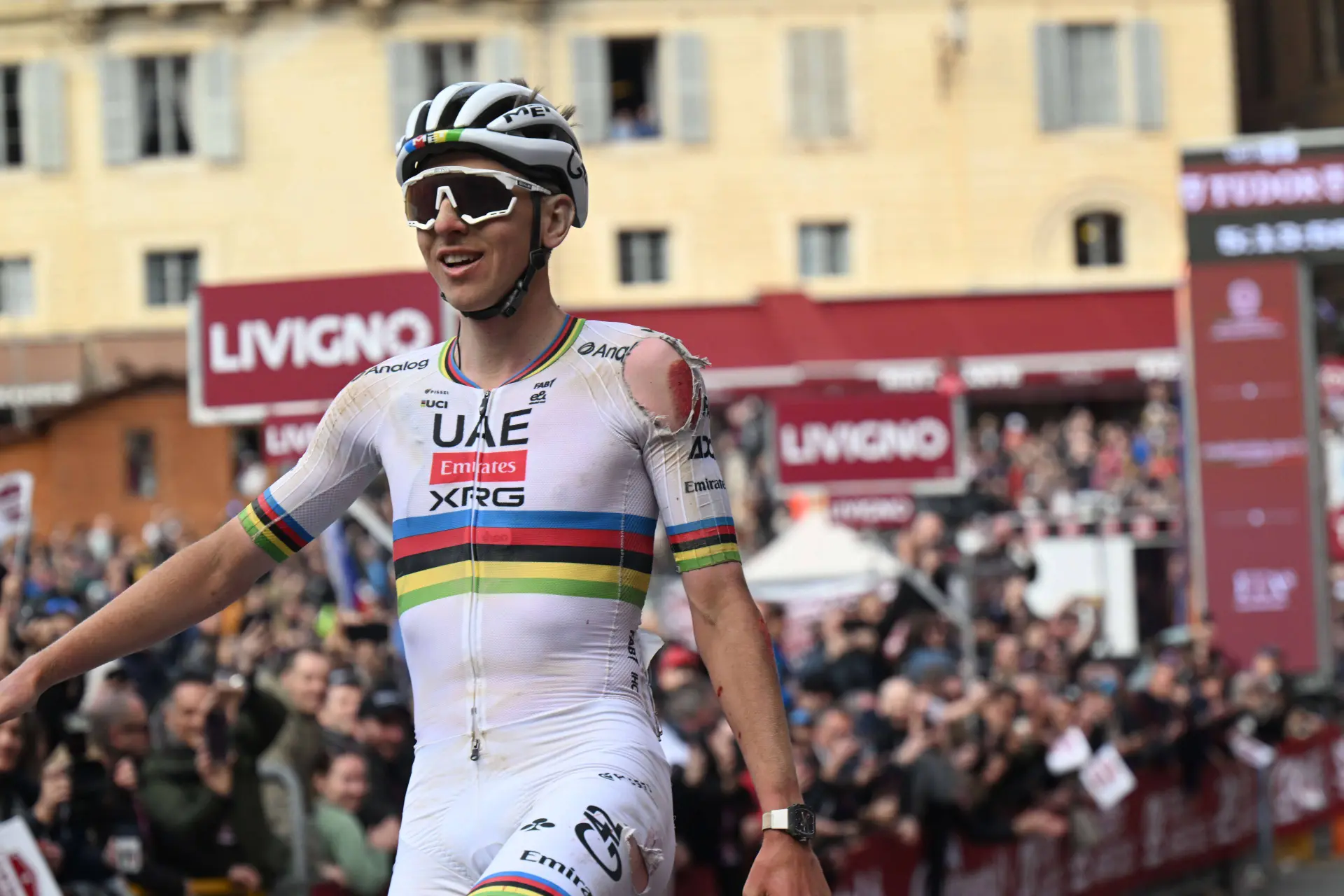
But in 2026, teams are reaching for the aero option more than ever. Visma and Cervélo are not alone. UAE Team Emirates-XRG introduced the Colnago Y1Rs in 2025 and, even though it was initially presented as an aero bike mainly for Milan–San Remo and less severe climbs, Pogačar was seen riding it virtually all the time.
Continue reading below the photo

Pogacar rode almost all of his races in 2025 on Colnago's new aero bike.
Cervélo see Visma | Lease a Bike using the R5 climbing bike less and less
Pogačar seemingly managed to put down his power so effectively in an aerodynamic position that he did not need a lighter climbing bike. At Visma | Lease a Bike, the same dynamic is playing out. Vingegaard won a Tour stage on the R5 in 2024, but two years later he might not even have chosen that bike. “The S5 is the star of the show,” Roy confirms.
“We tried in 2025 to bring the R5’s position closer to the S5,” the American explains. “The geometry of the two bikes was very different, with the S5 demanding a much more aggressive position. The team asked us to do that with the R5 as well. That way, both bikes feel more similar, so riders can feel at home on either bike more quickly.”
Roy emphasises that the need for a more aerodynamic climbing bike was also necessary if Cervélo wanted to stop the R5 from fading out of the picture. “The R5 is used less and less compared to ten years ago. These days, the advantage of the R5 is really in the very hard mountain finishes — for example in the second week of a Grand Tour.”
Continue reading below the photo

Vingegaard won a Tour stage in an uphill sprint against Pogacar in 2024, both men then on climbing bikes.
Vingegaard ended up on Cervélo’s aero bike after heavy crash
And yet, in 2025 we saw Vingegaard win stage 20 of the Vuelta a España — finishing on the brutally steep Bola del Mundo — on the S5 aero bike. That stood out, because Roy had also argued strongly in favour of the climbing bike in those scenarios: “In those conditions, the R5 responds so well and so directly. If you don’t have the R5, you don’t win those finishes.”
The fact Vingegaard barely used the R5 in 2025 was not just a luxury choice. Roy points back to Vingegaard’s heavy crash in the Tour of the Basque Country in 2024. “After that crash, with Jonas we had the issue that something wasn’t right in his position on the R5,” Roy says. “It didn’t work. Even though the positioning is almost identical, Jonas would come back from an R5 training ride with back pain.”
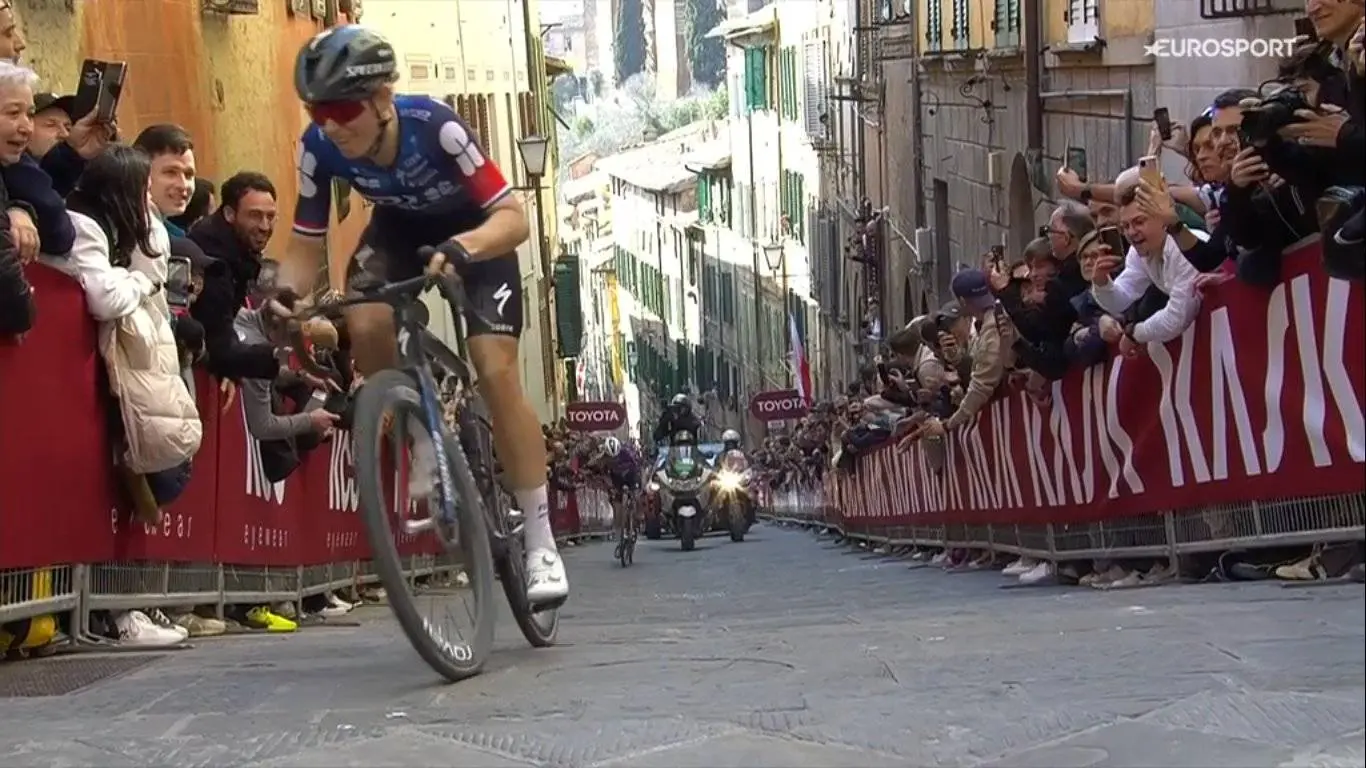
“It didn’t work after the crash like it did before, so we’re working on that. We don’t have the answer yet,” Roy adds. In 2026, it no longer seems like such a major problem. Pogačar became world and European champion on his aero bike, Vingegaard won the Vuelta on the S5 — and Van Aert won the brutally hard climbing stage to Siena at the Giro d’Italia in 2025 on the S5 aero bike as well.
Continue reading below the photo

Van Aert won stage 9 in the 2025 Giro d'Italia on the Cervélo S5 aero bike.
Cervélo R5 climbing bike no longer needed for hard climbing classics?
So don’t be surprised if Van Aert lines up on Saturday 7 March on the S5 aero bike and thunders across the Tuscan gravel roads at Strade Bianche. Roy finds it a fascinating development, but one that is still mainly limited to the professional peloton. “What’s important to say: what Jonas, Pogačar and Wout can push on an aero bike is not what you and I can push,” he stresses.
“For us, it wouldn’t make sense to sit on an aero bike. But if Pogačar rides a 10% average climb at 25, 26 or 27 kilometres per hour, then it does make sense. We just don’t climb that fast. We’ve also tested our bikes for years at 48 kilometres per hour. The faster you go, the more benefit you get from the aero bike.”
Those rising speeds in the peloton are literally changing which bikes make sense. A rider who is more aerodynamic can be faster on a slightly heavier bike than someone in a less aero position on a lighter one. “But the slower you are, the less advantage you get from the S5,” Roy concludes. “For the WorldTour, the climbing bike has become a specialist bike — but for a recreational rider, the R5 is still the perfect choice.”
Continue reading below the photo

Visma | Lease a Bike on Cervélo's aero bike.
Can Cervélo make the R5 both aerodynamic and ultra-light?
Cervélo’s focus has shifted towards making the S5 easier to ride. “The aero bike rides much more easily now and isn’t as stiff as it used to be,” Roy explains. “We already had that knowledge in 2017 and 2018, but only in recent years has the science in the sport caught up, so we can get the best out of athletes with the equipment. The bikes were always aero, but now teams understand how to actually be fast with them — to the point the UCI even want to slow the peloton down.”
More and more riders are now reaching the tipping point where aero beats light weight, helped by modern technology and data. That raises the bar for manufacturers — and Roy believes it should. “A bike can lose a race, but it can never win one,” he says. “For me, there can never be anything wrong with the bike. There are no excuses for a bike to fail at WorldTour level when it really matters.”
“We have the knowledge and materials to make a safe time trial bike that weighs four kilos. The bike has to be ultra-reliable all year long,” Roy continues, before turning to Cervélo’s P5 time trial bike, where the brand can go even further on aerodynamics.
And, Roy adds proudly: “We wanted the P5 to ride like the S5 — and we succeeded. That’s why it performs so well on technical courses. Our challenge is to make the time trial bikes as good as Colnago and Specialized, without it feeling worse.”
Bram van der PloegEditor-in-chief
Bram van der Ploeg (35) is the proud founder of In de Leiderstrui, IDL Pro Cycling's parent site, launched in 2018. Finally, he could create stories about the sport he had followed since childhood. He is the editor-in-chief on paper, but prefers to be with his recorder next to a rider, a team bus, or in the mud at a cyclocross race. Every year, from February to the end of May, Bram follows the entire Italian cycling season, from the Trofeo Laigueglia to the Giro d'Italia, with the grand finale in October in Lombardy. During that time, he lives in Tuscany, where he has since come to call Italy his 'home'.
IDL-productions
Team GB dominate, China on the rise, Lavreysen the best ever? Five takeaways from the 2026 Track World Championships
Track World Championships day 2: A golden day for Team GB, Levreysen goes 2 for 2, and Kopecky eliminates the competition
Rumours, speculation and guesswork: 2027 Tour de France route will be revealed live on October 22 in Paris
Vollering adds the Women’s European Championships road race jersey to her rainbow wardrobe
16-day Grand Tours, AI, VAR, drones and more: The UCI's new document has a potentially major impact from 2029 onwards
Latest Cycling News
Paula Blasi joins Movistar in emotional move: 'It makes me even prouder to wear the jersey'
Michael Valgren leaves EF and joins Netcompany INEOS: 'I’ve come full circle'
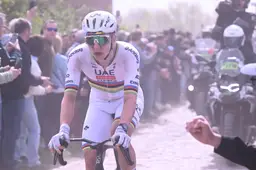
Tadej Pogačar to skip Paris-Roubaix in 2027: 'The easier it becomes to stay away from racing'
Transfer rumours fly as Roglič's retirement deadline looms: New potential team enters conversation
Here's what we know, and here are the rumours about the 2027 Tour de France route
Popular Cycling News
Cycling transfers 2026/2027 | The road season has ended, but the transfer market is in full swing

Marcel Kittel, Wout van Aert, and Marianne Vos partied at a cycling festival in Ibiza: 'To avoid a major hangover'
Greg LeMond on Pogačar, Seixas and living with cancer: 'He is the next Hinault'
Wiggins Jr. gets his call up to the Jayco AlUla WorldTour team, alongside 3 other emerging talents
Tom Pidcock pays special tribute to retiring brother Joey, but isn't totally happy: 'We had to settle for second place'
Latest Comments
- TotalEnergies’ sponsor situation makes this whole race for an invitation feel a bit academic unless they can secure funding. Hope they get it sorted—I’d love to see more teams get a crack at the Tour.cadencekingm21-10-2026
- Why do some teams get automatic invitations while others need a wildcard? Is it mainly based on their ranking from last year?robert6521-10-2026
- The paperwork deadline matters, but it’s odd that the UCI hasn’t explained what happens if a licence is vacated. Surely teams should know the process before the season is underway?velodromevirtuoso121-10-2026
- A guaranteed Tour start for the Rockets would be massive. Groenewegen has already shown he can deliver at WorldTour level, and the team looked well up to it at the Giro.gearguru3321-10-2026
- Pinarello-Q5 have made a strong case on the road, but a mid-cycle promotion would be messy if the UCI’s rules for filling a vacant licence aren’t clear. The riders and staff need certainty soon.jennifer1921-10-2026
- - The bike may be quick, but the article seems a bit too ready to credit the equipment for the result. Remco’s the one producing those watts—though I’ll admit, two minutes is a pretty convincing test ride.jennifer1918-10-2026
- - I’m still learning how time trials work: if Evenepoel caught Jay Vine, does that mean Vine started earlier, and do riders set off at fixed intervals?tourdeforce918-10-2026
- - A flat Tour TT on these roads would be brilliant viewing. Wide, fast courses really let the specialists show what they can do.davidm18-10-2026
- - Fourteen wins in a season is some going. He sounded focused on his own effort rather than the riders ahead, which is exactly the mindset you want in a race against the clock.michael5418-10-2026
- - Catching Vine and putting over two minutes into him is an enormous statement. That new Specialized clearly suits Remco—keen to see how it performs over a longer Tour time trial.raceready718-10-2026
Loading