Follow IDL Pro Cycling on Google
Stay up to date with the best cycling news by making us a preferred source on Google.
Follow us on GoogleThe UCI has weighed in on the the flood of opinions on doping tests at the Tour de France in an official press release. These tests were—as became apparent around the time Jonas Vingegaard crashed out of the race—also administered at night during this particular Tour. According to the international cycling federation, there is nothing wrong with that.
ADVERTISEMENT
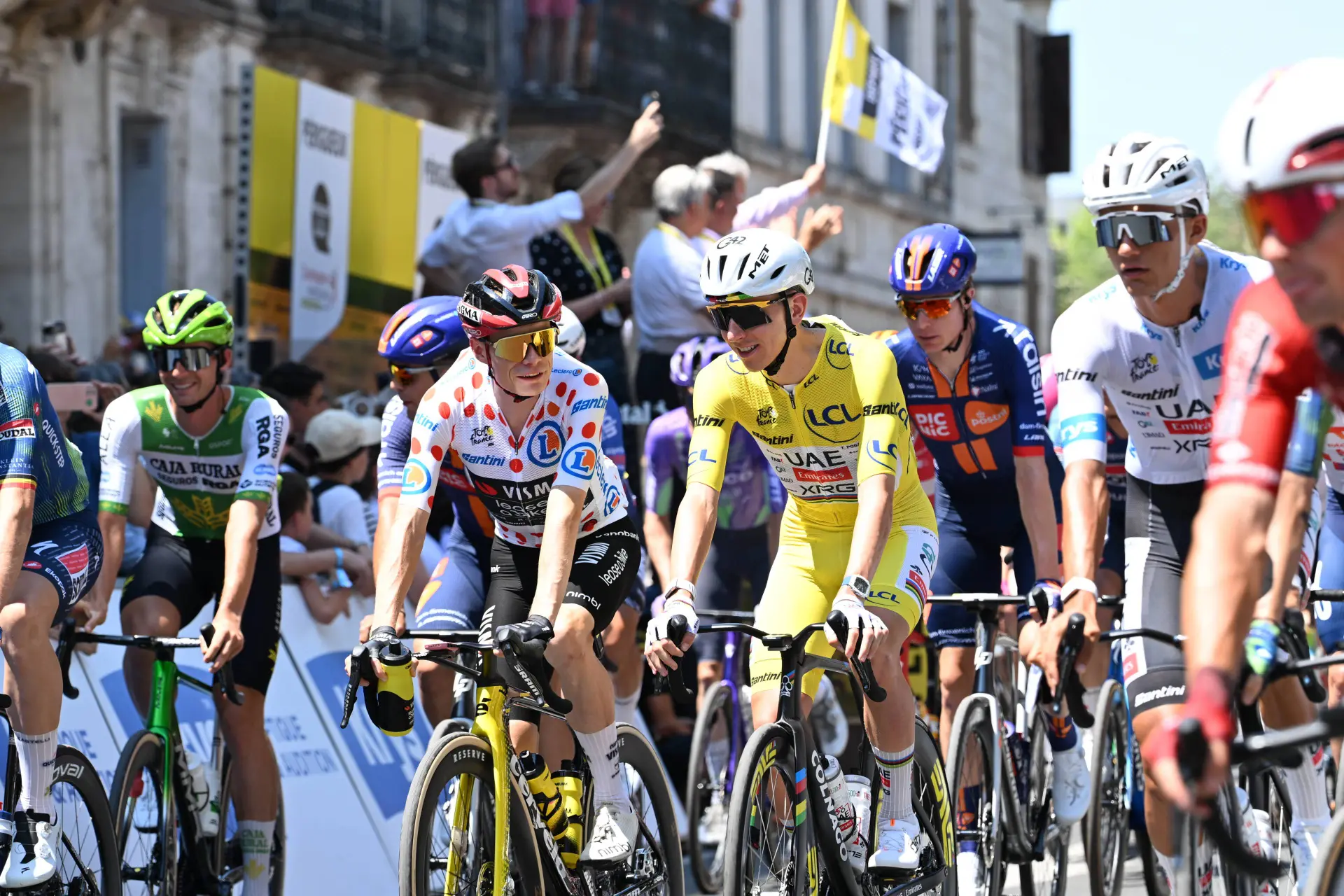
The UCI felt compelled to act after analysts, journalists, riders, and cycling teams continued to debate doping testing at this year’s Tour de France during the final days of the race. The news broke last Sunday when Tadej Pogacar and Jonas Vingegaard announced before the start of Stage 15 that they had been tested in the middle of the night.
In the days that followed, it turned out that the International Testing Agency (ITA) had also visited many other teams. The criticism was harsh, as voices from all sides emphasized that a good night’s sleep is a crucial factor during a grueling three-week Grand Tour. A statement from the ITA did little to ease the tension. The agency focused primarily on its responsibility in the fight against doping.
Continue reading below the photo

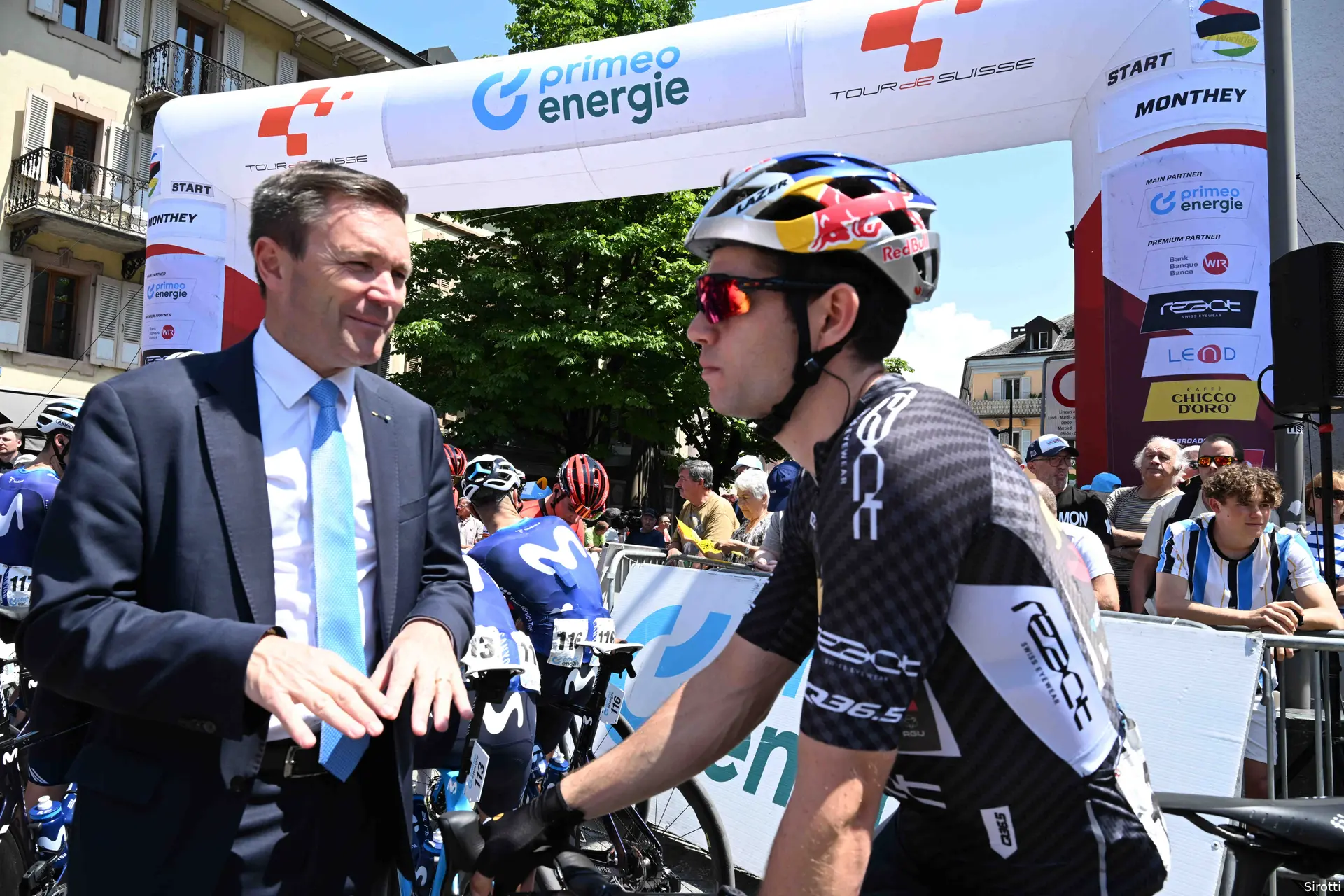
Jonas Vingegaard was tested for doping the night before Stage 15; during the stage itself, he fell and withdrew from the race.
UCI responds to debate over doping tests
The UCI is one of the organisations the ITA has been working for since 2021. And so the cycling federation apparently felt the need to respond to the criticism—which was, indirectly, directed at them. In addition to the popular one-liner that the fight against doping is a top priority for the cycling federation, they also addressed in greater detail the nighttime testing during this Tour de France in particular.
"The UCI of course acknowledges that night-time testing can disrupt riders' rest and recovery, and wishes to reiterate that carrying out such controls outside normal hours remains an exceptional measure, reserved for limited and justified circumstances," the statement reads.
So what are those circumstances? The UCI remains vague, stating only: “The fight against doping.” The UCI "supports the ITA's use of every means at its disposal to carry out its mission as effectively as possible, in compliance, naturally, with the World Anti-Doping Code of the World Anti-Doping Agency (WADA).”

Continue reading below the photo

UCI will stand firmly behind ITA
If the ITA operates within the rules governing doping control in that country, then, according to the UCI, there is no problem. "The UCI considers it essential that all stakeholders unite and support the anti-doping programme in place in cycling, which is now recognised by the relevant sporting authorities as a benchmark in this field."
The cycling federation emphasizes that all parties involved in cycling collectively contribute 10 million euros per year toward “the collection, analysis and re-analysis of samples, as well as in intelligence-gathering, across events falling within the UCI's regulatory remit, including the Tour de France,” the statement continues. "The UCI will continue to support the ITA in carrying out its mission, in full and complete respect for its independence, in the service of a cleaner and more credible sport of cycling," it finishes.
Read also
Bram van der PloegEditor-in-chief
Bram van der Ploeg (35) is the proud founder of In de Leiderstrui, IDL Pro Cycling's parent site, launched in 2018. Finally, he could create stories about the sport he had followed since childhood. He is the editor-in-chief on paper, but prefers to be with his recorder next to a rider, a team bus, or in the mud at a cyclocross race. Every year, from February to the end of May, Bram follows the entire Italian cycling season, from the Trofeo Laigueglia to the Giro d'Italia, with the grand finale in October in Lombardy. During that time, he lives in Tuscany, where he has since come to call Italy his 'home'.
IDL-productions
Team GB dominate, China on the rise, Lavreysen the best ever? Five takeaways from the 2026 Track World Championships
Track World Championships day 2: A golden day for Team GB, Levreysen goes 2 for 2, and Kopecky eliminates the competition
Rumours, speculation and guesswork: 2027 Tour de France route will be revealed live on October 22 in Paris
Vollering adds the Women’s European Championships road race jersey to her rainbow wardrobe
16-day Grand Tours, AI, VAR, drones and more: The UCI's new document has a potentially major impact from 2029 onwards
Latest Cycling News
Tadej Pogačar to skip Paris-Roubaix in 2027: 'The easier it becomes to stay away from racing'
Valgren's departure sees Danish contingent at EF Education-EasyPost completely disbanded: 'I’ve come full circle'
Here's what we think we know about the 2027 Tour de France ahead of tomorrow's official reveal
Richard Carapaz may be gone, but EF have big plans for their riders next season: 'They have more space'
Wout van Aert's off-season comes to an end: Belgian cyclocross rider talks about the winter season and major goals for 2027
Popular Cycling News
Cycling transfers 2026/2027 | The road season has ended, but the transfer market is in full swing
Marcel Kittel, Wout van Aert, and Marianne Vos partied at a cycling festival in Ibiza: 'To avoid a major hangover'
Greg LeMond on Pogačar, Seixas and living with cancer: 'He is the next Hinault'
Wiggins Jr. gets his call up to the Jayco AlUla WorldTour team, alongside 3 other emerging talents
Tom Pidcock pays special tribute to retiring brother Joey, but isn't totally happy: 'We had to settle for second place'
Latest Comments
- TotalEnergies’ sponsor situation makes this whole race for an invitation feel a bit academic unless they can secure funding. Hope they get it sorted—I’d love to see more teams get a crack at the Tour.cadencekingm21-10-2026
- Why do some teams get automatic invitations while others need a wildcard? Is it mainly based on their ranking from last year?robert6521-10-2026
- The paperwork deadline matters, but it’s odd that the UCI hasn’t explained what happens if a licence is vacated. Surely teams should know the process before the season is underway?velodromevirtuoso121-10-2026
- A guaranteed Tour start for the Rockets would be massive. Groenewegen has already shown he can deliver at WorldTour level, and the team looked well up to it at the Giro.gearguru3321-10-2026
- Pinarello-Q5 have made a strong case on the road, but a mid-cycle promotion would be messy if the UCI’s rules for filling a vacant licence aren’t clear. The riders and staff need certainty soon.jennifer1921-10-2026
- - The bike may be quick, but the article seems a bit too ready to credit the equipment for the result. Remco’s the one producing those watts—though I’ll admit, two minutes is a pretty convincing test ride.jennifer1918-10-2026
- - I’m still learning how time trials work: if Evenepoel caught Jay Vine, does that mean Vine started earlier, and do riders set off at fixed intervals?tourdeforce918-10-2026
- - A flat Tour TT on these roads would be brilliant viewing. Wide, fast courses really let the specialists show what they can do.davidm18-10-2026
- - Fourteen wins in a season is some going. He sounded focused on his own effort rather than the riders ahead, which is exactly the mindset you want in a race against the clock.michael5418-10-2026
- - Catching Vine and putting over two minutes into him is an enormous statement. That new Specialized clearly suits Remco—keen to see how it performs over a longer Tour time trial.raceready718-10-2026
Loading