Vermeersch questions Vuelta organisers' response to extreme heat: 'People just race even harder'
Cycling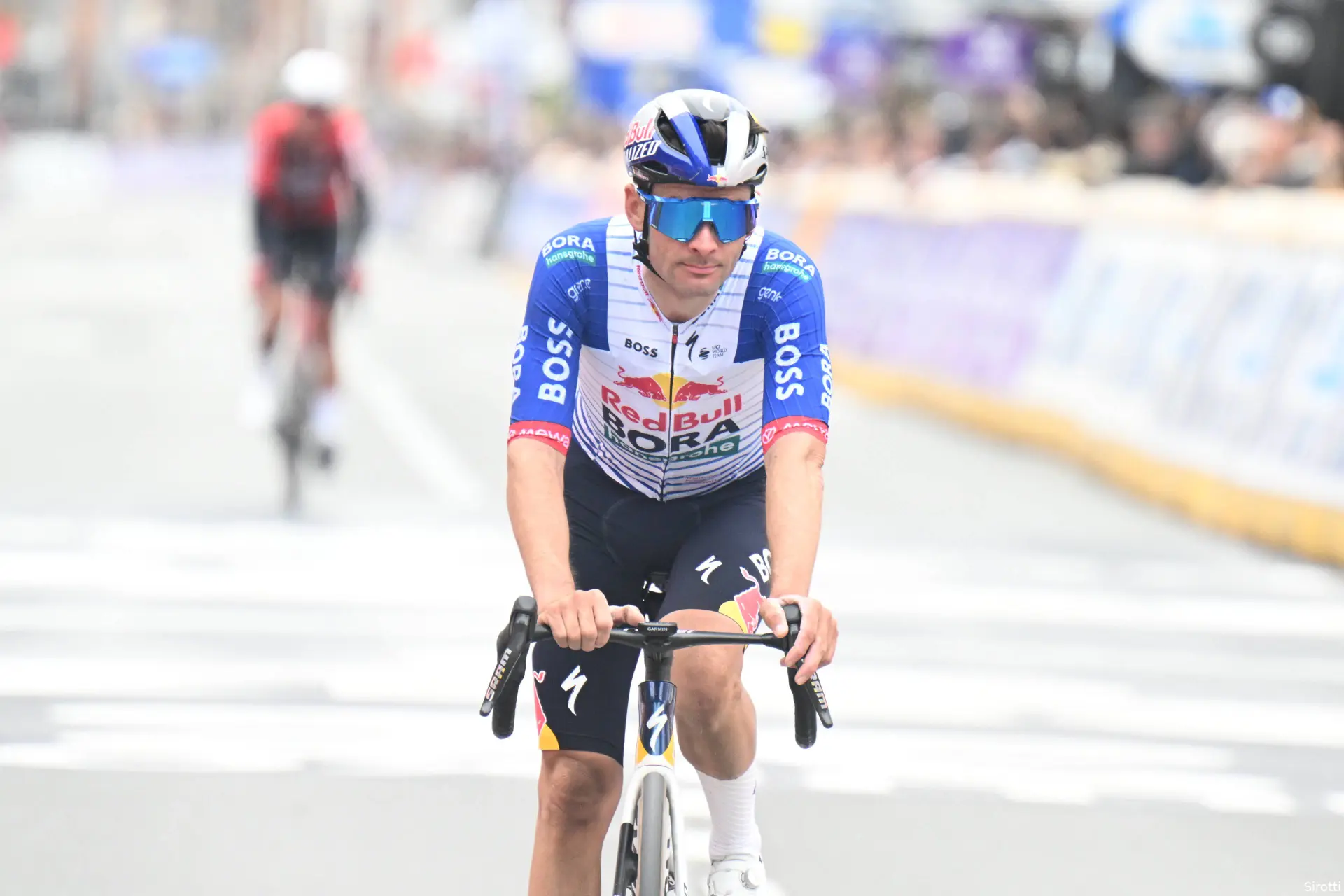
Follow IDL Pro Cycling on Google
Stay up to date with the best cycling news by making us a preferred source on Google.
Follow us on GoogleGianni Vermeersch has questioned whether shortening Vuelta a España stages in response to extreme heat actually solves the problem. The Red Bull-BORA-hansgrohe rider told Het Nieuwsblad that reducing the distance only causes riders to race harder, a counterintuitive take on the very measure organisers applied to Sunday's stage 15 into Córdoba.
ADVERTISEMENT
Riders have been vocal about the heat for days, calling for shorter stages, earlier start times, or outright cancellations. The organisers listened: stage 15 was cut from 189.7 kilometres to just 110.2 after activating the extreme temperature protocol. But Vermeersch is not convinced the solution works the way people think it does.
The Belgian explained that despite preparing specifically for the conditions in Spain, the relentless nature of racing in such temperatures is on another level. "I trained in Spain for a month for this Vuelta. But I have already suffered quite a bit. During training you can stop occasionally, and your body temperature drops for a moment, but when you have to race for four or five hours straight, that is really tough," he said.
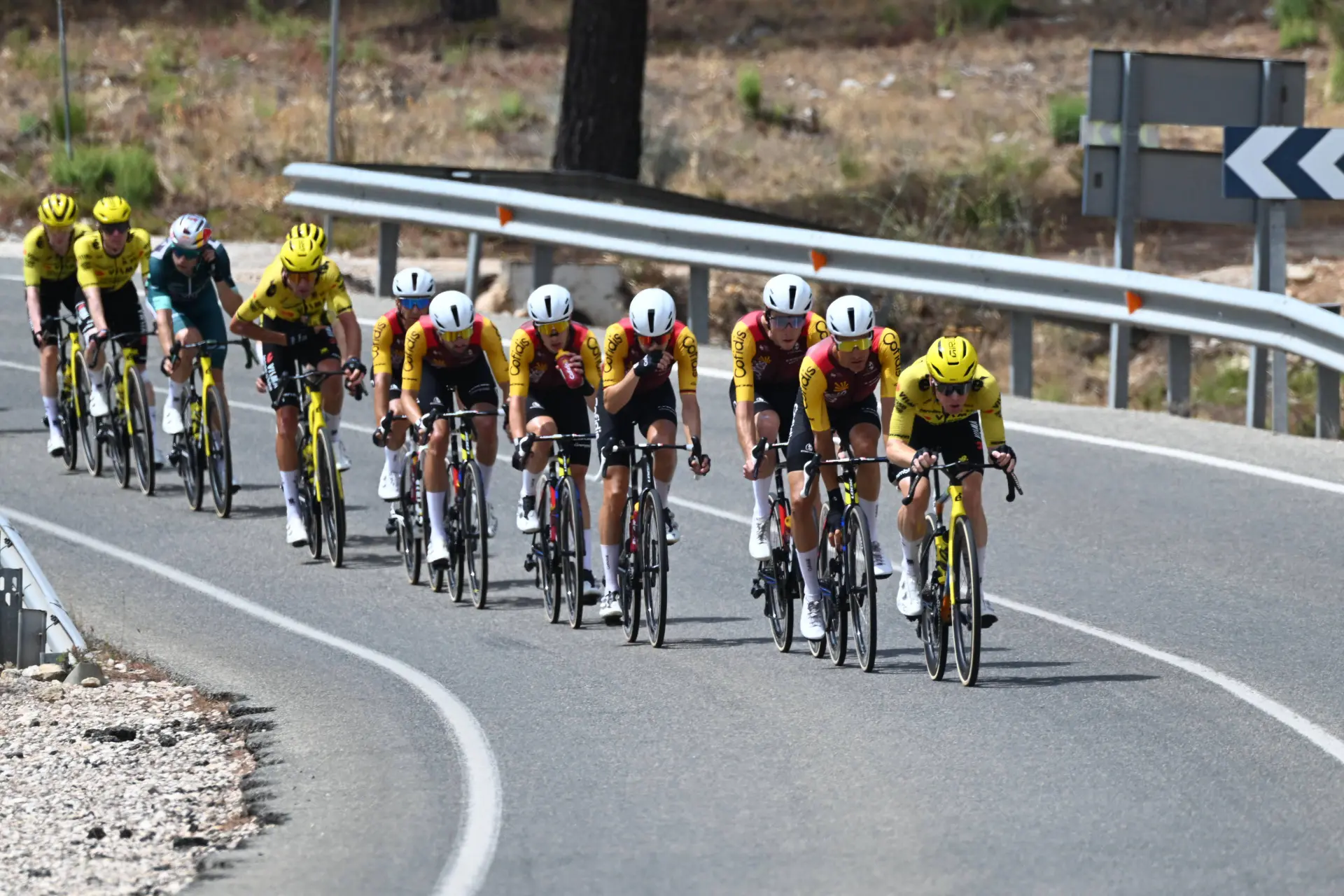

Visma's Matt Brennan has also voiced his concern
Vermeersch: 'The hailstorm was less severe'
Vermeersch drew a striking comparison to the weather chaos that hit the race in its opening week. Stage 3 was abandoned inside the final kilometres after a dangerous hailstorm struck on the way to Font Romeu. Riders, including then-leader Tadej Pogačar, were forced to pull off the road and seek shelter. At the time, it was a dramatic and dangerous situation. Yet Vermeersch says it pales next to the sustained heat the peloton is now facing.
Honestly? The hailstorm at the start of this Vuelta was less severe than these conditions.- Gianni Vermeersch on the Vuelta heat.
His sharpest criticism, though, was aimed directly at the logic behind shortened stages. The idea is straightforward: fewer kilometres mean less time in the heat. But Vermeersch argued that the competitive reality of professional cycling makes it self-defeating.
It is always difficult to deal with the heat properly, but if you shorten the race, people sometimes just race even harder. Which doesn't make it any better. Best of all would be if the riders agreed among themselves to take it a bit easier, but that isn't going to happen either.- Gianni Vermeersch to Het Nieuwsblad
Stage 15 may have proven his point
Sunday's shortened stage into Córdoba offered a case study in exactly what Vermeersch described. Visma | Lease a Bike set a fierce pace from the start, and the 110-kilometre race turned into a relentless battle.
Wout van Aert attacked after the Puerto Artafi, bridged to a breakaway group, and powered to his second stage victory in three days, beating Alessandro Romele and Thibau Nys in a five-man sprint. Rather than easing the burden, the shorter distance concentrated the effort into an explosive race.
Brennan and others also question the UCI and race organisers
The heat debate has escalated rapidly in recent days. Matthew Brennan tore into the UCI on Sunday, saying the people making decisions have "the air conditioning set to 20 degrees in their office" while riders battle temperatures above 40°C on the road. Five riders abandoned during stage 14 alone, including key Visma domestique Christophe Laporte, and earlier in the race Arthur Kluckers was hospitalised with heatstroke.
The peloton now has Monday's second rest day to recover, but there is little relief on the horizon. The final week takes the race through Huelva, Sevilla, Jerez, and eventually the finish in Granada, all in southern Spain's interior where temperatures are expected to remain punishing.
Steven Kruijswijk has replaced Enric Mas as one of the peloton's CPA representatives to continue negotiations about potential adjustments for the days ahead.
Whether those adjustments will include further shortened stages remains to be seen. If they do, Vermeersch's argument will linger: a shorter race may simply be a faster one, and faster does not mean safer.
David Bavin-HobbsChief Editor
David has been working in the sports & cycling industry for 16 years. Covering racing, business and technology, he has worked in communications for cycling companies, teams, and as a journalist. His proudest achievement is winning the first bike race he ever entered. He hasn't won a race since.
IDL-productions
Team GB dominate, China on the rise, Lavreysen the best ever? Five takeaways from the 2026 Track World Championships
Track World Championships day 2: A golden day for Team GB, Levreysen goes 2 for 2, and Kopecky eliminates the competition
Rumours, speculation and guesswork: 2027 Tour de France route will be revealed live on October 22 in Paris
Vollering adds the Women’s European Championships road race jersey to her rainbow wardrobe
16-day Grand Tours, AI, VAR, drones and more: The UCI's new document has a potentially major impact from 2029 onwards
Latest Cycling News
2027 Tour de France Femmes route | Team time trial in London, and finale up Puy-de-Dôme
Picnic PostNL's WorldTour uncertainty has five rival teams, and Tom Pidcock, watching the UCI closely
Unibet Rose Rockets could miss out on the Tour de France again: 'They don’t claim to be French at all'
Tour de France U-turn as 2027 route finale still not decided 'Will not change a tried-and-tested formula'
Rumours fly about Tour de France 2027, which seems set to miss Montmartre show down
Popular Cycling News
Cycling transfers 2026/2027 | The road season has ended, but the transfer market is in full swing
Marcel Kittel, Wout van Aert, and Marianne Vos partied at a cycling festival in Ibiza: 'To avoid a major hangover'
Tadej Pogačar to skip Paris-Roubaix in 2027: 'The easier it becomes to stay away from racing'
Greg LeMond on Pogačar, Seixas and living with cancer: 'He is the next Hinault'
Wiggins Jr. gets his call up to the Jayco AlUla WorldTour team, alongside 3 other emerging talents
Latest Comments
- TotalEnergies’ sponsor situation makes this whole race for an invitation feel a bit academic unless they can secure funding. Hope they get it sorted—I’d love to see more teams get a crack at the Tour.cadencekingm21-10-2026
- Why do some teams get automatic invitations while others need a wildcard? Is it mainly based on their ranking from last year?robert6521-10-2026
- The paperwork deadline matters, but it’s odd that the UCI hasn’t explained what happens if a licence is vacated. Surely teams should know the process before the season is underway?velodromevirtuoso121-10-2026
- A guaranteed Tour start for the Rockets would be massive. Groenewegen has already shown he can deliver at WorldTour level, and the team looked well up to it at the Giro.gearguru3321-10-2026
- Pinarello-Q5 have made a strong case on the road, but a mid-cycle promotion would be messy if the UCI’s rules for filling a vacant licence aren’t clear. The riders and staff need certainty soon.jennifer1921-10-2026
- - The bike may be quick, but the article seems a bit too ready to credit the equipment for the result. Remco’s the one producing those watts—though I’ll admit, two minutes is a pretty convincing test ride.jennifer1918-10-2026
- - I’m still learning how time trials work: if Evenepoel caught Jay Vine, does that mean Vine started earlier, and do riders set off at fixed intervals?tourdeforce918-10-2026
- - A flat Tour TT on these roads would be brilliant viewing. Wide, fast courses really let the specialists show what they can do.davidm18-10-2026
- - Fourteen wins in a season is some going. He sounded focused on his own effort rather than the riders ahead, which is exactly the mindset you want in a race against the clock.michael5418-10-2026
- - Catching Vine and putting over two minutes into him is an enormous statement. That new Specialized clearly suits Remco—keen to see how it performs over a longer Tour time trial.raceready718-10-2026
Loading