5 days with no memories and 16 hours of sleep a day for Andersson after a severe World Championship crash: Swedish athlete gives first interview
Women's Cycling
Follow IDL Pro Cycling on Google
Stay up to date with the best cycling news by making us a preferred source on Google.
Follow us on GoogleCaroline Andersson, the rider most severely affected by the massive crash at the Women’s World Cycling Championships in Montreal, has given her first interview since the crash. Upon arriving in her home country, the Swedish rider spoke to SVT about how she is doing.
ADVERTISEMENT
Andersson taking all the time she needs for recover
Andersson posted an update on social media just last week. “In the crash, I suffered four brain haemorrhages, two facial fractures, a broken collarbone, and a broken pelvis. I’m now in stable condition and in good hands. My 2026 season is over—now it’s all about recovery, especially for my head, and taking the time it needs.”
Read also

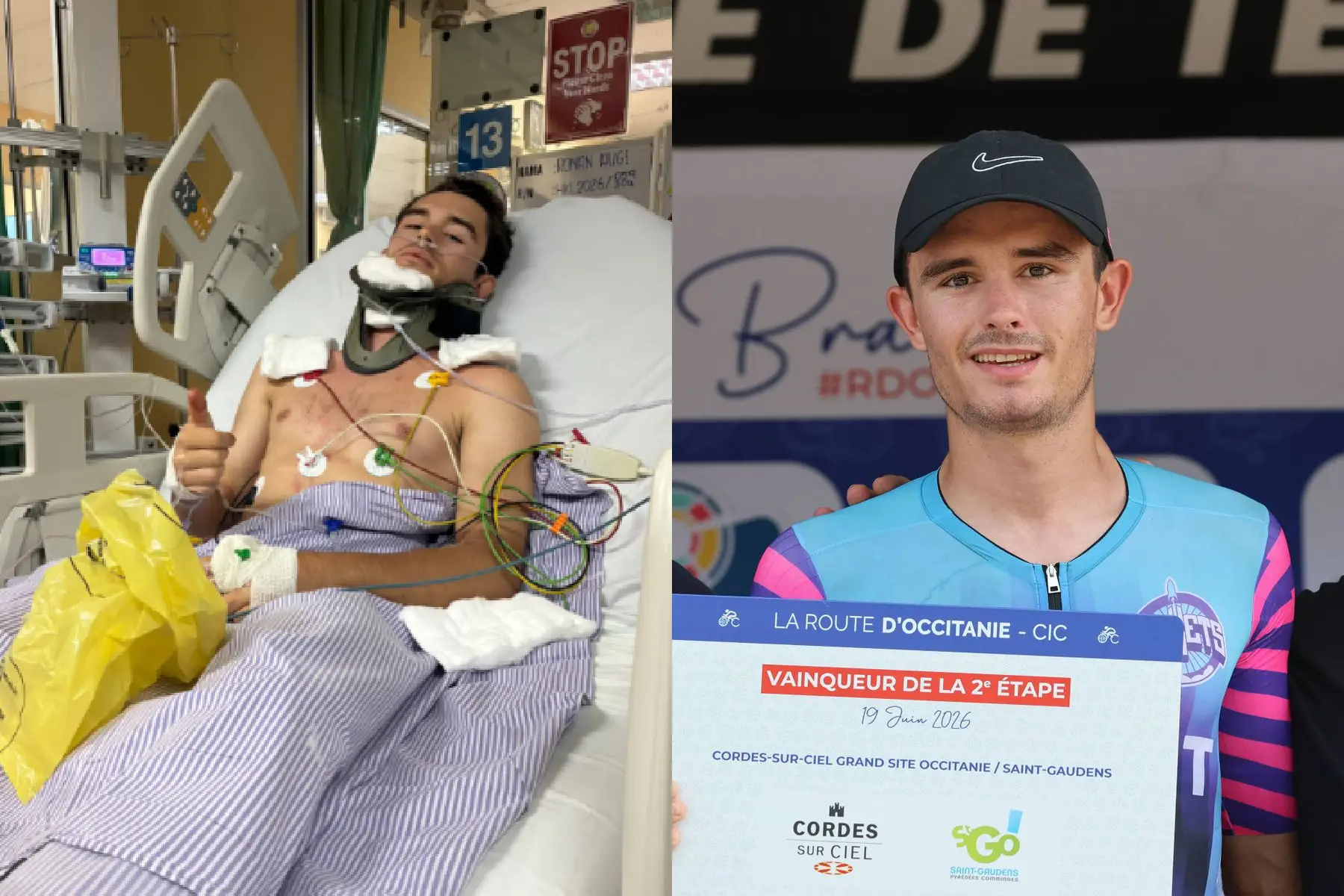
In her first interview, the Liv AlUla Jayco rider discusses in more detail how she’s doing now.
What actually happened? “If you hit another rider’s rear wheel with your own front wheel, you usually lose your balance, but that’s just a guess. I don’t know exactly what happened.”
Read more below the photo.

Andersson had no memories for 5 days
Andersson couldn't remember anything for five days, but is now undergoing rehabilitation. The 25-year-old doesn't remember anything about the moment itself.
“That’s an advantage. As silly as it sounds, it’s had the opposite effect. If you can crash that hard and still come back, then I’ll probably make it too.”
She hadn't looked at the pictures yet either. "Someday I'll probably have to look at the photos again—whether I want to or not—but right now it's a fresh and painful memory, even though it's not really a memory."
The four brain hemorrhages, in particular, are serious. Andersson—who says she sleeps 16 hours a day, 12 at night and 4 during the day—explains. “The brain has to learn to use new neural pathways and new routes, and hopefully it will heal, but right now it’s a pretty serious injury,” explains the Swede, who was only able to leave Canada ten days after the fall.
Read also


Clarice WebsterEditor
Clarice has been following cycling her whole life, wroting about Thibaut Pinot (among others) for her university magazine while earning her masters in Journalism. She is passionate about furthering equality in sports coverage, and has taken huge inspiration from pillars of women’s cycling like Beryl Burton, Marianne Vos, and Laura Kenny.
IDL-productions

Rumours, speculation and guesswork: 2027 Tour de France route will be revealed live on October 22 in Paris

Vollering adds the Women’s European Championships road race jersey to her rainbow wardrobe

16-day Grand Tours, AI, VAR, drones and more: The UCI's new document has a potentially major impact from 2029 onwards
Quinn Simmons' Strava shows exactly what it takes to compete at the World Championships: ‘I said, Hey guys, anything is possible'

Despite losing the World Championships, Del Toro and Seixas rank high mentally and physically on the Pogačar scale
Latest Cycling News
Mathieu van der Poel's running season has begun, still no word on his cyclocross plans

Jonas Vingegaard spotted training in Mallorca

Connor Swift reacts to bronze at Gravel World Championships: 'The only World Championship jersey I've got a real shot at'
Ciccone will ride with Pidcock at Pinarello-Q36.5 after sudden departure from Lidl: 'A proven winner, an experienced leader'

Two new pregnancies in the women's peloton: 'Prime example of how structure and support for female athletes should be'
Popular Cycling News

🎥 Women's Gravel World Championships shaken by a serious crash involving Unbound runner-up

UAE and Del Toro explain Tour of Lombardy collapse with (very) few words: ‘ Proud of the efforts in Italy’

In the style of Tadej Pogačar, record breaking Paul Seixas wins the 2026 Tour of Lombardy

Il Lombadria Strava analysis shows 2026 Paul Seixas outshines 2022 Tadej Pogačar on the Civiglio

Marianne Vos wins the 2026 Women's Gravel World Championships after crash-filled race
Latest Comments
- I’m still learning the race: why is it called the “Koers van de Vallende Bladeren”? Is that another name for Lombardy because it’s held in autumn?breakawaybikerd12-10-2026
- Brilliant result, but the coverage is already crowning him the next king after one big win. Let’s see how he handles a full season of expectations first.lindae12-10-2026
- The Civiglio move sounds a bit reckless, but clearly he trusted his legs and his plan. That confidence is exciting—though the team will need to help him manage all the hype now.gearguru3312-10-2026
- I’m still learning the race: why is it called the “Koers van de Vallende Bladeren”? Is that another name for Lombardy because it’s held in autumn?Huge ride from Seixas. Winning a Monument at 20 is remarkable, and dropping Ciccone and Pidcock on the final climb makes it more than just a case of Pogacar being absent.velodromevirtuoso112-10-2026
- Brilliant result, but the coverage is already crowning him the next king after one big win. Let’s see how he handles a full season of expectations first.patriciaw12-10-2026
- The Civiglio move sounds a bit reckless, but clearly he trusted his legs and his plan. That confidence is exciting—though the team will need to help him manage all the hype now.davidm12-10-2026
- Huge ride from Seixas. Winning a Monument at 20 is remarkable, and dropping Ciccone and Pidcock on the final climb makes it more than just a case of Pogacar being absent.sprocketspiny12-10-2026
- What a year for Del Toro. Future Grand Tour winner, surely.patriciaw11-10-2026
- Why did UAE make him team leader if they already knew the knee was bothering him? Seems like a strange decision.lindae11-10-2026
- Seixas really blew the race apart on the Civiglio. Del Toro’s 28th looks poor on paper, but context matters here. One bad day doesn’t erase the season he’s had.cyclechamp4511-10-2026
Loading