Naesen says Gall’s Giro podium was built on unwritten rules, smart positioning and a team effort against Arensman
Cycling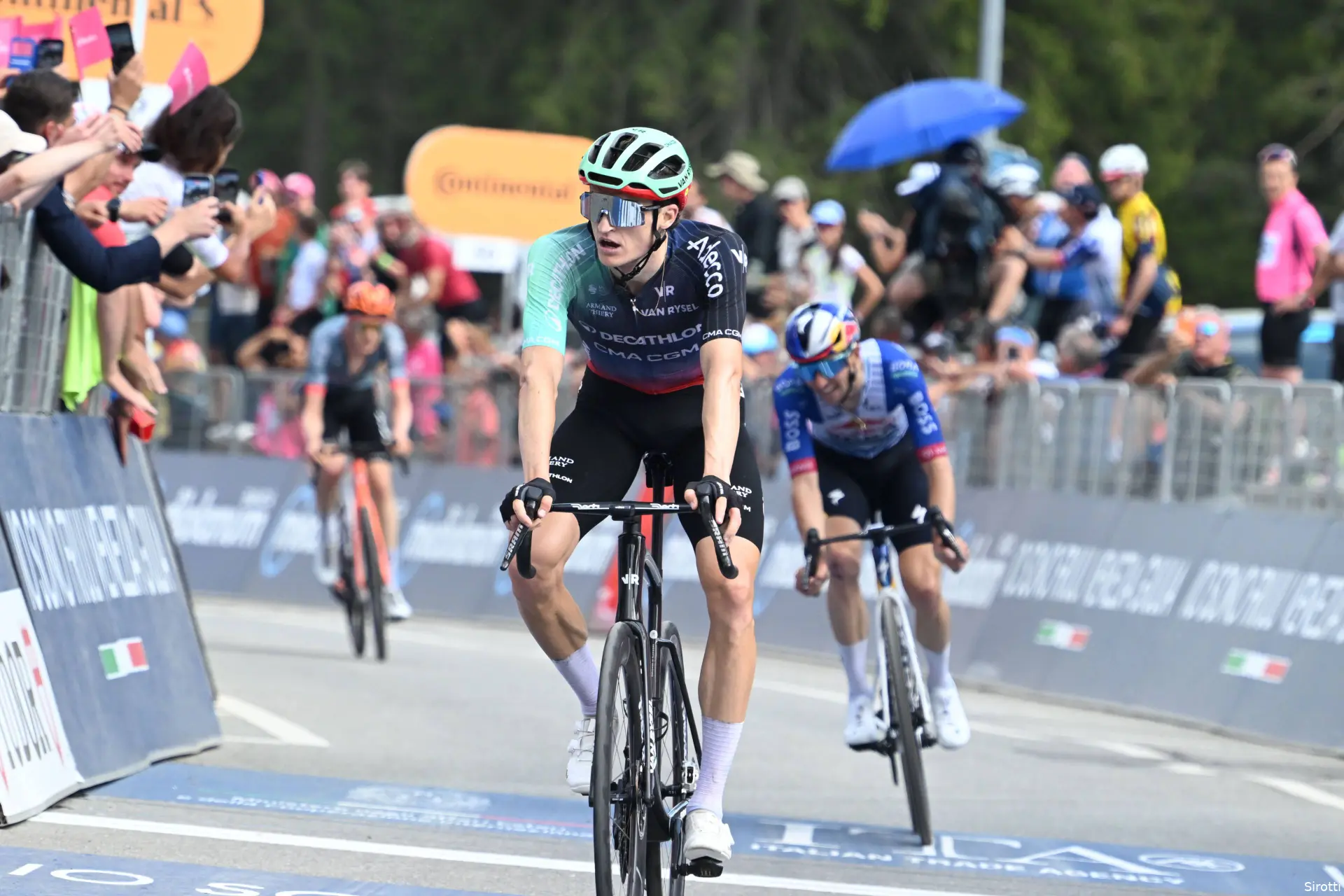
Follow IDL Pro Cycling on Google
Stay up to date with the best cycling news by making us a preferred source on Google.
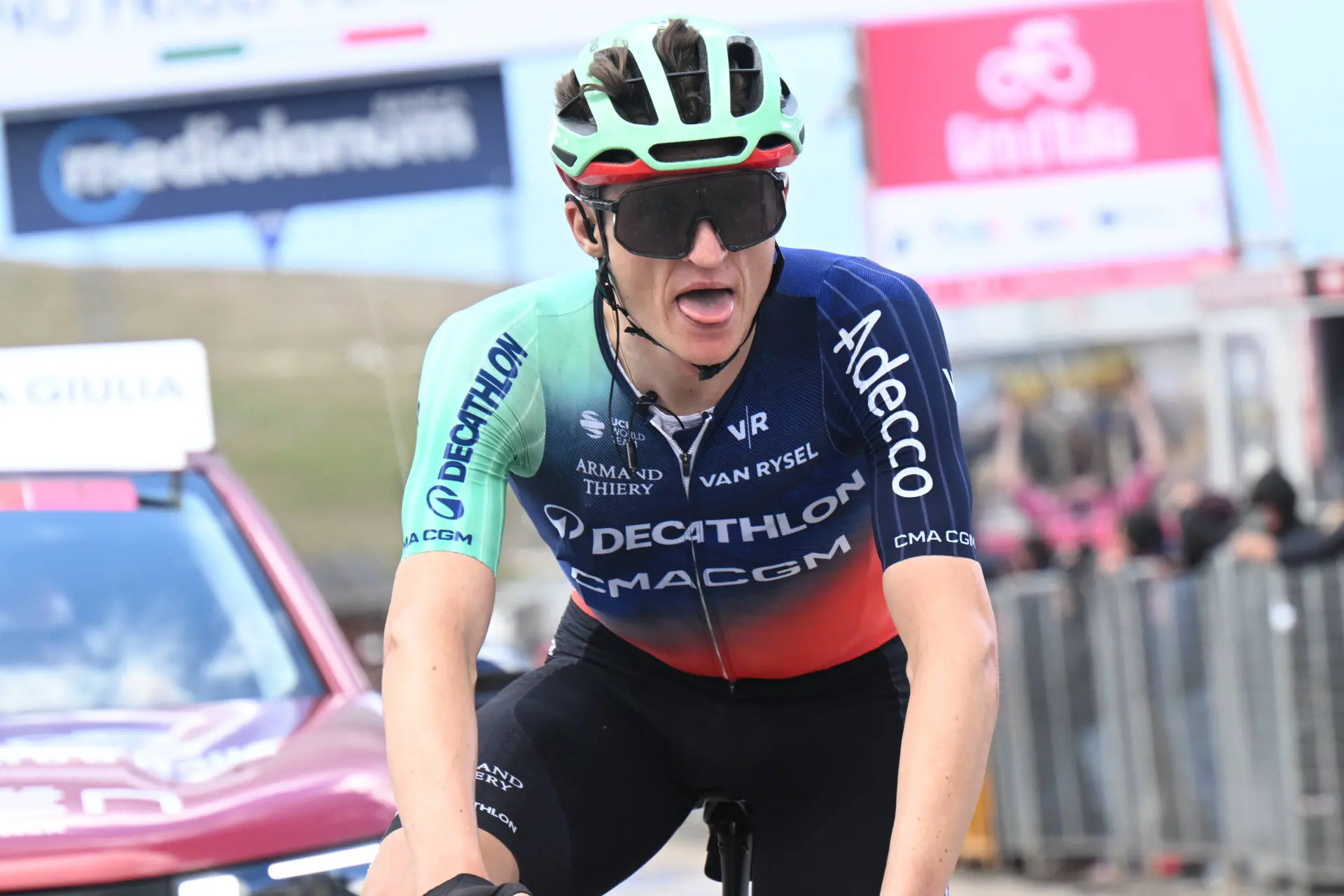
Follow us on GoogleMost of the attention at this Giro d’Italia went to Jonas Vingegaard and Visma | Lease a Bike, but behind the Dane, Felix Gall also made a huge impression. The 28-year-old Austrian rode onto a Grand Tour podium for the first time, thanks to a different preparation and mindset and the help of bodyguard Oliver Naesen. Bram from IDL Pro Cycling spoke to Naesen on the final day in Rome.
ADVERTISEMENT
That Gall would ride to second place in the Giro was something few people had expected. The climber took his first top-10 GC results last year in the Tour de France, where he was fifth, and the Vuelta a España, where he was eighth. Even so, it was still a surprise to many that he took the next step in the Giro. For three weeks, he was the strongest climber after Vingegaard. His weaker time trial on day ten barely even mattered.
“Very positive,” was how Naesen described Decathlon CMA CGM’s Giro. “We came here with big ambitions, and those turned out to be achievable. On paper we were aiming for top five, but dreaming of top three. We had thought that Giulio Pellizzari would be the second-best climber behind Vingegaard, but it turned out to be us. That was fantastic.”
Because sprinter Tobias Lund Andresen fell ill after a good start and had a “tough Giro”, the rest of the team could focus on Gall. He was supported impressively. “Before the Giro I already knew that Felix would be among the best two or three climbers, but how big would the beating be in the 42-kilometre time trial?”
Continue reading below the photo

Felix Gall in the time trial on day ten
Gall was never put under pressure downhill
Gall lost a lot of time in the time trial, but in the standings it curiously only meant he lost contact with Vingegaard. The podium was still fully within reach, and so Gall resurfaced again in the third week. “The big GC riders who are strong time triallists were not really here, so the damage remained limited. Still, danger is always lurking around the corner in a Grand Tour.”
The leader stayed out of trouble because there were no crosswinds, the weather was good after the first week, and Gall was not put under pressure on the descents he sometimes still feared. Naesen thought that was logical. “In previous years Felix wasted a lot of energy wriggling and pushing for position, energy he then lacked uphill.”
But above all, the place he had earned in the GC helped enormously, according to the Belgian. “If it is clear that you are the second-best climber in the peloton, it is hard for the rest to attack us. There are unwritten rules that you have to respect. As second in the standings, you are the second team in line in the peloton, which means Felix was always eighth or ninth at the front.”
“That was ideal for every descent. If a Filippo Ganna had been riding alongside us at that moment with Thymen Arensman, that would not have been allowed. And it works the other way too; if we had been behind INEOS in the standings, we would also not have ridden in front of or inside their train, and we would have had to endure the race behind them.”
Continue reading below the photo

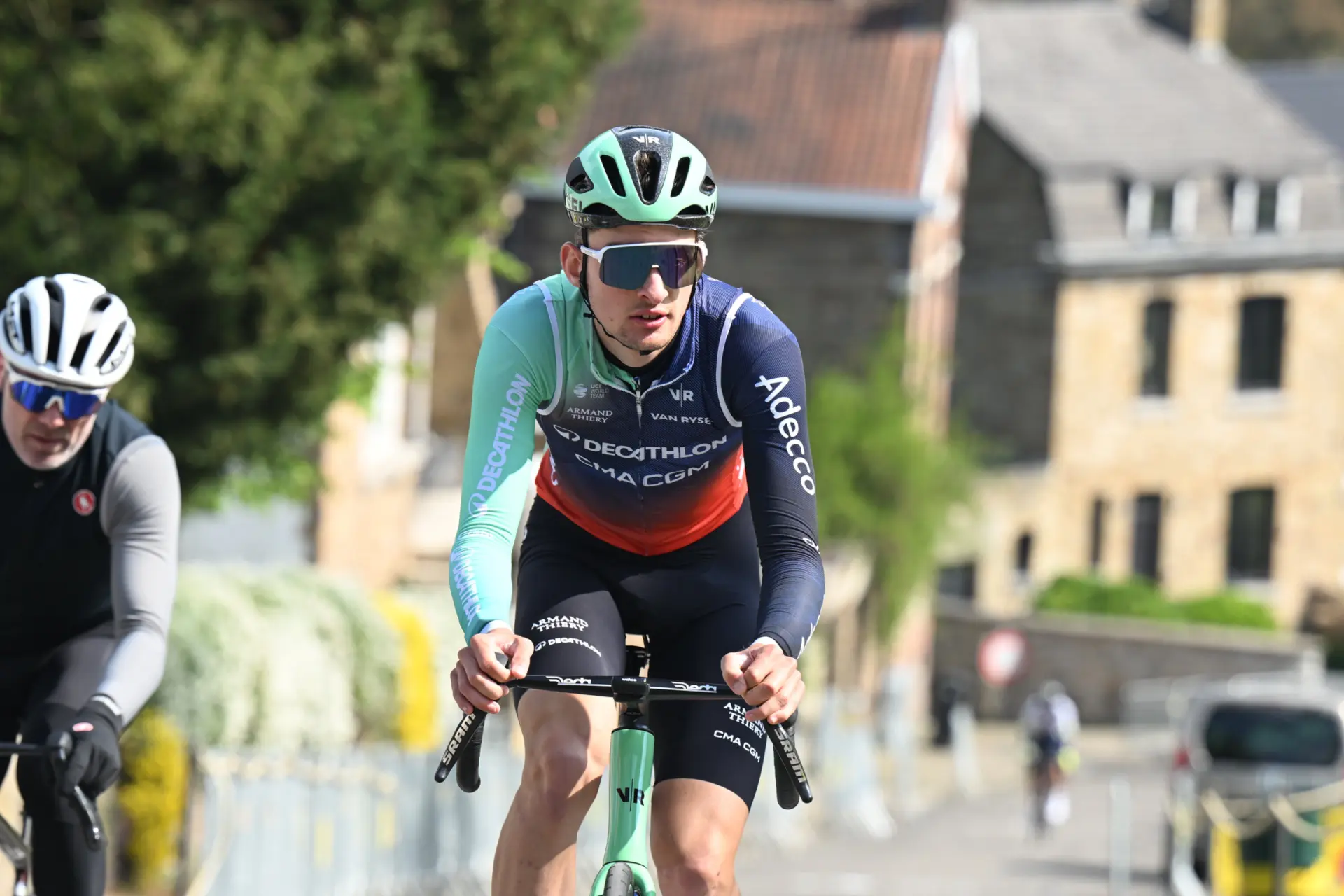
Oliver Naesen
Naesen kept Gall calm at the Giro d'Italia
Because of Gall’s GC position, Decathlon CMA CGM already had control in the important stages from the first week. And in the other stages, Naesen gave his leader extra calm. “Victor Campenaerts is the mouthpiece at Visma | Lease a Bike, and if he came over to Felix in a flat stage to ask what we were planning, he would always answer: ‘I’m just a passenger, talk to Oliver and leave me alone.’”
“In those stages nothing was expected of him, he just had to finish with the first group. That gave him a lot of peace. After that crash on day two, I also told Felix: we are not involved in that. It was wet, we were riding at 90 per hour, so we stayed centrally at the back. I promised him I would get him back to the front when we reached the climb. Those really were Felix’s strengths in this Giro.”
Continue reading below the photo

Why did Decathlon ride on the front at the Giro d'Italia?
The final question that was on our lips in Rome: why did Decathlon CMA CGM often ride on the front in the finales of mountain stages, when the gap between Vingegaard and Gall was already obvious? Did the French team believe Gall could win a stage? No, Naesen said: “There were actually no more scenarios in which the number two could still win a stage.”
“Still, before stage 20 I told Felix: if there is one stage you can win, it is this one. I thought the chance of Jonas attacking on the steeper part of Piancavallo was small, because then he would have had to do the less steep sections on his own. Felix might then have been able to follow,” he said. Vingegaard, however, did attack on the steep part and rode the entire finale solo.
So why did Decathlon CMA CGM still often set the pace and make the battle for stage wins among the GC men so hard? “We mainly looked in the rear-view mirror and thought: how can we hurt Arensman and INEOS the most? Then you still have to let the final climb be fought for stage victory, because the pace is just a little sharper then and Arensman finds that harder.”
“On steeper sections that was even better for Felix, and also towards Jai Hindley. That is why we sometimes rode on the front, but only in the finale. We always saved our climbers, so that worked out well. For the TV viewer, the stage win counts, but Visma | Lease a Bike was truly much better. The difference was simply too big. Then you have to value second place properly. And that value is very big.”
Read also
Bram van der PloegEditor-in-chief
Bram van der Ploeg (35) is the proud founder of In de Leiderstrui, IDL Pro Cycling's parent site, launched in 2018. Finally, he could create stories about the sport he had followed since childhood. He is the editor-in-chief on paper, but prefers to be with his recorder next to a rider, a team bus, or in the mud at a cyclocross race. Every year, from February to the end of May, Bram follows the entire Italian cycling season, from the Trofeo Laigueglia to the Giro d'Italia, with the grand finale in October in Lombardy. During that time, he lives in Tuscany, where he has since come to call Italy his 'home'.
IDL-productions
Track World Championships day 2: A golden day for Team GB, Levreysen goes 2 for 2, and Kopecky eliminates the competition
Rumours, speculation and guesswork: 2027 Tour de France route will be revealed live on October 22 in Paris
Vollering adds the Women’s European Championships road race jersey to her rainbow wardrobe
16-day Grand Tours, AI, VAR, drones and more: The UCI's new document has a potentially major impact from 2029 onwards
Quinn Simmons' Strava shows exactly what it takes to compete at the World Championships: ‘I said, Hey guys, anything is possible'
Latest Cycling News
Dutch Red Bull talent realises there is still a lot of work to be done to secure his dream role

Lidl-Trek’s top time-trialist on what Filippo Ganna’s arrival might mean for him: 'The team is ambitious'
Rumours fly about Tour de France 2027, which seems set to miss Montmartre show down
Jakobsen posts his strongest WorldTour result in years: 'It feels like a small victory'
Track World Championships day 2: A golden day for Team GB, Levreysen goes 2 for 2, and Kopecky eliminates the competition
Popular Cycling News
The Tour de France responds to the UCI's radical Grand Tour plan; the Giro and Vuelta are also opting out
Primož Roglič isn't sure whether he'll continue cycling, but his wife Lora has already spoken out.
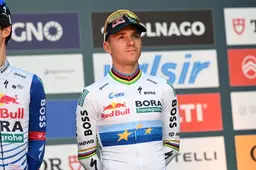
Evenpoel's 'unflattering' new jersey ridiculed by David Millar and others: 'Just the most absurd display'
Roche adds his voice, speaks out against Picnic PostNL: 'Management isn't cut out for cycling'
Riders who felt afraid and powerless expose 'unworkable' conditions at Picnic PostNL: 'It's like a cult'
Latest Comments
- A self-promoting billboard for the psychologically insecure Evenpoel, who should do as much work on his psyche as he does on his road training. It seems as if he's always looking for and desperately needing acclaim and external validation, and often miserable, as well as argumentative and accusatory unless he wins the race. And even when he does cross the finish line ahead of the pack, he seems to experience relief. more than joy. It's as if he can't win, even when he finishes first, because there's always a trap door, always someone there who will say, 'Not good enough,' or, 'But can you do it again?'rjb15-10-2026
- How does a team actually get a wildcard for a Grand Tour? Is it mainly based on ranking, or do organisers have more choice? I’m still trying to get my head around how the divisions work.andrewf15-10-2026
- The points gap to the top 18 is huge, so Picnic PostNL’s licence situation sounds precarious. Still, the allegations about conditions within the team deserve proper scrutiny, not just transfer-window speculation.cadencekingm15-10-2026
- Pidcock finishing ninth at the Tour as a ProTeam rider is impressive. WorldTour status would give the squad a more settled calendar, though the obligation to start almost every WorldTour race could stretch a team that’s still building.pedalpowe2915-10-2026
- Pinarello-Q5 are making a serious case on the road, and Ciccone is a big signing. But points alone won’t tell the whole story if Picnic PostNL meet the UCI’s financial conditions.michael5415-10-2026
- The article calls the Giro the likely option, but Seixas has said the Tour is his lifetime goal. That seems a bit premature—wouldn’t the team want him back at the Tour after finishing fourth?gearguru3314-10-2026
- Five weeks between the Tour and Worlds sounds like plenty of time to recover and get ready again. I’d love to see him go for both.sprocketspiny14-10-2026
- Why does the Vuelta start just six days after the Worlds? Do riders ever compete in both, or is that turnaround generally too short?davidm14-10-2026
- He’s had an extraordinary season, but there’s no need to rush him into targeting everything at once. A gradual build towards the Tour could pay off in the long run.lindae14-10-2026
- That Worlds course sounds tailor-made for Seixas. Twenty ascents of Domancy is savage, and racing at home could make it a huge day for him.andrewf14-10-2026
Loading